
Competitions · Physics · BPhO
BPhO, the British Physics Olympiad.
Every question is a derivation, an answer on its own scores nothing, and you choose which questions to attempt. Run from Oxford’s physics department since 1979, and the closest thing in a competition to the written tests Oxford and Cambridge set for physics and engineering.
Read this first
Round 1 places are allocated, not simply booked.
The China region has a capped number of Round 1 places - 3,500 for the 2026 cycle, raised from 3,000. Of those, 3,400 go to students who already hold a result from the Intermediate or Senior Physics Challenge, and only 100 are reserved for high scorers in Round 0.
Allocation runs in batches: global gold and silver winners from SPC and global gold from IPC are invited first, then bronze and silver holders, then the Round 0 top hundred, and only then is anything left released first come, first served. If nothing is left, registration does not open at all.
The practical consequence is that a student who wants to sit BPhO Round 1 usually needs to have entered IPC or SPC the season before. Planning starts a year out, not in the autumn.
At a glance
What the olympiad is, and who runs it.
BPhO began in 1979 and has selected Britain’s team for the International Physics Olympiad since 1983. Its committee is drawn from Oxford University, the Institute of Physics and the Ogden Trust, and its office sits in Oxford’s physics department.
- Organiser
- The British Physics Olympiad committee - Oxford University, the Institute of Physics and the Ogden Trust
- Since
- 1979, selecting the UK international team since 1983
- Sponsors
- Rolls-Royce, the Ogden Trust, Maplesoft and the Royal Astronomical Society
- Rounds
- Round 0, Round 1 and Round 2, with the IPC and SPC challenges feeding into them
- Question type
- Derivations throughout. There are no multiple-choice questions in Round 1 or Round 2
- In China since
- 2016. Chinese and British students sit the same paper, which is returned to the UK for central marking, and compete for the same global medals
- The one difference
- Students who are not UK nationals cannot be selected for the British national team. China-region winners may be invited to the China-region training camp
- Mathematics required
- Differentiation, integration and solving ordinary differential equations are all used extensively
- What it is not for
- Results carry no weight in Chinese school admissions. The event is positioned as an extracurricular activity and an international teaching exchange
How it is marked
The two rules that decide a BPhO score.
BPhO marks reasoning rather than results, and it lets a candidate choose which ground to fight on. Both are unusual and both reward preparation.
An answer alone scores nothing
Every question requires the derivation to be written out. A correct final value with no working earns no marks at all - the committee is assessing the argument, not the number.
But wrong answers can still score
Partially correct reasoning earns partial marks even when the final answer is wrong. That inverts the usual incentive: starting a hard question badly is worth more than not starting it.
You choose what to answer
Section 1 offers around 75 marks across roughly 18 questions, but caps at 50 - you answer the 50 marks you like best. Section 2 offers four long questions at 25 marks each, of which you answer any two.
Answering extra costs nothing
If you attempt more than 50 marks in Section 1, wrong answers are not penalised and correct ones count, but the section still caps at 50. There is no downside to attempting more than the minimum.
The rounds
Round 0, Round 1 and Round 2.
Round 0 is new since 2025 and free to anyone registered for Round 1. Round 2 is invitation-only from the very top of Round 1.
| Round 0 | Round 1 | Round 2 | |
|---|---|---|---|
| Who | Grades 10 to 12 | Holders of an IPC or SPC result, or the Round 0 top 100 | That year’s global Top Gold winners from Round 1 |
| When | Late September | Early November | Late February |
| Length | 60 minutes | 2 hours | 3 hours |
| Format | 25 multiple-choice questions, one mark each, no penalty | Two sections of derivations, 100 marks | Derivations, no practical component |
| Where | School computer or online | School computer only | Online |
| Awards | None - a qualifying score only | Five bands from Top Gold to Bronze II | Gold, silver and bronze on score bands |
Round 0 carries no award of its own. Its value is the hundred Round 1 places reserved for its highest scorers, which is the only route into Round 1 that does not run through IPC or SPC.
Awards
Why the cut-offs favour a strong cohort.
BPhO sets its thresholds on the British field and then applies them as fixed marks to everyone else - the same mechanism AIMO uses, and with the same consequence.
British scores set the bar
The award thresholds are calculated from UK-national students’ results at the top 2%, 8%, 15%, 25% and 40% for Top Gold, Gold, Silver, Bronze I and Bronze II.
Everyone else meets an absolute mark
Candidates from other countries are then measured directly against those mark thresholds rather than ranked among themselves. Clear the number and you take the award.
So a strong cohort is not self-defeating
If every candidate in a group clears the Gold line, every one of them takes a Gold. There is no fixed quota being divided among them.
Top Gold is the gate to Round 2
Only the top 2% band is invited onward. Everything below it is a credential rather than a progression.
For UK applications
Why physics applicants to Oxford and Cambridge sit this one.
BPhO is more directly aligned with British admissions testing than any other contest on this site.
The style matches the admissions tests
Round 1 is closely comparable in difficulty and question style to the PAT used by Oxford and Imperial for physics and engineering, and to Cambridge’s pre-interview assessments for natural sciences and engineering.
And it reaches into A2 material
Round 1 draws on A2 content and a little introductory university physics, which is the same territory those admissions papers occupy.
It is common among successful applicants
The organisers report that a large majority of students admitted to Oxbridge physics and engineering departments had entered BPhO.
Preparation transfers directly
Because the overlap is real rather than incidental, time spent on BPhO is time spent on admissions-test preparation. Very few competitions can claim that.
Preparation
How Hanlin prepares students for BPhO.
BPhO asks for two things a school course does not build: writing physics as an argument, and using calculus fluently while doing it.
Writing a derivation, not an answer
Since an answer without working scores nothing and partial reasoning does score, students practise writing up the argument as they go rather than at the end. This is the single largest source of lost marks.
Calculus as a working tool
Differentiation, integration and ordinary differential equations appear throughout. Students need these fluent enough to use inside a physics problem, not merely learned.
Choosing which 50 marks to take
Section 1 lets a candidate pick their ground. Deciding quickly which questions suit them - and attempting beyond the cap since there is no penalty - is practised under timed conditions.
Entering IPC or SPC first
Because almost all Round 1 places are allocated to IPC and SPC award holders, the realistic route starts a season earlier. That sequencing is the plan, not an afterthought.
Why Hanlin
Hanlin has been entering students for BPhO for years, and publishes what they got. The record is further down this page.
Programme formats
Five ways this is taught.
Group size is the whole difference between these. It decides how much of the tutor's attention a student gets and how far the course can bend to them, so it is worth choosing rather than accepting.
| Format | Group size | What it suits |
|---|---|---|
| One-to-one | One student | Content, pace and emphasis set by what this student actually needs rather than by a syllabus. The only format that can be rebuilt mid-course. |
| Small group | Three to eight | Opens at three. Frequent discussion, and the tutor can slow down or move on according to what the group has absorbed. Most students chasing a higher award are taught in this one. |
| Class | Eight to twelve | Taught by the subject lead or a medal coach. Less back-and-forth, so it suits a student who will say when something is unclear. |
| Large class | Ten to twenty | For students in the middle of the placement range, and a way to try a competition before committing. Students often move to a small group or to one-to-one afterwards. |
| Past-paper class | No cap | Past papers worked through in sequence in the weeks before the sitting. Free to students already enrolled. |
Course tiers
Which course, and on what evidence.
Every tier for BPhO is entered from a placement paper rather than from a year group. These are the actual standards.
| Course | Hours | Who it is for |
|---|---|---|
| Full course | 50 hours | AS physics, AP Physics 1 and 2, or IB DP1 physics, plus calculus |
| Past-paper class | 16 hours | Past papers worked through. Free to students already enrolled |
Ask for the placement paper before choosing a tier. It takes an hour and it settles the question.
How it runs
Six steps, four people on your side.
The same process for every student, so that nothing depends on one tutor remembering to do it.
 Step 1
Pre-course assessment
A placement paper before anything is booked, so the course tier is chosen on evidence rather than on a year group.
 Step 2
Tutor matching
A subject tutor is matched to the result, and their full background is provided before you agree to it.
 Step 3
Plan and group
A study group opens with four people on one student: the tutor, a planner, a supervisor and an academic manager.
 Step 4
Scheduled teaching
The teaching office sets the timetable around the competition date and school term, and teaching begins.
 Step 5
After-class reports
What was covered, and how the student handled it, reported after every lesson.
 Step 6
Homework follow-up
The teaching assistant and the form teacher both check that homework is done, which is where most preparation quietly fails.
Free resource pack
BPhO past papers and preparation pack
The same material our own BPhO students work from. Scan the code, say what you need, and an advisor sends it.

Tell an advisor which competition and year group, and the material comes back the same day. Free, and you do not have to enrol in anything. If we do not already hold what you need, we will go and find it.
- PDFRound 1 and Round 2 papers with published solutions
- PDFThe mathematics assumed, and where it goes beyond AS physics
- PDFAward boundaries by round, year by year
- PDFRegistration checklist and the dates for the current cycle
Teaching team
Who would teach it.
Three of the twenty-two tutors on the published Hanlin roster - the ones whose subject this is.
Huang
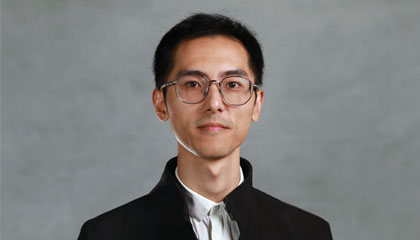
A College Board-accredited AP teacher. Read mathematics and physics in Southeast University's honours programme, took a master's in aerospace engineering at George Washington University under the lead of NASA's Sigma programme, and a second master's in robotics and AI at Melbourne. Five years teaching international curricula and competitions.
Ding
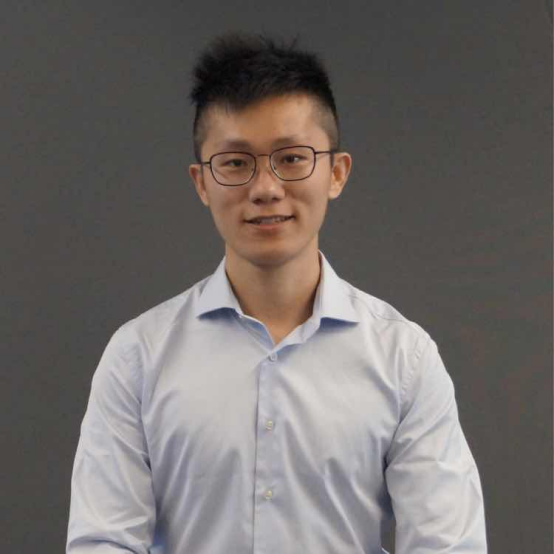
Master's in physics from Brown University after the physics honours programme at Central China Normal University, with a Berkeley BISP exchange. Two years as a graduate teaching assistant, then teaching alongside Professor Enrico Pajer (cosmology) and Professor Anastasia Romanou (exoplanets). College Board-accredited.

Lu
Master's in astrophysics from UCL after an astronomy degree at Xiamen University. In international education since 2019, teaching for logical structure and framework first - efficient methods and flexible problem-solving over rote coverage.
Student results
What Hanlin students got.
Taken from Hanlin's published record of student honours and rewritten in English. Figures are as the organisers reported them.
Top Golds in 2023
One line from Hanlin's published BPhO record. The rest of it is below.
BPhO
- 2024Round 1: 2 Top Gold in the UK region and 9 in the China region, with 20 Gold, 20 Silver and 12 Bronze
- 2023Round 1: 20 Top Gold, 24 Gold and 17 Silver. Round 2: 4 global Silver and 2 Bronze
- 2022Round 1: 19 Top Gold
Earlier years
- 2021Round 1: 8 Top Gold. Round 2: 2 Gold
- 2020Round 1: 6 Top Gold, a 70% award rate
The full record, across every subject and year, is on the student honours page.
Where it is taught
Hanlin learning centres.
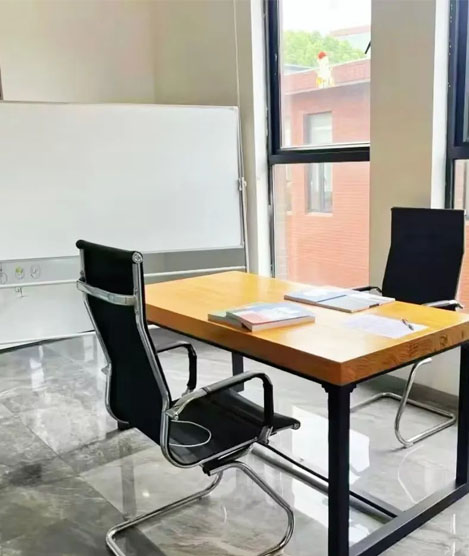
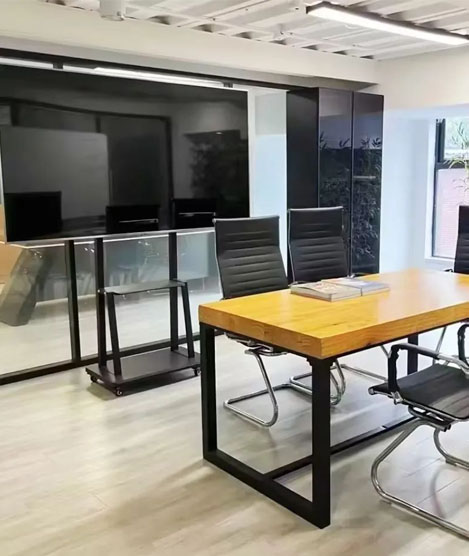
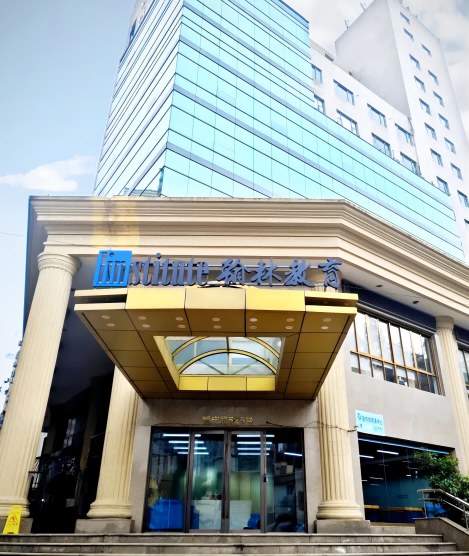
Teaching runs from Hanlin's own centres in Shanghai, Shenzhen, Chengdu and Hangzhou, and online for students elsewhere.
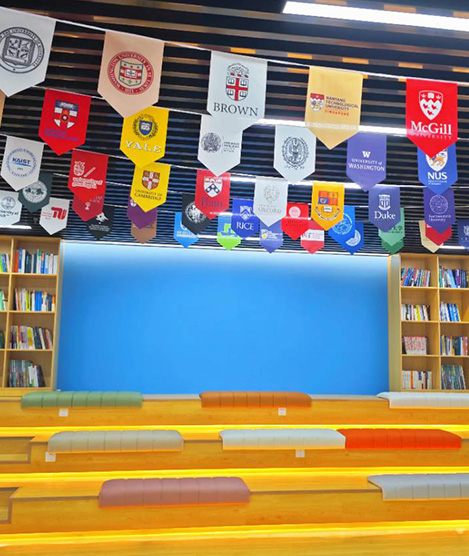
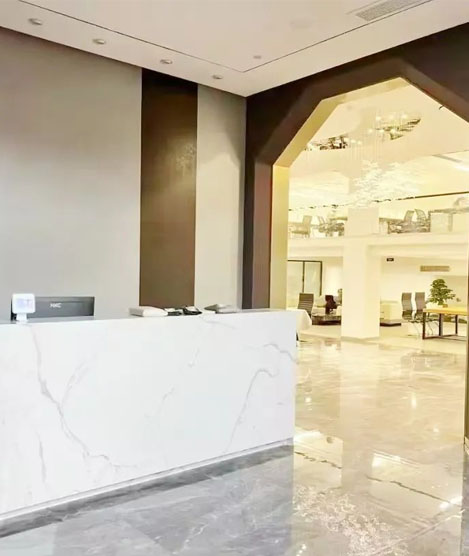
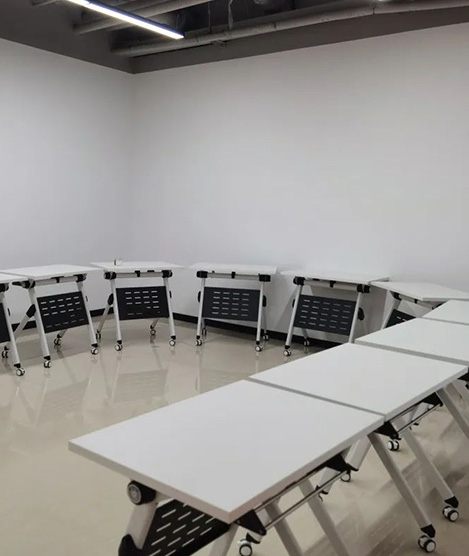
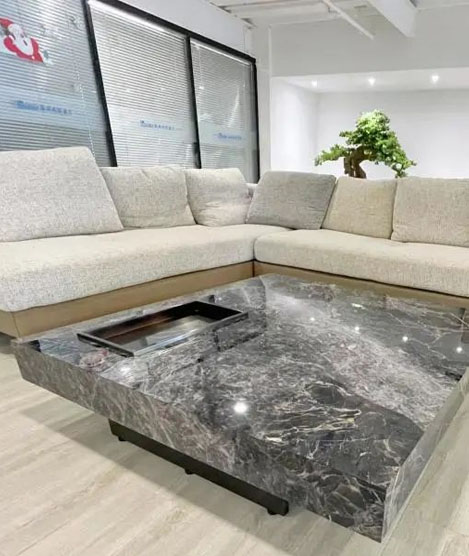
Talk to an advisor
Everything Hanlin does for BPhO, in one conversation.
Entry, planning, coaching and the past papers. An advisor will tell you which of these a student actually needs, including when the answer is none of them.
Competition entry and planning
Which competitions suit this student, in what order, and by when - then we handle the registration, including the ones that can only be entered through a school or a centre.
Competition coaching
Taught by full-time subject tutors, on a course tier chosen by placement paper rather than by year group.
International curriculum tutoring
IB, AP, A-Level, IGCSE and the US high school curriculum, taught alongside school and timed around the exam calendar.
Competition past papers, free
A large library of past papers, mark schemes and syllabus breakdowns across every competition on this site. No charge and no enrolment.
Scan to add an advisor
Say which competition or course you are asking about. Replies in Chinese or English.
Or call +86 21 6352 6630FAQ
BPhO, briefly answered.
What students and families ask before entering.
How do I get a place in Round 1?
Most places are allocated to students who already hold a global award from the Intermediate or Senior Physics Challenge, invited in batches from gold downward. A hundred further places go to the top scorers in Round 0. Anything left over is released first come, first served, and if nothing is left registration does not open.
What is Round 0?
A 60-minute paper of 25 multiple-choice questions, free to anyone registered for Round 1 and added to the series in 2025. It carries no award of its own - its value is the hundred Round 1 places reserved for its highest scorers.
Do I have to answer every question in Round 1?
No, and you are not expected to. Section 1 offers about 75 marks but caps at 50, so you choose which questions to attempt. Section 2 offers four long questions at 25 marks each and you answer any two.
Is there any penalty for attempting extra questions?
No. In Section 1 a wrong answer is not penalised and correct ones count, though the section total still caps at 50. There is no reason to stop at exactly 50 marks’ worth.
Does a correct answer without working score?
No. Every question requires the derivation. Conversely, partially correct reasoning earns partial marks even where the final answer is wrong.
What mathematics do I need?
Differentiation, integration and solving ordinary differential equations, all used extensively. Fluency matters more than coverage, since the calculus is a tool inside a physics problem rather than the problem itself.
How are awards decided?
Thresholds are set from UK-national scores at the top 2%, 8%, 15%, 25% and 40% for Top Gold, Gold, Silver, Bronze I and Bronze II. Students elsewhere are measured directly against those marks, so a strong cohort does not divide a fixed quota.
Can a Chinese student reach the British national team?
No. Chinese and British students sit the same paper and compete for the same global medals, but only UK nationals can be selected for the team. China-region winners may be invited to the China-region training camp.
Related
The rest of the British physics route.
The challenges that feed BPhO, and other physics contests.
BPhO enquiries
The season that matters starts a year before Round 1.
Almost every Round 1 place is allocated to a student who already holds an IPC or SPC award. Tell us the student’s year group and what they have entered so far, and an advisor will map the route that actually gets them a seat.