
Competitions · Business and economics · BPA
BPA, Business Professionals of America.
Java, SQL, Python, computer animation, video production - alongside accounting, marketing and human resources. BPA is filed under business, but its subject list is far wider than that, and it is the reason to look at it.

What it actually is
Not an economics competition. A career-skills one.
Every other business competition here examines economics. BPA examines what people in business actually do - and about a third of its subjects are programming and digital production.
It includes real programming subjects
Java, SQL and Python each appear as their own global-stage subject at high school level. A student can enter BPA on the strength of code rather than economics.
And digital production
Video production, computer animation and graphic design are full subjects, entered individually or as a team. Photography, games, web and new media all sit under the same route.
Alongside the business subjects
Fundamental accounting, banking and finance, human resource management, entrepreneurship, global marketing, financial analysis and economic research.
And spoken subjects
Prepared speech, extemporaneous speech and presentation management are examined in their own right, which is unusual - most competitions treat presentation as part of something else.
Read this first
Four things in the published material contradict each other.
These are not small print. Two of them change whether a season goes anywhere at all, so confirm each with the organiser before registering.
Whether the middle school division advances
One line states that the ML division does not advance to the global stage. The same source then lists middle-school global-stage subjects in detail, and describes ML assessment as applying for a global-stage subject. Both cannot be true.
How big a team is
The team rules say three to four students throughout. The assessment section says exactly three, every time it is mentioned. A team of four built on the first reading may not be eligible under the second.
Which grades belong where
One section gives grades 6 to 9 for middle school and 9 to 12 for high school, overlapping at grade 9. Another gives 7 to 9 and 10 to 12, with no overlap and no grade 6 at all.
Where the US global stage is
The schedule says Denver, Colorado. The sample itinerary flies to Dallas. Those are different cities in different states.
At a glance
What the competition is.
Business Professionals of America was founded in 1966 and is certified by the US Department of Education and the career and technical student organisation framework, and recommended by the National Association of Secondary School Principals. It reaches more than 45,000 students a year and came to China in 2020, where it is also known as CBPA.
- Who can enter
- Secondary students. The two levels are ML for middle school and S for high school, though the published grade bands disagree - see above
- Language
- The ML division may submit in Chinese. The S division works in English
- S division formats
- Objective Individual, Subjective Team, and BusinessPlus
- Objective Individual
- An online multiple-choice test: 60 minutes, 80 questions, five marks each, no penalty for a wrong or blank answer, 400 marks in total. Two sittings are offered and you pick one
- Its two directions
- Marketing, or Business Management. Chosen before the test
- Subjective Team
- A team takes one of the five global-stage subject themes and submits a presentation video against it
- BusinessPlus
- For students aiming at information technology or design. An application with subject grades, activities, awards and a portfolio - places filled on a rolling basis, first come first served
- Teams may cross schools
- Yes - across schools, year groups and regions. A cross-school team names one affiliated school for team awards; individual certificates still show each student’s own school
- Locking the team
- Rosters may be changed freely until the leader presses confirm. After that, no changes. A student may belong to only one team
- Changing division
- Once, before registration closes
- When
- Registration from mid-June to early December. Preliminary September to December, China stage February to March, US global stage in May, Asia global stage in Hong Kong in August
The global subjects
What you can actually enter.
This list is the clearest picture of what BPA is. Read it before deciding whether the competition suits the student - the answer is often yes for reasons that have nothing to do with business.
| Level and route | Entered as | Subjects |
|---|---|---|
| Middle school | Individual | Graphic Design Promotion, Financial Literacy, Entrepreneurship Exploration, Extemporaneous Speech, Presentation Management |
| Middle school | Team | Prepared Speech, Introduction to Video Production |
| High school - information technology | Individual | Java Programming, SQL Database Fundamentals, Python Programming |
| High school - digital design | Individual | Graphic Design Promotion |
| High school - business | Individual | Fundamental Accounting, Banking and Finance, Human Resource Management, Entrepreneurship |
| High school - digital design | Team | Video Production, Computer Animation, Graphic Design Promotion |
| High school - business | Team | Financial Analyst, Economic Research, Small Business Management, Global Marketing |
The five subjects used as China-stage themes for Subjective Team entries are Small Business Management, Economics Research, Presentation Management, Global Marketing and Financial Analyst. Note that middle-school subjects are listed here even though the same source says the middle school division does not advance - confirm before planning around them.
How to advance
Three routes, and only one is a competition.
BPA publishes its advancement mechanism in unusual detail, and it is worth reading closely, because score is only one of the three ways through.
On score
Objective Individual: the national top 25% advance directly. Subjective Team: the top ten teams nationally in each subject advance to that subject, and the rest are reallocated to other subjects. BusinessPlus: rolling, until places run out.
By invitation card
Schools and agencies that reach a qualifying number of participants receive a tiered allocation of direct-entry cards. More students entered means more guaranteed places, independently of how any of them scored.
On the waiting list
A student who misses both writes a motivation letter. The committee weighs it against the preliminary score, the quality of the letter and how early it was submitted - so late letters are at a disadvantage.
Details worth knowing
Two rules that decide seasons.
Both sit in the small print and both are irreversible once the deadline passes.
The subject preference form
Objective Individual entrants file up to five subject preferences on the entry platform before the test. They can be edited without limit until the preference deadline, and not at all afterwards - so a student who advances is placed against the list they filed weeks earlier.
Division declarations are policed
The committee reserves the right to supervise and review entries, and a student found to have broken the division rules may have every BPA result cancelled - not only the round in question.
Confirming the team is final
Members can be swapped freely until the leader presses confirm. That press ends it. A student may be in only one team across the whole competition.
Two global stages, four months apart
The US stage runs in May and the Asia stage in Hong Kong in August, which gives a qualifying student some choice about travel and timing.
The awards
Ranked by proportion, twice.
BPA awards on percentage bands rather than fixed cut-offs, and it ranks twice - once nationally and once regionally.
A certificate for everyone
Every participating student receives an official participation certificate. Strong performers additionally receive a study honour certificate.
National total-score awards
Each division is ranked nationally on total score, with gold, silver and bronze set as a proportion of the number of students entered.
Regional victory awards
National award winners are then removed, and the remaining teams are ranked within their region for a second set of gold, silver and bronze - again by proportion.
And a leadership track alongside
Campus ambassador, certified chapter, the China presidium and the global presidium form a published progression that runs independently of competition results.
Preparation
How Hanlin prepares students for BPA.
The subject choice matters more here than in any other business competition, because the subjects have almost nothing in common with each other.
Matching the subject to the student
A student who codes should be looking at Java, SQL or Python; one who edits video at Video Production; one who studies economics at Economic Research. Entering BPA as a generic business competition wastes what makes it useful.
Preparing the objective test at pace
Eighty questions in sixty minutes is forty-five seconds each, with no penalty for guessing. Every question should be attempted, and timed practice is what makes that automatic.
Covering both directions properly
Marketing covers brand marketing, segmentation, advertising media and e-commerce. Management covers multinational operations, human resources, corporate finance and decision optimisation. They share very little.
And building the portfolio early
BusinessPlus is decided on an application - grades, activities, awards and a body of work - and places fill on a rolling basis. A portfolio assembled the week before the deadline is competing against ones built over a year.
Why Hanlin
Hanlin has been entering students for BPA for years, and publishes what they got. The record is further down this page.
Programme formats
Five ways this is taught.
Group size is the whole difference between these. It decides how much of the tutor's attention a student gets and how far the course can bend to them, so it is worth choosing rather than accepting.
| Format | Group size | What it suits |
|---|---|---|
| One-to-one | One student | Content, pace and emphasis set by what this student actually needs rather than by a syllabus. The only format that can be rebuilt mid-course. |
| Small group | Three to eight | Opens at three. Frequent discussion, and the tutor can slow down or move on according to what the group has absorbed. Most students chasing a higher award are taught in this one. |
| Class | Eight to twelve | Taught by the subject lead or a medal coach. Less back-and-forth, so it suits a student who will say when something is unclear. |
| Large class | Ten to twenty | For students in the middle of the placement range, and a way to try a competition before committing. Students often move to a small group or to one-to-one afterwards. |
| Past-paper class | No cap | Past papers worked through in sequence in the weeks before the sitting. Free to students already enrolled. |
Course length for BPA is set after a placement paper. The gap between where a student is and what the paper asks for is what the course has to close, and that gap is not the same for two students in the same year group.
How it runs
Six steps, four people on your side.
The same process for every student, so that nothing depends on one tutor remembering to do it.
 Step 1
Pre-course assessment
A placement paper before anything is booked, so the course tier is chosen on evidence rather than on a year group.
 Step 2
Tutor matching
A subject tutor is matched to the result, and their full background is provided before you agree to it.
 Step 3
Plan and group
A study group opens with four people on one student: the tutor, a planner, a supervisor and an academic manager.
 Step 4
Scheduled teaching
The teaching office sets the timetable around the competition date and school term, and teaching begins.
 Step 5
After-class reports
What was covered, and how the student handled it, reported after every lesson.
 Step 6
Homework follow-up
The teaching assistant and the form teacher both check that homework is done, which is where most preparation quietly fails.
Free resource pack
Case and submission pack
The same material our own BPA students work from. Scan the code, say what you need, and an advisor sends it.

Tell an advisor which competition and year group, and the material comes back the same day. Free, and you do not have to enrol in anything. If we do not already hold what you need, we will go and find it.
- PDFPast cases and question sets
- PDFA worked example of a full submission
- PDFEvent categories and the judging criteria, broken down
- PDFEntry checklist and the dates for the current cycle
Teaching team
Who would teach it.
Three of the twenty-two tutors on the published Hanlin roster - the ones whose subject this is.

Bai
Master's in social entrepreneurship from Hult International Business School in San Francisco and a business administration degree from the Universitat Autonoma de Barcelona, with an exchange at Texas A&M's Mays Business School. Accredited by the College Board, Cambridge International and the IBO, a certified intermediate economist, and a judge at the 2020 Diamond Challenge global final and the 2021 NEC China final.

Zhang
Master's in engineering management from NYU and a double degree in finance and supply-chain management from Syracuse. Nearly nine years overseas and in finance, including at a well-known venture firm - experience that feeds scenario-based teaching. College Board-accredited.

Jiang
Master's in business analytics from the Schulich School of Business, a finance and business economics degree from York University and a software engineering degree from the Harbin Institute of Technology. Years in North America, university teaching before returning, and long experience across the whole economics curriculum.
Student results
What Hanlin students got.
Taken from Hanlin's published record of student honours and rewritten in English. Figures are as the organisers reported them.
In the world, Digital Marketing, 2022-23
One line from Hanlin's published BPA record. The rest of it is below.
BPA
- 2024-256 national Bronze and a team placing in the global top three
- 2023-24Awards at the global round and a team in the global top three
- 2022-23First in the world in Digital Marketing, and a Financial Analyst Team in the global top ten
Earlier years
- 2021-22The highest national award in Business Law and Ethics
- 2020-215 teams advanced to the global round, an 83% rate
The full record, across every subject and year, is on the student honours page.
Where it is taught
Hanlin learning centres.
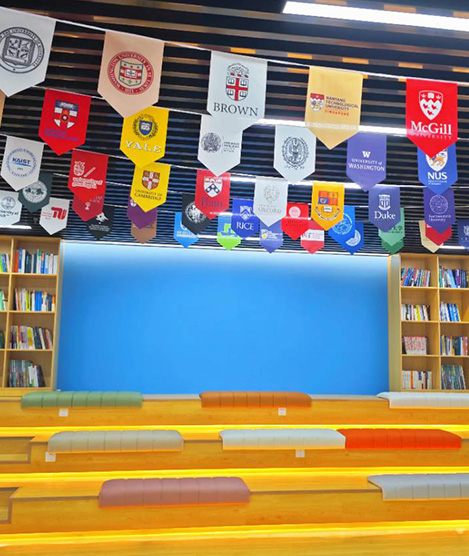
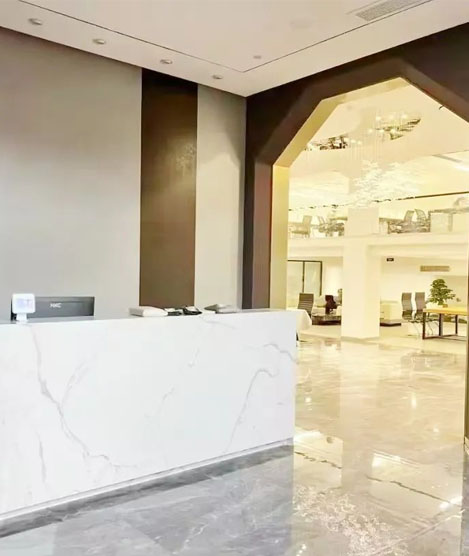
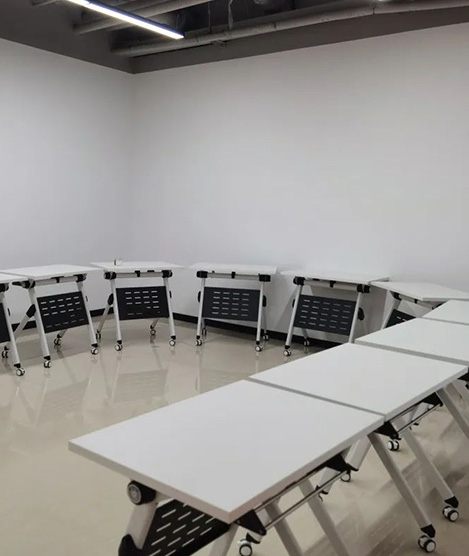
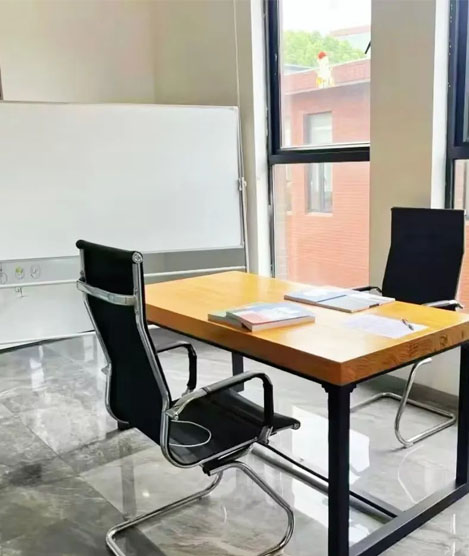
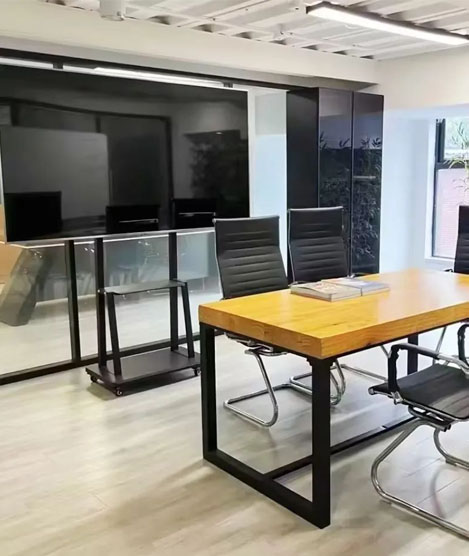
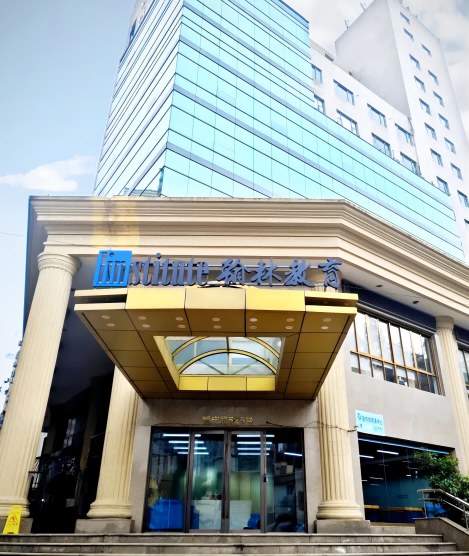
Teaching runs from Hanlin's own centres in Shanghai, Shenzhen, Chengdu and Hangzhou, and online for students elsewhere.

Talk to an advisor
Everything Hanlin does for BPA, in one conversation.
Entry, planning, coaching and the past papers. An advisor will tell you which of these a student actually needs, including when the answer is none of them.
Competition entry and planning
Which competitions suit this student, in what order, and by when - then we handle the registration, including the ones that can only be entered through a school or a centre.
Competition coaching
Taught by full-time subject tutors, on a course tier chosen by placement paper rather than by year group.
International curriculum tutoring
IB, AP, A-Level, IGCSE and the US high school curriculum, taught alongside school and timed around the exam calendar.
Competition past papers, free
A large library of past papers, mark schemes and syllabus breakdowns across every competition on this site. No charge and no enrolment.
Scan to add an advisor
Say which competition or course you are asking about. Replies in Chinese or English.
Or call +86 21 6352 6630FAQ
BPA, briefly answered.
What students and families ask before entering.
Is BPA the same as CBPA?
Yes. The competition operates in China under the CBPA name and both refer to Business Professionals of America.
What subjects can I enter?
At high school level: Java, SQL and Python programming; graphic design promotion; video production and computer animation; fundamental accounting, banking and finance, human resource management and entrepreneurship; and, in teams, financial analysis, economic research, small business management and global marketing. Middle school subjects include financial literacy, entrepreneurship exploration, prepared and extemporaneous speech, presentation management and video production.
What are the three ways to enter at high school level?
Objective Individual, an online multiple-choice test in either marketing or business management; Subjective Team, where a team submits a presentation video against one of five global subject themes; and BusinessPlus, an application route for information technology and design subjects.
What is the objective test like?
Sixty minutes, eighty multiple-choice questions, five marks each, with no penalty for a wrong or blank answer - 400 marks in total. Two sittings are offered and you choose one.
How big is a team?
The team rules say three to four students. The assessment section says exactly three. Confirm with the organiser before building a team of four.
Can my team come from different schools?
Yes, across schools, year groups and regions. A cross-school team names one affiliated school for team awards, while each member’s individual certificate shows their own school.
Does the middle school division reach the global stage?
The source says it does not, and then lists middle-school global-stage subjects and describes the division’s assessment as applying for one. This needs confirming with the organiser before you plan a season around it.
How do students advance?
Three ways. On score - the top 25% of Objective Individual entrants nationally, and the top ten Subjective Teams in each subject. By invitation card, allocated to schools in proportion to how many students they entered. Or from the waiting list, via a motivation letter judged alongside the preliminary score and how early it arrived.
What awards are given?
A participation certificate for everyone, and a study honour certificate for strong performers. Gold, silver and bronze are awarded nationally by proportion of entrants, then again regionally after the national winners are set aside.
Where and when is the global stage?
Two of them - the United States in May and Hong Kong in August. The published US location is inconsistent between Denver and Dallas, so confirm it.
How competitive is it?
The organiser cites a 60% award rate at the 2021 China preliminary and a 27% global advancement rate that year. Those figures are from 2021 and have not been updated in the published material.
Related
Other business and economics competitions.
What students enter alongside BPA.
BPA enquiries
The subject list is the reason to look at BPA.
Programming, video, animation and design sit next to accounting and marketing, and a student usually has one subject here that fits them far better than the others. Tell us what the student is good at and an advisor will point at the subject - and check the current team size and grade bands with the organiser before you register.