
Competitions · Computer science · Botball
Botball.
The only robotics competition here where you do not compete against anyone. Complete the required number of tasks and you advance - and every team that turns up takes an award home.

What makes it different
Nobody competes against anybody.
This is the defining feature of Botball and the reason it suits a particular kind of student.
Every event is non-competitive
Competitors challenge themselves rather than each other. Completing the required number of tasks is what earns advancement - not beating another team.
And every team receives an award
Beyond the champion, runner-up and third place, the remaining teams divide into first, second and third prizes at roughly 20%, 30% and 50%. No team leaves with nothing.
Which changes who it suits
A student who freezes in head-to-head competition, or a young team entering its first event, has a very different experience here from a knockout format.
But the task changes on the day
The year’s challenge is published at the start of the year. At the venue the committee announces an adjusted version, and teams must modify robot and program on the spot to complete it.
At a glance
What the programme is.
Botball originated as a youth team robotics programme at MIT and now runs across the United States, Europe and Asia, with teams from Austria, Poland, Qatar, the UAE, China, Egypt, India, Japan, Kuwait, Zimbabwe and Mexico among others.
- Origin
- MIT - the source counts eighteen years of history without dating it
- Recognition
- Recommended on MIT’s own site and recognised by NASA
- China organiser
- ITCCC, the International Teenager Competition and Communication Center, with the Botball international committee. China was its third overseas region
- In the Chinese system
- ITCCC works with the Ministry of Education’s central audio-visual education body, and Botball is included in the National Primary and Secondary School Computer Production Activity
- Age range
- 5 to 18, across the junior and secondary programmes
- Junior teams
- 2 to 3 students
- Asia rounds
- Two a year - a winter session and a summer session
- Junior entry route
- Primary teams must qualify through the Junior Botball Challenge open challenge to be invited to the Asia round
- Fee covers
- Registration, the competition itself, insurance and two days of lunch. Accompanying teachers and parents are not charged to attend but arrange their own accommodation and pay separately for lunch
- Alongside the competition
- The Global Conference on Educational Robotics, run by KIPR and the Botball committee at the same time and place as the international event, and described as the largest international conference in youth robotics education
The secondary format
Three rounds, and losing puts you in an alliance.
The secondary programme is structured so that a team knocked out early still competes for the rest of the day.
Seeding round
Teams run their robot without interference. A high score secures a better position going into the knockout.
Knockout round
Single elimination against other teams, seeded on the earlier scores.
Alliance round
Teams eliminated in the knockout enter a draw pool and are randomly paired into alliances to complete tasks together. Losing early means working with a team you have never met, which is its own skill.
And all three are awarded
National and international events award separately in the seeding, knockout and alliance rounds, alongside a number of judges’ choice awards.
What the challenge involves
A field task, and then defending your design.
Half of a Botball entry is not the robot at all, which is easy to underestimate.
The field task
The robot completes the field challenge fully autonomously, scoring points. Teams design, build and program it themselves.
And the engineering report
Teams write an engineering report and defend it in person. Assessors question the submitted design professionally, which rewards understanding your own robot rather than having built one.
Adjusted in front of you
Because the on-site task differs from the published one, teams watch other teams’ strategies between rounds and adjust in real time. Live analysis and quick decisions are what the organisers say the format develops.
Check the equipment rule
The source says equipment is unrestricted in one place and that Botball’s official designated equipment must be used in another. Confirm before buying anything - the difference is substantial.
The Junior Botball Challenge
Six levels, from age five upward.
JBC is an open challenge: teams complete tasks drawn on site from a published bank, earn a Future Engineer certificate, and qualify for the Asia round. Four tasks are drawn each day plus one live task, and completing all of them earns the Excellence in Engineering trophy.
| Level | Age | Equipment | To advance |
|---|---|---|---|
| Enlightenment A | 6 and under | Large blocks, LEGO or similar | 1 task from a bank of 3. The live task is identical to the bank task |
| Enlightenment B | 8 and under | Motor-driven construction parts, such as LEGO 9686 | 1 task from a bank of 3. The live task is identical to the bank task |
| Entry | 8 and under | A controller with no storage function - WeDo 2.0, Spike Essential 45345, VEX GO, Matatalab and similar | 2 tasks from a bank of 8. Live tasks are slightly adjusted |
| Rookie | Primary school | No requirement | 2 tasks from a bank of 8. Live tasks are slightly adjusted |
| Intermediate | Primary school | No requirement | 2 tasks from a bank of 8. Live tasks are slightly adjusted |
| Advanced | Primary school | No requirement | 2 tasks from a bank of 8. Live tasks are slightly adjusted |
The source describes JBC as having five levels while listing six. It also gives the age range as 5 to 12 in one place and 5 to grade 3 for the two new Enlightenment levels in another. Confirm the current structure before choosing a level.
What each level expects
The skills ladder underneath the levels.
JBC publishes what a team at each level should be able to do, which makes placing a child straightforward.
Enlightenment - building and cooperating
Constructing with large blocks, or assembling a powered mechanical arm and using it with a partner. The skills named are engineering thinking within limited resources, creativity, teamwork and communication.
Entry - controlling and debugging
Using any programming method to make a robot go forward, back and turn; breaking a simple movement into sub-tasks; and debugging a program independently.
Rookie and Intermediate - building and sensing
Constructing a simple autonomous wheeled robot and adjusting its structure; then controlling continuous movements, using a single sensor, and picking up simple objects.
Advanced - strategy and multiple sensors
Analysing a task and forming a strategy; precise movement; line-following and obstacle avoidance using several sensors; and writing programs clear enough to maintain.
Preparation
How Hanlin prepares a Botball team.
A non-competitive format with an on-the-day task change rewards preparation that most teams skip.
Rehearsing the on-site adjustment
The published task and the task you face differ. Teams practise modifying a working robot and program under time pressure, which is a different exercise from building one.
Writing the engineering report properly
Half the challenge is a written report and a technical defence. Teams that can explain why they made each choice do markedly better than teams that only built well.
Practising the alliance round
Teams eliminated in the knockout are paired randomly with strangers. Working with an unfamiliar team on a shared task is worth rehearsing rather than discovering.
And choosing the JBC level honestly
Each level publishes the skills it expects. Entering above a child’s level trades a certain award for a likely disappointment, in a competition designed so that nobody has to lose.
Why Hanlin
Preparation for Botball at Hanlin is taught by full-time subject tutors, on a course tier chosen by placement paper rather than by year group.
Programme formats
Five ways this is taught.
Group size is the whole difference between these. It decides how much of the tutor's attention a student gets and how far the course can bend to them, so it is worth choosing rather than accepting.
| Format | Group size | What it suits |
|---|---|---|
| One-to-one | One student | Content, pace and emphasis set by what this student actually needs rather than by a syllabus. The only format that can be rebuilt mid-course. |
| Small group | Three to eight | Opens at three. Frequent discussion, and the tutor can slow down or move on according to what the group has absorbed. Most students chasing a higher award are taught in this one. |
| Class | Eight to twelve | Taught by the subject lead or a medal coach. Less back-and-forth, so it suits a student who will say when something is unclear. |
| Large class | Ten to twenty | For students in the middle of the placement range, and a way to try a competition before committing. Students often move to a small group or to one-to-one afterwards. |
| Past-paper class | No cap | Past papers worked through in sequence in the weeks before the sitting. Free to students already enrolled. |
Course length for Botball is set after a placement paper. The gap between where a student is and what the paper asks for is what the course has to close, and that gap is not the same for two students in the same year group.
How it runs
Six steps, four people on your side.
The same process for every student, so that nothing depends on one tutor remembering to do it.
 Step 1
Pre-course assessment
A placement paper before anything is booked, so the course tier is chosen on evidence rather than on a year group.
 Step 2
Tutor matching
A subject tutor is matched to the result, and their full background is provided before you agree to it.
 Step 3
Plan and group
A study group opens with four people on one student: the tutor, a planner, a supervisor and an academic manager.
 Step 4
Scheduled teaching
The teaching office sets the timetable around the competition date and school term, and teaching begins.
 Step 5
After-class reports
What was covered, and how the student handled it, reported after every lesson.
 Step 6
Homework follow-up
The teaching assistant and the form teacher both check that homework is done, which is where most preparation quietly fails.
Free resource pack
Season and build pack
The same material our own Botball students work from. Scan the code, say what you need, and an advisor sends it.

Tell an advisor which competition and year group, and the material comes back the same day. Free, and you do not have to enrol in anything. If we do not already hold what you need, we will go and find it.
- PDFPast season materials and game manuals
- PDFThe judging rubric, broken down by what earns each point
- DOCXBuild log and documentation checklist
- PDFEntry checklist and the dates for the current cycle
Teaching team
Who would teach it.
Three of the twenty-two tutors on the published Hanlin roster - the ones whose subject this is.

Luo
Bachelor's and master's in computer science from the University of California and ten years in the United States. Works close to the hardware, and teaches for independent problem solving rather than pattern recall.

Tan
Master's in data science from the University of Sydney after a statistics degree at Simon Fraser University, graduating in the top 5% with repeated chancellor's honours; A-Levels at a Cambridge international school, and formerly a data analyst at Tencent. An AMC-accredited coach, a College Board-accredited AP teacher, and holder of a Math League excellent-teacher award.

He
A Cambridge master's after a computer science degree with a mathematics minor at the University of Nebraska-Lincoln, and a US high school GPA of 4.13. Six years overseas and teaches entirely in English, across AMC, Math League, AP Computer Science and AP Calculus.
Where it is taught
Hanlin learning centres.
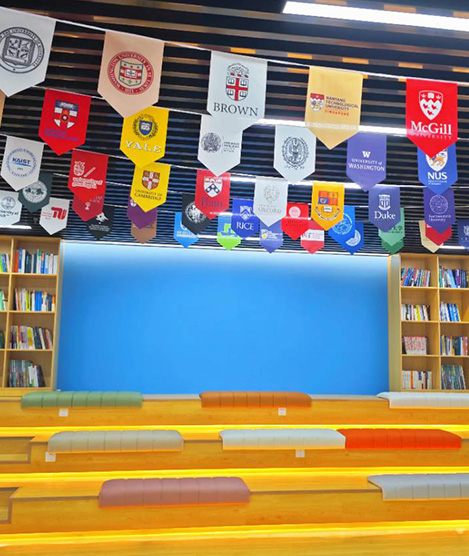
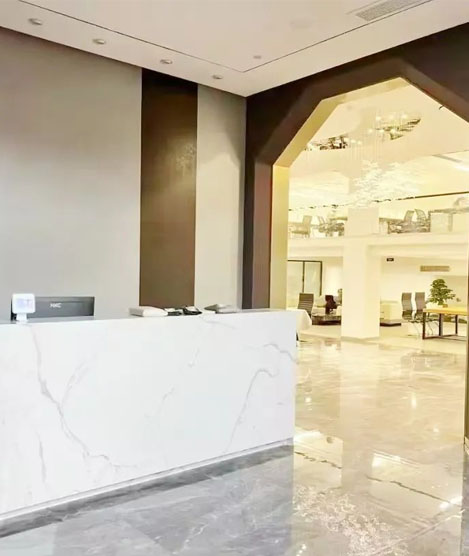
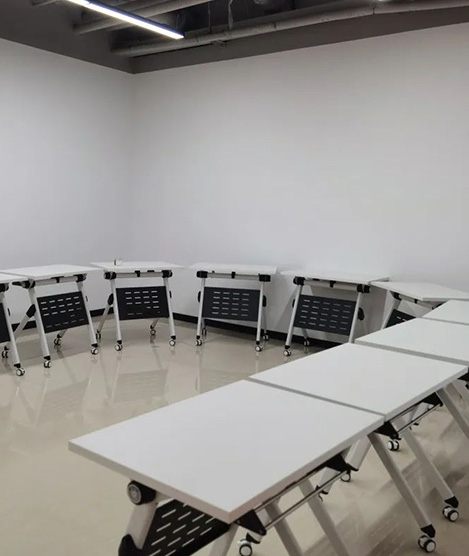
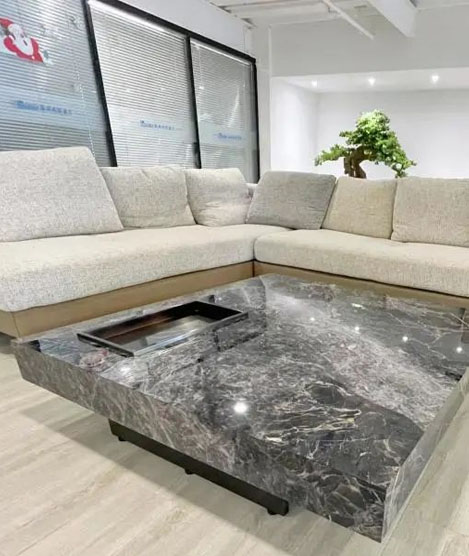
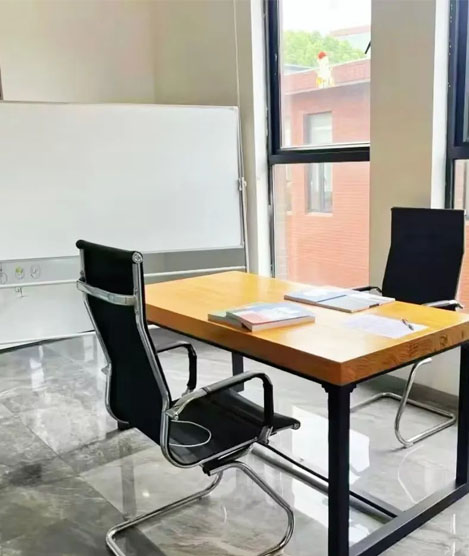
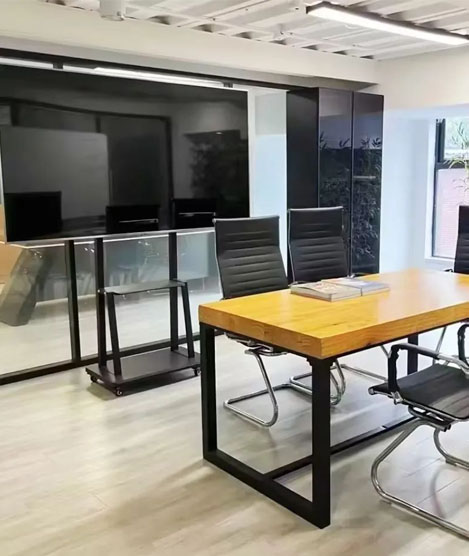
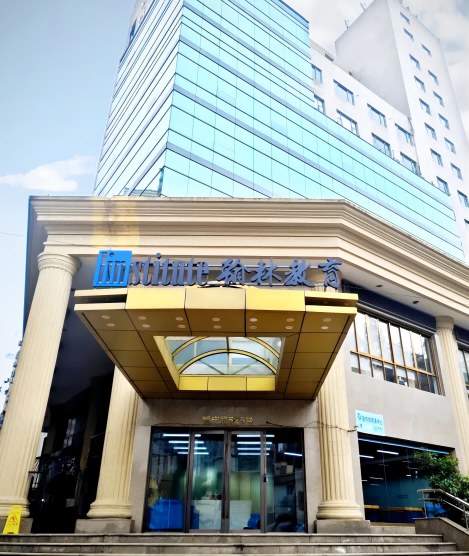
Teaching runs from Hanlin's own centres in Shanghai, Shenzhen, Chengdu and Hangzhou, and online for students elsewhere.
Talk to an advisor
Everything Hanlin does for Botball, in one conversation.
Entry, planning, coaching and the past papers. An advisor will tell you which of these a student actually needs, including when the answer is none of them.
Competition entry and planning
Which competitions suit this student, in what order, and by when - then we handle the registration, including the ones that can only be entered through a school or a centre.
Competition coaching
Taught by full-time subject tutors, on a course tier chosen by placement paper rather than by year group.
International curriculum tutoring
IB, AP, A-Level, IGCSE and the US high school curriculum, taught alongside school and timed around the exam calendar.
Competition past papers, free
A large library of past papers, mark schemes and syllabus breakdowns across every competition on this site. No charge and no enrolment.
Scan to add an advisor
Say which competition or course you are asking about. Replies in Chinese or English.
Or call +86 21 6352 6630FAQ
Botball, briefly answered.
What students, teachers and families ask before entering.
Do teams compete against each other?
In the junior programme, no - every event is non-competitive, and completing the required tasks earns both the award and advancement. The secondary programme does include a knockout, but teams eliminated there continue in an alliance round.
Does every team get an award?
Yes. Beyond the champion, runner-up and third place, the remaining teams divide into first, second and third prizes at roughly 20%, 30% and 50%.
Who can enter?
Students aged 5 to 18. The Junior Botball Challenge covers the younger levels in teams of two or three; the secondary programme runs the seeding, knockout and alliance format.
What equipment do we need?
The source is contradictory here - it says equipment is unrestricted in one place and that Botball’s official designated equipment is required in another. Confirm with the organiser before purchasing anything.
How does the Junior Botball Challenge work?
Four tasks are drawn from a published bank each day, plus one live task. Completing all of them earns the Excellence in Engineering trophy; teams that complete fewer are ranked by how many they finished. Completing the open-challenge tasks earns a Future Engineer certificate and qualifies a team for the Asia round.
What is the engineering report?
A written account of the robot’s design, defended in person. Assessors question the team about its design decisions, and this counts alongside the field score.
Is the task published in advance?
The year’s challenge is published at the start of the year, but the committee announces an adjusted version at the venue. Teams must modify their robot and program on the day.
What does the entry fee cover?
Registration, the competition, insurance and two days of lunch. Accompanying teachers and parents attend without charge but arrange their own accommodation and pay separately for lunch.
What is GCER?
The Global Conference on Educational Robotics, run by KIPR and the Botball committee at the same time and place as the international event. The organisers describe it as the largest international conference in youth robotics education.
Related
Other robotics competitions.
What teams enter alongside Botball.
Botball enquiries
A robotics competition where nobody has to lose.
Every junior event is non-competitive and every team takes an award home, which makes this the gentlest entry into robotics on this site - and the on-the-day task change still makes it a real challenge. Tell us the child’s age and an advisor will pick the level.