
Competitions · Mathematics · BMO
BMO, the British Mathematical Olympiad.
The hardest contest UKMT runs, and the one through which Britain selects its International Mathematical Olympiad team. Around a thousand students sit Round 1 each year; the top tenth go on to Round 2. Every question asks for a proof, so nothing here can be guessed.

At a glance
What BMO is, and how you get into it.
UKMT runs a full ladder of contests - JMC, IMC and SMC for broad participation, then BMO to select a national team. BMO is the top of it.
- Organiser
- The United Kingdom Mathematics Trust, founded in 1996 and the largest organiser of mathematics competitions in Britain
- Who sits it
- Senior secondary students, in years 9 to 12. Around a thousand are invited each year
- Entry in the UK
- Only students with a strong result on the Senior Mathematical Challenge qualify for Round 1
- Entry in China
- Students in China may register for Round 1 directly, without needing to qualify through SMC first
- Two rounds
- Round 1 in November and Round 2 in January. Only the top 10% of Round 1 are invited to Round 2
- Format
- An individual written paper. Round 1 is six questions in 3.5 hours; Round 2 is four questions in the same time
- Marking
- Every question is worth 10 marks and every question asks for a proof. A blank answer scores nothing, and partial credit depends on how clearly the mathematics is presented
- Language
- English only, for reading and for writing solutions
- What it selects for
- UKMT chooses the strongest Round 2 performers for the national mathematical olympiad training camp, and from there the British team for the IMO
- The difference from SMC
- SMC is multiple choice. BMO asks students to set out every step of an argument, which tests mathematical depth rather than speed and recognition
How to answer it
The advice the organisers actually give.
BMO rewards a different exam technique from every contest below it, and the guidance is explicit enough to be worth following literally.
One finished solution beats three attempts
The organisers state that a complete solution earns more credit than several unfinished ones. With six questions and 3.5 hours, the arithmetic of that is stark: committing properly to three problems will usually outscore touching all six.
Draft first, then write
The recommended approach is to work the problem out in rough and only then write up the best attempt. Marks follow the clarity of the presentation, so the written version is a separate piece of work from the solving.
A blank scores nothing at all
There is no participation credit inside a question. Anything you can establish - a special case, a reduction, a clean statement of what remains - is worth writing down, because the marker can only reward what is on the page.
Fully simplified answers
Where a question ends in a value, it has to be reduced properly. An unsimplified expression is treated as an unfinished answer, which is an avoidable way to lose marks on a problem already solved.
The two rounds
Round 1 and Round 2 compared.
Round 2 has fewer questions in the same time, which is the clearest signal of how much harder each one is.
| Round 1 | Round 2 | |
|---|---|---|
| When | November, 17:00-20:30 | January, 17:00-20:30 |
| Registration closes | Roughly ten days beforehand | Roughly ten days beforehand |
| Who can sit it | Years 9 to 12. In the UK, strong SMC performers; in China, open registration | The top 10% of Round 1 |
| Questions | 6, at 10 marks each | 4, at 10 marks each |
| Duration | 3.5 hours | 3.5 hours |
| Awards | Gold, silver and bronze on UK ranking, plus Distinction and Merit on score | Distinction and Merit |
| What follows | An invitation to Round 2 | Selection for the national training camp, and the IMO team |
The 2025-26 cycle ran Round 1 on 20 November 2025 and Round 2 on 22 January 2026. The pattern repeats annually; confirm the current dates before planning.
Round 1 awards
Medals by rank, certificates by score.
The three medals are decided on position within the UK field rather than on a mark, while Distinction and Merit are decided on score. Candidates in China are judged against the published UK lines.
Round 1 cutoffs
Where the lines fell, 2020 to 2025.
The spread across these six years is wide - the Distinction line has ranged from 18 to 30 out of 60 - which is a reminder that the paper’s difficulty moves a great deal from year to year.
| Year | Merit | Distinction | Round 2 invitation | Bronze | Silver | Gold |
|---|---|---|---|---|---|---|
| 2025 | 7 | 18 | Y13 31 · Y12 30 · Y11 27 · Y10 27 | 31 | 37 | 48 |
| 2024 | 10 | 26 | Y13 43 · Y12 40 · Y11 38 · Y10 38 | 43 | 48 | 50 |
| 2023 | 13 | 30 | Y13 43 · Y12 42 · Y11 39 · Y10 37 | 44 | 49 | 58 |
| 2022 | 12 | 25 | Y13 38 · Y12 36 · Y11 34 · Y10 33 | 39 | 43 | 51 |
| 2021 | 11 | 21 | Y13 33 · Y12 32 · Y11 31 · Y10 29 | 33 | 38 | 45 |
| 2020 | 10 | 18 | Y13 27 · Y12 26 · Y11 24 · Y10 not published | 29 | 34 | 40 |
The Round 2 invitation threshold is set by year group, with younger candidates invited on a lower mark. In 2022, for reference, Distinction was reached at 25 by roughly the top 26% of entrants and Merit at 12 by roughly the top 66%.
Round 2 cutoffs
The lines on the harder paper.
Round 2 is marked out of 40 rather than 60, and only students already in the top tenth of Round 1 are sitting it - so a Distinction here is a considerably scarcer thing than the number suggests.
| Year | Merit | Distinction |
|---|---|---|
| 2025 | 8 | 18 |
| 2024 | 6 | 15 |
| 2023 | 7 | 11 |
| 2022 | 10 | 17 |
| 2021 | 6 | 18 |
| 2020 | 7 | 15 |
In 2022, Distinction at 17 went to roughly the top 25% of Round 2 entrants and Merit at 10 to roughly the top 48% - meaning about half of an already highly selected field takes an award away.
Preparation
How Hanlin prepares students for BMO.
Students reach BMO from multiple-choice contests, and the transition is the whole difficulty. Nothing about answering AMC or SMC prepares a student to write a proof under time pressure.
Writing proofs, in English
The paper is in English and asks for complete written arguments. Both halves of that are trained deliberately: the structure of a rigorous proof, and the vocabulary to set one out clearly enough to earn the partial credit.
Choosing three questions, not six
Because a finished solution outscores several fragments, the first decision on the day is which problems to commit to. Students practise reading a paper, judging quickly, and then not looking back.
Olympiad technique, not more syllabus
BMO is built on standard school mathematics used at depth: invariants, extremal arguments, construction, induction and clean casework. Preparation adds methods rather than topics.
A route in from SMC
Students in China can enter Round 1 directly, but sitting SMC first is still the natural preparation - it establishes the level honestly and, for anyone competing from the UK, it is the only way in.
Why Hanlin
Preparation for BMO at Hanlin is taught by full-time subject tutors, on a course tier chosen by placement paper rather than by year group.
Programme formats
Five ways this is taught.
Group size is the whole difference between these. It decides how much of the tutor's attention a student gets and how far the course can bend to them, so it is worth choosing rather than accepting.
| Format | Group size | What it suits |
|---|---|---|
| One-to-one | One student | Content, pace and emphasis set by what this student actually needs rather than by a syllabus. The only format that can be rebuilt mid-course. |
| Small group | Three to eight | Opens at three. Frequent discussion, and the tutor can slow down or move on according to what the group has absorbed. Most students chasing a higher award are taught in this one. |
| Class | Eight to twelve | Taught by the subject lead or a medal coach. Less back-and-forth, so it suits a student who will say when something is unclear. |
| Large class | Ten to twenty | For students in the middle of the placement range, and a way to try a competition before committing. Students often move to a small group or to one-to-one afterwards. |
| Past-paper class | No cap | Past papers worked through in sequence in the weeks before the sitting. Free to students already enrolled. |
Course length for BMO is set after a placement paper. The gap between where a student is and what the paper asks for is what the course has to close, and that gap is not the same for two students in the same year group.
How it runs
Six steps, four people on your side.
The same process for every student, so that nothing depends on one tutor remembering to do it.
 Step 1
Pre-course assessment
A placement paper before anything is booked, so the course tier is chosen on evidence rather than on a year group.
 Step 2
Tutor matching
A subject tutor is matched to the result, and their full background is provided before you agree to it.
 Step 3
Plan and group
A study group opens with four people on one student: the tutor, a planner, a supervisor and an academic manager.
 Step 4
Scheduled teaching
The teaching office sets the timetable around the competition date and school term, and teaching begins.
 Step 5
After-class reports
What was covered, and how the student handled it, reported after every lesson.
 Step 6
Homework follow-up
The teaching assistant and the form teacher both check that homework is done, which is where most preparation quietly fails.
Free resource pack
Past papers and preparation pack
The same material our own BMO students work from. Scan the code, say what you need, and an advisor sends it.

Tell an advisor which competition and year group, and the material comes back the same day. Free, and you do not have to enrol in anything. If we do not already hold what you need, we will go and find it.
- PDFPast papers, every year the organiser has released
- PDFWorked solutions, where the organiser publishes them
- PDFThe syllabus on one page - every topic, and how heavily it is examined
- PDFEntry checklist and the dates for the current cycle
Teaching team
Who would teach it.
Three of the twenty-two tutors on the published Hanlin roster - the ones whose subject this is.

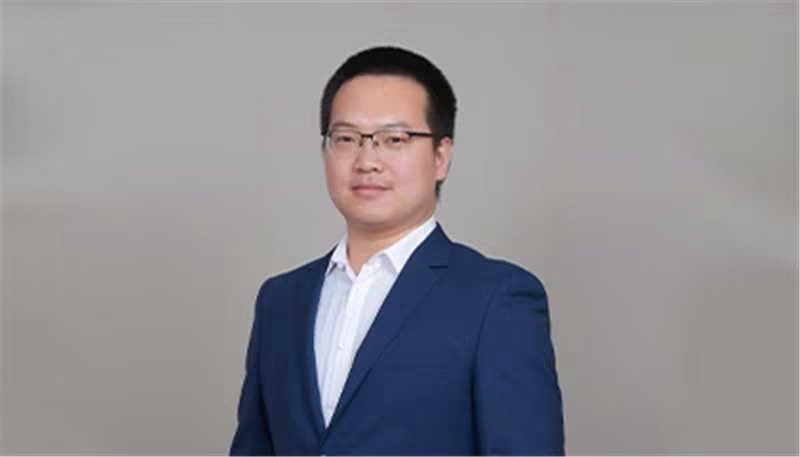
Dr Zhang
PhD in theoretical mathematics from the University of Rochester and a postdoctoral fellow at the Shanghai Center for Mathematical Sciences at Fudan. An AMC-accredited coach, ASDAN-accredited for DMM and ITCCC, and an accredited UKMT BMO2 and PUMaC coach. His students have gone on to read mathematics and physics at Harvard, MIT, Princeton, Caltech and Cambridge.
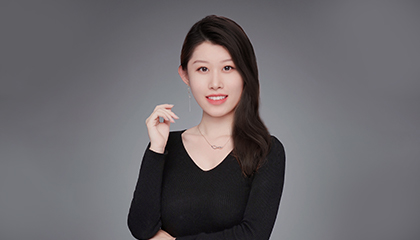
Dr Zhuang
PhD in mathematics from the University of Denver, working in mathematical logic, after a first degree in applied mathematics at Southeast University. A repeat conference speaker on his research, with three years lecturing and assisting on undergraduate mathematics at Denver.
He
A Cambridge master's after a computer science degree with a mathematics minor at the University of Nebraska-Lincoln, and a US high school GPA of 4.13. Six years overseas and teaches entirely in English, across AMC, Math League, AP Computer Science and AP Calculus.
Student results
What Hanlin students got.
Taken from Hanlin's published record of student honours and rewritten in English. Figures are as the organisers reported them.
BMO
- 20252 Distinctions and 3 Merits
- 20248 students advanced to Round 2, taking Merits and Distinctions
Earlier years
- 20202 students reached Round 2, one of them placing in the global top 20
The full record, across every subject and year, is on the student honours page.
Where it is taught
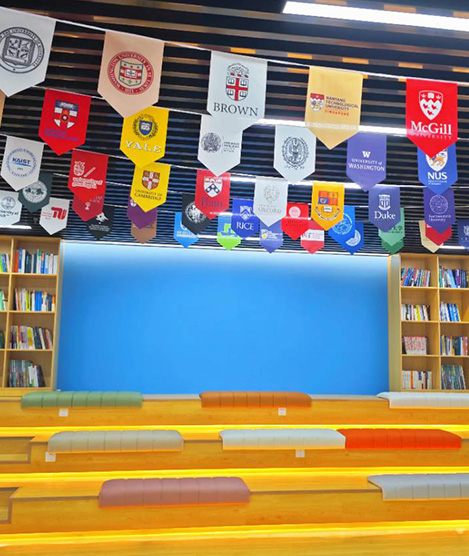
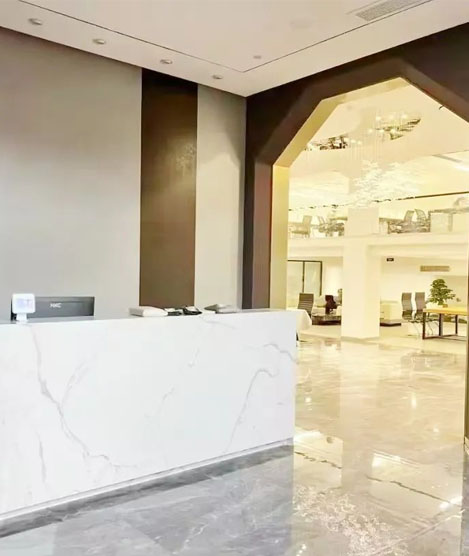
Hanlin learning centres.
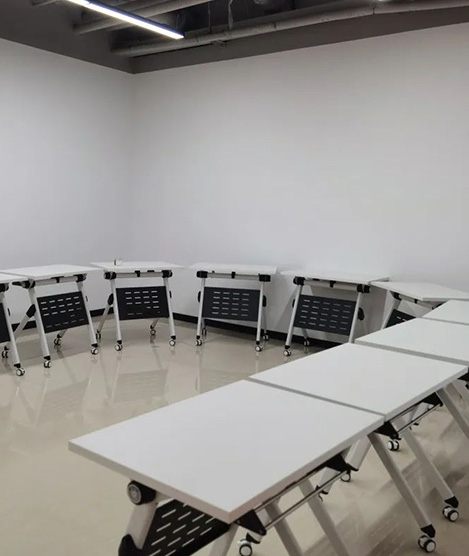
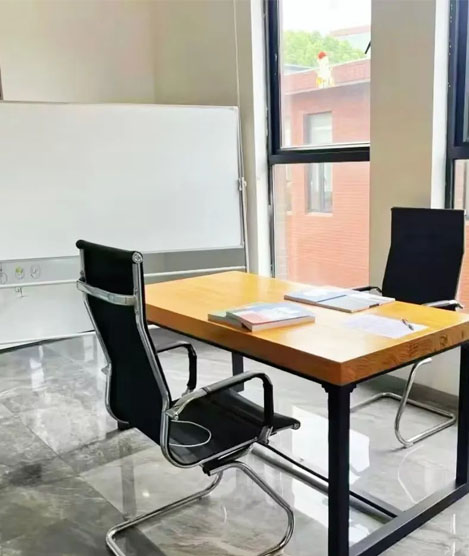
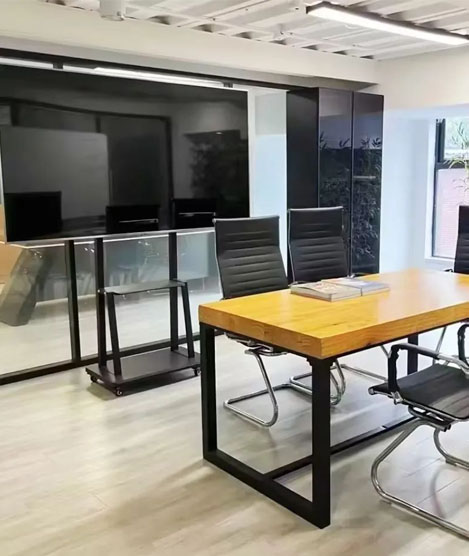
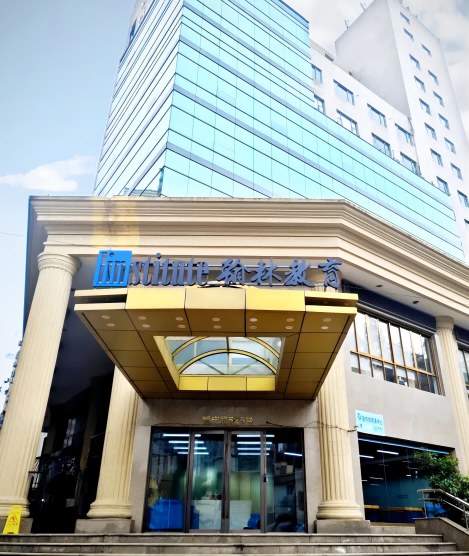
Teaching runs from Hanlin's own centres in Shanghai, Shenzhen, Chengdu and Hangzhou, and online for students elsewhere.

Talk to an advisor
Everything Hanlin does for BMO, in one conversation.
Entry, planning, coaching and the past papers. An advisor will tell you which of these a student actually needs, including when the answer is none of them.
Competition entry and planning
Which competitions suit this student, in what order, and by when - then we handle the registration, including the ones that can only be entered through a school or a centre.
Competition coaching
Taught by full-time subject tutors, on a course tier chosen by placement paper rather than by year group.
International curriculum tutoring
IB, AP, A-Level, IGCSE and the US high school curriculum, taught alongside school and timed around the exam calendar.
Competition past papers, free
A large library of past papers, mark schemes and syllabus breakdowns across every competition on this site. No charge and no enrolment.
Scan to add an advisor
Say which competition or course you are asking about. Replies in Chinese or English.
Or call +86 21 6352 6630FAQ
BMO, briefly answered.
What students and families ask before entering.
Can Chinese students enter BMO directly?
Yes. In the United Kingdom, Round 1 is open only to students with a strong Senior Mathematical Challenge result. Students in China may register for Round 1 directly without qualifying through SMC.
How do I qualify for Round 2?
By finishing in the top 10% of Round 1. The threshold is set by year group, with younger candidates invited on a lower mark - in 2025 the lines were 31 for Year 13 and 27 for Years 10 and 11.
How is BMO marked?
Every question is worth 10 marks and asks for a proof. A blank scores nothing, and partial credit is awarded according to how clearly the mathematics is set out. Answers that end in a value must be fully simplified.
Should I attempt every question?
Generally not. The organisers state that one complete solution earns more credit than several unfinished attempts, and with six questions in 3.5 hours the arithmetic favours committing properly to a few.
What score wins an award?
Gold, silver and bronze go to the UK top 20, 21st to 50th, and 51st to 100th respectively. Distinction and Merit are decided on score, and both lines move each year - Distinction has ranged from 18 to 30 out of 60 since 2020.
How hard is it compared with SMC?
Not comparable. SMC is a multiple-choice paper where recognition and speed carry you a long way; BMO requires a written argument for every mark. It is the hardest contest UKMT runs.
Is the paper in English?
Yes, and unlike the UKMT challenges there is no bilingual version. Students both read the problems and write their proofs in English.
What happens after Round 2?
UKMT selects the strongest Round 2 performers for the national mathematical olympiad training camp, and the British team for the International Mathematical Olympiad is chosen from there.
Related
The series BMO sits at the top of.
The UKMT challenges below it, and comparable olympiad routes elsewhere.
BMO enquiries
The gap to bridge is proof writing, not syllabus.
Most students arrive at BMO able to solve more than they can write down. Tell us where the student sits on SMC or AMC, and an advisor will say honestly whether Round 1 is worth entering this November or the one after.