
Competitions · Business and economics · Blue Ocean
The Blue Ocean Entrepreneurship Competition.
A five-minute video on YouTube, and that is the whole entry. No travel, no fee at the door, no team required - which is why more than twenty thousand students across a hundred and seventy countries file one every year.
What it is
Find the market nobody is in.
The competition takes its name and its brief from Blue Ocean Strategy, the book by Chan Kim and Renée Mauborgne. The distinction it asks for is specific, and entries that miss it lose on the rubric rather than on the idea.
Uncontested space, not a better product
The brief is to find a pressing problem nobody has solved, or a market space nobody is exploiting - and then build a business around something the world has not seen. Competing better in an existing market is the thing the framework is against.
Entirely online
Every part of the competition runs remotely. There is no travel, which is unusual at this scale and removes the cost that rules out most international entries.
Alone or with up to four friends
Individual entry is normal here. Teams are capped at five, and every member must be aged 14 to 18 at registration.
And the entry is one video
Five minutes, recorded to the organiser’s template, uploaded to YouTube. You submit the link and the file. That is the whole submission.
At a glance
The essentials.
Blue Ocean is one of the largest high school entrepreneurship competitions running. The organisers report more than 23,000 participants from 173 countries and regions, across more than 9,000 schools and all fifty US states - though note that an earlier paragraph on the same source gives 146 countries and 46 states.
- Who can enter
- High school students anywhere, aged 14 to 18 at registration
- Team
- Individually, or in a team of up to five
- What you submit
- A five-minute video, uploaded to YouTube, plus the file itself
- Structure
- Use the organiser’s Blue Ocean template to build the video
- Preparation supplied
- A Blue Ocean mini-course and a webinar, released on registration
- Where it runs
- Entirely online
- Submission deadline
- Late February
- Top 100 announced
- Early April
- Top 30 announced
- Late April
- Top 10 announced
- Early May
- Awards announced
- Mid-May
How to enter
Eight steps, in the organiser’s order.
Blue Ocean publishes the sequence, and it is worth following rather than improvising - two of the steps are about learning the framework the rubric is built on.
Register early
Registration unlocks the preparation material and keeps you informed. Use a personal email address rather than a school one.
Watch the webinar and take the mini-course
Both explain Blue Ocean thinking, which is what the judges are assessing against. Skipping this is the most common reason a good idea scores badly.
Study past winners
Previous winning videos are published. They are the clearest available statement of the standard.
Find an unsolved problem
A real-world problem nobody has addressed, or a market space nobody occupies. Then build a business idea around a solution.
Check it against the rubric
Before recording anything. The rubric is published, and an idea that does not meet the Blue Ocean criteria cannot be rescued by production quality.
Record five minutes to the template
The organiser supplies the structure. Five minutes is the limit.
Upload and declare
To YouTube, before the deadline, submitting both the link and the video file.
Campaign for the People’s Choice
Ask friends, classmates and family to vote. This is an explicit step in the organiser’s own instructions - see the note on that award below.
The awards
Four cash awards, and one of them is a popularity contest.
The award structure is worth reading closely, because the ranking of the prize money is not the ranking of the achievement.
| Award | Value | How it is decided |
|---|---|---|
| First place | $1,000 | On the judging rubric |
| Second place | $750 | On the judging rubric |
| Third place | $500 | On the judging rubric |
| People’s Choice | $750 | YouTube likes combined with a judges’ vote |
| Certificate of Participation | - | Every entrant who submits a proposal |
| Certificate of Outstanding Achievement | - | The top ten |
Note that the People’s Choice award matches second place and exceeds third, and that soliciting votes is step eight of the organiser’s own instructions. A student with a large network is at a real advantage in that award and at none in the other three. Judge a Blue Ocean result accordingly - a top ten placing is a judged outcome; a People’s Choice win is partly a measure of reach.
The school awards
Schools are paid too - and one award pays for volume.
Blue Ocean runs a parallel set of awards for schools and teachers, which is worth understanding if your school is encouraging entry.
$1,000 for the most winners in the top 25
Awarded to the school with the largest number of individuals or teams placing in the top 25. This one tracks quality.
$1,000 each to the top five schools by submissions
Awarded on the number of entries filed, not on how they place. A school can win it by entering everyone.
A large touchscreen for the best competition school
A seventy-five-inch touchscreen display goes to the school judged best overall in the competition.
And certificates for teachers
Certificates of outstanding achievement for selected Blue Ocean champion teachers, and certificates of commendation for schools supporting student entrepreneurship.
Preparation
How Hanlin prepares a Blue Ocean entry.
Five minutes of video is a brutal constraint, and it is where most entries are won or lost.
Finding genuine uncontested space
The rubric rewards a market nobody occupies. Most entries describe a better version of something that exists, which is the opposite of the framework. Establishing that nothing comparable exists is research, and it takes time.
Scripting to five minutes
Roughly seven hundred and fifty words spoken. The problem, the idea, why it is uncontested, and how it makes money all have to fit. Writing it as a script rather than speaking from notes is what makes it fit.
Producing it properly
The entry is a video and it is judged as one. Clear audio, a visible speaker and a structure that follows the template beat production polish every time.
And working from the rubric backwards
It is published before you start. Building the video against the criteria rather than checking it afterwards is the difference between the top 100 and the top 10.
Why Hanlin
Preparation for Blue Ocean at Hanlin is taught by full-time subject tutors, on a course tier chosen by placement paper rather than by year group.
Programme formats
Five ways this is taught.
Group size is the whole difference between these. It decides how much of the tutor's attention a student gets and how far the course can bend to them, so it is worth choosing rather than accepting.
| Format | Group size | What it suits |
|---|---|---|
| One-to-one | One student | Content, pace and emphasis set by what this student actually needs rather than by a syllabus. The only format that can be rebuilt mid-course. |
| Small group | Three to eight | Opens at three. Frequent discussion, and the tutor can slow down or move on according to what the group has absorbed. Most students chasing a higher award are taught in this one. |
| Class | Eight to twelve | Taught by the subject lead or a medal coach. Less back-and-forth, so it suits a student who will say when something is unclear. |
| Large class | Ten to twenty | For students in the middle of the placement range, and a way to try a competition before committing. Students often move to a small group or to one-to-one afterwards. |
| Past-paper class | No cap | Past papers worked through in sequence in the weeks before the sitting. Free to students already enrolled. |
Course length for Blue Ocean is set after a placement paper. The gap between where a student is and what the paper asks for is what the course has to close, and that gap is not the same for two students in the same year group.
How it runs
Six steps, four people on your side.
The same process for every student, so that nothing depends on one tutor remembering to do it.
 Step 1
Pre-course assessment
A placement paper before anything is booked, so the course tier is chosen on evidence rather than on a year group.
 Step 2
Tutor matching
A subject tutor is matched to the result, and their full background is provided before you agree to it.
 Step 3
Plan and group
A study group opens with four people on one student: the tutor, a planner, a supervisor and an academic manager.
 Step 4
Scheduled teaching
The teaching office sets the timetable around the competition date and school term, and teaching begins.
 Step 5
After-class reports
What was covered, and how the student handled it, reported after every lesson.
 Step 6
Homework follow-up
The teaching assistant and the form teacher both check that homework is done, which is where most preparation quietly fails.
Free resource pack
Case and submission pack
The same material our own Blue Ocean students work from. Scan the code, say what you need, and an advisor sends it.

Tell an advisor which competition and year group, and the material comes back the same day. Free, and you do not have to enrol in anything. If we do not already hold what you need, we will go and find it.
- PDFPast cases and question sets
- PDFA worked example of a full submission
- PDFEvent categories and the judging criteria, broken down
- PDFEntry checklist and the dates for the current cycle
Teaching team
Who would teach it.
Three of the twenty-two tutors on the published Hanlin roster - the ones whose subject this is.

Bai
Master's in social entrepreneurship from Hult International Business School in San Francisco and a business administration degree from the Universitat Autonoma de Barcelona, with an exchange at Texas A&M's Mays Business School. Accredited by the College Board, Cambridge International and the IBO, a certified intermediate economist, and a judge at the 2020 Diamond Challenge global final and the 2021 NEC China final.

Zhang
Master's in engineering management from NYU and a double degree in finance and supply-chain management from Syracuse. Nearly nine years overseas and in finance, including at a well-known venture firm - experience that feeds scenario-based teaching. College Board-accredited.

Jiang
Master's in business analytics from the Schulich School of Business, a finance and business economics degree from York University and a software engineering degree from the Harbin Institute of Technology. Years in North America, university teaching before returning, and long experience across the whole economics curriculum.
Where it is taught
Hanlin learning centres.
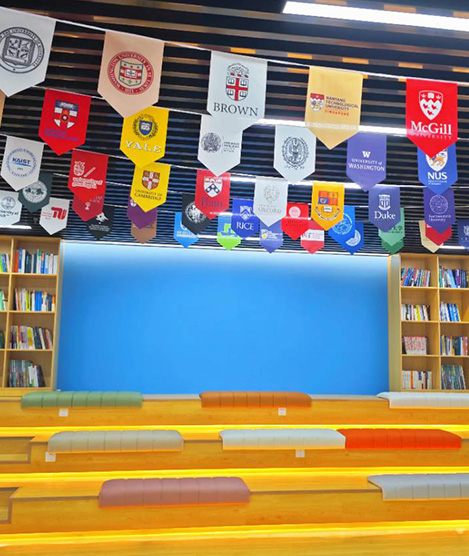
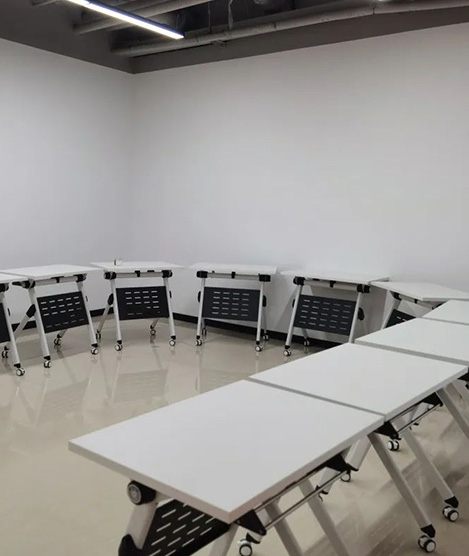
Teaching runs from Hanlin's own centres in Shanghai, Shenzhen, Chengdu and Hangzhou, and online for students elsewhere.





Talk to an advisor
Everything Hanlin does for Blue Ocean, in one conversation.
Entry, planning, coaching and the past papers. An advisor will tell you which of these a student actually needs, including when the answer is none of them.
Competition entry and planning
Which competitions suit this student, in what order, and by when - then we handle the registration, including the ones that can only be entered through a school or a centre.
Competition coaching
Taught by full-time subject tutors, on a course tier chosen by placement paper rather than by year group.
International curriculum tutoring
IB, AP, A-Level, IGCSE and the US high school curriculum, taught alongside school and timed around the exam calendar.
Competition past papers, free
A large library of past papers, mark schemes and syllabus breakdowns across every competition on this site. No charge and no enrolment.
Scan to add an advisor
Say which competition or course you are asking about. Replies in Chinese or English.
Or call +86 21 6352 6630FAQ
Blue Ocean, briefly answered.
What students and families ask before entering.
Who can enter?
High school students anywhere in the world, aged 14 to 18 at registration. You may enter alone or in a team of up to five.
What do I submit?
A five-minute video built to the organiser’s template, uploaded to YouTube. You submit both the link and the video file.
Do I have to travel?
No. The competition runs entirely online.
What is the brief?
Identify a pressing real-world problem nobody has solved, or a market space nobody is exploiting, and build a business idea around something new. The framework comes from Blue Ocean Strategy by Chan Kim and Renée Mauborgne.
Is there preparation material?
Yes - a Blue Ocean mini-course and a webinar, released when you register, plus published videos from past winners and the judging rubric.
What are the prizes?
First place $1,000, second $750, third $500, and a People’s Choice award of $750. Every entrant receives a certificate of participation and the top ten receive a certificate of outstanding achievement.
How is the People’s Choice award decided?
By YouTube likes combined with a judges’ vote. Soliciting votes from friends, classmates and family is an explicit step in the organiser’s instructions, so it rewards reach as well as the idea.
Are there awards for schools?
Yes. $1,000 to the school with the most entrants in the top 25; $1,000 to each of the five schools filing the most submissions; a seventy-five-inch touchscreen for the best competition school; and certificates for selected teachers and schools.
How big is the field?
The organisers report more than 23,000 participants from 173 countries and regions and over 9,000 schools. An earlier figure on the same page gives 146 countries, so treat the numbers as approximate.
When are the deadlines?
Submission in late February, the top 100 in early April, the top 30 in late April, the top 10 in early May and the awards in mid-May.
Related
Other entrepreneurship competitions.
What students enter alongside Blue Ocean.
Blue Ocean enquiries
Five minutes, and no reason not to try.
Blue Ocean runs entirely online, takes one video, and accepts individual entries - so the barrier is low and the work is all in finding a market nobody is in. Tell us what the student has noticed about the world and an advisor will help test whether it is genuinely uncontested.