
Competitions · Computer science · Bebras
Bebras, the computational thinking challenge.
Free to enter, no programming, and every past paper is published. Grades 1 to 12 sit short puzzle-like tasks drawn from problems computer scientists actually enjoy - and four million students a year now do it.
At a glance
What the challenge is, and how it is sat.
Bebras began in Lithuania in 2004 and now runs each November during World-Wide Bebras Week. China joined the Bebras alliance as a member country in 2017. It is described as the largest out-of-school activity in informatics education anywhere.
- Since
- 2004
- Scale
- Around four million students a year across some 85 countries and regions
- Who can enter
- Students in grades 1 to 12
- Programming required
- None. The tasks are solved by reasoning, not by writing code
- Format
- Individual. Multiple choice with a single correct answer
- Difficulty levels
- Seven, covering grades 1 to 12. The two youngest levels, A1 and A2, each have their own paper
- Language
- Chinese and English
- Where
- At partner schools across the country
- When
- A Saturday in November, with registration closing about a week earlier
- Cost
- Free. Any school may apply to run it
- Results
- About six to eight weeks after the challenge
- Past papers
- Every recent year is published on the organiser’s site, along with a shorter Bebras Mini Challenge and a set of algorithm resources
What computational thinking means here
Five skills, and none of them is coding.
The organisers define the term precisely: the problem-solving techniques a software engineer uses, separated from the act of writing software.
Decomposition
Breaking a complex task into simpler components. This is the skill the tasks exercise most consistently, at every difficulty level.
Algorithm design
Working out the sequence of steps that solves the problem - and recognising when one sequence is better than another.
Pattern recognition and generalisation
Spotting the repeated structure in a problem, and seeing that the same structure solves a family of problems rather than one.
Abstraction
Stripping a problem to what matters. It is the hardest of the five to teach and the one the harder Bebras tasks are built around.
Where the questions come from
Every member country writes some, and the world picks.
The question-setting process is unusual enough to be worth knowing, because it explains why the tasks are as varied as they are.
Each country submits a set
Every member country supplies an original set of computational-thinking problems a month before the annual workshop.
Experts meet to choose
The Bebras International Workshop brings informatics experts from every member country together to review the submissions and settle that year’s question bank. Nearly three hundred education researchers take part.
Then each country picks from the bank
Member countries select from the international bank for their own event. The same pool serves everyone, chosen locally.
And all of it is published afterwards
Recent years are open on the organiser’s site. The alliance treats sharing the questions as part of its purpose rather than as a concession.
Growth
From 3,470 students to millions.
The first challenge, in 2004, drew 3,470 students from 176 Lithuanian schools. These are the figures the organisers publish for the years that followed.
| Year | Students | Countries |
|---|---|---|
| 2016 | 1,610,000 | 34 |
| 2015 | 1,310,000 | 38 |
| 2014 | 930,000 | 36 |
| 2013 | 730,000 | 29 |
| 2012 | 520,000 | 21 |
| 2011 | 370,000 | 18 |
France has consistently been the largest participant, with more than 470,000 students in 2016 alone. The country count dips between 2015 and 2016 while entrant numbers rise, which the source does not explain.
Awards
Judged within your grade and your level.
Each difficulty level is awarded separately by grade, which keeps a grade 4 student from being ranked against a grade 8 one.
A global perfect score award
Students who answer everything correctly receive it. This is the only award decided internationally rather than within the China region.
Top Gold at 5%, Gold at 15%
The China-region bands run Top Gold for the top 5%, Gold for the top 15%, Silver for the top 30% and Bronze for the top 45%.
And a provincial award below that
A Proficiency Award goes to the top 25% within each province, municipality, autonomous region and special administrative region, excluding students who already hold a national award.
Which makes the field generous
Bronze reaches nearly half the entrants, and the provincial award sits below that again. For a first competition, that matters.
Bebras and CAT
Two computational thinking papers, and they differ.
Both test reasoning rather than programming, so students often consider them together.
Bebras ranges wider
The organisers describe the Bebras tasks as livelier in subject matter and broader in the range of algorithmic ability they test.
CAT is a tighter paper
Nine questions for thirty-six marks, individual and written, with a narrower and more consistent algorithmic focus.
Bebras starts much younger
Grade 1 upward against CAT’s secondary-school range. For a primary-age student this is the one that exists.
And Bebras is free
No entry fee, every school may apply to run it, and every recent paper is published. Nothing else in this group is as easy to try.
Preparation
How Hanlin prepares students for Bebras.
With every past paper published and no coding required, preparation here is about a way of thinking rather than a body of knowledge.
Working the published archive
Recent years are all available, along with the Mini Challenge. Nothing else prepares as directly, and it costs nothing.
Naming the five skills
Students who can recognise which of decomposition, algorithm design, pattern recognition, generalisation and abstraction a task is asking for solve it faster. That recognition is teachable.
Practising at puzzle pace
The tasks are short and self-contained. The failure mode is over-thinking a question that has a clean answer, and timed practice corrects it.
And picking the right level
Seven levels across twelve grades means the level matters. We place a student where the questions stretch without defeating them.
Why Hanlin
Preparation for Bebras at Hanlin is taught by full-time subject tutors, on a course tier chosen by placement paper rather than by year group.
Programme formats
Five ways this is taught.
Group size is the whole difference between these. It decides how much of the tutor's attention a student gets and how far the course can bend to them, so it is worth choosing rather than accepting.
| Format | Group size | What it suits |
|---|---|---|
| One-to-one | One student | Content, pace and emphasis set by what this student actually needs rather than by a syllabus. The only format that can be rebuilt mid-course. |
| Small group | Three to eight | Opens at three. Frequent discussion, and the tutor can slow down or move on according to what the group has absorbed. Most students chasing a higher award are taught in this one. |
| Class | Eight to twelve | Taught by the subject lead or a medal coach. Less back-and-forth, so it suits a student who will say when something is unclear. |
| Large class | Ten to twenty | For students in the middle of the placement range, and a way to try a competition before committing. Students often move to a small group or to one-to-one afterwards. |
| Past-paper class | No cap | Past papers worked through in sequence in the weeks before the sitting. Free to students already enrolled. |
Course length for Bebras is set after a placement paper. The gap between where a student is and what the paper asks for is what the course has to close, and that gap is not the same for two students in the same year group.
How it runs
Six steps, four people on your side.
The same process for every student, so that nothing depends on one tutor remembering to do it.
 Step 1
Pre-course assessment
A placement paper before anything is booked, so the course tier is chosen on evidence rather than on a year group.
 Step 2
Tutor matching
A subject tutor is matched to the result, and their full background is provided before you agree to it.
 Step 3
Plan and group
A study group opens with four people on one student: the tutor, a planner, a supervisor and an academic manager.
 Step 4
Scheduled teaching
The teaching office sets the timetable around the competition date and school term, and teaching begins.
 Step 5
After-class reports
What was covered, and how the student handled it, reported after every lesson.
 Step 6
Homework follow-up
The teaching assistant and the form teacher both check that homework is done, which is where most preparation quietly fails.
Free resource pack
Past papers and preparation pack
The same material our own Bebras students work from. Scan the code, say what you need, and an advisor sends it.

Tell an advisor which competition and year group, and the material comes back the same day. Free, and you do not have to enrol in anything. If we do not already hold what you need, we will go and find it.
- PDFPast papers, every year the organiser has released
- PDFWorked solutions, where the organiser publishes them
- PDFThe syllabus on one page - every topic, and how heavily it is examined
- PDFEntry checklist and the dates for the current cycle
Teaching team
Who would teach it.
Three of the twenty-two tutors on the published Hanlin roster - the ones whose subject this is.
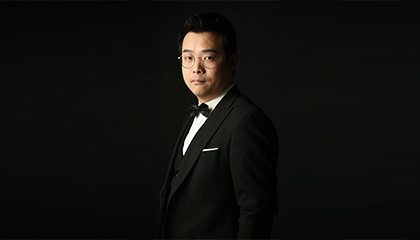
Luo
Bachelor's and master's in computer science from the University of California and ten years in the United States. Works close to the hardware, and teaches for independent problem solving rather than pattern recall.

Tan
Master's in data science from the University of Sydney after a statistics degree at Simon Fraser University, graduating in the top 5% with repeated chancellor's honours; A-Levels at a Cambridge international school, and formerly a data analyst at Tencent. An AMC-accredited coach, a College Board-accredited AP teacher, and holder of a Math League excellent-teacher award.

He
A Cambridge master's after a computer science degree with a mathematics minor at the University of Nebraska-Lincoln, and a US high school GPA of 4.13. Six years overseas and teaches entirely in English, across AMC, Math League, AP Computer Science and AP Calculus.
Where it is taught
Hanlin learning centres.
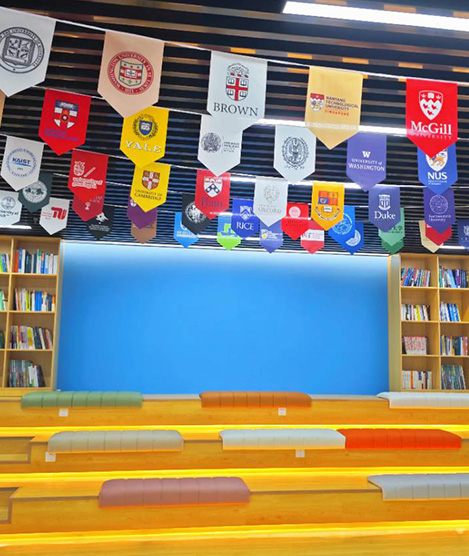
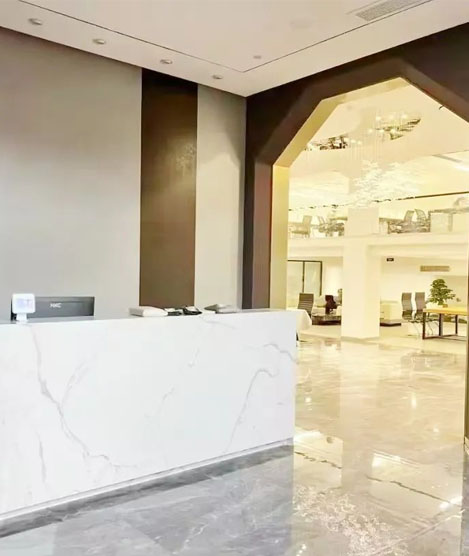
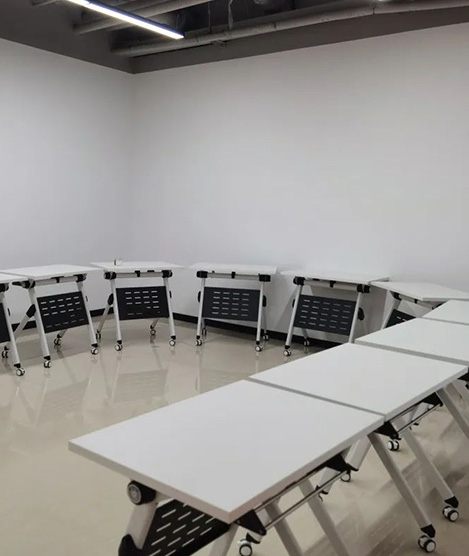
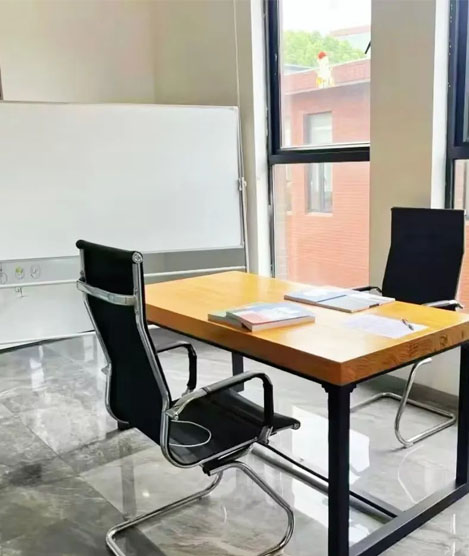
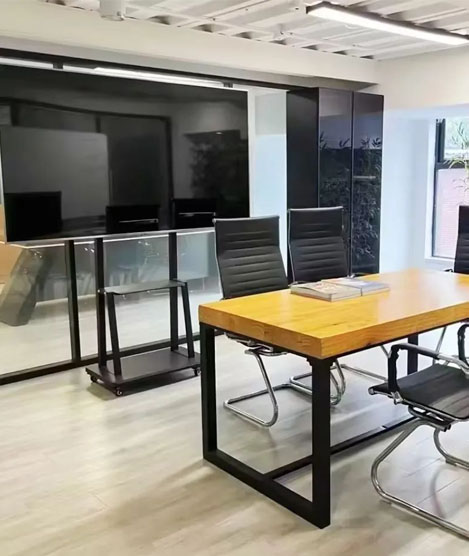
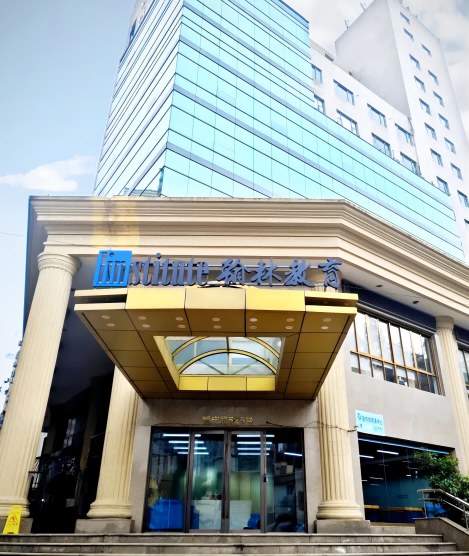
Teaching runs from Hanlin's own centres in Shanghai, Shenzhen, Chengdu and Hangzhou, and online for students elsewhere.

Talk to an advisor
Everything Hanlin does for Bebras, in one conversation.
Entry, planning, coaching and the past papers. An advisor will tell you which of these a student actually needs, including when the answer is none of them.
Competition entry and planning
Which competitions suit this student, in what order, and by when - then we handle the registration, including the ones that can only be entered through a school or a centre.
Competition coaching
Taught by full-time subject tutors, on a course tier chosen by placement paper rather than by year group.
International curriculum tutoring
IB, AP, A-Level, IGCSE and the US high school curriculum, taught alongside school and timed around the exam calendar.
Competition past papers, free
A large library of past papers, mark schemes and syllabus breakdowns across every competition on this site. No charge and no enrolment.
Scan to add an advisor
Say which competition or course you are asking about. Replies in Chinese or English.
Or call +86 21 6352 6630FAQ
Bebras, briefly answered.
What students, teachers and families ask before entering.
Do I need to know how to program?
No. The tasks are solved by logical thinking and can be answered with no prior knowledge of computing. That is the design.
Who can enter?
Students in grades 1 to 12, across seven difficulty levels. The two youngest levels, A1 and A2, each have their own paper.
What does it cost?
Nothing. Bebras is free to enter and any school may apply to organise it.
What is the format?
An individual paper of short multiple-choice tasks, each with a single correct answer, set in Chinese and English and sat at a partner school.
What is computational thinking?
The organisers define it as the problem-solving techniques a software engineer uses: breaking a complex task into simpler components, designing algorithms, recognising patterns, generalising them, and abstraction.
Where do the questions come from?
Every member country submits an original set a month before the annual Bebras International Workshop, where informatics experts from all member countries settle the year’s question bank. Each country then selects from that bank.
Can I see past papers?
Yes. Recent years are published on the organiser’s site, along with a shorter Bebras Mini Challenge and a set of algorithm resources.
What awards are there?
A global perfect score award, and in the China region Top Gold at the top 5%, Gold at 15%, Silver at 30% and Bronze at 45%. A Proficiency Award goes to the top 25% within each province outside the national awards. Every difficulty level is awarded separately by grade.
When are results published?
About six to eight weeks after the challenge.
How does it compare with CAT?
Both test reasoning rather than coding. Bebras ranges more widely in subject matter and in the algorithmic ability it tests, starts from grade 1, and is free. CAT is a tighter written paper for secondary students.
Related
Where students go next.
What to enter alongside or after Bebras.
Bebras enquiries
No code, no fee, and every paper published.
Bebras is the easiest competition on this site to try - free, open from grade 1, and with a decade of past papers online. Tell us the student’s year group and an advisor will place them at the right level for the November challenge.