
Competitions · Physics · BAAO
BAAO, the British Astronomy and Astrophysics Olympiad.
Three hours, three long problems, and no astronomy assumed. Launched in 2015 by the committee behind the British Physics Olympiad, it takes core physics and applies it to the universe - and it is Britain’s route into the international astronomy olympiad.
At a glance
What the olympiad is, and who sits it.
BAAO is run by the same committee as BPhO - Oxford University, the Institute of Physics and the Ogden Trust - from Oxford’s physics department. ASDAN China brought it to the China region in 2019.
- Organiser
- The British Physics Olympiad committee
- Since
- 2015, and the most senior astrophysics competition in the UK
- Who can enter
- High-school students in any year. It is aimed at years 12 and 13, though strong GCSE students are welcome to attempt it
- Prior astronomy
- None assumed. The paper is independent of any teaching syllabus and does not expect an astronomy module to have been studied
- Format
- Individual, written, in English. Three long questions, each divided into sub-questions
- Duration
- 3 hours
- Where
- In person, at a school
- When
- Mid-March, with registration closing about ten days earlier
- How to enter
- Through a school. A teacher registers both the school and the students - there is no individual registration
- What it feeds
- Selection for the International Olympiad in Astronomy and Astrophysics, where Britain competes against more than forty countries
- What it is not for
- Results carry no weight in Chinese school admissions
The paper
Physics you know, applied where you have not applied it.
BAAO is not an astronomy knowledge test. It takes core physics and puts it in an unfamiliar setting, supplying whatever astronomical detail a question needs.
The astronomy is supplied
Questions provide the additional detail they require, so a candidate is never penalised for not having studied astronomy. What is being tested is whether core physics can be carried into a new context.
Three questions, three hours
An hour a question, each broken into sub-parts. This is a paper for working through an extended argument rather than for answering quickly.
Independent of any syllabus
The organisers state plainly that the paper sits outside teaching syllabuses. Preparation therefore cannot be a matter of covering a specification.
Which rewards physical intuition
Because the setting is unfamiliar and the content is supplied, the differentiator is whether a student can see which piece of physics applies. That is a habit built on problems.
Awards
Thresholds set on the British field.
BAAO uses the same award mechanism as BPhO, and it works to the advantage of a strong cohort outside Britain.
British scores set the marks
Gold, silver and bronze thresholds are calculated first from UK-national students’ results at the published award proportions.
Everyone else meets a fixed number
Candidates from other countries are then measured directly against those mark thresholds rather than ranked among themselves.
So a strong group is not self-limiting
If every candidate in a cohort clears the gold line, all of them take gold. There is no fixed quota being divided.
And it protects the British field
The design also means a large international entry cannot displace British students from their own award proportions, which is why the committee set it up this way.
How it fits with BPhO
The organisers expect you to do both.
BAAO is not a standalone entry. The committee is explicit about the sequence it expects a serious candidate to follow.
Astronomy challenge in the autumn
Students are encouraged to sit the astronomy challenge paper during the autumn term, before the March olympiad.
BPhO Round 1 in November
The committee asks candidates to sit BPhO Round 1 at least, in November. BAAO in March then follows on from it rather than standing alone.
Because the preparation is shared
BPhO preparation consolidates IGCSE and A-Level or IB foundations and builds the derivation habit BAAO also needs. The two seasons reinforce each other.
Year 12 gains from it too
BPhO Round 1 is pitched at year 13, but the committee notes that year 12 students gain a great deal of useful experience from sitting it.
Entering
What the entry rules actually require.
BAAO’s eligibility rules are stricter than most about progression and about how a candidate registers.
Only through a school
A teacher registers both the school and the students. There is no individual registration route, which the committee says is necessary for administering the papers securely.
Home-educated students can still enter
Entry still runs through a school, but the committee will arrange for a candidate to sit at a local school or college that other students attend.
Younger yes, older no
A student younger than the specified year group may enter; an older one may not. Each competition in the series sets its own year band.
And you must not have moved on
Candidates must not have begun more advanced study than the paper is set for - university study in the case of BPhO Round 1, and the corresponding level for each other paper.
Preparation
How Hanlin prepares students for BAAO.
A syllabus-independent paper cannot be prepared for by covering content. What can be trained is the transfer.
Carrying physics into new settings
The core skill is recognising which piece of known physics a novel situation calls for. Practice uses unfamiliar contexts deliberately rather than more problems of a familiar type.
Sustaining an hour on one problem
Three questions across three hours is a very different exercise from a multiple-choice paper. Students sit the full length before the day so the endurance is not a surprise.
The physics that recurs
Gravitation, orbital mechanics, radiation and energy arguments come up repeatedly because they are what the universe is made of. These are secured first.
Sitting BPhO first
The committee expects it, and the derivation practice transfers directly. A student entering BAAO cold has skipped the preparation the organisers assume.
Why Hanlin
Preparation for BAAO at Hanlin is taught by full-time subject tutors, on a course tier chosen by placement paper rather than by year group.
Programme formats
Five ways this is taught.
Group size is the whole difference between these. It decides how much of the tutor's attention a student gets and how far the course can bend to them, so it is worth choosing rather than accepting.
| Format | Group size | What it suits |
|---|---|---|
| One-to-one | One student | Content, pace and emphasis set by what this student actually needs rather than by a syllabus. The only format that can be rebuilt mid-course. |
| Small group | Three to eight | Opens at three. Frequent discussion, and the tutor can slow down or move on according to what the group has absorbed. Most students chasing a higher award are taught in this one. |
| Class | Eight to twelve | Taught by the subject lead or a medal coach. Less back-and-forth, so it suits a student who will say when something is unclear. |
| Large class | Ten to twenty | For students in the middle of the placement range, and a way to try a competition before committing. Students often move to a small group or to one-to-one afterwards. |
| Past-paper class | No cap | Past papers worked through in sequence in the weeks before the sitting. Free to students already enrolled. |
Course length for BAAO is set after a placement paper. The gap between where a student is and what the paper asks for is what the course has to close, and that gap is not the same for two students in the same year group.
How it runs
Six steps, four people on your side.
The same process for every student, so that nothing depends on one tutor remembering to do it.
 Step 1
Pre-course assessment
A placement paper before anything is booked, so the course tier is chosen on evidence rather than on a year group.
 Step 2
Tutor matching
A subject tutor is matched to the result, and their full background is provided before you agree to it.
 Step 3
Plan and group
A study group opens with four people on one student: the tutor, a planner, a supervisor and an academic manager.
 Step 4
Scheduled teaching
The teaching office sets the timetable around the competition date and school term, and teaching begins.
 Step 5
After-class reports
What was covered, and how the student handled it, reported after every lesson.
 Step 6
Homework follow-up
The teaching assistant and the form teacher both check that homework is done, which is where most preparation quietly fails.
Free resource pack
Past papers and preparation pack
The same material our own BAAO students work from. Scan the code, say what you need, and an advisor sends it.

Tell an advisor which competition and year group, and the material comes back the same day. Free, and you do not have to enrol in anything. If we do not already hold what you need, we will go and find it.
- PDFPast papers, every year the organiser has released
- PDFWorked solutions, where the organiser publishes them
- PDFThe syllabus on one page - every topic, and how heavily it is examined
- PDFEntry checklist and the dates for the current cycle
Teaching team
Who would teach it.
Three of the twenty-two tutors on the published Hanlin roster - the ones whose subject this is.
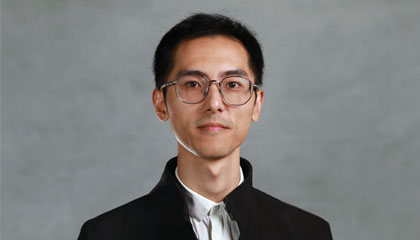
Huang
A College Board-accredited AP teacher. Read mathematics and physics in Southeast University's honours programme, took a master's in aerospace engineering at George Washington University under the lead of NASA's Sigma programme, and a second master's in robotics and AI at Melbourne. Five years teaching international curricula and competitions.
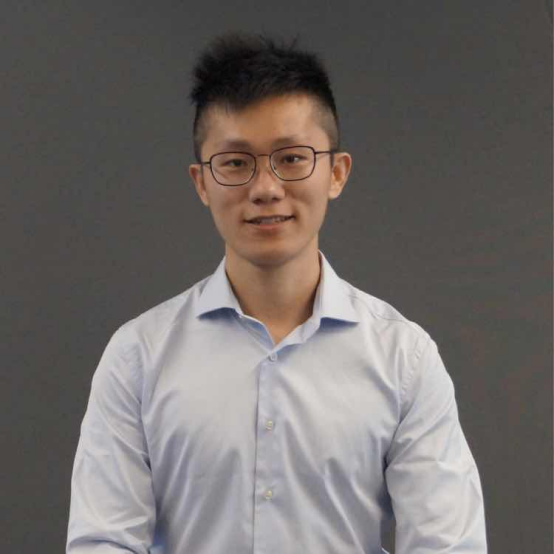
Ding
Master's in physics from Brown University after the physics honours programme at Central China Normal University, with a Berkeley BISP exchange. Two years as a graduate teaching assistant, then teaching alongside Professor Enrico Pajer (cosmology) and Professor Anastasia Romanou (exoplanets). College Board-accredited.

Lu
Master's in astrophysics from UCL after an astronomy degree at Xiamen University. In international education since 2019, teaching for logical structure and framework first - efficient methods and flexible problem-solving over rote coverage.
Student results
What Hanlin students got.
Taken from Hanlin's published record of student honours and rewritten in English. Figures are as the organisers reported them.
BAAO
- 2025A global Gold in the senior division
- 20242 Bronze
Earlier years
- 2023One Silver and one Bronze
- 2021A global Gold in the junior division
The full record, across every subject and year, is on the student honours page.
Where it is taught
Hanlin learning centres.
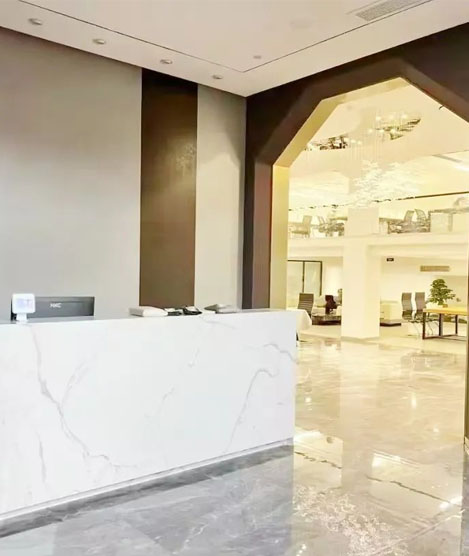
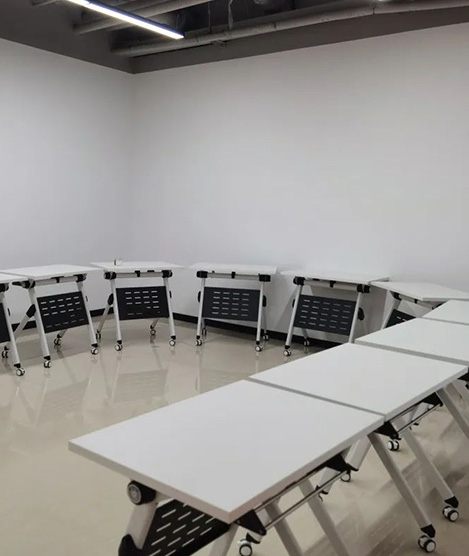
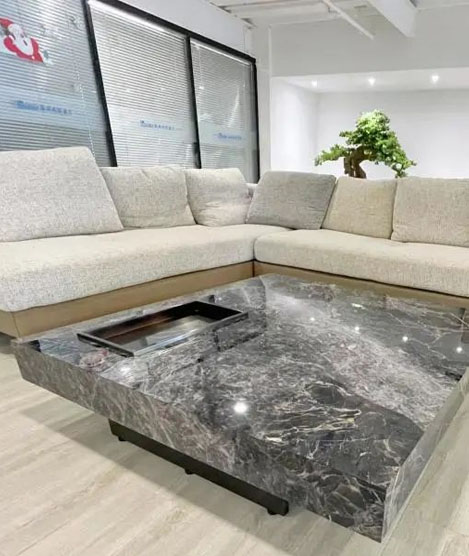
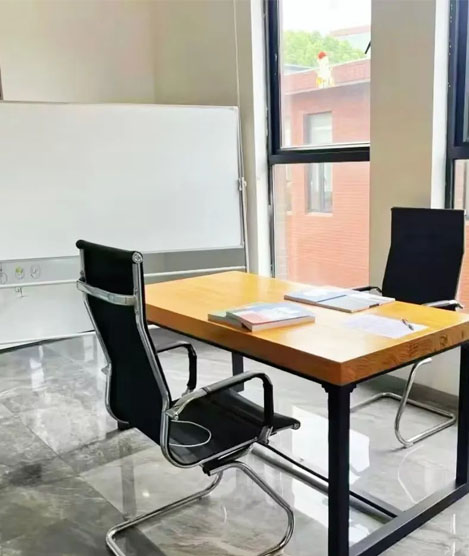
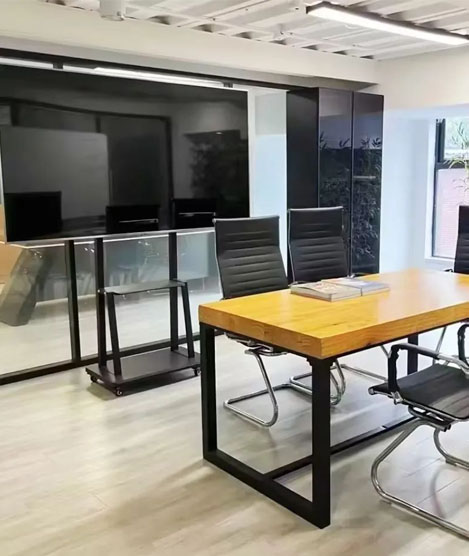
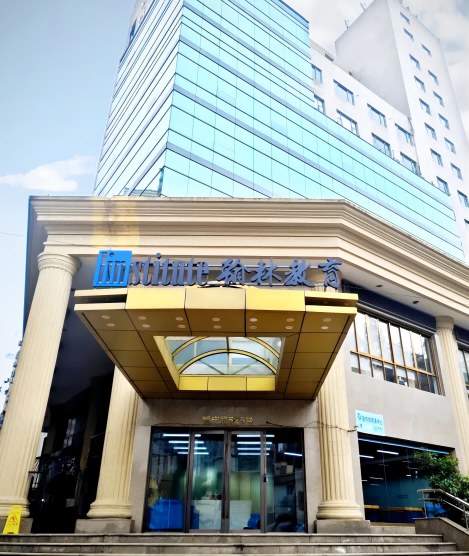
Teaching runs from Hanlin's own centres in Shanghai, Shenzhen, Chengdu and Hangzhou, and online for students elsewhere.
Talk to an advisor
Everything Hanlin does for BAAO, in one conversation.
Entry, planning, coaching and the past papers. An advisor will tell you which of these a student actually needs, including when the answer is none of them.
Competition entry and planning
Which competitions suit this student, in what order, and by when - then we handle the registration, including the ones that can only be entered through a school or a centre.
Competition coaching
Taught by full-time subject tutors, on a course tier chosen by placement paper rather than by year group.
International curriculum tutoring
IB, AP, A-Level, IGCSE and the US high school curriculum, taught alongside school and timed around the exam calendar.
Competition past papers, free
A large library of past papers, mark schemes and syllabus breakdowns across every competition on this site. No charge and no enrolment.
Scan to add an advisor
Say which competition or course you are asking about. Replies in Chinese or English.
Or call +86 21 6352 6630FAQ
BAAO, briefly answered.
What students and schools ask before entering.
Do I need to have studied astronomy?
No. The paper assumes no astronomy module has been studied and supplies whatever astronomical detail a question needs. It tests core physics applied to an unfamiliar setting.
Who can enter?
High-school students in any year. It is aimed at years 12 and 13, though strong GCSE students are welcome to attempt it. Younger students may enter a paper; older ones may not.
How do I register?
Through a school - a teacher registers both the school and the students. There is no individual registration. Home-educated candidates can be placed at a local school or college by arrangement.
What is the paper like?
Three long questions, each divided into sub-questions, over three hours. It is written in English and sat in person.
Should I sit BPhO as well?
The organisers expect it. They encourage the astronomy challenge paper in the autumn term and ask candidates to sit BPhO Round 1 in November before the March olympiad.
How are awards decided?
Gold, silver and bronze thresholds are set from UK-national students’ scores at the published proportions. Students elsewhere are then measured against those marks directly, so a strong cohort does not divide a fixed quota.
Can a Chinese student reach the international olympiad?
BAAO selects Britain’s representatives for the International Olympiad in Astronomy and Astrophysics, so national team selection is for UK students. China-region winners may be invited to the BPhO camp in China.
Is there a version for younger students?
Yes. BAAO Junior is a 50-minute multiple-choice challenge for grades 7 to 10, sat bilingually. It is a different exercise entirely rather than an easier version of this paper.
Related
The rest of the British physics series.
What the organisers expect a BAAO candidate to have entered.
BAAO enquiries
No astronomy required. Physics, applied somewhere new.
BAAO supplies the astronomy and tests whether a student can carry core physics into an unfamiliar setting. Tell us the year group and whether they have sat BPhO, and an advisor will map the March entry through the school.