
Competitions · Research and innovation · ASOE
ASOE, the Australian Earth and Environmental Science Olympiad.
Around eighty questions built into a single storyline, with no penalty for a wrong answer and no short-answer sections. The organisers say it tests skill rather than recall - and then publish exactly what you are assumed to know.

Read this first
Tutoring centres cannot register you.
The organisers restrict who may enter a student, and they say why. It is worth knowing before assuming any provider can arrange a place.
Registration runs through schools
Entries are accepted only through schools, registered home schools and distance education providers. The organisers state that this is to protect the fairness of the competition.
And not through tutoring centres
Registrations from tutoring centres are not accepted. Whatever preparation a student does, the entry itself has to come through their school.
What we can and cannot do
We can teach the syllabus and the exam technique. We cannot register a student, and any provider saying otherwise is describing something the organisers do not permit.
You also need a quiet room and a computer
The paper is sat online, under normal examination conditions and supervision, with every student taking the same paper at the same time.
At a glance
What the olympiad is.
ASOE is the earth and environmental science component of the Australian Science Olympiads, run by Australian Science Innovation with its headquarters at the Australian National University. ASDAN China has hosted the China region since 2019.
- Part of
- The Australian Science Olympiads, alongside physics, chemistry and biology
- Who can enter
- Students in grades 9 to 12
- Fields covered
- Geology, geophysics, meteorology, oceanography, astronomy and environmental science
- Format
- Online, sat under supervision. 50 multiple-choice questions and 30 true-or-false questions
- Duration
- Two hours, not counting the browser setup and login beforehand
- Marking
- No negative marking. A wrong answer costs nothing
- Question types
- Multiple choice presented in several forms - selecting from a list, drag and drop, matching - each with exactly one completely correct answer. There are no short-answer questions
- Registration
- Through schools, registered home schools and distance education providers only
- When
- A Sunday afternoon in mid-October, with registration closing about ten days earlier
- Cost
- The earth and environmental science paper was free in 2024. Confirm the current position
- Where it leads
- The competition feeds students into the Australian national olympiad squad, and strong performers are invited to research programmes
How the paper works
One storyline, and every question stands alone.
The exam is constructed unusually, and understanding the construction is worth marks.
It is built on a narrative
The paper is built around a storyline, so the organisers advise working from the beginning rather than skipping about. The context accumulates.
But nothing depends on anything else
No question’s answer ever depends on having got an earlier one right, and any question can be returned to at any point. One mistake never cascades.
And there is no penalty for a wrong answer
The organisers state it directly: incorrect answers carry no negative marking. Every question should be attempted, and leaving anything blank is pure loss.
Two full hours are available
Around eighty questions in two hours is roughly ninety seconds each, and students may use the whole time. This is not a speed test.
What it tests
Skill, applied to information you have never seen.
The organisers are explicit that this is not a recall examination, and the question design follows.
Reading, reasoning, and solving
The stated assessment is a student’s ability to read and understand a question, think critically, and solve problems logically.
From an earth systems perspective
The programme is built on an earth system science approach, so the organisers look for students with a rounded understanding of science rather than depth in one part of it.
Novel information in unusual settings
Many questions ask you to analyse information you have never encountered, in contexts you have never met, using general scientific understanding.
And everything you need is on the page
The organisers guarantee that the question, or the data supplied with it, always contains enough to answer it. Not recognising the context is not a reason to skip a question.
The assumed knowledge
Year 9, plus some year 10. Nothing beyond.
This is unusually generous and unusually specific. The organisers publish exactly what they assume - and state that no familiarity with year 11 or 12 science content is expected at all.
| Subject | What you are assumed to know |
|---|---|
| Biology | The role of classification in organising information, especially the biological classification of organisms including fossils. Plus the basics of evolution, a year 10 topic |
| Chemistry | Chemical symbols and terminology; the periodic table, a year 10 topic; states of matter, elements, isotopes, compounds and chemical equations; and the role of energy transfer in chemical processes |
| Earth and space | Basic planetary motion of the Earth and Moon relative to the Sun, and how it relates to tides, eclipses and lunar phases; the origin of stars and planets and the elements they are made of; how sedimentary, igneous and metamorphic rocks form; minerals as compounds; the general structure of the Earth’s interior; the basics of plate tectonics, linking plate movement, earthquakes and volcanoes; and the Earth systems and their cycles |
| Physics | Forces including gravity, and energy, energy transfer and waves |
| Mathematics | No advanced mathematics is required. Basic algebra, basic geometry and trigonometry, basic statistics, scientific notation, significant figures, and reading and interpreting graphs and other representations of data |
Questions cover the atmosphere, the biosphere, the geosphere, the hydrosphere and space science. The published assumption list is the whole preparation target - anything beyond it is not required.
The series
ASOE and its three siblings.
The Australian Science Olympiads run four subjects on a common model, and a student may sit more than one.
Four subjects, one series
Physics, chemistry, biology, and earth and environmental science. All are run by Australian Science Innovation and all sit in mid-October.
But the formats differ
ASOP and ASOC run 130-minute papers with written answers; ASOB combines single-answer and long questions across 120 marks. ASOE alone is entirely objective - multiple choice and true or false, with no negative marking.
Which makes ASOE the most accessible of the four
No written answers, no penalty for guessing, and a published assumption list that stops at year 10. For a student new to olympiad papers it is the gentlest entry.
And the subject is the least taught
Earth science is barely covered in most school curricula, so almost every entrant starts from the same place.
Preparation
How Hanlin prepares students for ASOE.
A published assumption list and no negative marking make this one of the most straightforward papers on the site to prepare for.
Working the published list
Year 9 science across four subjects plus a handful of named year 10 topics. It is a finite, checkable target - which is rare.
Building earth system thinking
Atmosphere, biosphere, geosphere, hydrosphere and how they connect. School science teaches these separately; the paper asks about the connections.
Practising with unfamiliar data
The questions supply information a student has not met. Getting comfortable reading an unfamiliar graph and reasoning from it is the core skill.
And answering everything
No negative marking means every blank is a wasted opportunity. It sounds obvious and students still leave questions empty.
Why Hanlin
Preparation for ASOE at Hanlin is taught by full-time subject tutors, on a course tier chosen by placement paper rather than by year group.
Programme formats
Five ways this is taught.
Group size is the whole difference between these. It decides how much of the tutor's attention a student gets and how far the course can bend to them, so it is worth choosing rather than accepting.
| Format | Group size | What it suits |
|---|---|---|
| One-to-one | One student | Content, pace and emphasis set by what this student actually needs rather than by a syllabus. The only format that can be rebuilt mid-course. |
| Small group | Three to eight | Opens at three. Frequent discussion, and the tutor can slow down or move on according to what the group has absorbed. Most students chasing a higher award are taught in this one. |
| Class | Eight to twelve | Taught by the subject lead or a medal coach. Less back-and-forth, so it suits a student who will say when something is unclear. |
| Large class | Ten to twenty | For students in the middle of the placement range, and a way to try a competition before committing. Students often move to a small group or to one-to-one afterwards. |
| Past-paper class | No cap | Past papers worked through in sequence in the weeks before the sitting. Free to students already enrolled. |
Course length for ASOE is set after a placement paper. The gap between where a student is and what the paper asks for is what the course has to close, and that gap is not the same for two students in the same year group.
How it runs
Six steps, four people on your side.
The same process for every student, so that nothing depends on one tutor remembering to do it.
 Step 1
Pre-course assessment
A placement paper before anything is booked, so the course tier is chosen on evidence rather than on a year group.
 Step 2
Tutor matching
A subject tutor is matched to the result, and their full background is provided before you agree to it.
 Step 3
Plan and group
A study group opens with four people on one student: the tutor, a planner, a supervisor and an academic manager.
 Step 4
Scheduled teaching
The teaching office sets the timetable around the competition date and school term, and teaching begins.
 Step 5
After-class reports
What was covered, and how the student handled it, reported after every lesson.
 Step 6
Homework follow-up
The teaching assistant and the form teacher both check that homework is done, which is where most preparation quietly fails.
Free resource pack
Project and submission pack
The same material our own ASOE students work from. Scan the code, say what you need, and an advisor sends it.

Tell an advisor which competition and year group, and the material comes back the same day. Free, and you do not have to enrol in anything. If we do not already hold what you need, we will go and find it.
- PDFPast finalist project titles and abstracts
- PDFCategory definitions and the judging criteria, broken down
- DOCXA project timeline working back from the submission date
- PDFEntry checklist and the dates for the current cycle
Teaching team
Who would teach it.
Three of the twenty-two tutors on the published Hanlin roster - the ones whose subject this is.

Shi
Master's in water science and engineering from TU Dresden - one of Germany's TU9 institutes - after environmental engineering at Ocean University of China. A researcher in environmental chemistry at the Helmholtz Centre for Environmental Research, a DAAD scholarship holder, and College Board-accredited.

Yu
Master's in bioinformatics and computational biology from UT Dallas and a nutritional sciences degree from Wisconsin-Madison. Second author on an SCI-indexed paper from the Tanumihardjo vitamin-A laboratory, and formerly at ABS Global.

Li
Biology at Emory, biomedical engineering at Georgia Tech, and a bioengineering master's at the University of Pennsylvania. College Board-accredited, teaching from a cross-disciplinary research base and folding research practice into the classroom.
Student results
What Hanlin students got.
Taken from Hanlin's published record of student honours and rewritten in English. Figures are as the organisers reported them.
ASOE
- 2020A second prize
The full record, across every subject and year, is on the student honours page.
Where it is taught
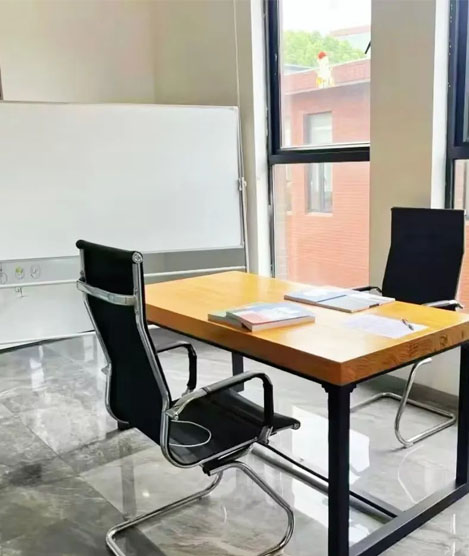
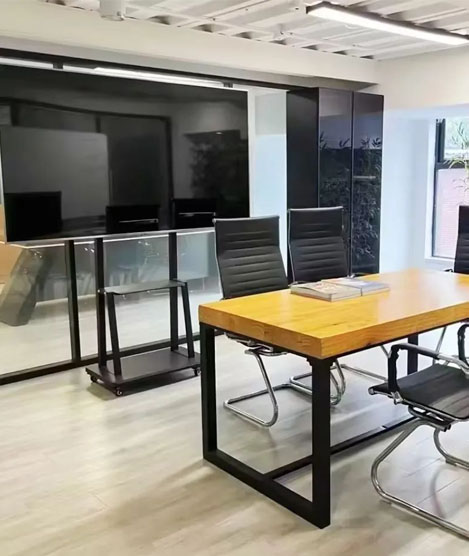
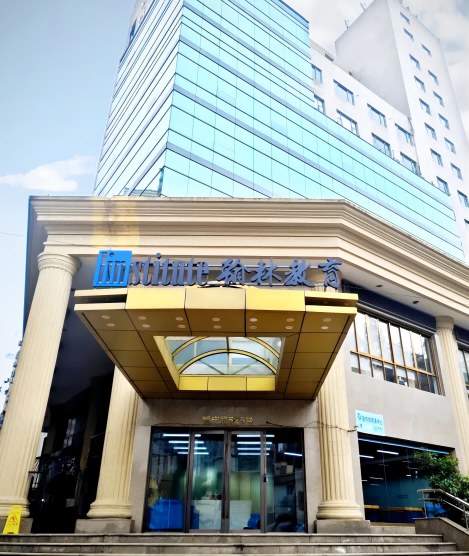
Hanlin learning centres.
Teaching runs from Hanlin's own centres in Shanghai, Shenzhen, Chengdu and Hangzhou, and online for students elsewhere.
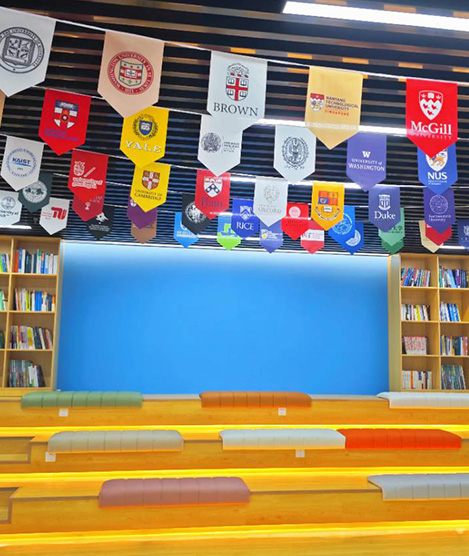
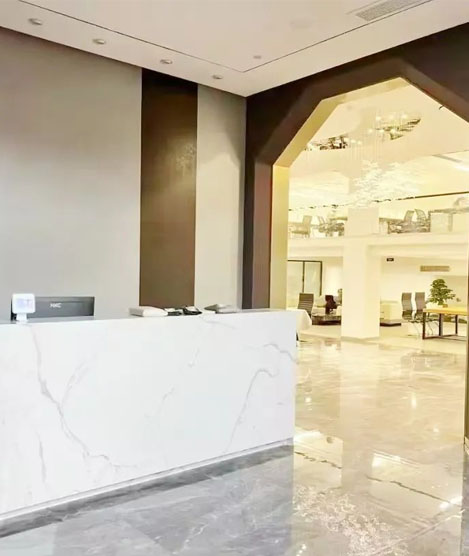
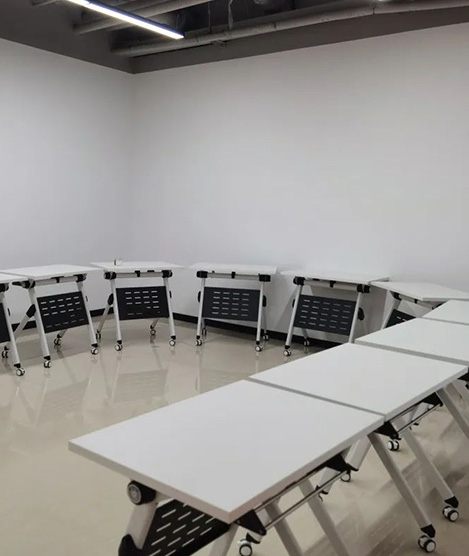
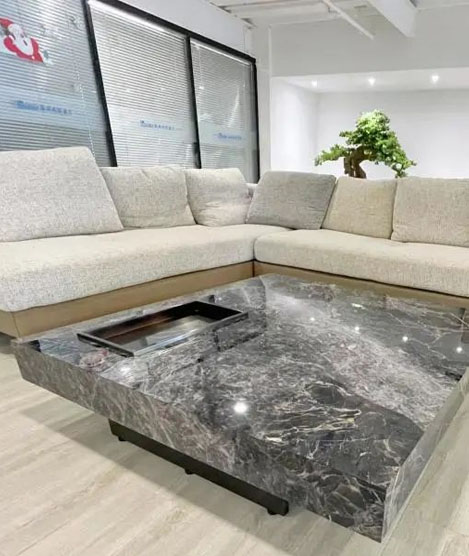
Talk to an advisor
Everything Hanlin does for ASOE, in one conversation.
Entry, planning, coaching and the past papers. An advisor will tell you which of these a student actually needs, including when the answer is none of them.
Competition entry and planning
Which competitions suit this student, in what order, and by when - then we handle the registration, including the ones that can only be entered through a school or a centre.
Competition coaching
Taught by full-time subject tutors, on a course tier chosen by placement paper rather than by year group.
International curriculum tutoring
IB, AP, A-Level, IGCSE and the US high school curriculum, taught alongside school and timed around the exam calendar.
Competition past papers, free
A large library of past papers, mark schemes and syllabus breakdowns across every competition on this site. No charge and no enrolment.
Scan to add an advisor
Say which competition or course you are asking about. Replies in Chinese or English.
Or call +86 21 6352 6630FAQ
ASOE, briefly answered.
What students, teachers and families ask before entering.
Who can register a student?
Schools, registered home schools and distance education providers. Registrations from tutoring centres are not accepted - the organisers say this protects the fairness of the competition.
Who can enter?
Students in grades 9 to 12.
What is the paper?
50 multiple-choice questions and 30 true-or-false questions, sat online in two hours under supervision. There are no short-answer questions.
Is there negative marking?
No. Incorrect answers carry no penalty, so every question should be attempted.
What do I need to know?
Year 9 science across biology, chemistry, earth and space, and physics, plus a few named year 10 topics. The organisers state that no familiarity with year 11 or 12 science content is expected.
Do I need advanced mathematics?
No. Basic algebra, geometry and trigonometry, basic statistics, scientific notation, significant figures, and the ability to read and interpret graphs and data.
What if I have never seen the context of a question?
That is expected. Many questions present novel information in unfamiliar settings, and the organisers guarantee that the question or the data supplied with it always contains enough to answer it.
Does the order of questions matter?
The paper is built on a storyline, so the organisers suggest working from the beginning. But any question can be returned to at any time, and no answer ever depends on getting an earlier question right.
What topics come up?
The atmosphere, the biosphere, the geosphere, the hydrosphere and space science - across geology, geophysics, meteorology, oceanography, astronomy and environmental science.
Can I sit more than one Australian olympiad?
Yes. Physics, chemistry, biology and earth and environmental science all run in mid-October under the same organiser. ASOE is the only one that is entirely objective.
Related
The rest of the series.
The other Australian Science Olympiads.
ASOE enquiries
A published syllabus that stops at year ten.
No negative marking, no written answers, and the organisers state exactly what they assume you know. Registration has to come through the school, but the preparation does not - tell us the year group and an advisor will map the October paper.