
Competitions · Mathematics · AMC 8
AMC 8, the American Mathematics Competitions 8.
Twenty-five multiple-choice questions in forty minutes, written for students in grade 8 and below. Run by the Mathematical Association of America since 1985 and sat in China since 2006, the paper needs no mathematics beyond middle school - what it rewards is clean reasoning under time pressure, which is a different skill from covering a syllabus.

At a glance
What the paper is, and who may sit it.
The details below follow the rules published for the 2027 cycle. Dates and age limits have both moved in recent years, so confirm them before you register rather than assuming last season carries over.
- Organiser
- The Mathematical Association of America (MAA), which has run the contest since 1985. Hanlin is an MAA-authorised test centre and can register independent candidates as well as school groups
- Who can enter
- Students in grade 8 or below who are under 15.5 years old on the day of the contest. The MAA raised that ceiling from 14.5 for the 2026 cycle, which brought a cohort of older grade-8 students back into eligibility
- Younger entrants
- Strong students in grades 4 to 6 regularly sit the paper. Nothing bars them, and one of the four award categories exists specifically for them
- Format
- An individual paper of 25 multiple-choice questions. No team component
- Duration
- 40 minutes, which works out at roughly 96 seconds a question
- Marking
- 25 marks available, one for each correct answer. Nothing is deducted for a wrong answer or a blank, so there is never a reason to leave a question unanswered
- Syllabus
- Integer arithmetic, fractions, decimals and percentages, introductory algebra, geometry, probability and statistics, and elementary number theory
- Language
- Candidates sitting in China receive a bilingual paper with the questions in both Chinese and English
- Calculators
- Not permitted. Permitted items are a valid photo ID, blank scratch paper, an eraser, a ruler, a pair of compasses, a pen and blank graph paper
- Results
- Scores are available around four weeks after the contest; electronic certificates follow six to eight weeks after
The paper
Four topics, and roughly how many questions each is worth.
The question mix moves a little from year to year, but the balance below has held across recent papers and is the sensible basis for a revision plan.
Algebra
Ratio, proportion, fractions and percentages account for three to six questions; equations, including word problems, another three to six; sequences one or two. Setting the equation up correctly is what separates candidates here, not the arithmetic that follows it.
Geometry
Triangle similarity and the Pythagorean theorem run to two to four questions; circles and their positional relationships one to three; quadrilaterals one to three. Area problems reward equal-area transformation and cut-and-fill, and a clean diagram does much of the work.
Number theory
Primes and prime factorisation take one to three questions; integers and digit problems one to three; divisibility one to three. Divisibility tests need to be automatic, because they usually arrive buried inside a word problem rather than stated openly.
Combinatorics
Counting principles, permutations and combinations account for two to four questions, and probability for one to three. What is rewarded is flexible use of the standard tools: working backwards, elimination, systematic enumeration and case-by-case analysis.
2027 cycle
The dates that decide whether you can sit it.
Registration closes well before the contest and there is no late window, so the first date below is the one that actually matters.
Registration deadline
The hard gate. Hanlin, as an authorised centre, can register independent candidates up to this point.
Contest day
The paper runs from 5:00 pm to 5:40 pm.
Scores released
Candidates check results through the contest portal.
Certificates issued
Electronic certificates become available for download.
Individual awards
Four awards, three of them ranked globally.
Awards are decided on the global distribution rather than on a fixed mark, which is why the qualifying score moves each year.
Score cutoffs
Where the lines actually fell.
Because the awards are percentile-based, the mark needed shifts with the difficulty of the paper. Published cutoffs for recent years:
- 2025
- Distinguished Honor Roll 23 · Honor Roll 19 · Achievement Roll 15
- 2024
- Distinguished Honor Roll 22 · Honor Roll 18
- 2023
- Distinguished Honor Roll 21 · Honor Roll 17
- Reading them
- A 23 was worth a top-1% award in 2025 and a 21 was worth one in 2023. Treat the cutoff as a moving target and aim a mark or two above the previous year rather than at it
School awards
Two awards decided on a school’s top three.
School Honor Roll
Awarded where the combined score of a school’s three highest-scoring candidates reaches 66 or more out of a possible 75.
School Merit Roll
Awarded where that combined score of the top three candidates falls between 50 and 65, one band below the Honor Roll.
Why students enter
What an AMC 8 result is actually good for.
It is a short paper with a long reach: the same score is read by admissions staff, by schools deciding on a transfer, and by the student deciding what to attempt next.
A comparable measure
More than 300,000 students across some 30 countries and regions and 6,000-plus schools sit the same paper, so a score means the same thing wherever it was earned - which school grades cannot claim.
Evidence when changing school
Families moving from the national system into an international school, or through the transition to middle school, use it as independent evidence of mathematical ability that does not depend on a single school’s marking.
Reasoning against the clock
Ninety-six seconds a question rules out grinding through every problem. Students have to judge which questions to attempt and when to move on, and that habit transfers to every later paper they sit.
The first rung of the AMC ladder
AMC 8 leads on to AMC 10 and AMC 12, and through them to AIME. Sitting it early gives a student a reading on where they stand before the stakes of the senior papers rise.
Preparation
How Hanlin prepares students for the paper.
Hanlin has arranged AMC sittings for more than 7,000 students across successive seasons, both as a registration centre and as a teaching provider.
Past papers first
Preparation is built on the real papers rather than on imitation questions. Working through several seasons in order shows how the examiners phrase things and where the difficulty is deliberately placed.
Topic-by-topic diagnosis
A level assessment sorts the four topics into those already secure and those losing marks, so revision time goes where it changes the score rather than where a student is already comfortable.
The mistakes that recur
Certain errors appear in nearly every cohort - misreading a ratio, mis-setting a word-problem equation, missing a case in an enumeration. Naming them early is cheaper than rediscovering them in the exam.
Practice at contest pace
Timed full papers are run under contest conditions, including the online setup, so the forty-minute constraint is familiar before it counts and no marks are lost to unfamiliar mechanics.
Why Hanlin
Hanlin has been entering students for AMC 8 for years, and publishes what they got. The record is further down this page.
Programme formats
Five ways this is taught.
Group size is the whole difference between these. It decides how much of the tutor's attention a student gets and how far the course can bend to them, so it is worth choosing rather than accepting.
| Format | Group size | What it suits |
|---|---|---|
| One-to-one | One student | Content, pace and emphasis set by what this student actually needs rather than by a syllabus. The only format that can be rebuilt mid-course. |
| Small group | Three to eight | Opens at three. Frequent discussion, and the tutor can slow down or move on according to what the group has absorbed. Most students chasing a higher award are taught in this one. |
| Class | Eight to twelve | Taught by the subject lead or a medal coach. Less back-and-forth, so it suits a student who will say when something is unclear. |
| Large class | Ten to twenty | For students in the middle of the placement range, and a way to try a competition before committing. Students often move to a small group or to one-to-one afterwards. |
| Past-paper class | No cap | Past papers worked through in sequence in the weeks before the sitting. Free to students already enrolled. |
Course length for AMC 8 is set after a placement paper. The gap between where a student is and what the paper asks for is what the course has to close, and that gap is not the same for two students in the same year group.
How it runs
Six steps, four people on your side.
The same process for every student, so that nothing depends on one tutor remembering to do it.
 Step 1
Pre-course assessment
A placement paper before anything is booked, so the course tier is chosen on evidence rather than on a year group.
 Step 2
Tutor matching
A subject tutor is matched to the result, and their full background is provided before you agree to it.
 Step 3
Plan and group
A study group opens with four people on one student: the tutor, a planner, a supervisor and an academic manager.
 Step 4
Scheduled teaching
The teaching office sets the timetable around the competition date and school term, and teaching begins.
 Step 5
After-class reports
What was covered, and how the student handled it, reported after every lesson.
 Step 6
Homework follow-up
The teaching assistant and the form teacher both check that homework is done, which is where most preparation quietly fails.
Free resource pack
AMC 8 past papers and preparation pack
The same material our own AMC 8 students work from. Scan the code, say what you need, and an advisor sends it.

Tell an advisor which competition and year group, and the material comes back the same day. Free, and you do not have to enrol in anything. If we do not already hold what you need, we will go and find it.
- PDFAMC 8 papers for the last ten years, with the official answer keys
- PDFThe cutoff for the top 5% and top 1%, year by year
- PDFThe four topic areas and roughly how many questions each is worth
- PDFRegistration checklist - the deadline is what stops most entrants
Teaching team
Who would teach it.
Three of the twenty-two tutors on the published Hanlin roster - the ones whose subject this is.

Dr Zhang
PhD in theoretical mathematics from the University of Rochester and a postdoctoral fellow at the Shanghai Center for Mathematical Sciences at Fudan. An AMC-accredited coach, ASDAN-accredited for DMM and ITCCC, and an accredited UKMT BMO2 and PUMaC coach. His students have gone on to read mathematics and physics at Harvard, MIT, Princeton, Caltech and Cambridge.

Dr Zhuang
PhD in mathematics from the University of Denver, working in mathematical logic, after a first degree in applied mathematics at Southeast University. A repeat conference speaker on his research, with three years lecturing and assisting on undergraduate mathematics at Denver.

He
A Cambridge master's after a computer science degree with a mathematics minor at the University of Nebraska-Lincoln, and a US high school GPA of 4.13. Six years overseas and teaches entirely in English, across AMC, Math League, AP Computer Science and AP Calculus.
Student results
What Hanlin students got.
Taken from Hanlin's published record of student honours and rewritten in English. Figures are as the organisers reported them.
In the global top 5%, 2024-25
One line from Hanlin's published AMC 8 record. The rest of it is below.
AMC 8
- 2024-2530 students in the top 5% and 16 in the top 1%. 35 scored 18 or above, 18 scored 22 or above
- 2023-2424 in the top 5%, 12 in the top 1%
- 2022-2322 in the top 5%, 5 in the top 1%
Earlier years
- 202124 in the top 5%, 10 in the top 1%, and three students scored 24
- 202019 in the top 5%, 10 in the top 1%
The full record, across every subject and year, is on the student honours page.
Where it is taught
Hanlin learning centres.
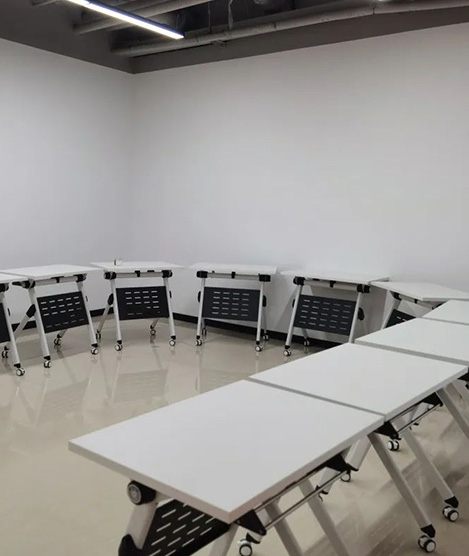
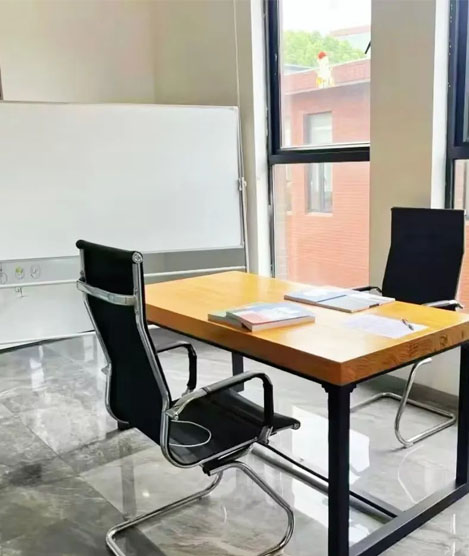
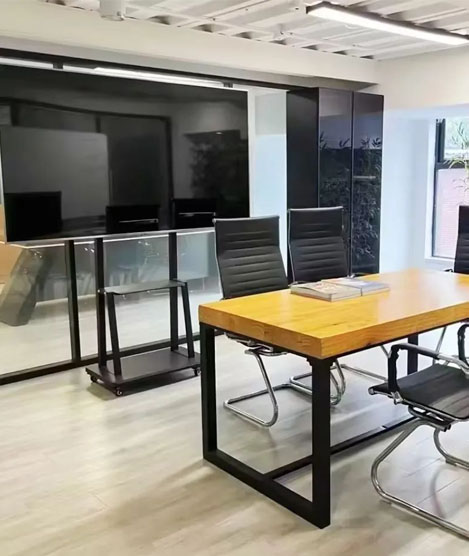
Teaching runs from Hanlin's own centres in Shanghai, Shenzhen, Chengdu and Hangzhou, and online for students elsewhere.




Talk to an advisor
Everything Hanlin does for AMC 8, in one conversation.
Entry, planning, coaching and the past papers. An advisor will tell you which of these a student actually needs, including when the answer is none of them.
Competition entry and planning
Which competitions suit this student, in what order, and by when - then we handle the registration, including the ones that can only be entered through a school or a centre.
Competition coaching
Taught by full-time subject tutors, on a course tier chosen by placement paper rather than by year group.
International curriculum tutoring
IB, AP, A-Level, IGCSE and the US high school curriculum, taught alongside school and timed around the exam calendar.
Competition past papers, free
A large library of past papers, mark schemes and syllabus breakdowns across every competition on this site. No charge and no enrolment.
Scan to add an advisor
Say which competition or course you are asking about. Replies in Chinese or English.
Or call +86 21 6352 6630FAQ
AMC 8, briefly answered.
What students and families ask before registering.
Who is eligible for AMC 8?
Students in grade 8 or below who are under 15.5 years old on the day of the contest. The MAA raised that ceiling from 14.5 for the 2026 cycle. Younger students are welcome to sit it, and strong candidates in grades 4 to 6 regularly do.
Can AMC 8 be taken online?
Yes. Candidates may sit it at home or in another quiet location. Two devices are needed: a computer to log into the exam system, and a phone or tablet running alongside it for invigilation. Both should be set up and tested before the day.
Is the practice run compulsory?
It is recommended but not required, and skipping it does not affect your score. Its purpose is to check the invigilation setup and get you familiar with the exam system, which is worth doing when the paper itself only lasts forty minutes.
Can I use a tablet or phone to sit the paper?
No. The paper must be answered on a computer. A second mobile device is used only for invigilation and cannot be used to answer questions.
Are calculators or scratch paper allowed?
No calculators. You may bring a valid photo ID, blank scratch paper, an eraser, a ruler, a pair of compasses, a pen and blank graph paper. Nothing else is permitted in the exam space.
Should I guess if I do not know an answer?
Yes. One mark is given for each correct answer and nothing is deducted for a wrong one or a blank, so an unanswered question is a mark you have given away for nothing.
Is the paper in English?
Candidates sitting in China receive a bilingual paper carrying the questions in both Chinese and English, so reading speed in English is not the constraint.
When do scores and certificates arrive?
Scores are released roughly four weeks after the contest and electronic certificates six to eight weeks after. Award announcements are published through the contest organiser’s official channels, and candidates can also check results through the contest portal.
What score is worth aiming at?
It depends on the year, because awards are percentile-based. In 2025 a 23 took the Distinguished Honor Roll and a 19 the Honor Roll; in 2023 the same awards went at 21 and 17. Aim a mark or two above the previous season rather than exactly at it.
Related
Where AMC 8 leads.
Students who sit AMC 8 usually move on to one of these within a year or two.
AMC 8 enquiries
Register early - the deadline is the constraint, not the paper.
Tell us the student’s year group and whether they are sitting through a school or as an independent candidate, and an advisor will confirm the registration route and map a preparation schedule against the contest date.