
Competitions · Computer science · AIO
AIO, the Australian Informatics Olympiad.
Six problems in three hours, marked by subtask so partial solutions score, and you may bring as many books and printed notes as you can carry. The entry point to the Australian informatics route.

At a glance
What the olympiad is, and who runs it.
AIO is the national school programming contest of the Australian Maths Trust, founded in 1992 by the Australian Mathematics Foundation, the Australian Mathematical Olympiad Committee and the University of Canberra. It is the entry-level event in the Australian informatics olympiad selection system.
- Organiser
- The Australian Maths Trust (AMT)
- Who can enter
- Students currently at an Australian secondary school, or at an equivalent institution overseas
- Divisions
- Intermediate for grades 7 to 10, Senior for grades 11 to 12
- Format
- Six problems in each division, individually, on a computer
- Duration
- 3 hours
- Marks
- 100 per problem, divided into subtasks
- Languages
- C11, C++17, Java 11 or Python 3
- What it tests
- Algorithm design, problem-solving and implementation. It does not test computer hardware or software knowledge
- Submissions
- Source code only, never compiled executables. At most one submission per problem per minute, and no source file larger than 100,000 bytes
- When
- Late August, with registration closing about a week earlier
- Where it leads
- Invitations to AIIO and FARIO, and from there selection for the Australian team at the International Olympiad in Informatics
How it is marked
Subtasks mean a partial answer still scores.
This is the mechanic that makes AIO a good first olympiad, and it changes how a competitor should spend three hours.
Each problem splits into subtasks
A problem is worth 100 marks divided among subtasks, each tested against its own set of input scenarios. Solving the easy cases of a hard problem is worth real marks.
A subtask needs every case correct
Within a subtask the program must produce the right output for all its input scenarios, inside the stated time and memory limits. There is no partial credit below subtask level.
And exceeding a limit fails the subtask
A program that runs too long or uses too much memory scores nothing for that subtask, however correct its logic. Judging runs on a 64-bit Linux machine of at least 2.0 GHz, and the time limits refer to it.
Which makes breadth the strategy
Attempting the first subtask of all six problems usually scores better than solving two problems completely. Problems and subtasks may be attempted in any order.
Confirm this before you compete
The source gives the submission rule three ways.
Whether your best, your last, or the union of all your submissions counts changes strategy completely, so this is worth settling with the organiser before the contest.
Best submission counts
One statement says multiple submissions are allowed and the best of them is used to calculate the problem score.
Last submission counts
Another says the final score for each problem depends on the grading of the last submission - which would make a late experimental submission genuinely risky.
Or the union of all of them
The scoring rules section says the final score is the sum of every subtask solved by at least one submission - which would make experimenting entirely free.
So ask, and behave conservatively until you know
Until it is confirmed, treat the last submission as the one that counts. That is the assumption under which no strategy loses marks.
What you may bring
An unusually generous materials rule.
AIO permits far more into the room than most programming contests, and it is worth preparing for deliberately.
Any number of books and written materials
Including printed source code and handwritten notes. A well-organised reference folder is a legitimate and underused advantage.
Plus ordinary stationery
Pens, scrap paper, a calculator and other stationery. One computer per student.
But no phones, tablets or smartwatches
Electronic devices beyond the contest computer are prohibited.
And the software rules are stricter
Text editors, IDEs and shells are free to use, and official language documentation may be consulted, but other websites may not. The source is ambiguous about pre-written code - it prohibits code stored on the machine while also saying pre-written code may be accessed. Confirm before relying on either reading.
Awards
Four bands, and a certificate for everyone else.
The two divisions are judged independently, so an Intermediate competitor is ranked against other Intermediate competitors.
| Award | Band |
|---|---|
| Gold | Top 10% |
| Silver | The next 15% |
| Bronze | The next 25% |
| Credit | The next 20% |
| Participation | Every remaining competitor |
Seventy per cent of each division receives a graded award, which is generous for an olympiad and consistent with AIO’s role as the entry point rather than the summit of the Australian route.
Technical rules
Four constraints that will fail an otherwise correct program.
These catch out competitors arriving from other contests, and each of them costs the whole problem.
Read and write the named files
Every problem statement names its input and output files. Opening the wrong file is the organisers’ own first explanation for scoring zero.
Java must be a class called Solution
Java solutions must sit in a single class named Solution and run from public static void main. Only java.lang, java.io and java.util may be used.
Single-threaded, single-process
No fork or system in C and C++, no java.lang.Thread or Runtime.exec in Java. Multithreading is prohibited outright.
And no network access
Programs must not attempt any network connection, and no code may interfere with the judging system.
Preparation
How Hanlin prepares students for AIO.
Subtask marking and a generous materials rule reward preparation that most competitors never do.
Practising the subtask sweep
Reading all six problems and taking the accessible subtasks first is a discipline. It is also the single highest-scoring habit available at this level.
Building the reference folder
Since printed code and handwritten notes are permitted, assembling a well-indexed set of standard algorithms before the contest is legitimate preparation and few students do it.
Testing locally, not on the judge
One submission per problem per minute means the grader cannot serve as a test harness. Students build their own cases from the sample data supplied.
And writing correct before writing fast
The organisers say it plainly: a slow but correct solution beats a fast but incorrect one. Subtask marking is what makes that true.
Why Hanlin
Preparation for AIO at Hanlin is taught by full-time subject tutors, on a course tier chosen by placement paper rather than by year group.
Programme formats
Five ways this is taught.
Group size is the whole difference between these. It decides how much of the tutor's attention a student gets and how far the course can bend to them, so it is worth choosing rather than accepting.
| Format | Group size | What it suits |
|---|---|---|
| One-to-one | One student | Content, pace and emphasis set by what this student actually needs rather than by a syllabus. The only format that can be rebuilt mid-course. |
| Small group | Three to eight | Opens at three. Frequent discussion, and the tutor can slow down or move on according to what the group has absorbed. Most students chasing a higher award are taught in this one. |
| Class | Eight to twelve | Taught by the subject lead or a medal coach. Less back-and-forth, so it suits a student who will say when something is unclear. |
| Large class | Ten to twenty | For students in the middle of the placement range, and a way to try a competition before committing. Students often move to a small group or to one-to-one afterwards. |
| Past-paper class | No cap | Past papers worked through in sequence in the weeks before the sitting. Free to students already enrolled. |
Course length for AIO is set after a placement paper. The gap between where a student is and what the paper asks for is what the course has to close, and that gap is not the same for two students in the same year group.
How it runs
Six steps, four people on your side.
The same process for every student, so that nothing depends on one tutor remembering to do it.
 Step 1
Pre-course assessment
A placement paper before anything is booked, so the course tier is chosen on evidence rather than on a year group.
 Step 2
Tutor matching
A subject tutor is matched to the result, and their full background is provided before you agree to it.
 Step 3
Plan and group
A study group opens with four people on one student: the tutor, a planner, a supervisor and an academic manager.
 Step 4
Scheduled teaching
The teaching office sets the timetable around the competition date and school term, and teaching begins.
 Step 5
After-class reports
What was covered, and how the student handled it, reported after every lesson.
 Step 6
Homework follow-up
The teaching assistant and the form teacher both check that homework is done, which is where most preparation quietly fails.
Free resource pack
Past papers and preparation pack
The same material our own AIO students work from. Scan the code, say what you need, and an advisor sends it.

Tell an advisor which competition and year group, and the material comes back the same day. Free, and you do not have to enrol in anything. If we do not already hold what you need, we will go and find it.
- PDFPast papers, every year the organiser has released
- PDFWorked solutions, where the organiser publishes them
- PDFThe syllabus on one page - every topic, and how heavily it is examined
- PDFEntry checklist and the dates for the current cycle
Teaching team
Who would teach it.
Three of the twenty-two tutors on the published Hanlin roster - the ones whose subject this is.
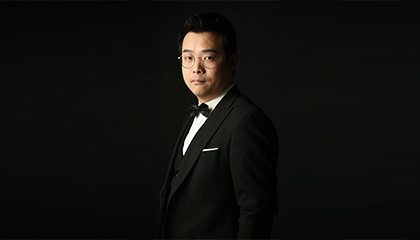
Luo
Bachelor's and master's in computer science from the University of California and ten years in the United States. Works close to the hardware, and teaches for independent problem solving rather than pattern recall.

Tan
Master's in data science from the University of Sydney after a statistics degree at Simon Fraser University, graduating in the top 5% with repeated chancellor's honours; A-Levels at a Cambridge international school, and formerly a data analyst at Tencent. An AMC-accredited coach, a College Board-accredited AP teacher, and holder of a Math League excellent-teacher award.

He
A Cambridge master's after a computer science degree with a mathematics minor at the University of Nebraska-Lincoln, and a US high school GPA of 4.13. Six years overseas and teaches entirely in English, across AMC, Math League, AP Computer Science and AP Calculus.
Where it is taught
Hanlin learning centres.
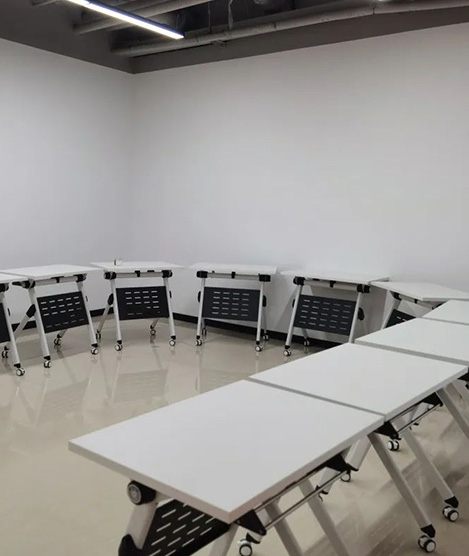
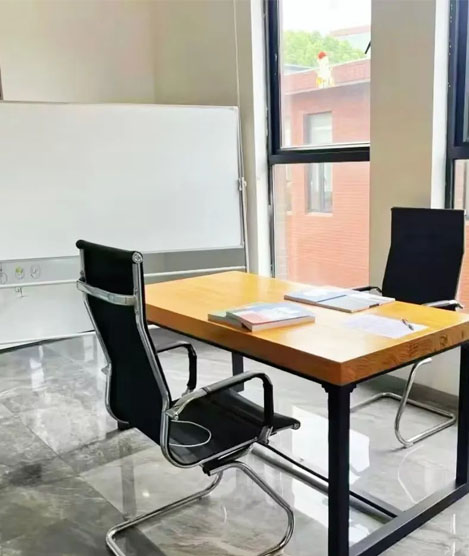
Teaching runs from Hanlin's own centres in Shanghai, Shenzhen, Chengdu and Hangzhou, and online for students elsewhere.





Talk to an advisor
Everything Hanlin does for AIO, in one conversation.
Entry, planning, coaching and the past papers. An advisor will tell you which of these a student actually needs, including when the answer is none of them.
Competition entry and planning
Which competitions suit this student, in what order, and by when - then we handle the registration, including the ones that can only be entered through a school or a centre.
Competition coaching
Taught by full-time subject tutors, on a course tier chosen by placement paper rather than by year group.
International curriculum tutoring
IB, AP, A-Level, IGCSE and the US high school curriculum, taught alongside school and timed around the exam calendar.
Competition past papers, free
A large library of past papers, mark schemes and syllabus breakdowns across every competition on this site. No charge and no enrolment.
Scan to add an advisor
Say which competition or course you are asking about. Replies in Chinese or English.
Or call +86 21 6352 6630FAQ
AIO, briefly answered.
What students and families ask before entering.
Can a student outside Australia enter?
Yes. Entry is open to students currently at an Australian secondary school or at an equivalent institution overseas.
What are the divisions?
Intermediate for grades 7 to 10 and Senior for grades 11 to 12. Each sits six problems and is judged independently.
What is the format?
Six problems in three hours, on a computer, submitted as source code. Each problem is worth 100 marks divided into subtasks, and problems may be attempted in any order.
Which languages may I use?
C11, C++17, Java 11 or Python 3. Java solutions must be in a single class named Solution and may use only java.lang, java.io and java.util.
Does a partial solution score?
Yes. Marks are awarded by subtask, so solving the easier cases of a hard problem is worth real marks. That is what makes attempting all six problems the better strategy.
If I submit more than once, which submission counts?
The source gives three different answers - the best submission, the last submission, and the sum of every subtask solved by any submission. Confirm with the organiser, and until then assume the last submission counts.
What may I bring into the contest?
One computer, pens, scrap paper, a calculator, other stationery, and any number of books or written materials including printed source code and handwritten notes. Phones, tablets and smartwatches are prohibited.
Can I use the internet?
Official language documentation may be consulted. Other websites may not be accessed. Text editors, IDEs and shells are free to use.
What awards are there?
Gold for the top 10%, silver for the next 15%, bronze for the next 25% and credit for the next 20%, with a participation certificate for everyone else. Each division is judged separately.
Where does it lead?
Strong performers may be invited to AIIO, the Australian Invitational Informatics Olympiad, and FARIO, the French-Australian Regional Informatics Olympiad, and from there to selection for the Australian international team.
Related
Other computing contests.
What students commonly enter alongside AIO.
AIO enquiries
A slow correct answer beats a fast wrong one.
Subtask marking makes AIO unusually forgiving of partial solutions, which is what makes it a good first olympiad. Tell us the student’s year group and what they program in, and an advisor will map the August entry.