
Competitions · Mathematics · AIMO
AIMO, the Australian Intermediate Mathematics Olympiad.
Ten questions in four hours for thirty-five marks, set by the Australian Mathematics Trust for students in year 10 and below. Its award system is unusual and works in a candidate’s favour: the cut-off scores are fixed by the Australian field, and everyone else is measured against those numbers rather than against each other.

At a glance
What the paper is, and who sits it.
AIMO is run by the Australian Mathematics Trust and is a progression paper from the Australian AMC - students who score well in the AMC middle-school group are the ones typically selected for it. It came to China in 2018.
- Organiser
- The Australian Mathematics Trust (AMT)
- Who can enter
- Students in grades 7 to 10 with a serious interest in mathematics. The paper is pitched at year 10, but able students from year 7 upward take it
- Where it sits
- A progression contest from the Australian AMC. Strong AMC middle-school performers are the usual entrants
- Format
- Individual. Ten written-solution questions
- Duration
- 4 hours
- Marks
- 35, distributed unevenly across the ten questions, plus an investigation carrying four further marks
- Language
- English
- Where
- At partner schools
- When
- A Saturday morning in September, 8:30 to 12:30, with registration closing about ten days before
- In China since
- 2018
- Equipment
- Confirm before the day - the published information contradicts itself. See below
Before the day
Confirm the calculator rule in writing.
This is worth its own section because getting it wrong is expensive and the published guidance points both ways.
Two rules, both in print
One part of the published information states that no calculator may be used at any point in the four hours. Another states that a calculator and a paper English-Chinese dictionary may be brought in.
Why it matters either way
A student who leaves a calculator behind on one reading loses a tool they were entitled to. A student who brings one on the other reading may have it removed at the door. Neither is recoverable once the paper starts.
Ask the organiser, not the internet
Before the day, get the current year’s equipment rule confirmed in writing by the organiser or your advisor. Rules of this kind also change between cycles, so an answer from a previous year is not enough.
Four hours is a long time without one
Whatever the answer, prepare as though arithmetic must be done by hand. A four-hour olympiad paper rewards reliable manual work far more than it rewards a calculator.
The mark scheme
Where the thirty-five marks sit.
The paper is heavily back-loaded. The last four questions carry more than half the total between them.
| Questions | Marks each | Subtotal |
|---|---|---|
| 1 to 4 | 2 | 8 |
| 5 | 3 | 3 |
| 6 | 4 | 4 |
| 7 to 10 | 5 | 20 |
| Investigation | — | 4 additional marks |
Questions 7 to 10 are worth 20 of the 35 marks. A candidate who spends the first two hours perfecting questions 1 to 4 has secured 8 marks and left the bulk of the paper untouched.
Awards
Why the award system favours international entrants.
AIMO does not rank the whole global field together, and the way it does work is genuinely to the advantage of a strong cohort outside Australia.
Australian scores set the bar
The cut-off marks are calculated first, from the Australian field alone - the scores at roughly the top 1.5%, 10%, 15% and 25% of Australian entrants.
Everyone else is judged against that number
International candidates are then measured directly against those mark thresholds rather than being ranked by percentile among themselves. The bar is absolute, not relative.
Which means you are not competing with each other
If every Chinese entrant scores above the Distinction line, every one of them takes a Distinction. A strong cohort raises the award count rather than dividing a fixed number of places.
And it protects the Australian field
The design also means a large or strong international entry cannot displace Australian students from their own award proportions, which is why the organisers set it up this way.
Award bands
Four bands, set on the Australian distribution.
Percentages are approximate and the actual mark thresholds move each year with the difficulty of the paper.
Syllabus
What the questions are built on.
The topic list is olympiad rather than curriculum: familiar objects used in unfamiliar ways, and several topics a school course never reaches.
Geometry
Parallels, similarity, Pythagoras, and circles with their tangents. Standard objects, but used in configurations that need construction rather than substitution.
Algebra and inequalities
Expansion and factorisation, sequences and series, and inequalities. The last of these is where most school-prepared candidates first find themselves without a method.
Number theory
Diophantine equations, congruences and number bases. These carry the largest gap between a school syllabus and what the paper expects, and reward direct preparation more than anything else on the list.
Counting and proof
Counting techniques, probability, and methods of proof. Because answers are written solutions rather than values, knowing how to present an argument is part of the syllabus rather than separate from it.
Preparation
How Hanlin prepares students for AIMO.
Four hours for ten questions is longer than almost anything else a student at this age will sit, and the endurance is a real part of the exercise.
Sitting a four-hour paper
Twenty-four minutes a question on average, and far longer on the last four. Students practise the full length at least once before the day - concentration over four hours is trained, not assumed.
Reaching questions 7 to 10
Those four carry 20 of the 35 marks. Timed practice is built around arriving at them with hours rather than minutes left, which usually means being brisker on the opening four than instinct suggests.
Closing the number theory gap
Congruences, Diophantine equations and number bases are the topics least likely to have been taught. They are covered explicitly rather than left to be met on the paper.
Writing the solution, not the answer
These are written-solution questions. Students practise setting out an argument a marker can follow, since a correct idea presented poorly does not score what it is worth.
Why Hanlin
Preparation for AIMO at Hanlin is taught by full-time subject tutors, on a course tier chosen by placement paper rather than by year group.
Programme formats
Five ways this is taught.
Group size is the whole difference between these. It decides how much of the tutor's attention a student gets and how far the course can bend to them, so it is worth choosing rather than accepting.
| Format | Group size | What it suits |
|---|---|---|
| One-to-one | One student | Content, pace and emphasis set by what this student actually needs rather than by a syllabus. The only format that can be rebuilt mid-course. |
| Small group | Three to eight | Opens at three. Frequent discussion, and the tutor can slow down or move on according to what the group has absorbed. Most students chasing a higher award are taught in this one. |
| Class | Eight to twelve | Taught by the subject lead or a medal coach. Less back-and-forth, so it suits a student who will say when something is unclear. |
| Large class | Ten to twenty | For students in the middle of the placement range, and a way to try a competition before committing. Students often move to a small group or to one-to-one afterwards. |
| Past-paper class | No cap | Past papers worked through in sequence in the weeks before the sitting. Free to students already enrolled. |
Course length for AIMO is set after a placement paper. The gap between where a student is and what the paper asks for is what the course has to close, and that gap is not the same for two students in the same year group.
How it runs
Six steps, four people on your side.
The same process for every student, so that nothing depends on one tutor remembering to do it.
 Step 1
Pre-course assessment
A placement paper before anything is booked, so the course tier is chosen on evidence rather than on a year group.
 Step 2
Tutor matching
A subject tutor is matched to the result, and their full background is provided before you agree to it.
 Step 3
Plan and group
A study group opens with four people on one student: the tutor, a planner, a supervisor and an academic manager.
 Step 4
Scheduled teaching
The teaching office sets the timetable around the competition date and school term, and teaching begins.
 Step 5
After-class reports
What was covered, and how the student handled it, reported after every lesson.
 Step 6
Homework follow-up
The teaching assistant and the form teacher both check that homework is done, which is where most preparation quietly fails.
Free resource pack
Past papers and preparation pack
The same material our own AIMO students work from. Scan the code, say what you need, and an advisor sends it.

Tell an advisor which competition and year group, and the material comes back the same day. Free, and you do not have to enrol in anything. If we do not already hold what you need, we will go and find it.
- PDFPast papers, every year the organiser has released
- PDFWorked solutions, where the organiser publishes them
- PDFThe syllabus on one page - every topic, and how heavily it is examined
- PDFEntry checklist and the dates for the current cycle
Teaching team
Who would teach it.
Three of the twenty-two tutors on the published Hanlin roster - the ones whose subject this is.

Dr Zhang
PhD in theoretical mathematics from the University of Rochester and a postdoctoral fellow at the Shanghai Center for Mathematical Sciences at Fudan. An AMC-accredited coach, ASDAN-accredited for DMM and ITCCC, and an accredited UKMT BMO2 and PUMaC coach. His students have gone on to read mathematics and physics at Harvard, MIT, Princeton, Caltech and Cambridge.

Dr Zhuang
PhD in mathematics from the University of Denver, working in mathematical logic, after a first degree in applied mathematics at Southeast University. A repeat conference speaker on his research, with three years lecturing and assisting on undergraduate mathematics at Denver.

He
A Cambridge master's after a computer science degree with a mathematics minor at the University of Nebraska-Lincoln, and a US high school GPA of 4.13. Six years overseas and teaches entirely in English, across AMC, Math League, AP Computer Science and AP Calculus.
Where it is taught
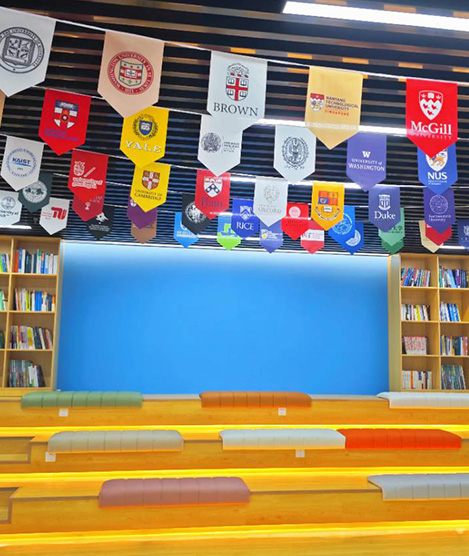
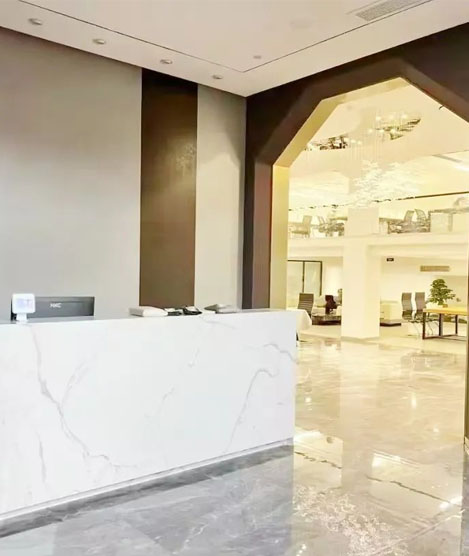
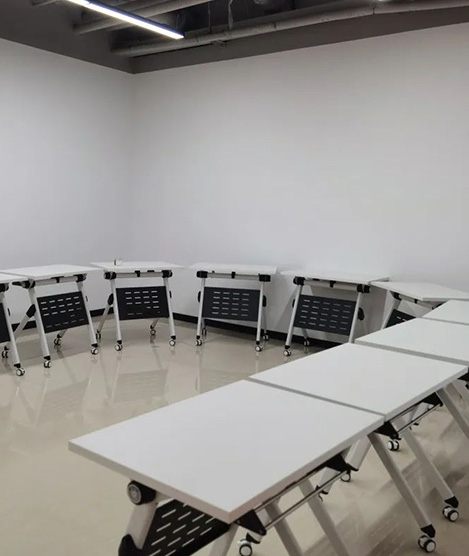
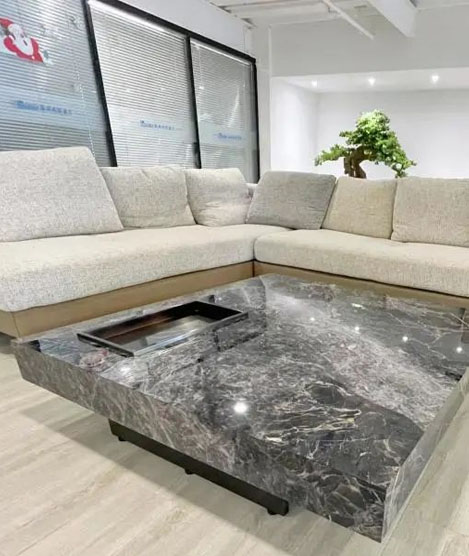
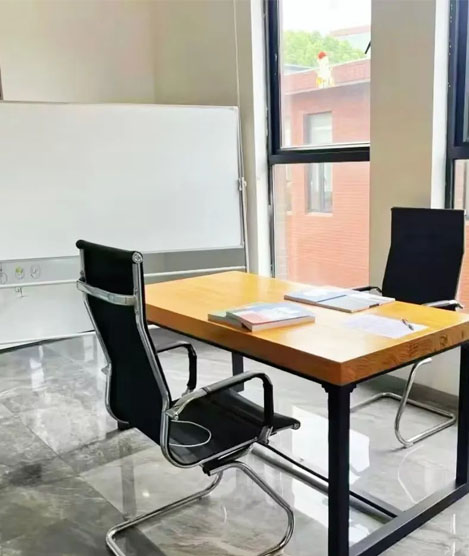
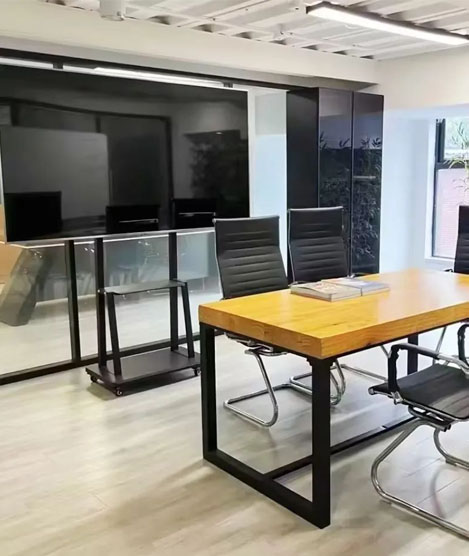
Hanlin learning centres.
Teaching runs from Hanlin's own centres in Shanghai, Shenzhen, Chengdu and Hangzhou, and online for students elsewhere.

Talk to an advisor
Everything Hanlin does for AIMO, in one conversation.
Entry, planning, coaching and the past papers. An advisor will tell you which of these a student actually needs, including when the answer is none of them.
Competition entry and planning
Which competitions suit this student, in what order, and by when - then we handle the registration, including the ones that can only be entered through a school or a centre.
Competition coaching
Taught by full-time subject tutors, on a course tier chosen by placement paper rather than by year group.
International curriculum tutoring
IB, AP, A-Level, IGCSE and the US high school curriculum, taught alongside school and timed around the exam calendar.
Competition past papers, free
A large library of past papers, mark schemes and syllabus breakdowns across every competition on this site. No charge and no enrolment.
Scan to add an advisor
Say which competition or course you are asking about. Replies in Chinese or English.
Or call +86 21 6352 6630FAQ
AIMO, briefly answered.
What students and families ask before entering.
Who can enter AIMO?
Students in grades 7 to 10. The paper is pitched at year 10 level, but able students from year 7 upward enter it - typically those who have scored highly in the Australian AMC or worked well beyond their curriculum.
Can I use a calculator?
Confirm this with the organiser before the day. The published information contradicts itself: one part says no calculator may be used at any point, another says a calculator and a paper English-Chinese dictionary may be brought. Prepare as though you will not have one.
How is the paper marked?
Ten questions for 35 marks: two marks each for questions 1 to 4, three for question 5, four for question 6 and five each for questions 7 to 10. An investigation carries four further marks.
How long is it?
Four hours, sat individually. It is considerably longer than most contests at this age group, and the endurance is part of what is being tested.
How are awards decided?
Cut-off marks are set from the Australian field - roughly the top 1.5%, 10%, 15% and 25% of Australian entrants for Prize, High Distinction, Distinction and Credit. International candidates are then measured against those marks directly.
Does that mean I compete against other Chinese students?
No, and this is the useful part. Because the bar is an absolute mark rather than a percentile among your own cohort, a strong group can all clear the same line and all take the award.
What topics should I prepare?
Parallels, similarity, Pythagoras, circles and tangents, Diophantine equations, congruences, number bases, counting techniques, expansion and factorisation, inequalities, sequences and series, probability, and methods of proof.
Is AIMO connected to the AMC?
Yes. It is a progression contest from the Australian AMC, and strong performers in the AMC middle-school group are the students usually selected for it.
Related
Contests around AIMO.
What students commonly sit before or alongside it.
AIMO enquiries
Settle the calculator question before anything else.
The published equipment rule points both ways, and four hours is a long time to discover you prepared for the wrong one. Tell us the student’s year group and an advisor will confirm the current rule and map the September entry.