
Competitions · Mathematics · AIME
AIME, the American Invitational Mathematics Examination.
Fifteen questions across two 90-minute parts, every answer a whole number between 0 and 999. You cannot simply enter AIME - you qualify, from 2027 on fixed scores: 100 or above on the AMC 10, 85 or above on the AMC 12, per the MAA. The qualification is itself the first distinction; the score is the second.
At a glance
What the paper is, and how you get to sit it.
AIME is the middle rung of the American competition ladder, between the open AMC papers and the national olympiad. Details below follow the published rules for the 2027 cycle.
- Organiser
- The Mathematical Association of America (MAA)
- Entry
- By invitation only. There is no open registration and the invitation cannot be transferred to anyone else
- Format
- 15 fill-in questions, rising in difficulty. No multiple choice and no working to be shown
- Duration
- 3 hours
- Answers
- Every answer is a whole number from 0 to 999, written as an integer. Padding shorter answers with leading zeros was once required and is not under current guidance - follow the instructions issued for the year you sit
- Marking
- 1 mark for a correct answer, 0 for a wrong or blank one, 15 in total. Nothing is deducted, so leaving anything unanswered is a wasted chance
- Calculators
- Not permitted, in any form
- Language
- Candidates sitting in China receive a bilingual Chinese and English paper
- Venue
- At a partner school. Unlike AMC, AIME may not be sat at home, and it is formally invigilated
- Two sittings
- AIME I and AIME II run on different dates with different questions and equivalent difficulty. You sit one or the other, never both
- Validity
- An invitation is valid only for that year’s AIME. Qualifying again means placing again on the following AMC
- Scope
- Arithmetic, algebra, counting, geometry, number theory and probability. Calculus is outside the syllabus, though calculus methods may be used to reach an answer
Qualification
The two routes to an invitation.
Both routes run through the November AMC papers. Whichever you qualify on, the AIME paper you then sit is the same.
| Route | What it takes | Who is eligible for that paper |
|---|---|---|
| Via AMC 10 | From 2027, a fixed qualifying score: 100 or above on the AMC 10, per the MAA - percentile invitations are retired. | Grade 10 and below, not older than 17.5 on contest day |
| Via AMC 12 | From 2027, a fixed qualifying score: 85 or above on the AMC 12, per the MAA - percentile invitations are retired. | Grade 12 and below, not older than 19.5 on contest day |
Qualification is automatic on the score. There is nothing to apply for, and no route into AIME that bypasses the AMC papers.
The paper
Fifteen questions in three bands.
The difficulty climbs steadily with the question number, and the useful way to plan three hours is by band rather than by dividing the time evenly.
Questions 1 to 6
Comparable to a hard AMC question, and within reach of anyone who scored above 120 on the paper that qualified them. Thirty to forty minutes is the target for all six - time spent beyond that is taken from the questions that decide the score.
Questions 7 to 10
The transition band, where fluency matters more than knowledge: permutations and combinations, the binomial theorem, Vieta’s formulas, higher-degree and Diophantine equations, Newton’s identities. Another thirty to forty minutes.
Questions 11 to 15
Long rather than uniformly hard. Several carry heavy casework instead of a hidden trick, which means the band rewards patience and organised bookkeeping as much as insight - and it is where the remaining time should go.
The habits that save marks
Verify endpoints separately, grid Diophantine cases so none is missed, check whether integer or non-zero solutions are wanted, and confirm every condition including the implicit ones has been used before committing an answer.
2027 cycle
The dates for the coming season.
AIME follows the November AMC papers, so the qualifying result arrives only weeks before the paper itself.
Sit AMC 10 or AMC 12
The only route to an invitation. Both A and B papers count, and the better result is used.
Registration deadline
Qualified candidates confirm their place by this point.
Contest
Sat at a partner school under formal invigilation. Candidates sit one paper only, never both sittings.
Certificate issued
Every candidate receives a certificate showing their score and global percentile.
Score benchmarks
What a mark out of fifteen actually means.
AIME awards no ranked prizes. Every candidate receives a certificate carrying their score and global percentile, and the score is read against the global distribution rather than against a pass mark.
Reading a score
What each band demonstrates.
No competition result determines an admission. What follows is how scores are commonly read as evidence, and what each band is usually enough to support.
| Score | What it demonstrates |
|---|---|
| 5 to 7 | Strong mathematical ability, well clear of the global average. Useful supporting evidence in an application to a selective university, including outside mathematics-heavy subjects. |
| 8 to 10 | Places a candidate in roughly the global top 10%. This is the band at which competitive mathematics summer programmes become realistic. |
| 11 to 12 | Around the level at which USA(J)MO qualification becomes reachable, and unambiguous evidence of ability in a science or engineering application. |
| 13 to 15 | Among the strongest results earned worldwide in a given year, and a rare thing for any admissions reader to see. |
Students holding Chinese nationality can compete up to AIME level but do not continue to USAMO or USAJMO. Reaching a qualifying index is still strong independent evidence of ability, and is worth stating as such.
Why it matters
The invitation, the index and the ceiling.
Three things changed the weight of an AIME score, and the most important of them happened recently.
Qualification now runs on AIME alone
For years, USA(J)MO qualification ran on an index - the AMC score plus a multiple of the AIME score. From the 2027 cycle the index is retired: qualification is based primarily on AIME scores, and AMC scores are no longer a factor, per the MAA.
USAMO and USAJMO
From the 2027 cycle, USAMO and USAJMO qualification is based primarily on AIME scores - AMC scores are no longer a factor, per the MAA. The old score-plus-20×AIME index, where a region of 220 to 250 typically progressed, is retired.
Read directly by admissions
Selective US universities treat AIME as a hard indicator of mathematical ability, and several provide a field for AMC and AIME results in their application systems so the score is read as submitted.
The invitation is the first signal
Because there is no open entry, sitting AIME at all already places a student in the top few per cent of a global field. That is true before the paper is marked, and it is worth saying plainly in an application.
Preparation
How Hanlin prepares students for AIME.
The gap between AMC and AIME is wider than the gap between any two AMC papers, and it is not closed by doing more of the same.
The four modules, one level up
Algebra, geometry, number theory and combinatorics again, but at the depth AIME asks for: roots of unity, Ptolemy and the power of a point, Fermat’s little theorem and the Chinese remainder theorem, expectation and inclusion-exclusion.
Past papers back to the beginning
AIME has run since 1983 and the archive is deep enough to train on directly. Reading papers in sequence is what makes the recurring structures visible, and most AIME questions are variations on a structure.
Three hours, rehearsed
Full timed papers, because pacing across three hours is a skill in itself. The usual failure is not running out of mathematics but spending the first hour on questions that were only ever worth forty minutes.
Answering with no partial credit
A right method and a slipped arithmetic step score the same as a blank page. Preparation therefore trains checking as deliberately as solving, since on this paper accuracy is not a virtue but the whole of the mark.
Why Hanlin
Hanlin has been entering students for AIME for years, and publishes what they got. The record is further down this page.
Programme formats
Five ways this is taught.
Group size is the whole difference between these. It decides how much of the tutor's attention a student gets and how far the course can bend to them, so it is worth choosing rather than accepting.
| Format | Group size | What it suits |
|---|---|---|
| One-to-one | One student | Content, pace and emphasis set by what this student actually needs rather than by a syllabus. The only format that can be rebuilt mid-course. |
| Small group | Three to eight | Opens at three. Frequent discussion, and the tutor can slow down or move on according to what the group has absorbed. Most students chasing a higher award are taught in this one. |
| Class | Eight to twelve | Taught by the subject lead or a medal coach. Less back-and-forth, so it suits a student who will say when something is unclear. |
| Large class | Ten to twenty | For students in the middle of the placement range, and a way to try a competition before committing. Students often move to a small group or to one-to-one afterwards. |
| Past-paper class | No cap | Past papers worked through in sequence in the weeks before the sitting. Free to students already enrolled. |
Course tiers
Which course, and on what evidence.
Every tier for AIME is entered from a placement paper rather than from a year group. These are the actual standards.
| Course | Hours | Who it is for |
|---|---|---|
| Full course | 40 hours | An AMC 12 mock above 90 or fifteen correct on the placement paper - that is, already at qualifying standard |
| Sprint | 30 hours | Qualifying standard reached, but with limited time before the paper |
Ask for the placement paper before choosing a tier. It takes an hour and it settles the question.
How it runs
Six steps, four people on your side.
The same process for every student, so that nothing depends on one tutor remembering to do it.
 Step 1
Pre-course assessment
A placement paper before anything is booked, so the course tier is chosen on evidence rather than on a year group.
 Step 2
Tutor matching
A subject tutor is matched to the result, and their full background is provided before you agree to it.
 Step 3
Plan and group
A study group opens with four people on one student: the tutor, a planner, a supervisor and an academic manager.
 Step 4
Scheduled teaching
The teaching office sets the timetable around the competition date and school term, and teaching begins.
 Step 5
After-class reports
What was covered, and how the student handled it, reported after every lesson.
 Step 6
Homework follow-up
The teaching assistant and the form teacher both check that homework is done, which is where most preparation quietly fails.
Free resource pack
AIME past papers and preparation pack
The same material our own AIME students work from. Scan the code, say what you need, and an advisor sends it.

Tell an advisor which competition and year group, and the material comes back the same day. Free, and you do not have to enrol in anything. If we do not already hold what you need, we will go and find it.
- PDFPast AIME papers with full solutions
- PDFUSA(J)MO qualifying indices, year by year
- PDFThe topics that recur, and the ones that never do
- PDFWhat has to happen on the AMC first, and by when
Teaching team
Who would teach it.
Three of the twenty-two tutors on the published Hanlin roster - the ones whose subject this is.

Dr Zhang
PhD in theoretical mathematics from the University of Rochester and a postdoctoral fellow at the Shanghai Center for Mathematical Sciences at Fudan. An AMC-accredited coach, ASDAN-accredited for DMM and ITCCC, and an accredited UKMT BMO2 and PUMaC coach. His students have gone on to read mathematics and physics at Harvard, MIT, Princeton, Caltech and Cambridge.

Dr Zhuang
PhD in mathematics from the University of Denver, working in mathematical logic, after a first degree in applied mathematics at Southeast University. A repeat conference speaker on his research, with three years lecturing and assisting on undergraduate mathematics at Denver.

He
A Cambridge master's after a computer science degree with a mathematics minor at the University of Nebraska-Lincoln, and a US high school GPA of 4.13. Six years overseas and teaches entirely in English, across AMC, Math League, AP Computer Science and AP Calculus.
Student results
What Hanlin students got.
Taken from Hanlin's published record of student honours and rewritten in English. Figures are as the organisers reported them.
Reached the USA(J)MO line, 2024-25
One line from Hanlin's published AIME record. The rest of it is below.
AIME
- 2024-2532 students scored 10 or above; 14 reached the USA(J)MO qualifying line
- 2023-24Two students scored 14, three scored 13 and nine scored 12. 20 reached the USA(J)MO line
- 2022-2319 students scored 8 or above, the highest a 14. 10 reached the line
Earlier years
- 2021Highest score 14; 9 students reached the USA(J)MO line
- 2020The US test cohort qualified for the AIME at 93.3%, and two students scored 10 or above to reach the USAMO line
The full record, across every subject and year, is on the student honours page.
Where it is taught
Hanlin learning centres.
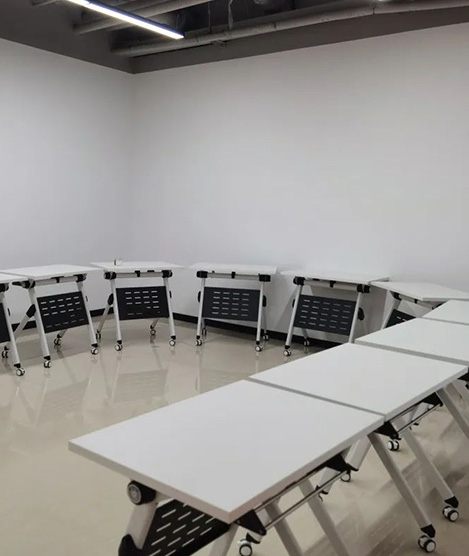
Teaching runs from Hanlin's own centres in Shanghai, Shenzhen, Chengdu and Hangzhou, and online for students elsewhere.






Talk to an advisor
Everything Hanlin does for AIME, in one conversation.
Entry, planning, coaching and the past papers. An advisor will tell you which of these a student actually needs, including when the answer is none of them.
Competition entry and planning
Which competitions suit this student, in what order, and by when - then we handle the registration, including the ones that can only be entered through a school or a centre.
Competition coaching
Taught by full-time subject tutors, on a course tier chosen by placement paper rather than by year group.
International curriculum tutoring
IB, AP, A-Level, IGCSE and the US high school curriculum, taught alongside school and timed around the exam calendar.
Competition past papers, free
A large library of past papers, mark schemes and syllabus breakdowns across every competition on this site. No charge and no enrolment.
Scan to add an advisor
Say which competition or course you are asking about. Replies in Chinese or English.
Or call +86 21 6352 6630FAQ
AIME, briefly answered.
What students and families ask once an invitation arrives.
How do I qualify for AIME?
By scoring in roughly the top 2.5% on AMC 10 or the top 5% on AMC 12. Qualification is automatic on the score - there is no separate application, and no way to enter AIME without one of those results.
What is the difference between AIME I and AIME II?
Nothing in difficulty, question type or marking. They run on different dates with different questions. You sit one of the two, never both.
How is AIME marked?
One mark for each correct answer and nothing deducted for a wrong or blank one, out of fifteen. Because there is no penalty, every question should carry an answer by the time you stop.
Do I need to pad answers with leading zeros?
Not under current guidance - write the answer as an integer, so 7 rather than 007. This was required in earlier years, which is why the belief persists. Follow whatever the instructions say for the year you sit.
How hard is it compared with AMC?
Considerably harder. The first five or six questions sit near the top of the AMC range, question six is generally the watershed, and the final five are genuinely demanding. There is also no multiple choice to fall back on.
What score is worth having?
It depends on the purpose. The global average is usually 3 to 5. Above 7 is already a significant result for a selective application, around 9 is a strong case for a competitive summer programme, and progressing further generally needs 10 or more combined with the AMC score.
Can I sit AIME at home?
No. Unlike AMC, AIME must be sat at a partner school under formal invigilation, and no calculators of any kind are permitted.
Can Chinese students go on to USAMO?
No. Students holding Chinese nationality can compete up to AIME level and do not continue to USAMO or USAJMO. Reaching an index that would have qualified is still meaningful evidence and worth recording.
Does the invitation carry over to next year?
No. An invitation is valid for that year’s AIME only, and it cannot be transferred to another student. Qualifying again means placing again on the following AMC.
Related
The ladder around AIME.
The papers that qualify for it, and the round it qualifies for.
AIME enquiries
The invitation arrives weeks before the paper.
If a student is close to the AMC cutoff, preparation for AIME should start before the AMC result is known - there is not enough time afterwards. Tell us the year group and the AMC score, and an advisor will map what the window allows.