
Competitions · Research and innovation · 3M Young Scientist Challenge
The 3M Young Scientist Challenge.
A one-to-two-minute video is the entire entry, and creativity is worth as much as the science. Grades 5 to 8, a mentorship with a working 3M scientist for finalists - and US residence is required.
Read this first
US residence, and grades 5 to 8 only.
The eligibility rules are narrow in three separate ways, and all three are checked at entry.
Legal US residents, aged 10 or over
Entrants must be legal residents of the United States and at least ten years old. There is no international entry route.
Enrolled in one of the fifty states or DC
At a public, charter, private, parochial or home school, in grades 5 to 8, by the stated enrolment date. A student at a school in China cannot enter.
And previous finalists cannot return
Anyone who has already reached the final of the Young Scientist Challenge is ineligible. It is a one-time achievement rather than a ladder.
If this is closed to you
ICW is open to students from kindergarten through grade 12 worldwide and rewards the same kind of problem-finding invention. CASTIC is the Chinese national route.
At a glance
What the challenge is.
Launched by Discovery Communications in 1999 and run with 3M since 2008, the challenge asks middle-school students to use STEM to solve a real problem - and to explain it in under two minutes.
- Organisers
- Discovery Communications and 3M
- Since
- 1999, with 3M as partner from 2008
- Who can enter
- Legal US residents aged 10 or over, in grades 5 to 8
- Language
- English
- The entry
- A video of one to two minutes describing an innovation or solution to an everyday problem affecting the student, their family, their community or the wider world
- Judging weights
- Creativity 30%, scientific knowledge 30%, persuasiveness and effective communication 20%, overall performance 20%
- Grand prize
- USD 25,000, and one-to-one research mentorship from a scientist
- For finalists
- One-to-one time with 3M executives and scientists
- The season
- Entries open in January and close on 1 May. Judging and the finalist announcement follow in June, and the final and the results in October
The format
Two minutes, and nothing else.
This is the whole entry. No paper, no prototype requirement, no display board - which changes what the competition actually tests.
One to two minutes of video
The student describes an innovation or a solution. The constraint is the point: a complicated idea that cannot be explained in two minutes is not yet finished thinking.
About a problem that affects them
The brief asks for a problem that directly affects the student, their family, their community or the global population. Personal proximity to the problem is built into the question.
Which lowers the barrier deliberately
For a grade 5 student, a two-minute video is a far more achievable first entry than a research paper. Past winning solutions have addressed water conservation, noise pollution, energy use and public transport efficiency.
And raises a different one
Communication is worth twenty per cent on its own, and creativity thirty. A student who can build but cannot explain is competing at a real disadvantage here.
How the video is judged
Four criteria, and the science is only thirty per cent.
The weights are published in full, which is rare. Read them as a brief rather than as a rubric.
| Criterion | Weight | What it asks for |
|---|---|---|
| Creativity | 30% | Originality and innovative thinking - presenting the challenge through a distinct perspective and a distinct idea |
| Scientific knowledge | 30% | Applying STEM principles to a real challenge, and demonstrating that you understand the science you are using |
| Persuasiveness and communication | 20% | Enthusiasm and evident research, and conveying the idea clearly and effectively |
| Overall performance | 20% | Connecting all of it together, and whether the video actually inspires the person watching it |
Creativity and communication together are worth 50%, against 30% for the science. This is a competition about having an idea and making someone care about it, with the science as the foundation rather than the subject.
The themes
Six starting points.
The themes are framed as prompts rather than categories - a flexible framework for a student to find their own question inside.
Robotics, and safety
Machines built and programmed to work without human intervention, at speed and with accuracy. And safety - on the sports field, crossing the road, and in what we do and consume.
Home improvement, and automotive
Making homes more energy-efficient, safer and more comfortable. And making cars more efficient and sustainable, in manufacture and in design.
AR and VR, and climate technology
Augmented and virtual reality, for their capacity to change how we live, work and interact. And science-based innovation addressing climate challenges, so that the next generation inherits the same quality of life.
What finalists get
The mentorship is the real prize.
The cash award is substantial, but the part that changes a student’s year is the access.
One-to-one with a working scientist
The winner receives one-to-one research mentorship. Finalists get direct time with 3M executives and scientists - the kind of access a school science fair cannot offer.
USD 25,000 for the winner
Awarded to the grand prize winner alongside the mentorship.
And a cohort
Finalists meet other students who care about the same things. For a grade 6 or 7 student that is often the first time.
Over most of a year
Entries open in January and the winners are announced the following October. The programme is a season rather than an event.
Preparation
What to take from this if you cannot enter.
The published weights are a useful brief for any competition that asks a student to present an idea, and most of them do.
Practise explaining in two minutes
Almost every research and invention competition ends in a short presentation. Two minutes is a demanding and highly transferable discipline.
Start from a problem you actually have
The brief asks for something affecting the student directly. That is good advice well beyond this competition - the strongest entries anywhere start from observation rather than from a topic list.
And weight creativity properly
Thirty per cent for originality against thirty for the science. Most students spend their preparation the other way round.
Then find a route that is open
ICW takes entries from students worldwide from kindergarten upward and weighs the invention process heavily. It is the closest equivalent available from China.
Why Hanlin
Preparation for 3M Young Scientist Challenge at Hanlin is taught by full-time subject tutors, on a course tier chosen by placement paper rather than by year group.
Programme formats
Five ways this is taught.
Group size is the whole difference between these. It decides how much of the tutor's attention a student gets and how far the course can bend to them, so it is worth choosing rather than accepting.
| Format | Group size | What it suits |
|---|---|---|
| One-to-one | One student | Content, pace and emphasis set by what this student actually needs rather than by a syllabus. The only format that can be rebuilt mid-course. |
| Small group | Three to eight | Opens at three. Frequent discussion, and the tutor can slow down or move on according to what the group has absorbed. Most students chasing a higher award are taught in this one. |
| Class | Eight to twelve | Taught by the subject lead or a medal coach. Less back-and-forth, so it suits a student who will say when something is unclear. |
| Large class | Ten to twenty | For students in the middle of the placement range, and a way to try a competition before committing. Students often move to a small group or to one-to-one afterwards. |
| Past-paper class | No cap | Past papers worked through in sequence in the weeks before the sitting. Free to students already enrolled. |
Course length for 3M Young Scientist Challenge is set after a placement paper. The gap between where a student is and what the paper asks for is what the course has to close, and that gap is not the same for two students in the same year group.
How it runs
Six steps, four people on your side.
The same process for every student, so that nothing depends on one tutor remembering to do it.
 Step 1
Pre-course assessment
A placement paper before anything is booked, so the course tier is chosen on evidence rather than on a year group.
 Step 2
Tutor matching
A subject tutor is matched to the result, and their full background is provided before you agree to it.
 Step 3
Plan and group
A study group opens with four people on one student: the tutor, a planner, a supervisor and an academic manager.
 Step 4
Scheduled teaching
The teaching office sets the timetable around the competition date and school term, and teaching begins.
 Step 5
After-class reports
What was covered, and how the student handled it, reported after every lesson.
 Step 6
Homework follow-up
The teaching assistant and the form teacher both check that homework is done, which is where most preparation quietly fails.
Free resource pack
Project and submission pack
The same material our own 3M Young Scientist Challenge students work from. Scan the code, say what you need, and an advisor sends it.

Tell an advisor which competition and year group, and the material comes back the same day. Free, and you do not have to enrol in anything. If we do not already hold what you need, we will go and find it.
- PDFPast finalist project titles and abstracts
- PDFCategory definitions and the judging criteria, broken down
- DOCXA project timeline working back from the submission date
- PDFEntry checklist and the dates for the current cycle
Teaching team
Who would teach it.
Three of the twenty-two tutors on the published Hanlin roster - the ones whose subject this is.

Dr An
Mathematics at Illinois Urbana-Champaign with highest honours and the Elizabeth R. Bennett scholarship, then a PhD in mathematics at Johns Hopkins on full funding with the Owen fellowship and the Joel Dean award for excellent teaching. Years of US university teaching, translating high-level mathematics into language students can use.

Yu
Master's in bioinformatics and computational biology from UT Dallas and a nutritional sciences degree from Wisconsin-Madison. Second author on an SCI-indexed paper from the Tanumihardjo vitamin-A laboratory, and formerly at ABS Global.

Tan
Master's in data science from the University of Sydney after a statistics degree at Simon Fraser University, graduating in the top 5% with repeated chancellor's honours; A-Levels at a Cambridge international school, and formerly a data analyst at Tencent. An AMC-accredited coach, a College Board-accredited AP teacher, and holder of a Math League excellent-teacher award.
Where it is taught
Hanlin learning centres.
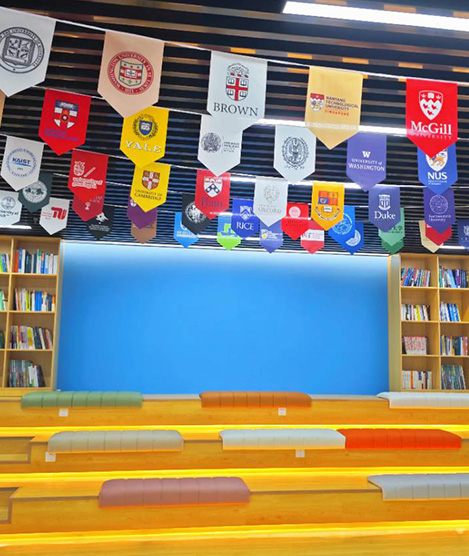
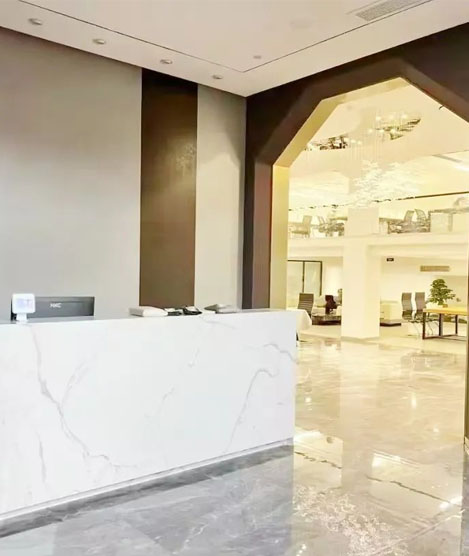
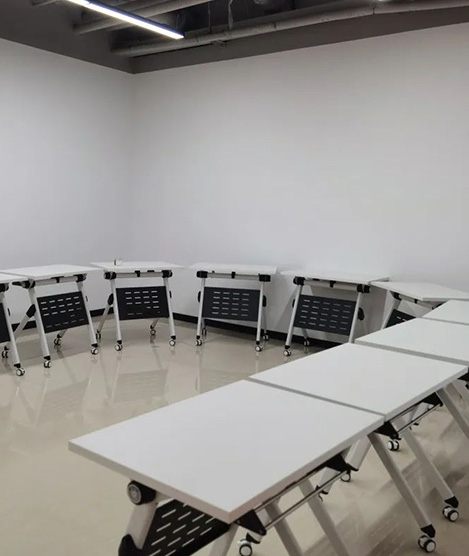
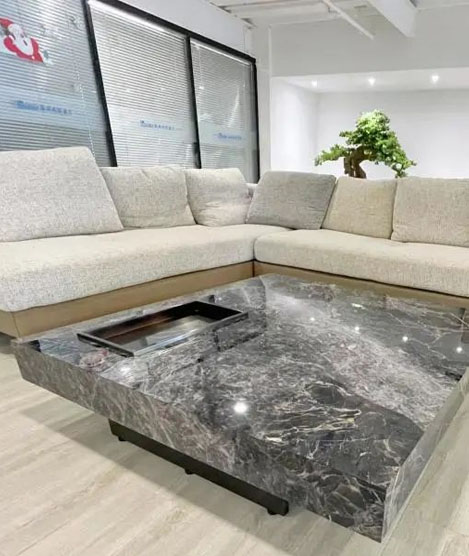
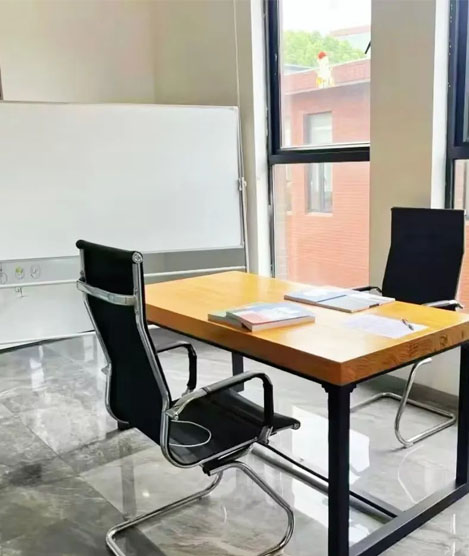
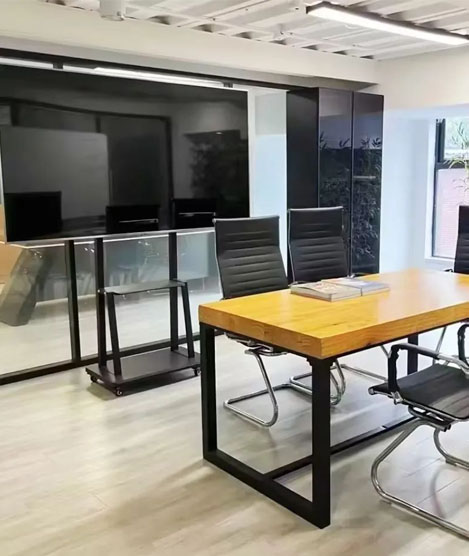
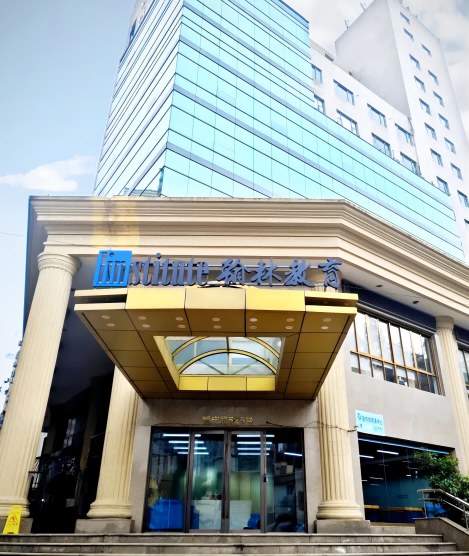
Teaching runs from Hanlin's own centres in Shanghai, Shenzhen, Chengdu and Hangzhou, and online for students elsewhere.
Talk to an advisor
Everything Hanlin does for 3M Young Scientist Challenge, in one conversation.
Entry, planning, coaching and the past papers. An advisor will tell you which of these a student actually needs, including when the answer is none of them.
Competition entry and planning
Which competitions suit this student, in what order, and by when - then we handle the registration, including the ones that can only be entered through a school or a centre.
Competition coaching
Taught by full-time subject tutors, on a course tier chosen by placement paper rather than by year group.
International curriculum tutoring
IB, AP, A-Level, IGCSE and the US high school curriculum, taught alongside school and timed around the exam calendar.
Competition past papers, free
A large library of past papers, mark schemes and syllabus breakdowns across every competition on this site. No charge and no enrolment.
Scan to add an advisor
Say which competition or course you are asking about. Replies in Chinese or English.
Or call +86 21 6352 6630FAQ
The 3M Young Scientist Challenge, briefly answered.
What students and families ask.
Can a student in China enter?
No. Entrants must be legal US residents aged 10 or over, enrolled in grades 5 to 8 at a school in one of the fifty states or the District of Columbia.
What should a student in China enter instead?
ICW, the Invention Convention Worldwide, which takes entries from kindergarten through grade 12 and runs a China region. CASTIC is the Chinese national innovation contest.
Who can enter?
Legal US residents aged at least ten, in grades 5 to 8 at a public, charter, private, parochial or home school. Previous finalists of the challenge are not eligible to enter again.
What is the entry?
A video of one to two minutes describing an innovation or solution to an everyday problem affecting the student, their family, their community or the global population.
How is it judged?
Creativity 30%, scientific knowledge 30%, persuasiveness and effective communication 20%, and overall performance 20%.
What are the themes?
Robotics, home improvement, automotive, safety, augmented and virtual reality, and climate technology - framed as prompts rather than fixed categories.
What is the prize?
USD 25,000 for the grand prize winner, along with one-to-one research mentorship from a scientist. Finalists get direct time with 3M executives and scientists.
When does it run?
Entries open in January and close on 1 May. Judging and the finalist announcement follow in June, and the final and the results come in October.
Do I need a working prototype?
The entry is the video. What it must contain is a described innovation or solution and the science behind it, explained clearly enough to persuade someone in under two minutes.
Related
Competitions that are open to you.
Where a young inventor in China can go instead.
3M Young Scientist Challenge enquiries
Closed from China - but the brief is worth borrowing.
This one needs US residence, so most families reading this cannot enter. What transfers is the format: a two-minute explanation of a problem you actually have, with creativity weighted as heavily as the science. Tell us the year group and an advisor will find a competition that is open.