
Competitions · Mathematics and sciences · MCM/ICM
MCM and ICM, the COMAP modelling contests.
Ninety-nine hours, six problems to choose between, and twenty-five pages to say everything in - code and appendices included. Your name appears nowhere on it. And the school team next to you is competing against universities.

Read this first
A school team here competes against universities.
The contest is usually described as an undergraduate one, and mostly it is. Its own rules open it to school students as well, in the same field and against the same standard.
Open to undergraduates and high school students
The rules state the contest is open to all undergraduates and high school students. A school team is not entered in a separate division - it is in the same field.
Which is the honest reason to think carefully
A strong school team can do well here, and it is being judged against people two to four years further into a mathematics degree. That is a real decision, not a formality.
Teams of at most three
The published material gives team size three different ways. The rules section is the one to follow: at most three students, currently enrolled at the same school. A school may register as many teams as it likes.
And the advisor can be a student
Any faculty member or student at the team’s institution may serve as advisor, and they need not be from the mathematics department. A team member, or another student at the school, can take the role.
At a glance
What the contests are.
COMAP has organised MCM since 1985, making it the oldest of the modelling contests. Problems range across economics, management, environment, resources, ecology, medicine and public safety, and students from more than eighteen countries enter each year.
- Two contests
- MCM, the Mathematical Contest in Modeling, and ICM, the Interdisciplinary Contest in Modeling
- Who can enter
- Undergraduates and high school students
- Team
- At most three students, all currently enrolled at the same school
- Teams per school
- No limit
- Advisor
- Any faculty member or student at the same institution, from any department. Completing team registration is the advisor’s job
- Language
- English. All submitted material must be in English, at 12 point or larger
- Registration deadline
- 3:00pm US Eastern on the opening day. COMAP states that late registration is never accepted, without exception
- The contest
- Opens 5:00pm Eastern on a Thursday in late January and closes 8:00pm Eastern the following Monday - about 99 hours
- Report deadline
- 9:00pm Eastern on the closing day, one hour after the contest ends
- Page limit
- 25 pages for the entire submission
- Results
- Early May
The six problems
Choose the field you actually know.
Problems are released at the start and teams choose one. MCM tests analysis of an open problem; ICM grew out of it and leans harder on working across disciplines and on written communication.
| Contest | Problem | Type |
|---|---|---|
| MCM | A | Continuous |
| MCM | B | Discrete |
| MCM | C | Big data |
| ICM | D | Operations research and network science |
| ICM | E | Environmental science |
| ICM | F | Government policy |
The choice is free, and it is the most consequential decision of the ninety-nine hours. A team that picks the problem matching what it already knows has four days to model. A team that picks the interesting one has four days to learn a field and then model it.
The AI policy
You may use it. You must declare it.
COMAP has published a position on generative AI, which very few competitions have. It is permissive and specific, and it is worth following exactly.
Large language models are permitted
Teams may use large language models and generative AI tools in the contest. There is no prohibition.
With a declared AI Use Report
A team that uses AI adds a section at the end of the report titled "AI Use Report". It is a named, required section, not a footnote.
And that section is free of the page limit
The AI Use Report has no page limit and does not count toward the 25 pages. So there is no cost to declaring fully, and every reason to.
The 25 pages stand either way
Using AI does not extend the solution report. Twenty-five pages remains the cap on everything else, whether or not AI was used.
The submission rules
Twenty-five pages, and no names anywhere.
The rules are precise and mechanical. Getting them wrong is the cheapest way to lose four days of work.
| Rule | Detail |
|---|---|
| The page cap | Twenty-five pages covers the whole submission - summary sheet, solution, references, table of contents, notes, appendices, code and any problem-specific material. Only the AI Use Report sits outside it |
| Anonymity | The names of students, advisors and institutions must not appear on any page. The team control number is the only identifying information permitted |
| File size | Under 20MB |
| Email subject | COMAP followed by the control number - COMAP1234 |
| Attachment name | Team followed by the control number - Team1234 |
| Sources | Any external source must be documented with footnotes, endnotes or inline documentation, and cited properly in a reference list |
| Typography | English, 12 point or larger |
For 2026 the submission runs through a new online page, and registration is split into advisor registration and team registration. You need the team control number, the advisor ID and your chosen problem to submit. Advisors do not have to name members when registering a team - register the control numbers early and fill in the students later.
The paper
Six sections, and the first one carries the most weight.
COMAP publishes the expected structure. The summary is not a formality here.
Summary, then contents
The summary is described as an important component of the paper and must be the first page of the report. A table of contents follows, so the reader can preview how the work is organised.
Introduction, analysis and models
Clarify or restate the problem as appropriate, then present the analysis and justify why the model you chose is the right one. Motivating the model is explicitly part of the job.
Conclusions, results, references
State the conclusions clearly and report the results. Then document every source. The whole thing must be clear, concise and organised enough to follow easily.
The awards
Named awards, each with its own criterion.
Beyond the ranking bands, MCM/ICM gives a set of named awards chosen by the head judge for each problem. They reward quite different things.
| Award | Who gives it, and for what |
|---|---|
| International COMAP Scholarship Award | To the four highest-scoring teams across MCM and ICM, regardless of nationality. Team members share a $9,000 prize and the school receives $1,000 - the published material does not make clear whether the $9,000 is per team or in total |
| INFORMS Award | From the Institute for Operations Research and the Management Sciences, to the highest-scoring team on each of the six problems |
| Ben Fusaro Award | MCM, problems A to C. For a particularly creative paper, chosen from the finalists |
| Frank R. Giordano Award | MCM. For a paper showing genuine excellence in executing the modelling process |
| Leonhard Euler Award | ICM, problem D. Chosen by the head judge from papers at Meritorious, Finalist or Outstanding level, for a creative model and deep understanding of interdisciplinary science |
| Rachel Carson Award | ICM, problem E. Chosen by the head judge for the best use of scientific theory and data |
| ICM Pareto Award | ICM, problem F. Chosen by the head judge for expressing factors that resist simplification through a more dynamic and demanding model |
Note that four of these are chosen by a single head judge for a single problem. Choosing problem D, E or F puts a team in a much smaller field for its named award than the overall ranking suggests.
Preparation
How Hanlin prepares an MCM or ICM team.
Four days is short, three people is small, and twenty-five pages is less than it sounds once code and appendices are inside it.
Deciding the problem type in advance
Continuous, discrete, big data, networks, environment or policy. A team that knows which two it would take before the problems are released loses no time to the choice.
Writing to twenty-five pages including code
Appendices and code count. Teams used to unlimited appendices consistently overrun. Practising the cut on an old problem is the fix.
Drafting the summary first
It has to be page one and it carries disproportionate weight. Writing it early, then rewriting it at the end, produces a far better paper than leaving it to the last hour.
And registering long before the deadline
COMAP states that late registration is never accepted, without exception. Advisors can register control numbers before members are chosen, so there is no reason to wait.
Why Hanlin
Preparation for MCM/ICM at Hanlin is taught by full-time subject tutors, on a course tier chosen by placement paper rather than by year group.
Programme formats
Five ways this is taught.
Group size is the whole difference between these. It decides how much of the tutor's attention a student gets and how far the course can bend to them, so it is worth choosing rather than accepting.
| Format | Group size | What it suits |
|---|---|---|
| One-to-one | One student | Content, pace and emphasis set by what this student actually needs rather than by a syllabus. The only format that can be rebuilt mid-course. |
| Small group | Three to eight | Opens at three. Frequent discussion, and the tutor can slow down or move on according to what the group has absorbed. Most students chasing a higher award are taught in this one. |
| Class | Eight to twelve | Taught by the subject lead or a medal coach. Less back-and-forth, so it suits a student who will say when something is unclear. |
| Large class | Ten to twenty | For students in the middle of the placement range, and a way to try a competition before committing. Students often move to a small group or to one-to-one afterwards. |
| Past-paper class | No cap | Past papers worked through in sequence in the weeks before the sitting. Free to students already enrolled. |
Course length for MCM/ICM is set after a placement paper. The gap between where a student is and what the paper asks for is what the course has to close, and that gap is not the same for two students in the same year group.
How it runs
Six steps, four people on your side.
The same process for every student, so that nothing depends on one tutor remembering to do it.
 Step 1
Pre-course assessment
A placement paper before anything is booked, so the course tier is chosen on evidence rather than on a year group.
 Step 2
Tutor matching
A subject tutor is matched to the result, and their full background is provided before you agree to it.
 Step 3
Plan and group
A study group opens with four people on one student: the tutor, a planner, a supervisor and an academic manager.
 Step 4
Scheduled teaching
The teaching office sets the timetable around the competition date and school term, and teaching begins.
 Step 5
After-class reports
What was covered, and how the student handled it, reported after every lesson.
 Step 6
Homework follow-up
The teaching assistant and the form teacher both check that homework is done, which is where most preparation quietly fails.
Free resource pack
Problems and modelling pack
The same material our own MCM/ICM students work from. Scan the code, say what you need, and an advisor sends it.

Tell an advisor which competition and year group, and the material comes back the same day. Free, and you do not have to enrol in anything. If we do not already hold what you need, we will go and find it.
- PDFEvery past problem set
- PDFOutstanding papers, with the structure annotated
- PDFA modelling toolkit - the methods that keep recurring, and when each applies
- PDFEntry checklist and the dates for the current cycle
Teaching team
Who would teach it.
Three of the twenty-two tutors on the published Hanlin roster - the ones whose subject this is.

Dr An
Mathematics at Illinois Urbana-Champaign with highest honours and the Elizabeth R. Bennett scholarship, then a PhD in mathematics at Johns Hopkins on full funding with the Owen fellowship and the Joel Dean award for excellent teaching. Years of US university teaching, translating high-level mathematics into language students can use.

Dr Zhang
PhD in theoretical mathematics from the University of Rochester and a postdoctoral fellow at the Shanghai Center for Mathematical Sciences at Fudan. An AMC-accredited coach, ASDAN-accredited for DMM and ITCCC, and an accredited UKMT BMO2 and PUMaC coach. His students have gone on to read mathematics and physics at Harvard, MIT, Princeton, Caltech and Cambridge.

Tan
Master's in data science from the University of Sydney after a statistics degree at Simon Fraser University, graduating in the top 5% with repeated chancellor's honours; A-Levels at a Cambridge international school, and formerly a data analyst at Tencent. An AMC-accredited coach, a College Board-accredited AP teacher, and holder of a Math League excellent-teacher award.
Student results
What Hanlin students got.
Taken from Hanlin's published record of student honours and rewritten in English. Figures are as the organisers reported them.
MCM/ICM
- 2023Meritorious
- 2021Honourable Mention, the top 16%
Earlier years
- 2019Honourable Mention, the top 16%
The full record, across every subject and year, is on the student honours page.
Where it is taught
Hanlin learning centres.
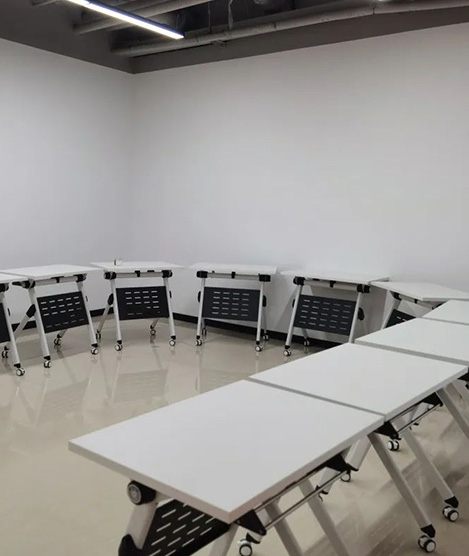
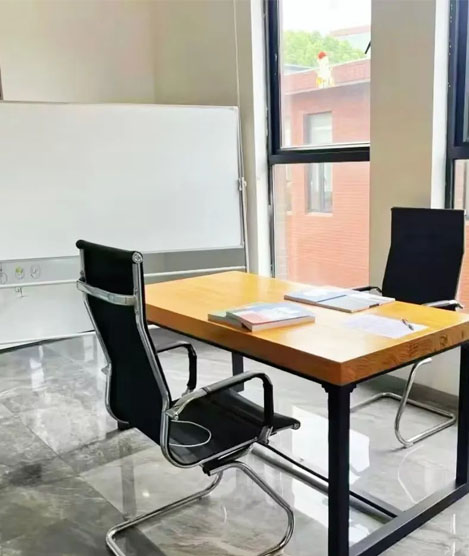
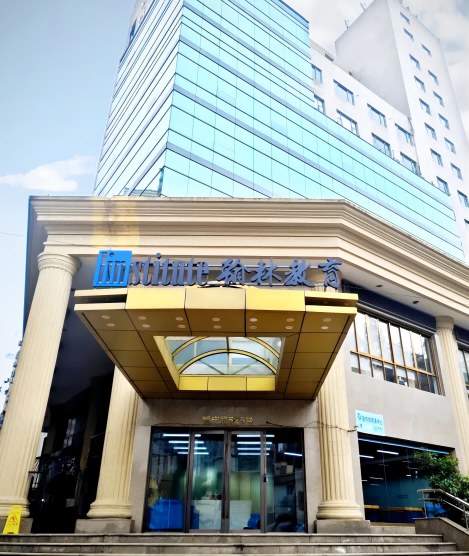
Teaching runs from Hanlin's own centres in Shanghai, Shenzhen, Chengdu and Hangzhou, and online for students elsewhere.




Talk to an advisor
Everything Hanlin does for MCM/ICM, in one conversation.
Entry, planning, coaching and the past papers. An advisor will tell you which of these a student actually needs, including when the answer is none of them.
Competition entry and planning
Which competitions suit this student, in what order, and by when - then we handle the registration, including the ones that can only be entered through a school or a centre.
Competition coaching
Taught by full-time subject tutors, on a course tier chosen by placement paper rather than by year group.
International curriculum tutoring
IB, AP, A-Level, IGCSE and the US high school curriculum, taught alongside school and timed around the exam calendar.
Competition past papers, free
A large library of past papers, mark schemes and syllabus breakdowns across every competition on this site. No charge and no enrolment.
Scan to add an advisor
Say which competition or course you are asking about. Replies in Chinese or English.
Or call +86 21 6352 6630FAQ
MCM/ICM, briefly answered.
What students and families ask before entering.
Can high school students enter?
Yes. The rules open the contest to undergraduates and high school students alike, in the same field. There is no separate school division.
What is the difference between MCM and ICM?
MCM tests the ability to clarify, analyse and solve an open-ended problem. ICM grew out of it and leans further into working across disciplines and into written communication. MCM offers problems A, B and C; ICM offers D, E and F.
How big is a team?
At most three students, all currently enrolled at the same school. A school may register as many teams as it likes.
Who can be the advisor?
Any faculty member or student at the team’s institution, from any department. A team member or another student at the school may serve. The advisor completes registration for each team.
How long is the contest?
It opens at 5pm US Eastern on a Thursday in late January and closes at 8pm Eastern the following Monday - about ninety-nine hours - with the report due an hour after that.
Can we use AI?
Yes. COMAP permits large language models and generative AI tools. A team that uses them must add a section titled "AI Use Report" at the end of the report. That section has no page limit and does not count toward the 25 pages.
What is the page limit?
Twenty-five pages for the entire submission - summary sheet, solution, references, contents, notes, appendices, code and any problem-specific material. Only the AI Use Report is exempt.
Can our names appear on the paper?
No. The names of students, advisors and institutions must not appear on any page. The team control number is the only identifying information allowed.
How do we submit?
Through COMAP’s online submission page, using the team control number, the advisor ID and the chosen problem. The file must be under 20MB, the email subject is COMAP followed by the control number, and the attachment is Team followed by the control number.
What if we miss the registration deadline?
There is no route back. COMAP states that late registration is never accepted under any circumstances. Advisors can register team control numbers before choosing members, so register early.
What awards are there?
The International COMAP Scholarship Award to the four highest-scoring teams, the INFORMS Award to the top team on each problem, the Ben Fusaro and Frank R. Giordano Awards in MCM, and the Leonhard Euler, Rachel Carson and ICM Pareto Awards for ICM problems D, E and F respectively.
Related
Other modelling and mathematics competitions.
What students enter alongside MCM/ICM.
MCM/ICM enquiries
Four days, three people, twenty-five pages.
A school team enters the same field as university teams, chooses one of six problems and has about ninety-nine hours. Tell us who is in the team and which problem types they could take on, and an advisor will plan the four days backwards from the page limit.