
Competitions · Mathematics and sciences · IMMC
IMMC, the International Mathematical Modeling Challenge.
One hundred and twenty consecutive hours on a problem set by an international panel - and then, if you get that far, you stand up in Hong Kong and defend the paper out loud. Very few modelling competitions make you argue for your model in person.
How it differs from HiMCM
Four rules that make it a different competition.
Both are modelling competitions and COMAP is involved in both. Beyond that they work quite differently, and a team planning to enter both should know how.
One school, one teacher
Every member of an IMMC team must come from the same school, and at least one teacher from that school must serve as advisor. Cross-school teams are not possible.
A fixed 120 hours
The international round gives teams five consecutive days on a set problem. That is a hard, continuous block rather than a fortnight to work within.
A live defence
Finalists present and defend their paper in person in Hong Kong. The written paper is not the last word.
And you can set your own problem
The Chinese regional round accepts a self-chosen paper as well as a set-problem one. A team can bring a question it actually cares about.
At a glance
What the challenge is.
IMMC was founded in Boston in 2014 and is run jointly by COMAP and Neo Union of Hong Kong. Its stated purpose is to spread modelling education and build scientific and innovative capability among secondary students. In its seventh edition, students from more than thirty countries and regions took part and 52 teams reached the final.
- Who can enter
- Students in grades 6 to 12, with good mathematics and strong English reading and writing
- Selection
- Entrants pass an interview with a mentor
- Team
- Two to four students, all from the same school
- Advisor
- At least one teacher from that same school
- Entry fee
- $100 per team per entry, whichever entry mode is used. The international round and the defence final carry no further fee
- Two entry modes
- A set-problem paper, or a self-chosen paper
- Regional round
- All teams from mainland China, Taiwan, Hong Kong and Macau go through it. Autumn and winter seasons are offered
- You may enter both seasons
- Yes - the better result counts toward the regional selection and toward advancing
- International round
- 120 consecutive hours on a problem set by the IMMC international expert panel
- Defence final
- Late April, in Hong Kong
- Awards ceremony
- Summer, in Boston
The two entry modes
A problem you are given, or one you choose.
The self-chosen route is unusual and is worth considering seriously. The two modes demand different things and cost the same.
The set-problem paper
The problem goes live when the season opens. Every team works independently on the same question, models it, solves it and submits a research paper. Directly comparable, and directly competitive.
The self-chosen paper
No opening time - submit any time before the deadline. The team picks its own question. This suits a team that already has a problem it wants to work on, and it removes the time pressure entirely.
The trade-off is comparability
On a set problem the judges see how your model compares with everyone else’s on the same question. On a self-chosen one, the question itself is part of what is being assessed.
Both cost the same
The entry fee applies per entry either way, so the choice is about the work rather than the budget.
The season
Registration in November, Boston in the summer.
The route runs across most of an academic year and crosses three cities.
Registration
Teams register, with their school advisor, and choose an entry mode.
The Chinese regional round
A four-day window, opening and closing at 8pm. Autumn and winter seasons are offered and a team may enter both, with the better result counting.
The international round
120 consecutive hours - five days, 8pm to 8pm - on a problem set by the international expert panel.
The defence final in Hong Kong
The grand jury reviews finalists from both the regional and international rounds. Teams present and answer for their work.
The awards ceremony in Boston
Where the competition was founded, in 2014.
The awards
Five bands, and a separate route to international review.
Award bands are capped as a share of the field, so the cut-offs move with the number of teams entering.
| Award | Cap |
|---|---|
| Outstanding (O) | No more than 1% of teams |
| Finalist (F) | No more than 7% of teams |
| Meritorious (M) | No more than 12% of teams |
| Honorable (H) | No more than 31% of teams |
| Participation | Every team completing a modelling paper |
Advancing works separately from the award bands. Teams in the top 20% by score automatically qualify for the IMMC international round. Beyond that, the IMMC China committee selects the two best papers from each of mainland China, Taiwan, Hong Kong and Macau - eight in all - to go forward to international review.
Before you plan around it
Two claims worth checking yourself.
Both appear in the published material and both could cause a student real difficulty if taken at face value.
Reusing the paper as an EE or EPQ
The material suggests submitting competition work as an IB extended essay or an A-level EPQ or IPQ. Examination boards have rules about work submitted for more than one purpose. Ask your IB coordinator or EPQ supervisor before doing this - the answer may be yes with a declaration, and it may be no.
Bonus points in Chinese university admissions
The material refers to bonus points in independent admissions. That channel was discontinued in 2020, so treat any claim of admissions credit as needing verification against the current system.
And a certificate for "training papers"
A university research-capability certificate is offered for competition or training papers. A paper never entered into the competition would therefore carry the same certificate. Judge what that is worth accordingly.
None of which is a reason not to enter
IMMC is a serious modelling competition with a genuine international final. It is a reason to be precise about what the result is and is not.
Preparation
How Hanlin prepares an IMMC team.
A hundred and twenty continuous hours and a live defence at the end make this competition demanding in two quite different ways.
Planning five continuous days
Five days running, not five days of work spread across a fortnight. Deciding when the team sleeps, and who works while others do, is a real part of the plan.
Building the team inside one school
Everyone comes from the same school with a teacher from that school as advisor, so the team is drawn from a smaller pool. Finding and developing the missing skill internally has to start early.
Choosing between the two modes
A team with a question it genuinely cares about should think hard about the self-chosen route. A team that wants a direct comparison against the field should take the set problem.
And rehearsing the defence
Presenting a model to a grand jury and being questioned on it is a distinct skill from writing the paper. Teams that reach Hong Kong having never defended the work out loud are at a real disadvantage.
Why Hanlin
Hanlin has been entering students for IMMC for years, and publishes what they got. The record is further down this page.
Programme formats
Five ways this is taught.
Group size is the whole difference between these. It decides how much of the tutor's attention a student gets and how far the course can bend to them, so it is worth choosing rather than accepting.
| Format | Group size | What it suits |
|---|---|---|
| One-to-one | One student | Content, pace and emphasis set by what this student actually needs rather than by a syllabus. The only format that can be rebuilt mid-course. |
| Small group | Three to eight | Opens at three. Frequent discussion, and the tutor can slow down or move on according to what the group has absorbed. Most students chasing a higher award are taught in this one. |
| Class | Eight to twelve | Taught by the subject lead or a medal coach. Less back-and-forth, so it suits a student who will say when something is unclear. |
| Large class | Ten to twenty | For students in the middle of the placement range, and a way to try a competition before committing. Students often move to a small group or to one-to-one afterwards. |
| Past-paper class | No cap | Past papers worked through in sequence in the weeks before the sitting. Free to students already enrolled. |
Course length for IMMC is set after a placement paper. The gap between where a student is and what the paper asks for is what the course has to close, and that gap is not the same for two students in the same year group.
How it runs
Six steps, four people on your side.
The same process for every student, so that nothing depends on one tutor remembering to do it.
 Step 1
Pre-course assessment
A placement paper before anything is booked, so the course tier is chosen on evidence rather than on a year group.
 Step 2
Tutor matching
A subject tutor is matched to the result, and their full background is provided before you agree to it.
 Step 3
Plan and group
A study group opens with four people on one student: the tutor, a planner, a supervisor and an academic manager.
 Step 4
Scheduled teaching
The teaching office sets the timetable around the competition date and school term, and teaching begins.
 Step 5
After-class reports
What was covered, and how the student handled it, reported after every lesson.
 Step 6
Homework follow-up
The teaching assistant and the form teacher both check that homework is done, which is where most preparation quietly fails.
Free resource pack
Problems and modelling pack
The same material our own IMMC students work from. Scan the code, say what you need, and an advisor sends it.

Tell an advisor which competition and year group, and the material comes back the same day. Free, and you do not have to enrol in anything. If we do not already hold what you need, we will go and find it.
- PDFEvery past problem set
- PDFOutstanding papers, with the structure annotated
- PDFA modelling toolkit - the methods that keep recurring, and when each applies
- PDFEntry checklist and the dates for the current cycle
Teaching team
Who would teach it.
Three of the twenty-two tutors on the published Hanlin roster - the ones whose subject this is.

Dr An
Mathematics at Illinois Urbana-Champaign with highest honours and the Elizabeth R. Bennett scholarship, then a PhD in mathematics at Johns Hopkins on full funding with the Owen fellowship and the Joel Dean award for excellent teaching. Years of US university teaching, translating high-level mathematics into language students can use.

Dr Zhang
PhD in theoretical mathematics from the University of Rochester and a postdoctoral fellow at the Shanghai Center for Mathematical Sciences at Fudan. An AMC-accredited coach, ASDAN-accredited for DMM and ITCCC, and an accredited UKMT BMO2 and PUMaC coach. His students have gone on to read mathematics and physics at Harvard, MIT, Princeton, Caltech and Cambridge.

Tan
Master's in data science from the University of Sydney after a statistics degree at Simon Fraser University, graduating in the top 5% with repeated chancellor's honours; A-Levels at a Cambridge international school, and formerly a data analyst at Tencent. An AMC-accredited coach, a College Board-accredited AP teacher, and holder of a Math League excellent-teacher award.
Student results
What Hanlin students got.
Taken from Hanlin's published record of student honours and rewritten in English. Figures are as the organisers reported them.
Of teams advanced in 2024
One line from Hanlin's published IMMC record. The rest of it is below.
IMMC
- 20257 teams advanced to the international round. In the Greater China round, 4 teams took Outstanding nominations and 3 first prizes; internationally, 3 Outstanding nominations, 2 Honourable Mentions and one first prize
- 20246 teams entered and all 6 advanced to the international round
- 20236 teams advanced, 3 of them shortlisted for the international Outstanding award
Earlier years
- 2022One team took an Honourable Mention
- 20213 teams entered and all advanced, one taking the Greater China Outstanding award at the international round
The full record, across every subject and year, is on the student honours page.
Where it is taught
Hanlin learning centres.
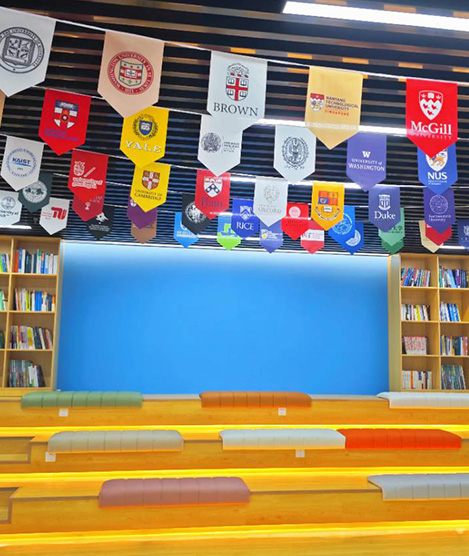
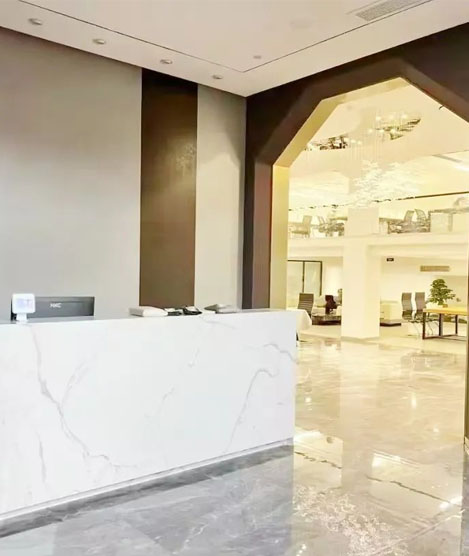
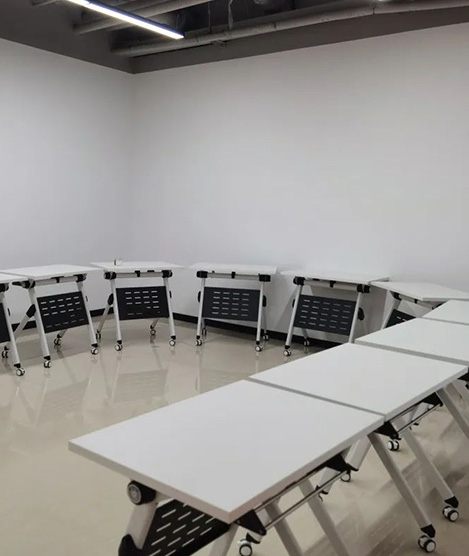
Teaching runs from Hanlin's own centres in Shanghai, Shenzhen, Chengdu and Hangzhou, and online for students elsewhere.

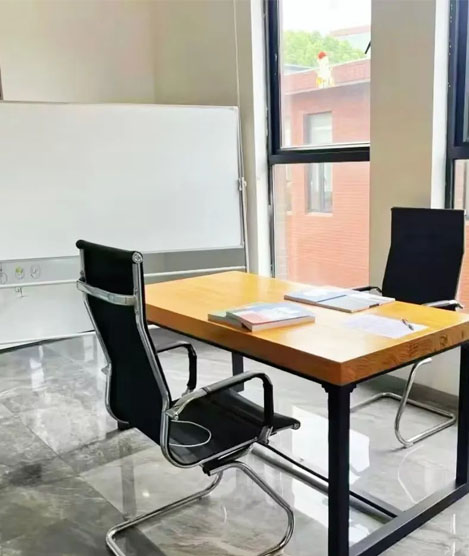
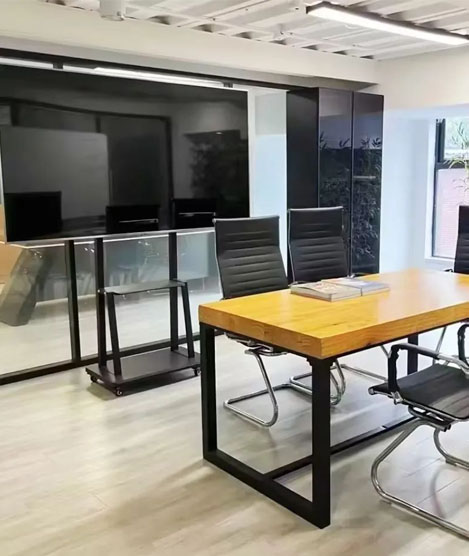
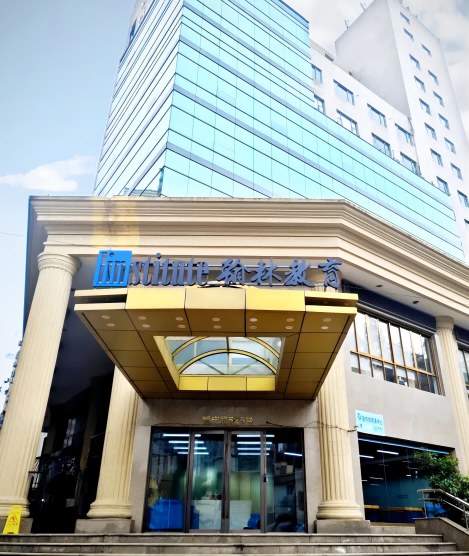
Talk to an advisor
Everything Hanlin does for IMMC, in one conversation.
Entry, planning, coaching and the past papers. An advisor will tell you which of these a student actually needs, including when the answer is none of them.
Competition entry and planning
Which competitions suit this student, in what order, and by when - then we handle the registration, including the ones that can only be entered through a school or a centre.
Competition coaching
Taught by full-time subject tutors, on a course tier chosen by placement paper rather than by year group.
International curriculum tutoring
IB, AP, A-Level, IGCSE and the US high school curriculum, taught alongside school and timed around the exam calendar.
Competition past papers, free
A large library of past papers, mark schemes and syllabus breakdowns across every competition on this site. No charge and no enrolment.
Scan to add an advisor
Say which competition or course you are asking about. Replies in Chinese or English.
Or call +86 21 6352 6630FAQ
IMMC, briefly answered.
What students and families ask before entering.
Who runs IMMC?
It was founded in Boston in 2014 and is run jointly by COMAP and Neo Union of Hong Kong. It is also written as IM2C.
Who can enter?
Students in grades 6 to 12 with good mathematics and strong English reading and writing, who pass an interview with a mentor.
How big is a team, and can it cross schools?
Two to four students, all from the same school, with at least one teacher from that school as advisor. Cross-school teams are not permitted.
What does it cost?
$100 per team per entry, in either entry mode. The international round and the defence final carry no further fee.
What are the two entry modes?
A set-problem paper, where the problem is released when the season opens and every team works on the same question; or a self-chosen paper, which has no opening time and lets the team pick its own question.
How does the Chinese regional round work?
All teams from mainland China, Taiwan, Hong Kong and Macau must go through it. Autumn and winter seasons are offered and a team may enter either or both, with the better result counting.
What is the international round?
A hundred and twenty consecutive hours - five days - on a problem set by the IMMC international expert panel, ending in a submitted modelling paper.
How do teams reach international review?
Teams in the top 20% by score automatically qualify for the international round. The IMMC China committee then selects the two best papers from each of mainland China, Taiwan, Hong Kong and Macau - eight in total - for international review.
What are the award bands?
Outstanding for no more than 1% of teams, Finalist for no more than 7%, Meritorious for no more than 12% and Honorable for no more than 31%. Every team completing a paper receives a participation award.
Where does it finish?
The defence final is in Hong Kong in late April, and the awards ceremony is in Boston in the summer.
Can I use the paper as my extended essay?
Check with your IB coordinator or EPQ supervisor first. Examination boards have rules about work submitted for more than one purpose, and the answer depends on the board and on how the work is declared.
Related
Other modelling and mathematics competitions.
What students enter alongside IMMC.
IMMC enquiries
One school, five days, and a room in Hong Kong.
IMMC needs a team from a single school with a teacher behind it, and it ends with students defending their model out loud. Tell us which school and who is available, and an advisor will help decide between the set problem and a question of your own.