
Competitions · Business and economics · Ideas for Action
Ideas for Action, the World Bank and Wharton competition.
Three winning teams present at the IMF and World Bank Annual Meetings in Washington, with their travel paid, and every winning proposal is published by the World Bank. But you have to be eighteen to enter.

Read this first
This is not a school competition.
Ideas for Action is open to young people aged eighteen to thirty-five. Most secondary school students are not eligible, and it is worth being clear about that before anything else.
The floor is eighteen
Not "school students", not "under eighteen with permission". A student in year eleven cannot enter this competition, however good the idea is.
Which makes it a gap-year or university target
For a student turning eighteen in the final year of school, or heading to university, it becomes available - and stays available for the next seventeen years.
And the team can be anyone
Two to six people, from different schools, companies, countries and backgrounds. An eighteen-year-old can team up with older colleagues, which is unusual and worth knowing.
What to do in the meantime
If the student is not yet eighteen, the Diamond Challenge and the Conrad Challenge ask for similar work at school age. The preparation transfers directly.
At a glance
What the competition is.
Ideas for Action has run since 2015, organised jointly by the World Bank and the Zicklin Center for Business Ethics Research at the Wharton School, University of Pennsylvania. It asks how development goals should actually be financed - poverty, energy, disease, hunger, discrimination, education and technology among them.
- Who can enter
- Young people aged 18 to 35, anywhere in the world
- Team
- Two to six people, who may come from different schools, companies, countries and backgrounds
- What you submit
- A written proposal, in English
- Length
- 1,500 to 3,000 words, excluding references and any text inside figures
- Format
- PDF or Word, submitted through the official application portal
- The subject
- Anything that supports the United Nations sustainable development goals, provided it comes with a workable financing plan. No restriction on the entrant’s field
- How it is judged
- A three-stage selection process assessing creativity, significance and feasibility
- Who judges
- Technical specialists and senior managers from the World Bank, Wharton, Mastercard, PepsiCo and the G-24 Secretariat
- Registration
- Register the team on the competition site first. Research materials and resources on the year’s theme follow
- Deadline
- March
- Scale
- In 2017 the competition received 743 proposals from 118 countries
The proposal
Every section has a word count.
The organisers publish the structure with the length of each part, which turns writing the proposal into a fairly precise exercise. The solution is half the document.
| Section | Length | What it has to do |
|---|---|---|
| Title | - | The name of the proposal |
| Team | - | Team name and the names of every member |
| Executive summary | 200 words | The whole proposal, compressed |
| Problem and background | 200-400 words | A brief description of the problem the proposal addresses |
| Solution | 700-1,400 words | The rationale, what is new about it, the target group, the stakeholders, the implementation plan and the expected outcomes |
| Similar cases | 150-300 words, optional | Comparable work, and what makes yours different |
| Challenges | 200-400 words | What could go wrong in implementation, and how you would handle it |
| References | - | Every quotation and every figure must be cited here |
Note that the optional section is the one comparing your idea to existing work. Skipping it is a choice - and one of the judging criteria is originality measured against the existing development literature.
How it is judged
Four criteria, and the third one is where proposals fail.
The criteria are published, and they pull against each other in a way that is worth understanding before writing.
Significance
The proposal must be specific and detailed, and at the same time affect large numbers of people, businesses or countries. Being both concrete and large-scale is the tension the whole document has to manage.
Originality and creativity
Original, creative, and ideally aimed at an area the international development literature has not already worked over. That is a research judgement as much as a creative one.
Feasibility
A short application roadmap showing the solution can actually be done and the obvious obstacles handled. Everything must be actionable and measurable, grounded in practice rather than theory. Teams are encouraged to tie the proposal to a specific country or region.
Clarity
Presented clearly and concisely. With a hard word limit and eight required sections, this is not a soft criterion.
What has actually won
Three past winning proposals.
These are the best guide to the level expected. Note that each is a specific mechanism aimed at a specific place, not a general policy argument.
| Proposal | What it did |
|---|---|
| MINO - microbubble technology | Raising dissolved oxygen in water to increase fish farm yields. The team argued their microbubble technology could reach 7 ppm of dissolved oxygen where existing approaches manage 3 to 4 ppm, and reported helping fish farms increase yields by 40% |
| Starlight - lighting | A women-led business model replacing kerosene lamps with solar lamps in Rwanda and neighbouring areas, with a scheme to recruit, train and support local women as small-scale clean energy entrepreneurs who sell and distribute the lamps |
| Amal - a rights platform | Software and a digital platform helping women in the Middle East and North Africa understand the rights they hold, with centralised automatic document generation to complete the paperwork those rights require |
All three name a technology or mechanism, a place, and a measurable outcome. That combination is what the significance and feasibility criteria are asking for.
The awards
Ten proposals are recognised. Six travel. Three are paid for.
The distinction between those three groups matters if you are planning a budget as well as a proposal.
Ten proposals are published
Three champions, three runners-up and four honourable mentions are compiled into the World Bank’s published book of action plans. Being in print under the World Bank’s name is a real outcome in itself.
Six teams are invited to Washington
The three champions and three runners-up attend the four-day joint Annual Meetings of the World Bank and the IMF, and present their proposals to the experts there.
Three have their travel covered
The World Bank meets the full travel costs of the three champion teams. Runners-up are invited but the published material does not say their travel is funded - check before committing.
And winning projects get Wharton’s incubator
One-to-one support and implementation guidance from the Wharton incubator, aimed at the proposal actually being built rather than filed.
Preparation
How Hanlin prepares an Ideas for Action entry.
For an eligible student, this is a research and writing exercise with an unusually well-specified brief.
Finding an under-worked problem
Originality is measured against the international development literature, so the first task is a literature search - what has already been tried, and where the gap is. Most losing proposals restate a well-known solution.
Building the financing plan
The competition is about how development is financed, not only about what should be done. A good idea with no financial mechanism is answering half the question.
Writing to eight fixed sections
Two hundred words for the summary, seven hundred to fourteen hundred for the solution. Drafting long and cutting to the counts produces a much tighter document than writing to length first time.
And anchoring it somewhere real
Teams are encouraged to tie the proposal to a specific country or region, and the winning proposals all do. A generic global solution scores worse than a specific national one.
Why Hanlin
Preparation for Ideas for Action at Hanlin is taught by full-time subject tutors, on a course tier chosen by placement paper rather than by year group.
Programme formats
Five ways this is taught.
Group size is the whole difference between these. It decides how much of the tutor's attention a student gets and how far the course can bend to them, so it is worth choosing rather than accepting.
| Format | Group size | What it suits |
|---|---|---|
| One-to-one | One student | Content, pace and emphasis set by what this student actually needs rather than by a syllabus. The only format that can be rebuilt mid-course. |
| Small group | Three to eight | Opens at three. Frequent discussion, and the tutor can slow down or move on according to what the group has absorbed. Most students chasing a higher award are taught in this one. |
| Class | Eight to twelve | Taught by the subject lead or a medal coach. Less back-and-forth, so it suits a student who will say when something is unclear. |
| Large class | Ten to twenty | For students in the middle of the placement range, and a way to try a competition before committing. Students often move to a small group or to one-to-one afterwards. |
| Past-paper class | No cap | Past papers worked through in sequence in the weeks before the sitting. Free to students already enrolled. |
Course length for Ideas for Action is set after a placement paper. The gap between where a student is and what the paper asks for is what the course has to close, and that gap is not the same for two students in the same year group.
How it runs
Six steps, four people on your side.
The same process for every student, so that nothing depends on one tutor remembering to do it.
 Step 1
Pre-course assessment
A placement paper before anything is booked, so the course tier is chosen on evidence rather than on a year group.
 Step 2
Tutor matching
A subject tutor is matched to the result, and their full background is provided before you agree to it.
 Step 3
Plan and group
A study group opens with four people on one student: the tutor, a planner, a supervisor and an academic manager.
 Step 4
Scheduled teaching
The teaching office sets the timetable around the competition date and school term, and teaching begins.
 Step 5
After-class reports
What was covered, and how the student handled it, reported after every lesson.
 Step 6
Homework follow-up
The teaching assistant and the form teacher both check that homework is done, which is where most preparation quietly fails.
Free resource pack
Case and submission pack
The same material our own Ideas for Action students work from. Scan the code, say what you need, and an advisor sends it.

Tell an advisor which competition and year group, and the material comes back the same day. Free, and you do not have to enrol in anything. If we do not already hold what you need, we will go and find it.
- PDFPast cases and question sets
- PDFA worked example of a full submission
- PDFEvent categories and the judging criteria, broken down
- PDFEntry checklist and the dates for the current cycle
Teaching team
Who would teach it.
Three of the twenty-two tutors on the published Hanlin roster - the ones whose subject this is.

Bai
Master's in social entrepreneurship from Hult International Business School in San Francisco and a business administration degree from the Universitat Autonoma de Barcelona, with an exchange at Texas A&M's Mays Business School. Accredited by the College Board, Cambridge International and the IBO, a certified intermediate economist, and a judge at the 2020 Diamond Challenge global final and the 2021 NEC China final.

Zhang
Master's in engineering management from NYU and a double degree in finance and supply-chain management from Syracuse. Nearly nine years overseas and in finance, including at a well-known venture firm - experience that feeds scenario-based teaching. College Board-accredited.

Jiang
Master's in business analytics from the Schulich School of Business, a finance and business economics degree from York University and a software engineering degree from the Harbin Institute of Technology. Years in North America, university teaching before returning, and long experience across the whole economics curriculum.
Where it is taught
Hanlin learning centres.
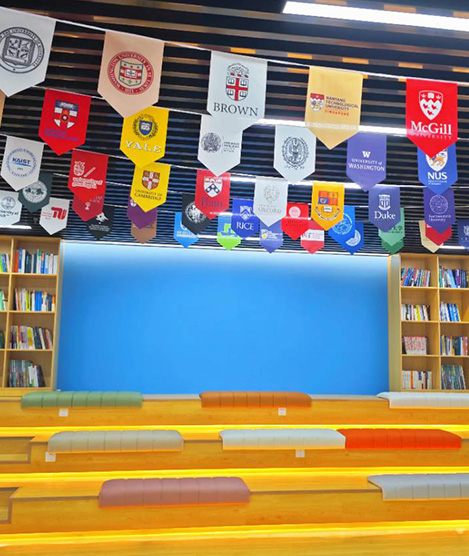
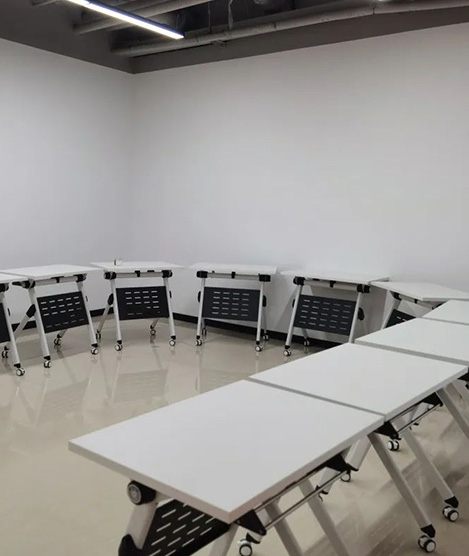
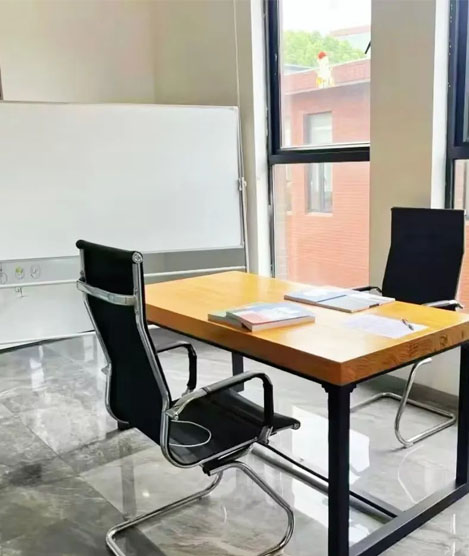
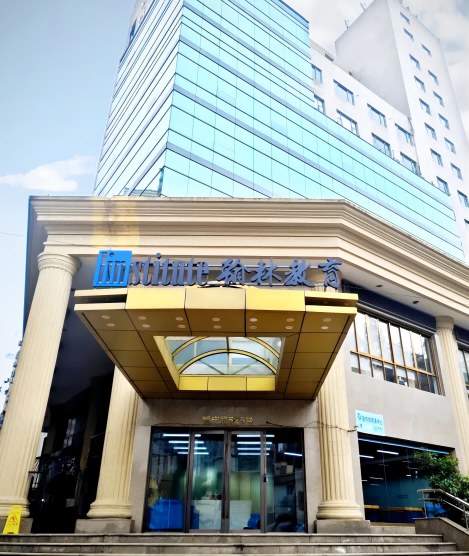
Teaching runs from Hanlin's own centres in Shanghai, Shenzhen, Chengdu and Hangzhou, and online for students elsewhere.



Talk to an advisor
Everything Hanlin does for Ideas for Action, in one conversation.
Entry, planning, coaching and the past papers. An advisor will tell you which of these a student actually needs, including when the answer is none of them.
Competition entry and planning
Which competitions suit this student, in what order, and by when - then we handle the registration, including the ones that can only be entered through a school or a centre.
Competition coaching
Taught by full-time subject tutors, on a course tier chosen by placement paper rather than by year group.
International curriculum tutoring
IB, AP, A-Level, IGCSE and the US high school curriculum, taught alongside school and timed around the exam calendar.
Competition past papers, free
A large library of past papers, mark schemes and syllabus breakdowns across every competition on this site. No charge and no enrolment.
Scan to add an advisor
Say which competition or course you are asking about. Replies in Chinese or English.
Or call +86 21 6352 6630FAQ
Ideas for Action, briefly answered.
What students and families ask before entering.
Can a high school student enter?
Only if they are eighteen. The competition is open to young people aged 18 to 35, so most secondary school students are not eligible.
Who runs it?
The World Bank together with the Zicklin Center for Business Ethics Research at the Wharton School, University of Pennsylvania. It has run since 2015.
How big is a team?
Two to six people. Members may come from different schools, companies, countries and backgrounds.
What do I submit?
A written proposal in English of 1,500 to 3,000 words, excluding references and text inside figures, in PDF or Word format, through the official application portal.
What has to be in the proposal?
A title; team name and members; a 200-word executive summary; the problem and background in 200 to 400 words; the solution in 700 to 1,400 words covering rationale, innovation, target group, stakeholders, implementation and expected outcomes; optionally similar cases in 150 to 300 words; challenges in 200 to 400 words; and references.
What subjects are accepted?
Anything supporting the United Nations sustainable development goals, with a workable financing plan attached. There is no restriction on the entrant’s academic field.
How is it judged?
On significance, originality and creativity, feasibility, and clarity, through a three-stage process. Judges include technical specialists and senior managers from the World Bank, Wharton, Mastercard, PepsiCo and the G-24 Secretariat.
What do winners receive?
Ten proposals - three champions, three runners-up and four honourable mentions - are published in the World Bank’s book of action plans. The champions and runners-up are invited to the four-day World Bank and IMF Annual Meetings in Washington to present, with the World Bank covering full travel for the three champions. Winning projects receive one-to-one support from the Wharton incubator.
When is the deadline?
March. Register the team on the competition site first, and you will receive research materials on the year’s theme.
What should a student under eighteen do instead?
The Diamond Challenge and the Conrad Challenge both ask for comparable work at school age, and the preparation transfers directly to Ideas for Action later.
Related
Competitions a school-age student can enter.
What to do while waiting to become eligible.
Ideas for Action enquiries
Check the age before you plan the proposal.
Ideas for Action starts at eighteen, so for most school students the question is what to enter now and when this becomes available. Tell us the student’s year group and an advisor will map a route that ends here rather than starting here.