
Competitions · Business and economics · SIC
SIC, the Student Investment Challenge.
Short selling, leverage and margin calls - on a simulator, with the return rankings updating live. Most school investment competitions let you buy and hold. This one lets you find out what happens when you are wrong.
Read this first
Choose the division carefully. Only one of them goes anywhere.
The two divisions are named Junior and Senior but both are open to grades 6 to 12. They divide by format, not by age - and only one advances.
The trading division is individual
Entered alone, assessed purely on simulated trading. It is the faster, simpler route and a genuine introduction to running a portfolio.
But it stops at the regional stage
The trading division does not advance to the global stage at all. A student who wants the full route has to be in the strategy division.
The strategy division is a team of two to four
Assessed on simulated trading plus an individual stock analysis report. This is the division that can reach the global stage.
And the choice is effectively final
Once confirmed at registration the division cannot be changed by the student. A change requires an email application to the committee explaining the circumstances, for them to review.
At a glance
What the challenge is.
SIC is part of SKT’s financial literacy series and has reached more than 10,000 secondary students. It is built around value investing, with an annual theme tied to the United Nations sustainable development goals - recently, AI and ESG investing together.
- Who can enter
- Students in grades 6 to 12, in either division
- Trading division
- Individual. Assessed on online simulated trading. Does not advance to the global stage
- Strategy division
- Teams of two to four, who may come from different schools, year groups and regions. Assessed on simulated trading and a stock analysis report. Advances to the global stage
- Changing teams
- Members may be swapped, and teams disbanded and rebuilt, until the team deadline. After that the roster is fixed
- The theme
- Value investing, with an annual focus. The 2026 season is AI and ESG investing
- The platform
- An online simulator tracking real markets in real time, with return rankings updating live
- What you can do on it
- Short selling, leverage, and the liquidation that follows when a leveraged position goes wrong
- Regional stage
- April to July, online - simulated trading, the strategy report for strategy teams, and an optional financial capability certification
- Global stage
- July to August, online or in person - simulated trading, the strategy report, a finance quiz, and an investment presentation with questions
- Registration
- From mid-March to the start of June
What makes it different
It lets you lose money in ways that matter.
Most school investment competitions simulate a long-only portfolio. SIC simulates the instruments that can actually go badly wrong.
Short selling and leverage
Both are available on the simulator. A student can take a position that loses more than it cost, which is a lesson worth learning where the money is not real.
Including liquidation
The organisers name margin liquidation explicitly among the experiences on offer. Very few school competitions will let a student blow up a portfolio.
With live rankings
Return rankings update in real time throughout, which changes the psychology considerably - and testing that psychology is part of the stated purpose.
And a value-investing frame around it
The competition holds to value investing as its principle, so the simulator is there to teach risk rather than to reward gambling. The tension between the two is the point.
How to advance
Three routes to the global stage, and one is allocated.
Only strategy teams advance, and it is worth understanding that not every place is won on score.
Direct - the top 40% regionally
Strategy teams in the top 40% of their region by total score advance directly. The actual number depends on how many teams entered that region.
Second round - the top 20% nationally
Teams that miss direct qualification are ranked nationally, and the top 20% may advance as reserves. The number advancing this way never exceeds the number who qualified directly.
And direct-entry cards, given to schools
Schools registering as a group receive a proportional allocation of strategy-division direct-entry cards. One card guarantees one team a place at the global stage.
Which is worth knowing before you plan
A place at the global stage is not purely a function of score. A student at a school that registers as a group is in a materially different position from one entering alone.
The awards
Different awards for different divisions.
Every student receives an official participation certificate for the regional stage. Beyond that the two divisions are recognised differently.
Trading division
One individual award - Best Portfolio Return. Simple, and entirely a measure of the portfolio.
Strategy division, team awards
Outstanding Investment Team, Best Stock Analysis Report and Best Portfolio Return. The report has its own award, which tells you how much it counts.
Strategy division, individual award
Best Portfolio Return, awarded to individuals within the strategy division as well.
And an optional certification
A separate secondary-school financial capability certification can be taken during the regional stage, independently of the competition awards.
The Omaha trip
The Berkshire Hathaway annual meeting.
SIC attaches something to the season that no other competition here offers.
Berkshire Hathaway’s shareholder meeting
Strong participants have travelled to Omaha in early May for the annual meeting - the event value investors organise their year around.
And an Omaha summit dinner
Alongside the meeting, a summit and dinner bringing students into contact with people who work in investment professionally.
It sits outside the competition calendar
Early May falls between the start of the regional stage and the global stage, so it is an addition to the season rather than a prize at the end of it.
Confirm what it involves
The trip is described as an opportunity for outstanding participants. Ask the organiser how places are allocated and what the cost is before counting on it.
Preparation
How Hanlin prepares students for SIC.
The division decision comes first, and the strategy report is where the competition is actually decided.
Choosing the division deliberately
The trading division is individual and stops regionally. The strategy division needs a team and a written report but goes all the way. Neither is better - but the choice cannot easily be reversed.
Writing the stock analysis
The report carries its own award and is what separates the strategy division from pure trading. Analysing a company properly is a teachable skill and a rare one at this age.
Understanding leverage before using it
Short selling and leverage are available, and a student who does not understand them will discover margin liquidation the hard way. Learning the mechanics first is the point of a simulator.
And engaging with the theme
ESG investing, and now AI applied to it, is the annual frame. A portfolio built without reference to the theme is answering a different question.
Why Hanlin
Preparation for SIC at Hanlin is taught by full-time subject tutors, on a course tier chosen by placement paper rather than by year group.
Programme formats
Five ways this is taught.
Group size is the whole difference between these. It decides how much of the tutor's attention a student gets and how far the course can bend to them, so it is worth choosing rather than accepting.
| Format | Group size | What it suits |
|---|---|---|
| One-to-one | One student | Content, pace and emphasis set by what this student actually needs rather than by a syllabus. The only format that can be rebuilt mid-course. |
| Small group | Three to eight | Opens at three. Frequent discussion, and the tutor can slow down or move on according to what the group has absorbed. Most students chasing a higher award are taught in this one. |
| Class | Eight to twelve | Taught by the subject lead or a medal coach. Less back-and-forth, so it suits a student who will say when something is unclear. |
| Large class | Ten to twenty | For students in the middle of the placement range, and a way to try a competition before committing. Students often move to a small group or to one-to-one afterwards. |
| Past-paper class | No cap | Past papers worked through in sequence in the weeks before the sitting. Free to students already enrolled. |
Course length for SIC is set after a placement paper. The gap between where a student is and what the paper asks for is what the course has to close, and that gap is not the same for two students in the same year group.
How it runs
Six steps, four people on your side.
The same process for every student, so that nothing depends on one tutor remembering to do it.
 Step 1
Pre-course assessment
A placement paper before anything is booked, so the course tier is chosen on evidence rather than on a year group.
 Step 2
Tutor matching
A subject tutor is matched to the result, and their full background is provided before you agree to it.
 Step 3
Plan and group
A study group opens with four people on one student: the tutor, a planner, a supervisor and an academic manager.
 Step 4
Scheduled teaching
The teaching office sets the timetable around the competition date and school term, and teaching begins.
 Step 5
After-class reports
What was covered, and how the student handled it, reported after every lesson.
 Step 6
Homework follow-up
The teaching assistant and the form teacher both check that homework is done, which is where most preparation quietly fails.
Free resource pack
Case and submission pack
The same material our own SIC students work from. Scan the code, say what you need, and an advisor sends it.
Tell an advisor which competition and year group, and the material comes back the same day. Free, and you do not have to enrol in anything. If we do not already hold what you need, we will go and find it.
- PDFPast cases and question sets
- PDFA worked example of a full submission
- PDFEvent categories and the judging criteria, broken down
- PDFEntry checklist and the dates for the current cycle
Teaching team
Who would teach it.
Three of the twenty-two tutors on the published Hanlin roster - the ones whose subject this is.

Bai
Master's in social entrepreneurship from Hult International Business School in San Francisco and a business administration degree from the Universitat Autonoma de Barcelona, with an exchange at Texas A&M's Mays Business School. Accredited by the College Board, Cambridge International and the IBO, a certified intermediate economist, and a judge at the 2020 Diamond Challenge global final and the 2021 NEC China final.

Zhang
Master's in engineering management from NYU and a double degree in finance and supply-chain management from Syracuse. Nearly nine years overseas and in finance, including at a well-known venture firm - experience that feeds scenario-based teaching. College Board-accredited.

Jiang
Master's in business analytics from the Schulich School of Business, a finance and business economics degree from York University and a software engineering degree from the Harbin Institute of Technology. Years in North America, university teaching before returning, and long experience across the whole economics curriculum.
Student results
What Hanlin students got.
Taken from Hanlin's published record of student honours and rewritten in English. Figures are as the organisers reported them.
SIC
- Season 13Gold in the U-FEB quiz, team strategy division
- Season 12A trading Gold
- Season 11A global Silver
Earlier years
- Season 93 teams took national Gold, Silver and Bronze
- Season 84 global Golds
- Season 73 teams entered and all advanced
The full record, across every subject and year, is on the student honours page.
Where it is taught
Hanlin learning centres.
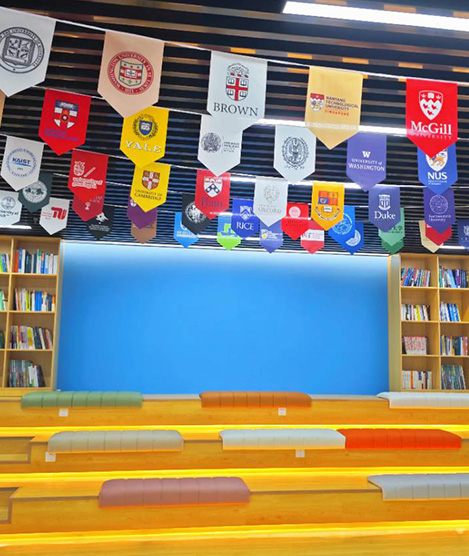
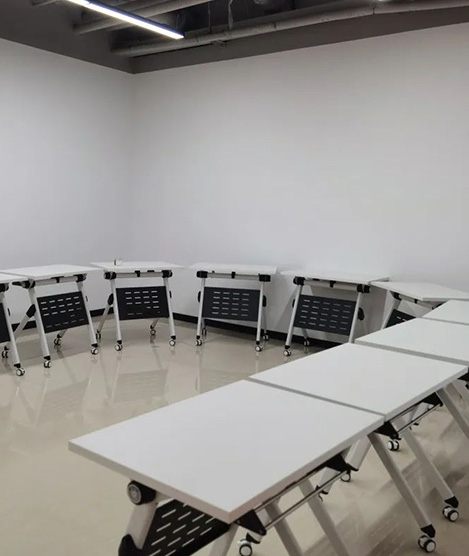
Teaching runs from Hanlin's own centres in Shanghai, Shenzhen, Chengdu and Hangzhou, and online for students elsewhere.




Talk to an advisor
Everything Hanlin does for SIC, in one conversation.
Entry, planning, coaching and the past papers. An advisor will tell you which of these a student actually needs, including when the answer is none of them.
Competition entry and planning
Which competitions suit this student, in what order, and by when - then we handle the registration, including the ones that can only be entered through a school or a centre.
Competition coaching
Taught by full-time subject tutors, on a course tier chosen by placement paper rather than by year group.
International curriculum tutoring
IB, AP, A-Level, IGCSE and the US high school curriculum, taught alongside school and timed around the exam calendar.
Competition past papers, free
A large library of past papers, mark schemes and syllabus breakdowns across every competition on this site. No charge and no enrolment.
Scan to add an advisor
Say which competition or course you are asking about. Replies in Chinese or English.
Or call +86 21 6352 6630FAQ
SIC, briefly answered.
What students and families ask before entering.
What are the two divisions?
The trading division, entered individually and assessed on simulated trading; and the strategy division, entered in teams of two to four and assessed on simulated trading plus a stock analysis report. Both are open to grades 6 to 12.
Which one advances?
Only the strategy division. The trading division does not go to the global stage at all.
Can I change division later?
Not directly. The choice is confirmed at registration, and a change requires an email application to the committee for review.
Can my team come from different schools?
Yes. Strategy teams of two to four may cross schools, year groups and regions, provided all members are in the same division.
What can I trade?
The simulator tracks real markets in real time and supports short selling and leverage, including the liquidation that follows a leveraged position going wrong. Return rankings update live.
How do teams reach the global stage?
The top 40% of strategy teams in each region advance directly. Teams that miss out are ranked nationally and the top 20% may advance as reserves, though never more than the number who qualified directly. Schools registering as a group also receive an allocation of direct-entry cards, each guaranteeing one team a place.
What is the annual theme?
Value investing, with a yearly focus tied to the United Nations sustainable development goals. The 2026 season is AI and ESG investing.
What awards are there?
Trading division: Best Portfolio Return. Strategy division: Outstanding Investment Team, Best Stock Analysis Report and Best Portfolio Return as team awards, plus Best Portfolio Return individually. Every student receives a participation certificate, and an optional financial capability certification is available.
What happens at the global stage?
Simulated trading, the investment strategy report, a finance quiz, and an investment presentation with questions, run online or in person in July and August.
What is the Omaha trip?
Outstanding participants have travelled to Omaha in early May for the Berkshire Hathaway annual meeting and an accompanying summit dinner. Ask the organiser how places are allocated and what it costs.
Related
Other business and finance competitions.
What students enter alongside SIC.
SIC enquiries
One division goes to the global stage. The other does not.
Trading alone is the simpler entry and stops regionally; the strategy division needs a team and a written analysis but runs the whole route. Tell us what the student wants from the season and an advisor will help make that call before registration fixes it.