
Competitions · Business and economics · Diamond Challenge
The Diamond Challenge.
Free to enter, judged blind, and it wants evidence rather than a business plan. The organisers expect you to go and interview actual potential customers before you write anything down.
What makes it different
Evidence, not a business plan.
Most entrepreneurship competitions reward a polished plan. The Diamond Challenge is built around finding out whether the idea survives contact with real people.
Go and interview real customers
The organisers explicitly ask students to gather evidence by interviewing genuine potential customers, and to talk to working entrepreneurs, business people and community leaders. That evidence is what the judging rests on.
Arguments for and against
The stated method is evidence-based entrepreneurship - looking for what supports the idea and what undermines it. A concept that has never been argued against reads as untested.
It costs nothing to enter
Registering and submitting an idea is entirely free. Very few competitions with prize money at this level charge nothing at all.
And it can carry university credit
The course structure allows students to earn university credit through a partnership with their school or course. Ask your school whether such an arrangement exists.
At a glance
What the challenge is.
The Diamond Challenge was founded in 2012 by Horn Entrepreneurship at the University of Delaware, to show high school students what an entrepreneurial career actually looks like. More than 4,000 students from 35 countries have entered.
- Who can enter
- Students enrolled in high school for the duration of the competition - grades 9 to 12, typically aged 14 to 18
- Cost
- Free. Registration and submission carry no fee
- Teams may cross schools
- Yes. Members do not need to be at the same school or in the same place
- Two tracks
- Business Innovation, for an idea that solves a customer problem; and Social Innovation, for one that solves a social or environmental problem
- Language
- All submissions must be in English
- What you submit
- A written concept and a pitch deck
- Registration opens
- Mid-September, with the written concept and pitch deck due in mid-January
- The pitch round
- February to March, by invitation from the submission round
- Finalists announced
- Early March
- The summit
- Two days in late April at the University of Delaware
- How long it takes
- The organisers recommend developing the idea, writing the concept and building the deck across about ten weeks
The submission rules
Read these before you write a word.
The Diamond Challenge publishes its formatting requirements precisely, and enforces them. Teams lose material every year to the page limit rather than to the judging.
| What | The requirement |
|---|---|
| Written concept | No cover page. Five pages maximum - anything beyond page five is simply not read. One-inch margins, double spaced, 12 point |
| Pitch deck | Fifteen slides maximum, ten recommended, submitted as a PDF. It may be uploaded ahead of the competition |
| Concept ID | Every team is assigned a submission number, which must appear on the first page of the written concept and the first slide of the deck. It exists to keep the review blind |
| Email addresses | Every team member and the adult mentor must each register a different, unique email address |
| Virtual pitch | A recorded video of no more than five minutes. Any format - slides, Keynote, film - but team members must appear in it, and the team chooses who speaks |
| Live pitch | Five minutes to present and three minutes to answer the judges. Only team members may answer. Not every venue can play video, so plan for a room that cannot |
| Submission is final | Once confirmed, a submission cannot be revised |
The blind review is worth understanding: judges see a concept ID, not a school or a country. Nothing about where a team comes from can help it, which is unusual and works in favour of students without a well-known school behind them.
The two tracks
Choose by what the idea solves.
The organisers make this easy: it follows from the problem, not from the student. Both tracks are judged on three criteria, and two of the three differ.
Business Innovation
For an idea focused on solving a customer problem. Judged on feasibility - whether it is achievable and can win a place in its target market; on growth potential - whether it can scale and how far; and on special factors.
Social Innovation
For an idea focused on a social or environmental problem. Judged on feasibility and the sustainability of its growth; on social impact - the good it actually does for its beneficiaries and their community; and on special factors.
What "special factors" means
Originality, creativity, persistence, passion, how the case is argued, and any other intangible the judges think bears on whether the venture could work. It is a real criterion, not a tiebreak.
The four questions behind the criteria
How attractively and distinctly does the product solve a problem for a defined segment? Does the team have the experience, skills, contacts and resources to build it? How far can it grow? And how much creativity, craft, persistence and storytelling has the team shown?
The awards
Everyone who reaches the semifinal is paid something.
Prize money is awarded by the organisers at the University of Delaware. Every semifinal team receives an award and an invitation to Delaware.
| Place | What it carries |
|---|---|
| First | More than $12,000 in total value - entrepreneurship funds for each team member, fast-track scholarship access, the semifinal award, and travel support |
| Second | More than $8,000 in total value, on the same basis |
| Third | More than $4,500 in total value, on the same basis |
| Topic awards | $1,500 in cash. Introduced in 2019, sponsored by companies, and awarded to one semifinal team in each track for excellence in a particular entrepreneurial skill |
Social Innovation projects can receive additional funding for the venture itself and an education fund. Any student anywhere in the world who has entered is eligible for a topic award, provided the team concept arrived before the deadline. Note that the published prize breakdown still lists a hardware item discontinued around 2016, so confirm the current package with the organiser.
The season
Registration to summit, in seven months.
Only the team leader registers. The rest is done on the platform.
Registration opens
The team leader registers at diamondchallenge.org, sets a password of at least twelve characters, and creates the team profile.
Choose a pitch venue and a track
Pick where the pitch will happen - virtual is a valid choice - and whether the concept goes in the Business Innovation or Social Innovation track.
Build the concept
Complete the team leader, team member, adult advisor, concept question and upload tabs. About ten weeks of work, including the customer interviews.
Submission closes
The written concept and pitch deck are due. Review carefully - once confirmed, a submission is final.
The pitch round
Invited teams pitch. Five minutes, then three minutes of questions answered only by team members.
Finalists announced
Semifinal and final teams have until late April to refine their presentations.
The summit
A two-day global gathering of students, educators and supporters at the University of Delaware, with speakers, entrepreneurs and mentors.
Preparation
How Hanlin prepares a Diamond Challenge team.
The written concept is five pages and the deck is ten slides. Almost all the work is deciding what to leave out.
Doing the customer interviews properly
The competition asks for evidence from real potential customers. Learning to ask questions that could disprove your idea, rather than questions that flatter it, is the single highest-return thing a team can practise.
Writing to five pages
Page six is not read. Teams that draft twelve pages and cut are far better placed than teams that write five and stop, because cutting forces a decision about what actually matters.
Rehearsing five and three
Five minutes to pitch, three to answer, and only team members may speak. Practising hostile questions is what separates teams at the pitch round.
And choosing the track honestly
Business Innovation for a customer problem, Social Innovation for a social or environmental one. A social idea forced into the business track loses the criterion it would have scored best on.
Why Hanlin
Hanlin has been entering students for Diamond Challenge for years, and publishes what they got. The record is further down this page.
Programme formats
Five ways this is taught.
Group size is the whole difference between these. It decides how much of the tutor's attention a student gets and how far the course can bend to them, so it is worth choosing rather than accepting.
| Format | Group size | What it suits |
|---|---|---|
| One-to-one | One student | Content, pace and emphasis set by what this student actually needs rather than by a syllabus. The only format that can be rebuilt mid-course. |
| Small group | Three to eight | Opens at three. Frequent discussion, and the tutor can slow down or move on according to what the group has absorbed. Most students chasing a higher award are taught in this one. |
| Class | Eight to twelve | Taught by the subject lead or a medal coach. Less back-and-forth, so it suits a student who will say when something is unclear. |
| Large class | Ten to twenty | For students in the middle of the placement range, and a way to try a competition before committing. Students often move to a small group or to one-to-one afterwards. |
| Past-paper class | No cap | Past papers worked through in sequence in the weeks before the sitting. Free to students already enrolled. |
Course length for Diamond Challenge is set after a placement paper. The gap between where a student is and what the paper asks for is what the course has to close, and that gap is not the same for two students in the same year group.
How it runs
Six steps, four people on your side.
The same process for every student, so that nothing depends on one tutor remembering to do it.
 Step 1
Pre-course assessment
A placement paper before anything is booked, so the course tier is chosen on evidence rather than on a year group.
 Step 2
Tutor matching
A subject tutor is matched to the result, and their full background is provided before you agree to it.
 Step 3
Plan and group
A study group opens with four people on one student: the tutor, a planner, a supervisor and an academic manager.
 Step 4
Scheduled teaching
The teaching office sets the timetable around the competition date and school term, and teaching begins.
 Step 5
After-class reports
What was covered, and how the student handled it, reported after every lesson.
 Step 6
Homework follow-up
The teaching assistant and the form teacher both check that homework is done, which is where most preparation quietly fails.
Free resource pack
Case and submission pack
The same material our own Diamond Challenge students work from. Scan the code, say what you need, and an advisor sends it.

Tell an advisor which competition and year group, and the material comes back the same day. Free, and you do not have to enrol in anything. If we do not already hold what you need, we will go and find it.
- PDFPast cases and question sets
- PDFA worked example of a full submission
- PDFEvent categories and the judging criteria, broken down
- PDFEntry checklist and the dates for the current cycle
Teaching team
Who would teach it.
Three of the twenty-two tutors on the published Hanlin roster - the ones whose subject this is.

Bai
Master's in social entrepreneurship from Hult International Business School in San Francisco and a business administration degree from the Universitat Autonoma de Barcelona, with an exchange at Texas A&M's Mays Business School. Accredited by the College Board, Cambridge International and the IBO, a certified intermediate economist, and a judge at the 2020 Diamond Challenge global final and the 2021 NEC China final.

Zhang
Master's in engineering management from NYU and a double degree in finance and supply-chain management from Syracuse. Nearly nine years overseas and in finance, including at a well-known venture firm - experience that feeds scenario-based teaching. College Board-accredited.

Jiang
Master's in business analytics from the Schulich School of Business, a finance and business economics degree from York University and a software engineering degree from the Harbin Institute of Technology. Years in North America, university teaching before returning, and long experience across the whole economics curriculum.
Student results
What Hanlin students got.
Taken from Hanlin's published record of student honours and rewritten in English. Figures are as the organisers reported them.
In the world, Business track, 2021-22
One line from Hanlin's published Diamond Challenge record. The rest of it is below.
Diamond Challenge
- 2024-254 students advanced to the semifinal
- 2023-244 students advanced to the semifinal
- 2022-23First nationally at both the Nanjing and Shenzhen semifinals
Earlier years
- 2021-22Third in the world in the Business track
- 2019-205 teams reached the China final and one the US final, a 100% advancement rate
The full record, across every subject and year, is on the student honours page.
Where it is taught
Hanlin learning centres.
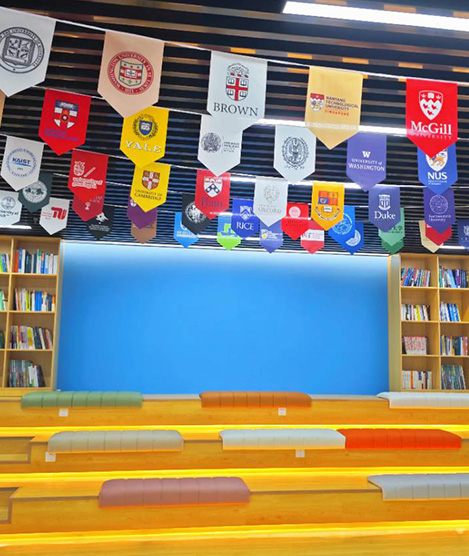
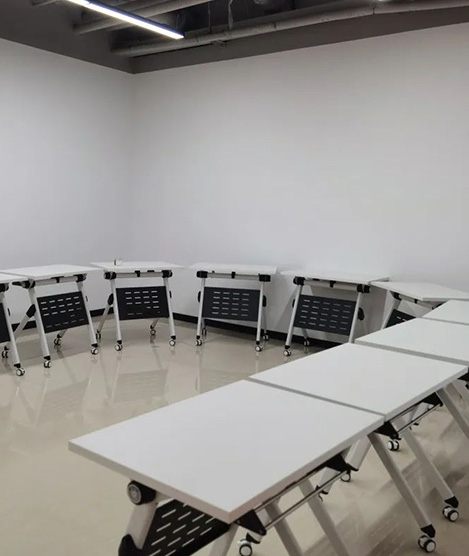
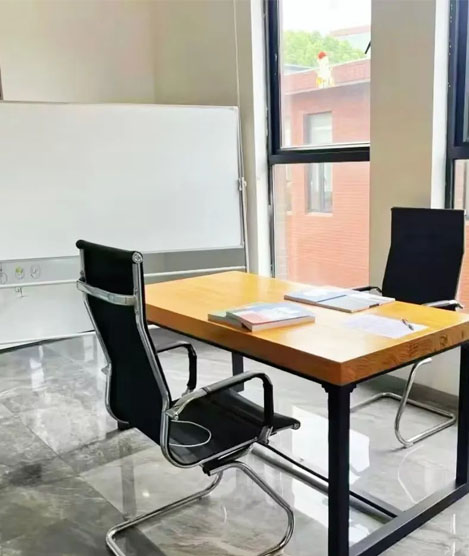
Teaching runs from Hanlin's own centres in Shanghai, Shenzhen, Chengdu and Hangzhou, and online for students elsewhere.




Talk to an advisor
Everything Hanlin does for Diamond Challenge, in one conversation.
Entry, planning, coaching and the past papers. An advisor will tell you which of these a student actually needs, including when the answer is none of them.
Competition entry and planning
Which competitions suit this student, in what order, and by when - then we handle the registration, including the ones that can only be entered through a school or a centre.
Competition coaching
Taught by full-time subject tutors, on a course tier chosen by placement paper rather than by year group.
International curriculum tutoring
IB, AP, A-Level, IGCSE and the US high school curriculum, taught alongside school and timed around the exam calendar.
Competition past papers, free
A large library of past papers, mark schemes and syllabus breakdowns across every competition on this site. No charge and no enrolment.
Scan to add an advisor
Say which competition or course you are asking about. Replies in Chinese or English.
Or call +86 21 6352 6630FAQ
The Diamond Challenge, briefly answered.
What students and families ask before entering.
Does it cost anything?
No. Registering and submitting an idea to the Diamond Challenge is entirely free.
Who can enter?
Students enrolled in a secondary institution in grades 9 to 12 for the duration of the competition, typically aged 14 to 18.
Can my team come from different schools?
Yes. Team members do not need to be at the same school or in the same region.
How do I choose a track?
By what the idea solves. If it addresses a customer problem, choose Business Innovation. If it addresses a social or environmental problem, choose Social Innovation.
What do I submit?
A written concept of no more than five pages - no cover page, one-inch margins, double spaced, 12 point - and a pitch deck of no more than fifteen slides, ten recommended, as a PDF. Everything in English.
What happens if I go over five pages?
Only the first five pages are evaluated. The rest is not read.
What is a concept ID?
A submission number assigned to each team, which must appear on the first page of the written concept and the first slide of the deck. It keeps the review blind so judges do not know which team they are reading.
How is it judged?
Business Innovation on feasibility, growth potential and special factors. Social Innovation on feasibility and sustainability of growth, social impact, and special factors. Special factors covers originality, creativity, persistence, passion and how the case is argued.
What are the prizes?
Every semifinal team receives an award and an invitation to the University of Delaware. First place carries more than $12,000 in total value, second more than $8,000 and third more than $4,500, including entrepreneurship funds and travel support. Topic awards of $1,500 go to one semifinal team in each track.
How long does it take?
The organisers recommend about ten weeks to develop the idea, write the concept and build the deck. Submissions open in September and close in mid-January.
Can I compete without travelling?
Yes. Virtual is an available pitch venue, with a recorded video of no more than five minutes featuring the team members.
Related
Other business and entrepreneurship competitions.
What students enter alongside the Diamond Challenge.
Diamond Challenge enquiries
Five pages, ten slides, and evidence you gathered yourself.
It costs nothing to enter and the review is blind, so the only thing that counts is whether the idea has been tested against real people. Tell us what the student wants to build and an advisor will help turn it into a concept that fits on five pages.