
Competitions · Business and economics · NEC
NEC, the National Economics Challenge.
Four divisions - including, from 2027, an AI research division - and four global stations from the Federal Reserve to Oxford. The division is set by what you have actually studied, and declaring it wrongly can cost every result in the series.
Read this first
Declare your division honestly.
NEC sorts entrants by how much economics they have already studied, and it polices that rule harder than any other competition on this site.
The committee reviews declarations
Entrants must choose their division truthfully according to the published rules. The organising committee reserves the right to supervise and review those declarations.
And the penalty is total
A student found to have breached the division rules may have all their results across the NEC series cancelled - not just the round in question.
Teams are fixed at the deadline
Every team must be complete before registration closes, and every member must be in the same division - one member’s eligibility decides what the whole team can enter.
Cross-school teams pick one school
A team drawn from more than one school designates, in the Bloom registration system, which school its team honours belong to. Each student’s individual certificate still names their own school.
The four divisions
Set by what you had studied before September 2026.
This is the decision that shapes everything else. Read the entry condition rather than the division name - and note that the AI division is entered on top of one of the other three, not instead of them.
| Division | Who it is for | Team | What it tests |
|---|---|---|---|
| Pre | Students who, before September 2026, had never studied an economics course or had taken only an introductory IGCSE economics course | Individually or in teams of two to four. Individuals may sit the preliminary alone - with no team honours - but must form a team for the China and global stages | Microeconomics and macroeconomics, built as a zero-threshold first economics competition before a student takes a higher-level course |
| David Ricardo | Students who, before September 2026, had studied only one of microeconomics or macroeconomics within IBDP, AP or AS | Exactly four students | Microeconomics, macroeconomics, and international economics and current affairs - consolidating the foundation for undergraduate study |
| Adam Smith | No entry threshold; recommended after studying both microeconomics and macroeconomics within IBDP, AP or AS | Exactly four students | Microeconomics, macroeconomics, and international economics and current affairs - weighted towards theoretical understanding, application and research capability |
| Herbert Simon - AI | New for 2027. Open only to students already registered in Pre, David Ricardo or Adam Smith | Two to four students | AI in economics research: posing and solving a real economic question, and using AI to raise the quality and efficiency of the work. For students whose economics is already excellent |
Pre is examined on two subjects and the middle divisions on three. The AI division is an addition for registered entrants, so the honest reading is: choose among the first three by coursework, then decide whether the AI division is worth adding.
At a glance
What the challenge is.
NEC is run by the Council for Economic Education, founded in 1949 at the initiative of the US President’s Council of Economic Advisers - seventy-seven years of standards-setting that CEE says has reached more than five million young people. CNEC is the China-region programme and the only route from China to the NEC global stations.
- Organiser
- The Council for Economic Education (CEE), founded 1949; CNEC in the China region
- Who can enter
- Students in grades 7 to 12
- What it assumes
- Some economics background, strong English reading and writing - the papers are in English - and ideally some experience of debate or presentation
- Scale
- Entrants from more than fifteen countries; in China, more than 800 schools and around a hundred thousand students over ten-plus years
- Language
- English
- Preliminary
- Mid-December 2026, online
- China stage
- March 2027, venue to be announced
- Global stations
- United States, May-June 2027; United Kingdom, July 2027; Hong Kong SAR, August 2027; Singapore, date to be announced
- Preliminary fee
- The organiser charges ¥698 per student for the online preliminary, with published reductions for early registration (by 31 August 2026) and returning entrants (by 9 October 2026), and the two stack
- Selectivity
- The organiser reports that more than 60% of global-station participants have been admitted to universities including Oxford, Cambridge and Harvard - its figure, quoted as stated
The rounds
One written paper, then rounds that are not papers.
The Qualifying Test runs at every stage. Everything stacked on top of it assesses something school economics does not - which is why NEC suits a student who can argue as well as calculate.
Qualifying Test - at all three stages
An individual written test, objective questions covering microeconomics, macroeconomics and international economics. It runs at the preliminary, the China stage and the global stage, rising in difficulty as it goes.
Critical Thinking - two different beasts
At the China stage, teams research a case in their own time and write a theory-grounded report; at the global stage it becomes a timed, closed-book policy analysis. Both end in a presentation defended before judges - but the preparation for each is different, and teams should train for both.
Quiz Bowl - the top teams, on stage
A timed rapid-answer round at the China and global stages, reserved for the leading teams. It tests economics knowledge at reflex speed, in front of an audience, and it is the round spectators remember - the write-in questions reward a team that has drilled its fundamentals until they are automatic.
A published preparation system
The organiser’s Bloom platform runs a five-step preparation ladder - placement test, core concepts, online course with readings, a topic-by-topic test bank, and a full mock. Worth using: it is the examiner’s own view of what matters.
The global stations
Four stations, and rounds that exist nowhere else.
From 2027 the global stage runs in four places, each with its own character - and two of its rounds are unlike anything in the earlier stages.
Washington and New York, May-June
The US station includes a visit inside the Federal Reserve, and the competition is carried live by CNBC - very few school competitions put entrants on financial television.
Oxford, July - the OX-BP Debate Sessions
The UK station is built around Oxford: an academic visit, a MasterClass with Oxford scholars, the Tutorial Forge - where an argument is hammered into shape tutorial-style - and a closing Statement of the student’s own economic thinking.
Hong Kong in August, Singapore to come
The Hong Kong SAR station runs in August 2027; a Singapore station is announced with dates to follow. A qualifying team has real choice about where and when to travel.
U20 Youth Voice
Global youth teams take on major economic issues, and the strongest voices and works are selected and publicly presented - with a joint recommendation from named institutions and figures in academia and industry attached. A different kind of outcome from a medal.
Preparation
How Hanlin prepares an NEC team.
The division decision comes first, and the team rounds need something school economics does not build.
Choosing the division correctly
The rule is about courses studied before September 2026, not about ability, and the penalty for getting it wrong is the loss of every result in the series. This is settled before anything else - including whether the AI division is worth adding on top.
Covering three subjects, not one
Above Pre level the paper spans microeconomics, macroeconomics and international economics with current affairs. The international-and-current strand is the area school courses cover least and the one most often left until last.
Practising both Critical Thinking formats
The China stage rewards researched writing; the global stage rewards timed, closed-book policy analysis. They are rehearsable separately, and a team that has only practised one is half-prepared.
And building a team that argues well
Four students who can disagree productively will outperform four who each know more economics. The team rounds are where NEC is won.
Why Hanlin
Hanlin has been entering students for NEC for years, and publishes what they got. The record is further down this page.
Programme formats
Five ways this is taught.
Group size is the whole difference between these. It decides how much of the tutor's attention a student gets and how far the course can bend to them, so it is worth choosing rather than accepting.
| Format | Group size | What it suits |
|---|---|---|
| One-to-one | One student | Content, pace and emphasis set by what this student actually needs rather than by a syllabus. The only format that can be rebuilt mid-course. |
| Small group | Three to eight | Opens at three. Frequent discussion, and the tutor can slow down or move on according to what the group has absorbed. Most students chasing a higher award are taught in this one. |
| Class | Eight to twelve | Taught by the subject lead or a medal coach. Less back-and-forth, so it suits a student who will say when something is unclear. |
| Large class | Ten to twenty | For students in the middle of the placement range, and a way to try a competition before committing. Students often move to a small group or to one-to-one afterwards. |
| Past-paper class | No cap | Past papers worked through in sequence in the weeks before the sitting. Free to students already enrolled. |
Course length for NEC is set after a placement paper. The gap between where a student is and what the paper asks for is what the course has to close, and that gap is not the same for two students in the same year group.
How it runs
Six steps, four people on your side.
The same process for every student, so that nothing depends on one tutor remembering to do it.
 Step 1
Pre-course assessment
A placement paper before anything is booked, so the course tier is chosen on evidence rather than on a year group.
 Step 2
Tutor matching
A subject tutor is matched to the result, and their full background is provided before you agree to it.
 Step 3
Plan and group
A study group opens with four people on one student: the tutor, a planner, a supervisor and an academic manager.
 Step 4
Scheduled teaching
The teaching office sets the timetable around the competition date and school term, and teaching begins.
 Step 5
After-class reports
What was covered, and how the student handled it, reported after every lesson.
 Step 6
Homework follow-up
The teaching assistant and the form teacher both check that homework is done, which is where most preparation quietly fails.
Free resource pack
NEC past papers and case pack
The same material our own NEC students work from. Scan the code, say what you need, and an advisor sends it.

Tell an advisor which competition and year group, and the material comes back the same day. Free, and you do not have to enrol in anything. If we do not already hold what you need, we will go and find it.
- PDFPast quiz rounds and critical-thinking cases
- PDFDivision definitions, and which one a student should enter
- PDFHow the team total is built, round by round
- PDFRegistration checklist and the dates for the current cycle
Teaching team
Who would teach it.
Three of the twenty-two tutors on the published Hanlin roster - the ones whose subject this is.

Bai
Master's in social entrepreneurship from Hult International Business School in San Francisco and a business administration degree from the Universitat Autonoma de Barcelona, with an exchange at Texas A&M's Mays Business School. Accredited by the College Board, Cambridge International and the IBO, a certified intermediate economist, and a judge at the 2020 Diamond Challenge global final and the 2021 NEC China final.

Zhang
Master's in engineering management from NYU and a double degree in finance and supply-chain management from Syracuse. Nearly nine years overseas and in finance, including at a well-known venture firm - experience that feeds scenario-based teaching. College Board-accredited.

Jiang
Master's in business analytics from the Schulich School of Business, a finance and business economics degree from York University and a software engineering degree from the Harbin Institute of Technology. Years in North America, university teaching before returning, and long experience across the whole economics curriculum.
Student results
What Hanlin students got.
Taken from Hanlin's published record of student honours and rewritten in English. Figures are as the organisers reported them.
And 2nd in the world on total score, 2025
One line from Hanlin's published NEC record. The rest of it is below.
NEC
- 2025At the global round, first and second in the world on combined quiz and critical-thinking score in the US region Academy division, and second in the world in the China-US finals. In the Asia region, a global Silver and Bronze in Academy and a global Gold in David Ricardo. Nationally, 9 teams advanced with one Gold, 5 Silver and 6 Bronze individually; 30 teams advanced from the junior round with 8 Gold, 26 Silver and 48 Bronze
- 2024Second in the world in the China-US finals in the David Ricardo division, with 13 teams advancing
- 2023At the global round, first in team total score in the Academy division, first in the economics assessment and first in the macroeconomics round. 14 teams and more than 50 students won awards nationally
Earlier years
- 2022First in the world on team total score in the David Ricardo division and runner-up in the quiz bowl. 46 team awards and 28 individual awards in the China round
- 2020All 7 teams advanced to the final
The full record, across every subject and year, is on the student honours page.
Where it is taught
Hanlin learning centres.
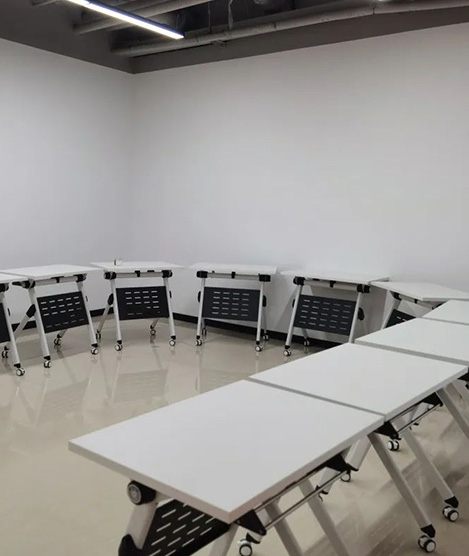
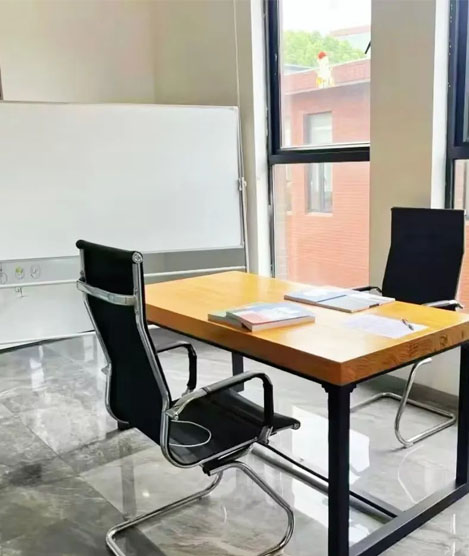
Teaching runs from Hanlin's own centres in Shanghai, Shenzhen, Chengdu and Hangzhou, and online for students elsewhere.





Talk to an advisor
Everything Hanlin does for NEC, in one conversation.
Entry, planning, coaching and the past papers. An advisor will tell you which of these a student actually needs, including when the answer is none of them.
Competition entry and planning
Which competitions suit this student, in what order, and by when - then we handle the registration, including the ones that can only be entered through a school or a centre.
Competition coaching
Taught by full-time subject tutors, on a course tier chosen by placement paper rather than by year group.
International curriculum tutoring
IB, AP, A-Level, IGCSE and the US high school curriculum, taught alongside school and timed around the exam calendar.
Competition past papers, free
A large library of past papers, mark schemes and syllabus breakdowns across every competition on this site. No charge and no enrolment.
Scan to add an advisor
Say which competition or course you are asking about. Replies in Chinese or English.
Or call +86 21 6352 6630FAQ
NEC, briefly answered.
What students and families ask before entering.
Is NEC the same as CNEC?
CNEC is the China-region programme of the NEC series and the only route from China to the NEC global stations. One series, one set of divisions.
Who can enter?
Students in grades 7 to 12 with some economics background and strong English reading and writing. The papers are in English.
How do I choose a division?
By what you had studied before September 2026, not by your year group. Pre is for students who had never taken an economics course or only an introductory IGCSE one. David Ricardo is for students who had studied one of micro or macro within IBDP, AP or AS. Adam Smith has no threshold but is recommended after studying both.
What is the Herbert Simon division?
New for 2027: an AI research division, open only to students already registered in Pre, David Ricardo or Adam Smith, in teams of two to four. Teams pose and solve a real economic question and use AI to raise the quality and efficiency of the research.
What happens if I choose the wrong division?
The committee supervises and reviews declarations, and a student found to have breached the rules may have all their results across the NEC series cancelled.
How big is a team?
Pre: individually or two to four, though individuals may only sit the preliminary and earn no team honours. David Ricardo and Adam Smith: exactly four. Herbert Simon: two to four. Every member must be in the same division, and teams must be complete before registration closes.
Our team spans two schools - whose result is it?
The team designates one school in the Bloom system as the owner of its team honours. Individual certificates are unaffected and name each student’s own school.
What subjects are examined?
Microeconomics and macroeconomics in Pre. Microeconomics, macroeconomics, and international economics and current affairs in David Ricardo and Adam Smith.
What are the rounds?
The written Qualifying Test at every stage; Critical Thinking from the China stage - researched case reports there, timed closed-book policy analysis at the global stage; a Quiz Bowl for the top teams; and, at the global stations, the Oxford OX-BP Debate Sessions and U20 Youth Voice.
When does it run?
The online preliminary in mid-December 2026, the China stage in March 2027, and the global stations from May to August 2027 - the US in May-June, the UK in July, Hong Kong SAR in August, with a Singapore station to be dated.
What does it cost to enter?
The organiser charges ¥698 per student for the online preliminary, paid to the organiser, with published early-bird and returning-entrant reductions that stack. Later stages carry their own arrangements - confirm with the organiser.
Who runs it?
The Council for Economic Education, founded in 1949 at the initiative of the US President’s Council of Economic Advisers - the body behind the American K-12 standards for economics and personal finance.
Related
Other business and economics competitions.
What students enter alongside NEC.
NEC enquiries
The division decision is the one that matters.
NEC sorts entrants by the economics courses they had taken before September 2026, and cancels every result in the series for a student who declares wrongly. Tell us exactly what the student has studied and an advisor will confirm the division - and whether the new AI division is worth adding - before anything else.