
Competitions · Computer science · APIO
APIO, the Asia-Pacific Informatics Olympiad.
Five hours, three problems, one day - the shape of half an international olympiad. A moderate entry barrier and a moderate difficulty, which is exactly why it works as the rehearsal before the Chinese national final.

Read this first
Two things that decide how you enter.
Both sit some way down the source page and both change what a family should actually do.
CCF does not accept individual registration
Competitors register with their provincial NOI commissioner, who completes the form and submits it to the NOI office. Applying directly is not possible, and arriving at the venue without CCF’s agreement carries no guarantee of a place.
Every province must name a leader teacher
A province without a designated leader teacher will have its students’ registrations refused outright. This is worth confirming with the school before anything else.
On-site and online produce different certificates
The two options differ in cost and in the certificate issued. That is stated plainly by the organisers and is the kind of detail that is discovered too late.
And withdrawal has consequences
Once registered, a competitor may not change or miss the contest except for circumstances CCF confirms as unavoidable. Doing so affects future opportunities to enter NOI.
At a glance
What the olympiad is.
APIO was created in 2007 as a regional, near-synchronous online contest for the Asia-Pacific, intended to give young competitors more opportunities and to develop informatics olympiad activity across the region. A different country hosts each year.
- Since
- 2007
- China-region organiser
- The China Computer Federation
- Format
- A near-synchronous regional online contest. Each country selects any continuous five hours within the contest window, usually two days long
- Problems
- Three - the equivalent of one of the two days at the international olympiad
- Programming language
- C++
- During the contest
- Each competitor sees only their own score
- When
- Mid-May, with China-region registration closing in late March
- Who can enter
- Voluntary. Priority goes to first-prize winners from the CSP-S second round and to NOIP first-prize winners. CCF also awards places to schools and teachers who have made outstanding contributions
- Places
- One to three base Group A places per province, plus a number of Group B places. Members of the international olympiad training squad may take part but not in Group A
- How to register
- Through the provincial NOI commissioner. CCF does not accept individual applications
- What everyone receives
- A certificate issued by CCF
- Alongside the contest
- The China region schedules teaching sessions on the two days either side of the competition
Group A and Group B
Which group you are in decides what you are competing for.
This is the substance of an APIO entry, and it is settled before the contest rather than by it.
Group A sits the official contest
Around sixty competitors. Programs are uploaded in real time to the host country for grading, and Group A results are the ones that count internationally.
The top six represent China
The six highest-scoring Group A competitors are entered as China’s official competitors in the host country’s statistics, and compete for international medals.
Group B sits the unofficial contest
Around 590 competitors, in the China region only. Whether their work is graded by the host country depends on that country - if it grades only Group A, the CCF NOI scientific committee grades Group B from the test data published afterwards.
And the Open Contest has no medals at all
Held online some days after the main event, entered individually with no national organisation required. It carries no international medals, which is worth knowing before treating it as the same thing.
Why competitors enter
The rehearsal before the national final.
The organisers state the case for APIO in terms of what it prepares you for, and it is an honest one.
A lower barrier and moderate difficulty
Compared with the national route it is easier to enter and the problems sit at a moderate level, while the reach and reputation are wide.
In May, before NOI in July
It falls between provincial selection in April and the national final in late July - the natural checkpoint in an informatics season.
Shaped like the international olympiad
Five hours and three problems is exactly one of the international olympiad’s two contest days. Sitting APIO is the closest a competitor gets to that experience before reaching it.
And it teaches composure
Seeing only your own score, for five hours, with no board to read - the organisers name working under those conditions as part of what the contest develops.
Submission rules
Four rules that are easy to break by accident.
APIO submits through an interface rather than through standard input and output, which catches out competitors arriving from other contests.
One source file, as specified
The submitted program must be contained in the single source file named in the task statement. Splitting the solution across files invalidates it.
No explicit input or output
Programs must not read or write directly. Data passes only through the interface the task statement specifies - a habit no other contest on this site requires.
One submission a minute
At most one submission per task per minute. The limit is lifted in the final fifteen minutes before a competitor’s time ends.
Fifty submissions in total
Unless a task states otherwise, a competitor may make at most fifty submissions across the contest. Testing on the judge rather than locally will exhaust that.
Preparation
How Hanlin prepares students for APIO.
A five-hour, three-problem contest in C++ with an unusual submission interface needs specific rehearsal, not general practice.
Practising the full five hours
Three problems across five hours is a pacing problem as much as an algorithmic one. Half-length practice teaches the wrong habits.
Rehearsing the interface
Writing to a specified interface rather than to standard input and output is the commonest way a correct solution scores nothing. It is worth practising until it is automatic.
Testing locally, not on the judge
Fifty submissions and a one-a-minute limit mean the judge cannot be used as a test harness. Students build their own test cases before submitting.
Using it to redirect the summer
A May result tells a competitor what to work on before the national final in July. That is the main reason to enter, and it only works if the result is read honestly.
Why Hanlin
Preparation for APIO at Hanlin is taught by full-time subject tutors, on a course tier chosen by placement paper rather than by year group.
Programme formats
Five ways this is taught.
Group size is the whole difference between these. It decides how much of the tutor's attention a student gets and how far the course can bend to them, so it is worth choosing rather than accepting.
| Format | Group size | What it suits |
|---|---|---|
| One-to-one | One student | Content, pace and emphasis set by what this student actually needs rather than by a syllabus. The only format that can be rebuilt mid-course. |
| Small group | Three to eight | Opens at three. Frequent discussion, and the tutor can slow down or move on according to what the group has absorbed. Most students chasing a higher award are taught in this one. |
| Class | Eight to twelve | Taught by the subject lead or a medal coach. Less back-and-forth, so it suits a student who will say when something is unclear. |
| Large class | Ten to twenty | For students in the middle of the placement range, and a way to try a competition before committing. Students often move to a small group or to one-to-one afterwards. |
| Past-paper class | No cap | Past papers worked through in sequence in the weeks before the sitting. Free to students already enrolled. |
Course length for APIO is set after a placement paper. The gap between where a student is and what the paper asks for is what the course has to close, and that gap is not the same for two students in the same year group.
How it runs
Six steps, four people on your side.
The same process for every student, so that nothing depends on one tutor remembering to do it.
 Step 1
Pre-course assessment
A placement paper before anything is booked, so the course tier is chosen on evidence rather than on a year group.
 Step 2
Tutor matching
A subject tutor is matched to the result, and their full background is provided before you agree to it.
 Step 3
Plan and group
A study group opens with four people on one student: the tutor, a planner, a supervisor and an academic manager.
 Step 4
Scheduled teaching
The teaching office sets the timetable around the competition date and school term, and teaching begins.
 Step 5
After-class reports
What was covered, and how the student handled it, reported after every lesson.
 Step 6
Homework follow-up
The teaching assistant and the form teacher both check that homework is done, which is where most preparation quietly fails.
Free resource pack
Past papers and preparation pack
The same material our own APIO students work from. Scan the code, say what you need, and an advisor sends it.

Tell an advisor which competition and year group, and the material comes back the same day. Free, and you do not have to enrol in anything. If we do not already hold what you need, we will go and find it.
- PDFPast papers, every year the organiser has released
- PDFWorked solutions, where the organiser publishes them
- PDFThe syllabus on one page - every topic, and how heavily it is examined
- PDFEntry checklist and the dates for the current cycle
Teaching team
Who would teach it.
Three of the twenty-two tutors on the published Hanlin roster - the ones whose subject this is.
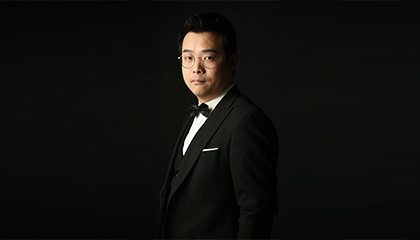
Luo
Bachelor's and master's in computer science from the University of California and ten years in the United States. Works close to the hardware, and teaches for independent problem solving rather than pattern recall.

Tan
Master's in data science from the University of Sydney after a statistics degree at Simon Fraser University, graduating in the top 5% with repeated chancellor's honours; A-Levels at a Cambridge international school, and formerly a data analyst at Tencent. An AMC-accredited coach, a College Board-accredited AP teacher, and holder of a Math League excellent-teacher award.

He
A Cambridge master's after a computer science degree with a mathematics minor at the University of Nebraska-Lincoln, and a US high school GPA of 4.13. Six years overseas and teaches entirely in English, across AMC, Math League, AP Computer Science and AP Calculus.
Where it is taught
Hanlin learning centres.
Teaching runs from Hanlin's own centres in Shanghai, Shenzhen, Chengdu and Hangzhou, and online for students elsewhere.






Talk to an advisor
Everything Hanlin does for APIO, in one conversation.
Entry, planning, coaching and the past papers. An advisor will tell you which of these a student actually needs, including when the answer is none of them.
Competition entry and planning
Which competitions suit this student, in what order, and by when - then we handle the registration, including the ones that can only be entered through a school or a centre.
Competition coaching
Taught by full-time subject tutors, on a course tier chosen by placement paper rather than by year group.
International curriculum tutoring
IB, AP, A-Level, IGCSE and the US high school curriculum, taught alongside school and timed around the exam calendar.
Competition past papers, free
A large library of past papers, mark schemes and syllabus breakdowns across every competition on this site. No charge and no enrolment.
Scan to add an advisor
Say which competition or course you are asking about. Replies in Chinese or English.
Or call +86 21 6352 6630FAQ
APIO, briefly answered.
What students, teachers and families ask before entering.
How do I register?
Through your provincial NOI commissioner, who completes the form and sends it to the NOI office. CCF does not accept individual registrations, and your province must have a designated leader teacher or its registrations will not be processed.
Who can enter?
Entry is voluntary, with priority to first-prize winners from the CSP-S second round and to NOIP first-prize winners. Provinces receive one to three base Group A places plus a number of Group B places, and CCF confirms the final list.
What is the difference between Group A and Group B?
Group A sits the official contest, with programs graded in real time by the host country, and the top six represent China internationally. Group B sits the unofficial contest within the China region; whether the host country grades it depends on that country, and otherwise the CCF NOI scientific committee does.
What is the format?
Three problems in a continuous five hours, chosen by each country within a contest window that usually runs two days. That is the equivalent of one of the international olympiad’s two contest days.
What language do I program in?
C++.
Can I see the standings during the contest?
No. Each competitor sees only their own score.
What is the Open Contest?
An online contest held some days after the main event, entered individually with no national organisation required. It carries no international medals.
Is there a difference between entering on-site and online?
Yes, in both cost and the certificate issued. On-site entrants attend the teaching sessions and testing in person; online entrants join live sessions and sit the test synchronously. Some online entrants may be moved to on-site on the strength of their results or their teacher’s contribution.
How many submissions may I make?
At most one per task per minute, with the limit lifted in the final fifteen minutes, and at most fifty submissions in total unless a task says otherwise.
What happens if I withdraw after registering?
Unless CCF confirms the reason as unavoidable, changing or missing the contest affects future opportunities to take part in NOI.
Related
The route around it.
What comes before APIO and what follows.
APIO enquiries
Register through your province, not directly.
APIO runs through provincial commissioners and CCF will not process an individual application, so the first step is your school rather than a form. Tell us where the student is and what they have already sat, and an advisor will map the May entry.