
Competitions · Computer science · NOI
NOI, the National Olympiad in Informatics.
The top fifty at the national final can enter Tsinghua or Peking University without sitting the gaokao. That single fact explains why the Chinese informatics route is taken as seriously as it is - and why it starts in primary school.
Why it matters
What a result actually unlocks.
NOI is one of the five recognised science olympiads in China, and its consequences run directly into university admission.
Top 50 - direct admission
The leading fifty competitors at the national final may be admitted directly to Tsinghua, Peking University and other leading institutions without sitting the national college entrance examination.
Places 51 to 150 - silver, and the Strong Foundation Plan
Silver medallists qualify for the Strong Foundation Plan, a separate admissions channel into leading universities.
And it is the gate to the international route
NOI is a prerequisite for the Asia-Pacific Informatics Olympiad and for the International Olympiad in Informatics.
Which is why it starts early
The series admits primary-school students at its first level. Families make this decision years before the national final.
At a glance
What NOI is, and who runs it.
NOI was founded in 1984 by the China Computer Federation, following Deng Xiaoping’s remark that the popularisation of computers must begin with the children. It is the highest-level contest for provincial teams, including Hong Kong and Macau.
- Organiser
- The China Computer Federation (CCF), commissioned by the Ministry of Education and the China Association for Science and Technology
- Since
- 1984
- Open to
- Any school or individual with the interest and means, voluntarily and in their own time
- Who reaches NOI
- Five competitors per province, of whom at most four may be male, plus a team leader
- Age limit
- 19, calculated to 30 June. Competitors must be enrolled students that year, excluding that summer’s graduating final-year students
- How you qualify
- Through provincial selection. Competitors nominated by a province without going through selection are not eligible
- When
- Late July, over two contest days of five hours each
- Marks
- Three problems at 100 marks on each contest day, plus a 100-mark written paper - 700 in total
- Language
- C, C++ and Pascal were permitted in the final round. From 2022 only C++
- Format
- Seven days: arrival, opening, first contest day, an exchange and visit day, second contest day, closing and departure
- Contest hours
- 08:00 to 13:00, with grading from 13:30 to 15:00 and self-review and appeals from 15:30
The route
Five stages, from primary school to the international team.
The Chinese informatics olympiad is a sequence rather than a single contest. Each stage qualifies you for the next.
| Stage | Who enters | When and how |
|---|---|---|
| CSP-J and CSP-S | Open, including primary-school students - the only stage that admits them | Round one is a two-hour written paper in September; round two an on-machine test in October - 3.5 hours for CSP-J, 4 for CSP-S. Nationally set, provincially awarded |
| NOIP | Strong CSP-S performers, or students recommended by a CCF-recognised teacher | Mid-to-late November. Nationally set by CCF, run province by province at the same time in different venues |
| Provincial selection | Leading NOIP performers within each province | Early April, over two days of 4.5-hour on-machine tests |
| NOI | Five competitors per province | Late July, over two days of five-hour on-machine tests |
| CTSC and IOI | The leading NOI competitors | Selection weighs the NOI score, winter camp performance, a paper and its defence, regular assignments, a selection contest and an oral examination. Four students represent China at the international olympiad in August |
CSP-J and CSP-S are the entry point and the only stage open to primary-school students, which is why most competitive students begin there. A strong CSP-S result is the credential the rest of the route is built on.
The three levels below NOI
CSP, NOIP and provincial selection.
Most students never reach the national final, and the earlier stages carry their own value.
CSP-J, the first big contest
Formerly the NOIP junior division. The lowest difficulty and youngest audience in the series, and for many students the first large informatics competition they enter. A strong result gives priority access to later NOI-series activities.
CSP-S, the real credential
Aimed at middle and high-school students and significantly harder. The CSP-S result is the important certificate for entering the rest of the series.
NOIP, and the winter camps
A first prize at NOIP opens the Tsinghua and Peking University winter camps and the CCF winter camp - where first-round preferential admission agreements may be signed.
Provincial selection, the hardest cut
The most brutal stage of the route. It decides which competitors hold their province’s official NOI places, and provincial allocations differ.
Places and quotas
How the five places per province are filled.
The allocation has several routes beyond straightforward selection, and they are worth knowing.
Four base places, plus a female place
Each province sends a team of at most five competitors, of whom no more than four may be male. Provinces may also gain places through incentive and major-contribution quotas.
Five extra places for the host province
The province hosting NOI receives five additional places that year. If the host is itself a secondary school, that school takes three of the five in addition to its competitors from provincial selection.
And reward places for strong teams
The top three teams on aggregate score, and the five provinces with the largest league entry, each gain one extra competitor at the following NOI. No province receives more than one reward place, and reward competitors count individually rather than toward the team total.
Registration forty days ahead
Entry forms are due forty days before the contest by postmark, stamped by the provincial organising unit and signed by the special commissioner.
Two things easy to miss
The written paper, and the compulsory exchange days.
Both carry marks, and both catch out students who prepare only for the programming.
A hundred marks are written
Of the 700 available, 100 come from a written paper testing computing fundamentals and breadth of knowledge rather than programming ability. That is a seventh of the total, and it is the part algorithm practice does not cover.
The exchange programme is not optional
Every participant must attend the exchange activities the host arranges, on the exchange day and around the opening and closing. A competitor who skips one without approval loses 100 marks each time.
The final round is C++ only now
C, C++ and Pascal were previously permitted. From 2022 the on-machine rounds accept only C++, which affects how a younger student should choose their first language.
And there is a review session
After the second contest day the scientific committee presents a review of the problems - which is the best teaching in the whole week and is easy to skip.
Preparation
How Hanlin supports the informatics route.
This is a multi-year plan rather than a contest entry, and the decisions that matter most are made early.
Starting at the right stage
CSP-J and CSP-S are where the route begins and the only stage open to primary-school students. Entering at the right level, at the right age, sets everything that follows.
C++ from the beginning
Because the on-machine rounds are C++ only from 2022, a student starting in another language will have to switch. Beginning in C++ avoids a costly transition.
Not neglecting the written paper
A seventh of the NOI total is written, covering computing fundamentals. Students who train only on problems lose marks that were available to them.
Practising at contest length
Two consecutive days of five hours is a specific endurance, and provincial selection is two days of four and a half. Full-length practice is the only preparation for it.
Why Hanlin
Preparation for NOI at Hanlin is taught by full-time subject tutors, on a course tier chosen by placement paper rather than by year group.
Programme formats
Five ways this is taught.
Group size is the whole difference between these. It decides how much of the tutor's attention a student gets and how far the course can bend to them, so it is worth choosing rather than accepting.
| Format | Group size | What it suits |
|---|---|---|
| One-to-one | One student | Content, pace and emphasis set by what this student actually needs rather than by a syllabus. The only format that can be rebuilt mid-course. |
| Small group | Three to eight | Opens at three. Frequent discussion, and the tutor can slow down or move on according to what the group has absorbed. Most students chasing a higher award are taught in this one. |
| Class | Eight to twelve | Taught by the subject lead or a medal coach. Less back-and-forth, so it suits a student who will say when something is unclear. |
| Large class | Ten to twenty | For students in the middle of the placement range, and a way to try a competition before committing. Students often move to a small group or to one-to-one afterwards. |
| Past-paper class | No cap | Past papers worked through in sequence in the weeks before the sitting. Free to students already enrolled. |
Course length for NOI is set after a placement paper. The gap between where a student is and what the paper asks for is what the course has to close, and that gap is not the same for two students in the same year group.
How it runs
Six steps, four people on your side.
The same process for every student, so that nothing depends on one tutor remembering to do it.
 Step 1
Pre-course assessment
A placement paper before anything is booked, so the course tier is chosen on evidence rather than on a year group.
 Step 2
Tutor matching
A subject tutor is matched to the result, and their full background is provided before you agree to it.
 Step 3
Plan and group
A study group opens with four people on one student: the tutor, a planner, a supervisor and an academic manager.
 Step 4
Scheduled teaching
The teaching office sets the timetable around the competition date and school term, and teaching begins.
 Step 5
After-class reports
What was covered, and how the student handled it, reported after every lesson.
 Step 6
Homework follow-up
The teaching assistant and the form teacher both check that homework is done, which is where most preparation quietly fails.
Free resource pack
Past papers and preparation pack
The same material our own NOI students work from. Scan the code, say what you need, and an advisor sends it.

Tell an advisor which competition and year group, and the material comes back the same day. Free, and you do not have to enrol in anything. If we do not already hold what you need, we will go and find it.
- PDFPast papers, every year the organiser has released
- PDFWorked solutions, where the organiser publishes them
- PDFThe syllabus on one page - every topic, and how heavily it is examined
- PDFEntry checklist and the dates for the current cycle
Teaching team
Who would teach it.
Three of the twenty-two tutors on the published Hanlin roster - the ones whose subject this is.
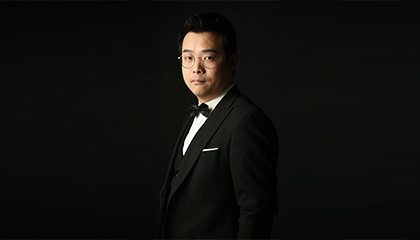
Luo
Bachelor's and master's in computer science from the University of California and ten years in the United States. Works close to the hardware, and teaches for independent problem solving rather than pattern recall.

Tan
Master's in data science from the University of Sydney after a statistics degree at Simon Fraser University, graduating in the top 5% with repeated chancellor's honours; A-Levels at a Cambridge international school, and formerly a data analyst at Tencent. An AMC-accredited coach, a College Board-accredited AP teacher, and holder of a Math League excellent-teacher award.

He
A Cambridge master's after a computer science degree with a mathematics minor at the University of Nebraska-Lincoln, and a US high school GPA of 4.13. Six years overseas and teaches entirely in English, across AMC, Math League, AP Computer Science and AP Calculus.
Where it is taught
Hanlin learning centres.
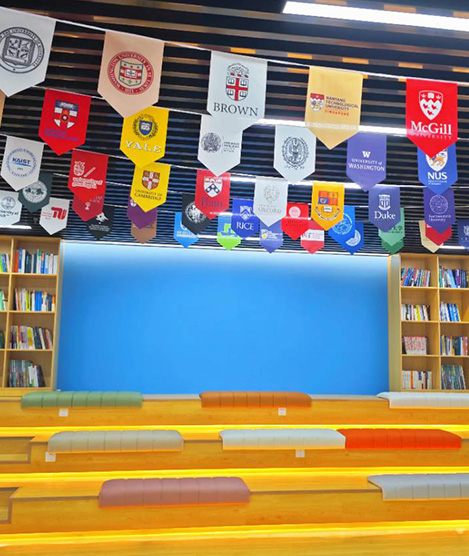
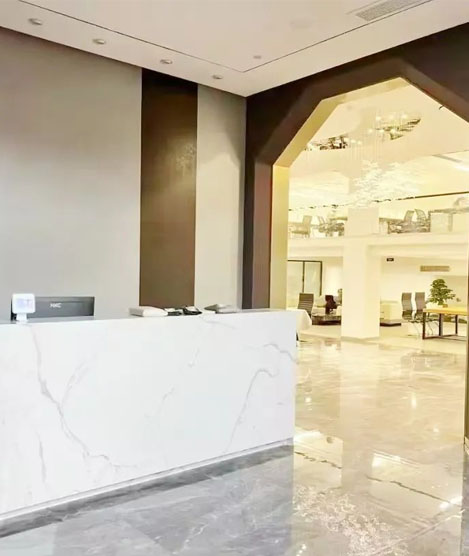
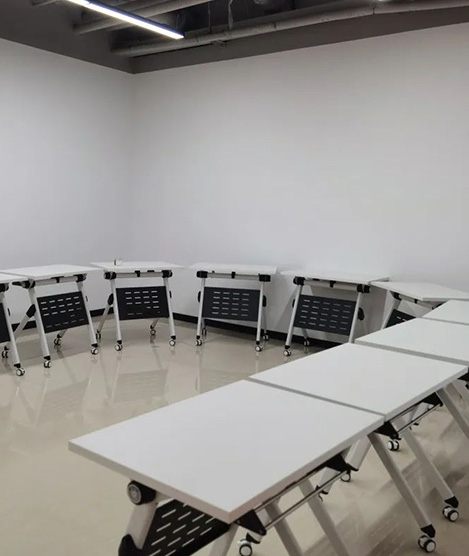
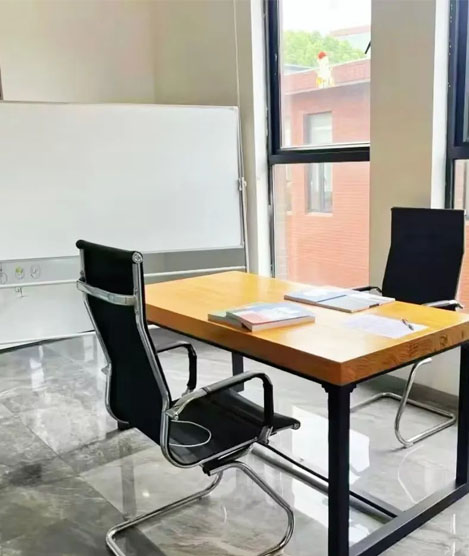
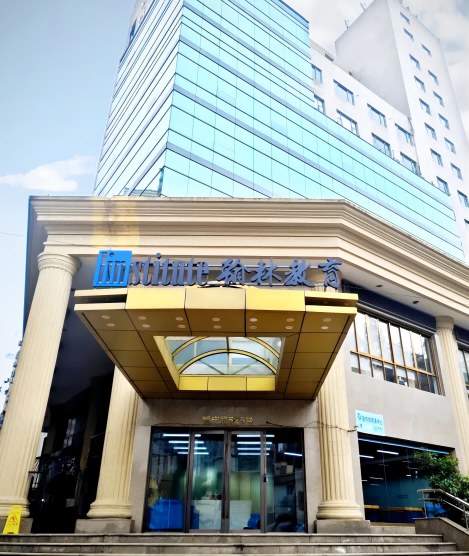
Teaching runs from Hanlin's own centres in Shanghai, Shenzhen, Chengdu and Hangzhou, and online for students elsewhere.


Talk to an advisor
Everything Hanlin does for NOI, in one conversation.
Entry, planning, coaching and the past papers. An advisor will tell you which of these a student actually needs, including when the answer is none of them.
Competition entry and planning
Which competitions suit this student, in what order, and by when - then we handle the registration, including the ones that can only be entered through a school or a centre.
Competition coaching
Taught by full-time subject tutors, on a course tier chosen by placement paper rather than by year group.
International curriculum tutoring
IB, AP, A-Level, IGCSE and the US high school curriculum, taught alongside school and timed around the exam calendar.
Competition past papers, free
A large library of past papers, mark schemes and syllabus breakdowns across every competition on this site. No charge and no enrolment.
Scan to add an advisor
Say which competition or course you are asking about. Replies in Chinese or English.
Or call +86 21 6352 6630FAQ
NOI, briefly answered.
What students and families ask about the informatics route.
What is the informatics olympiad route?
A sequence: CSP-J and CSP-S, then NOIP, then provincial selection, then NOI, and from there the national team for the international olympiad. Each stage qualifies you for the next.
When should a student start?
CSP-J and CSP-S are the entry point and the only stage that admits primary-school students. Most competitive students begin there.
What does a strong NOI result do?
The top fifty may be admitted directly to Tsinghua, Peking University and other leading institutions without sitting the gaokao. Places 51 to 150 receive silver and qualify for the Strong Foundation Plan.
Who can compete at NOI?
Five competitors per province, of whom at most four may be male, all selected through the provincial process. Competitors must be enrolled students that year, excluding that summer’s graduating final-year students, and under 19 as at 30 June.
What is the format?
Two contest days of five hours each, with three problems worth 100 marks per day, plus a 100-mark written paper - 700 in total. The week also includes compulsory exchange and visit activities.
What happens if I skip the exchange activities?
A competitor who misses one without the organiser’s approval loses 100 marks each time. They are not optional.
Which programming language?
C, C++ and Pascal were previously permitted in the on-machine rounds. From 2022 only C++ is accepted.
How is the national team chosen?
From the leading NOI competitors, weighing the NOI score, winter camp performance, a paper and its defence, regular assignments, a selection contest and an oral examination. Four students represent China. The source gives the pool as the top twenty in one place and the top fifty in another, so confirm the current rule.
How does provincial selection work now?
The source describes it as nationally set and provincially run from 2022, while also carrying a CCF notice that CCF will no longer organise a unified provincial selection and that provinces decide their own method. Check your province’s current arrangement.
What does NOIP give me?
A first prize opens the Tsinghua and Peking University winter camps and the CCF winter camp, where first-round preferential admission agreements may be signed, and gives access to provincial team selection.
Related
Where the route leads, and what runs alongside.
The international contests connected to this one.
Informatics route enquiries
The decisions that matter are made years early.
Which stage to enter, at what age, in which language - these set what is possible later, and they are made long before the national final. Tell us the student’s year group and what they already program in, and an advisor will map the route.