
Competitions · Computer science · TopCoder
TopCoder.
Contests two or three times a month rather than once a year, free to join at any age, and after every match the winners’ code is open for you to read. The oldest online algorithm platform there is.

Read this first
This is a platform, not a school competition.
TopCoder is worth a student’s time for a specific reason, and it is not the reason the other contests on this site are.
Open to anyone, at any time
Registration is free and continuous, with no age requirement, no school involvement and no qualifying round. You can enter your first match this month.
And the field is professional
TopCoder has more than a million members, most of them working developers. There is no school division and no separate ranking for students.
There are no certificates
Rewards are paid as prize money on individual challenges. Nothing here produces the graded, dated award an admissions reader recognises.
So use it as training, not as the credential
It is one of the best regular practice grounds available - and it has long served as preparation for ICPC. Pair it with USACO or CCC, which produce the results.
At a glance
What the platform is.
TopCoder was founded in April 2001 and is the origin of online algorithm competition - the concepts of coloured ratings, the Challenge phase, virtual participation and competition rooms all began here. It was later acquired by Appirio and then by Wipro.
- Founded
- April 2001
- Members
- More than a million
- Who can enter
- Anyone. Registration is free and open at any time
- Frequency
- Two or three algorithm matches a month
- Match format
- Three problems, typically worth 250, 500 and 1000 points
- Partial credit
- None. A problem is solved or it is not
- Coding phase
- 75 minutes
- Then
- A five-minute intermission, followed by a fifteen-minute Challenge phase and a final system test
- Languages
- Java, C++, C#, Visual Basic or Python
- After the match
- Every competitor can read the winners’ submitted code
- Rewards
- Prize money on individual challenges, plus points toward the TopCoder Open
The scoring mechanic
The clock starts when you open the problem.
This is the single most important thing to understand about a TopCoder match, and it is different from every other contest on this site.
Scores decay with time
A problem is worth less the longer you take. The 250, 500 and 1000-point values are maxima, not fixed awards.
Measured from opening, not from the start
Decay is counted from the moment you open the problem to the moment you submit - not from the start of the match. Opening all three problems to survey them costs you points on all three.
So reading order is a real decision
Competitors open one problem at a time and commit to it. That is a habit, and it is the first thing a newcomer from another contest gets wrong.
And there is no partial credit
A solution is right or it scores nothing. Combined with decay, that makes verifying before submitting more valuable than submitting early.
The Challenge phase
Fifteen minutes to break other people’s code.
After the coding phase closes, competitors can attack each other’s submissions - the mechanic Codeforces later borrowed as hacking.
Find an input that breaks a submission
You read other competitors’ code in your room and supply a test case you believe it fails on. A successful challenge earns points and removes their solution.
Which rewards reading code fast
A skill quite separate from writing it, and one that transfers directly to code review and debugging in real work.
Then the system test
Every surviving submission is run against the full test set. Solutions that pass the examples but fail the general case are eliminated here.
And afterwards, everything is open
Winners’ code is published for all competitors to read and compare against their own. The platform treats that as the main way its members improve.
Beyond algorithms
The TopCoder Open runs six kinds of competition.
The annual TCO is designed by the platform’s most established members and covers considerably more than algorithm problems.
Data science
Marathon matches run a week with several problems, and the top of the scoreboard at the end wins. Alongside them sit first-to-finish sprints, manually judged problem sets with no live scoreboard, and data visualisation challenges judged subjectively on the output.
Development
Bug hunts on existing products; five-day build competitions followed by four days of user feedback and debugging on a sponsor’s brief; open-ended first-to-finish challenges; quality assurance; and interface design judged on concept, elements and usability.
Three qualifying stages
Competitors earn prize money and TCO points through ordinary challenges, and extra points through specially badged TCO events. Enough points at the end of a stage brings prize money and a place at the annual final in the United States.
Which is a wide door
A student who designs interfaces or works with data, rather than writing algorithms, has a genuine route here that the algorithm olympiads do not offer.
How to use it
How Hanlin uses TopCoder with students.
Because it produces no certificate, the value has to be extracted deliberately rather than by entering and hoping.
A regular contest rhythm
Two or three matches a month gives a student far more contest experience than the annual olympiads can. Contest nerves are a solved problem after ten matches.
Reading the published solutions
The winners’ code is open after every match. Comparing your own against it is the fastest single form of improvement available, and most students never do it without being asked.
Learning the decay discipline
Opening one problem at a time and committing to it is a transferable habit. It teaches decisiveness that pays in every timed contest.
While the credential comes from elsewhere
We use TopCoder as the training and USACO, CCC or the Hacker Cup as the result. Confusing the two leads students to spend a year without anything to show.
Why Hanlin
Preparation for TopCoder at Hanlin is taught by full-time subject tutors, on a course tier chosen by placement paper rather than by year group.
Programme formats
Five ways this is taught.
Group size is the whole difference between these. It decides how much of the tutor's attention a student gets and how far the course can bend to them, so it is worth choosing rather than accepting.
| Format | Group size | What it suits |
|---|---|---|
| One-to-one | One student | Content, pace and emphasis set by what this student actually needs rather than by a syllabus. The only format that can be rebuilt mid-course. |
| Small group | Three to eight | Opens at three. Frequent discussion, and the tutor can slow down or move on according to what the group has absorbed. Most students chasing a higher award are taught in this one. |
| Class | Eight to twelve | Taught by the subject lead or a medal coach. Less back-and-forth, so it suits a student who will say when something is unclear. |
| Large class | Ten to twenty | For students in the middle of the placement range, and a way to try a competition before committing. Students often move to a small group or to one-to-one afterwards. |
| Past-paper class | No cap | Past papers worked through in sequence in the weeks before the sitting. Free to students already enrolled. |
Course length for TopCoder is set after a placement paper. The gap between where a student is and what the paper asks for is what the course has to close, and that gap is not the same for two students in the same year group.
How it runs
Six steps, four people on your side.
The same process for every student, so that nothing depends on one tutor remembering to do it.
 Step 1
Pre-course assessment
A placement paper before anything is booked, so the course tier is chosen on evidence rather than on a year group.
 Step 2
Tutor matching
A subject tutor is matched to the result, and their full background is provided before you agree to it.
 Step 3
Plan and group
A study group opens with four people on one student: the tutor, a planner, a supervisor and an academic manager.
 Step 4
Scheduled teaching
The teaching office sets the timetable around the competition date and school term, and teaching begins.
 Step 5
After-class reports
What was covered, and how the student handled it, reported after every lesson.
 Step 6
Homework follow-up
The teaching assistant and the form teacher both check that homework is done, which is where most preparation quietly fails.
Free resource pack
Past papers and preparation pack
The same material our own TopCoder students work from. Scan the code, say what you need, and an advisor sends it.

Tell an advisor which competition and year group, and the material comes back the same day. Free, and you do not have to enrol in anything. If we do not already hold what you need, we will go and find it.
- PDFPast papers, every year the organiser has released
- PDFWorked solutions, where the organiser publishes them
- PDFThe syllabus on one page - every topic, and how heavily it is examined
- PDFEntry checklist and the dates for the current cycle
Teaching team
Who would teach it.
Three of the twenty-two tutors on the published Hanlin roster - the ones whose subject this is.

Luo
Bachelor's and master's in computer science from the University of California and ten years in the United States. Works close to the hardware, and teaches for independent problem solving rather than pattern recall.

Tan
Master's in data science from the University of Sydney after a statistics degree at Simon Fraser University, graduating in the top 5% with repeated chancellor's honours; A-Levels at a Cambridge international school, and formerly a data analyst at Tencent. An AMC-accredited coach, a College Board-accredited AP teacher, and holder of a Math League excellent-teacher award.

He
A Cambridge master's after a computer science degree with a mathematics minor at the University of Nebraska-Lincoln, and a US high school GPA of 4.13. Six years overseas and teaches entirely in English, across AMC, Math League, AP Computer Science and AP Calculus.
Where it is taught
Hanlin learning centres.
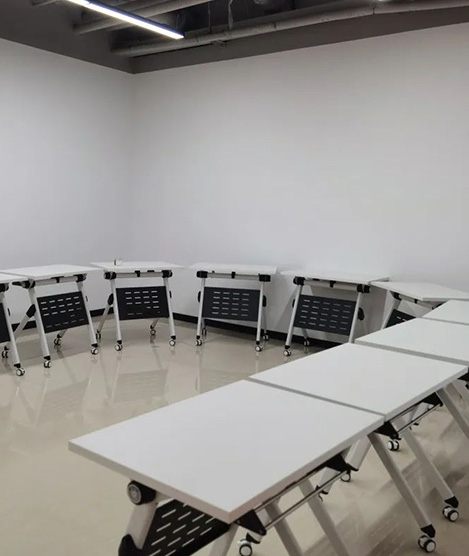
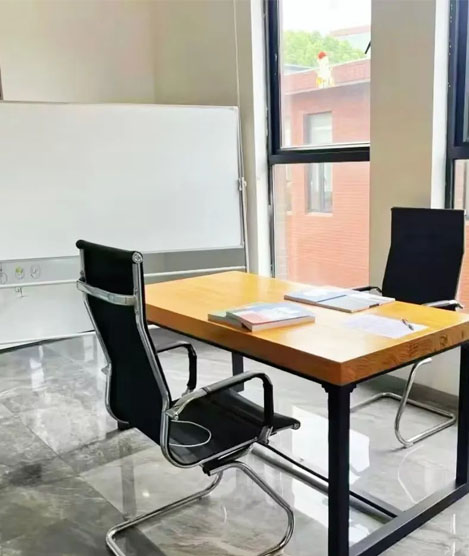
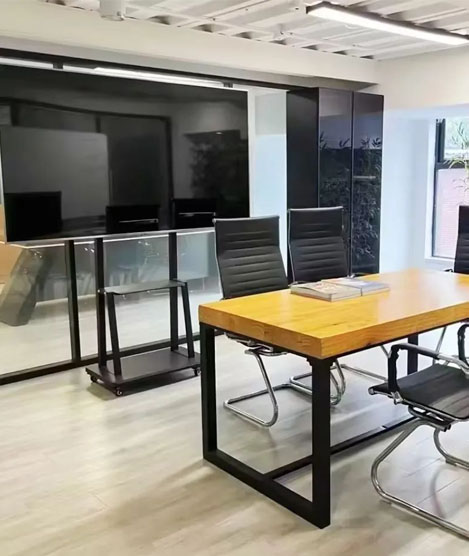
Teaching runs from Hanlin's own centres in Shanghai, Shenzhen, Chengdu and Hangzhou, and online for students elsewhere.




Talk to an advisor
Everything Hanlin does for TopCoder, in one conversation.
Entry, planning, coaching and the past papers. An advisor will tell you which of these a student actually needs, including when the answer is none of them.
Competition entry and planning
Which competitions suit this student, in what order, and by when - then we handle the registration, including the ones that can only be entered through a school or a centre.
Competition coaching
Taught by full-time subject tutors, on a course tier chosen by placement paper rather than by year group.
International curriculum tutoring
IB, AP, A-Level, IGCSE and the US high school curriculum, taught alongside school and timed around the exam calendar.
Competition past papers, free
A large library of past papers, mark schemes and syllabus breakdowns across every competition on this site. No charge and no enrolment.
Scan to add an advisor
Say which competition or course you are asking about. Replies in Chinese or English.
Or call +86 21 6352 6630FAQ
TopCoder, briefly answered.
What students and families ask before starting.
Is there an age limit?
No. Registration is free and open to anyone at any time, with no school involvement and no qualifying round.
Does it produce an award I can put in an application?
Not in the way the school competitions do. Rewards are paid as prize money on individual challenges, and there are no graded certificates. Use TopCoder as practice and USACO, CCC or the Hacker Cup for the result.
What is a match like?
Three problems, typically worth 250, 500 and 1000 points, in a 75-minute coding phase. Then a five-minute intermission, a fifteen-minute Challenge phase and a system test.
How is it scored?
A problem’s value decays with time, counted from when you open it to when you submit - not from the start of the match. There is no partial credit.
So should I open all three problems at the start?
No. Because decay runs from opening, surveying all three costs points on all three. Competitors open one at a time and commit to it.
What is the Challenge phase?
Fifteen minutes in which competitors read each other’s submitted code and supply test cases they believe it fails on. A successful challenge earns points and removes the other solution.
Which languages can I use?
Java, C++, C#, Visual Basic or Python.
Can I see other people’s solutions?
Yes. After every match the winners’ code is open for all competitors to read - the platform treats that as the main way its members improve.
What is the TopCoder Open?
The annual championship. It runs algorithm, design, development, first-to-finish and marathon competitions across three qualifying stages, with enough accumulated points bringing prize money and a place at the final in the United States.
How does it differ from ICPC?
The problem types and contest format are quite different, but TopCoder has long been used as training for ICPC, and the algorithmic ground overlaps heavily.
Related
Where the credential comes from.
Contests to pair with TopCoder practice.
TopCoder enquiries
Use it for the practice, not for the certificate.
Two or three matches a month against a professional field, with every winner’s code published afterwards, is the best regular training available - but it produces no graded award. Tell us what a student is aiming at and an advisor will pair it with the contest that does.