
Competitions · Computer science · Imagine Cup
The Imagine Cup.
A hundred thousand dollars, Azure and OpenAI credits, and a mentoring session with Microsoft’s chief executive. It is also closed to anyone under eighteen, which for most school students means not yet.

Read this first
Eighteen and over, with no exceptions.
The Imagine Cup appears on lists of student technology competitions, which makes the age floor easy to miss.
Every competitor must be at least 18
This is a firm requirement, not a guideline. Most secondary students reach it only in their final year, if at all.
But you must still be a student
Student status has to be proved - through a school email address, a Shibboleth institutional login, or a Microsoft Imagine verification code. It is a student competition, just not a school one.
Open worldwide, with no nationality restriction
Teams may cross institutions and countries. For an eligible student anywhere, there is no geographic barrier at all.
For younger students, other doors
The Swift Student Challenge opens at 13, Kaggle at any age, and USACO and the Bebras challenge have no age floor. An advisor can map what is actually available now.
At a glance
What the competition is.
Microsoft has run the Imagine Cup since 2003 - more than twenty editions, with 1.75 million students from 190 countries and regions having taken part. Chinese teams have reached the world final and taken awards several times.
- Organiser
- Microsoft
- Since
- 2003
- Scale
- 1.75 million students from 190 countries and regions
- Who can enter
- Students aged 18 or over, anywhere in the world
- Proving student status
- A school email address, a Shibboleth institutional login, or a Microsoft Imagine verification code
- Registration
- An account at the Imagine Cup site, using the same email address throughout
- Team size
- The entry requirements give at most three members; the teams section says up to four. Confirm before forming a team
- Team composition
- Members may come from different institutions and different countries. Each competitor may belong to only one team
- Mentors
- A mentor may be designated, from an academic institution, a non-profit or a private company. The organisers recommend every team have one
- Technology requirement
- The project must use Windows Azure. Other Microsoft technologies are optional, and the value of the platform must be evident in the project
- Season
- Registration and submission open in late September, submissions close in early January, and the world champion is announced in early June
The three tracks
Sustainability, Innovation, Industry.
Entries are submitted into one of three categories, and the choice frames how a project is judged.
Sustainability
Solutions focused on sustainable development and on improving quality of life.
Innovation
Solutions demonstrating novel and breakthrough ideas, pushing the boundaries of what is technically and creatively possible.
Industry
Solutions to real problems in specific sectors - healthcare, education, finance and others.
What you submit
A business plan, not a demo.
The qualifying round is where most technically strong teams underestimate what is being asked.
A business plan, tightly limited
Word or PDF of no more than ten pages, or a PowerPoint of no more than twenty slides. The limit is a real constraint on what can be included.
Covering five specific things
Team composition, what the business is, how AI is used, who the target users are, and how the business will reach the market.
Plus the team leader’s LinkedIn profile
A requirement worth noting early, since it means the leader needs a credible professional profile before the deadline rather than after it.
And a minimum viable product
The submission window is described as MVP submission - so a working product, not only a plan for one.
What competitors get
The support is worth more than the prize to most teams.
Only a handful of teams take the cash. Everyone who enters gets the rest.
AI credits and tooling
Access to current AI technology along with Azure and OpenAI credits, which is a material advantage for a student team building an AI product.
One-to-one mentoring
Both technical and business mentors, tailored to what a team is trying to do. The organisers describe it as an entrepreneurship ecosystem rather than a technical programme.
Up to USD 100,000 for the winner
Plus global recognition and a private mentoring session with Microsoft’s chairman and chief executive. Two runner-up teams receive USD 50,000 each.
And a network
Contact with industry professionals, travel opportunities, and a business framework the organisers frame as career preparation rather than as a competition prize.
Preparation
How Hanlin supports an Imagine Cup entry.
For an eligible student this is a startup competition, so the support looks nothing like competition tutoring.
Confirming eligibility first
Age 18, provable student status, and a team formed inside the size limit. All three are settled before any work begins, because none of them can be fixed later.
Choosing the track deliberately
Sustainability, Innovation and Industry frame the same project differently. Matching the track to what the project actually does is a positioning decision worth making early.
Writing to ten pages
Fitting team, product, AI use, users and go-to-market into ten pages or twenty slides is a discipline. Most first drafts are twice the length and half as persuasive.
And building on Azure from the start
The Azure requirement is not a formality - the project must show the platform’s value. Retrofitting it late produces a weaker entry than designing for it.
Why Hanlin
Preparation for Imagine Cup at Hanlin is taught by full-time subject tutors, on a course tier chosen by placement paper rather than by year group.
Programme formats
Five ways this is taught.
Group size is the whole difference between these. It decides how much of the tutor's attention a student gets and how far the course can bend to them, so it is worth choosing rather than accepting.
| Format | Group size | What it suits |
|---|---|---|
| One-to-one | One student | Content, pace and emphasis set by what this student actually needs rather than by a syllabus. The only format that can be rebuilt mid-course. |
| Small group | Three to eight | Opens at three. Frequent discussion, and the tutor can slow down or move on according to what the group has absorbed. Most students chasing a higher award are taught in this one. |
| Class | Eight to twelve | Taught by the subject lead or a medal coach. Less back-and-forth, so it suits a student who will say when something is unclear. |
| Large class | Ten to twenty | For students in the middle of the placement range, and a way to try a competition before committing. Students often move to a small group or to one-to-one afterwards. |
| Past-paper class | No cap | Past papers worked through in sequence in the weeks before the sitting. Free to students already enrolled. |
Course length for Imagine Cup is set after a placement paper. The gap between where a student is and what the paper asks for is what the course has to close, and that gap is not the same for two students in the same year group.
How it runs
Six steps, four people on your side.
The same process for every student, so that nothing depends on one tutor remembering to do it.
 Step 1
Pre-course assessment
A placement paper before anything is booked, so the course tier is chosen on evidence rather than on a year group.
 Step 2
Tutor matching
A subject tutor is matched to the result, and their full background is provided before you agree to it.
 Step 3
Plan and group
A study group opens with four people on one student: the tutor, a planner, a supervisor and an academic manager.
 Step 4
Scheduled teaching
The teaching office sets the timetable around the competition date and school term, and teaching begins.
 Step 5
After-class reports
What was covered, and how the student handled it, reported after every lesson.
 Step 6
Homework follow-up
The teaching assistant and the form teacher both check that homework is done, which is where most preparation quietly fails.
Free resource pack
Project and submission pack
The same material our own Imagine Cup students work from. Scan the code, say what you need, and an advisor sends it.
Tell an advisor which competition and year group, and the material comes back the same day. Free, and you do not have to enrol in anything. If we do not already hold what you need, we will go and find it.
- PDFPast finalist project titles and abstracts
- PDFCategory definitions and the judging criteria, broken down
- DOCXA project timeline working back from the submission date
- PDFEntry checklist and the dates for the current cycle
Teaching team
Who would teach it.
Three of the twenty-two tutors on the published Hanlin roster - the ones whose subject this is.
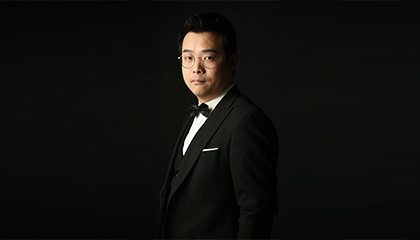
Luo
Bachelor's and master's in computer science from the University of California and ten years in the United States. Works close to the hardware, and teaches for independent problem solving rather than pattern recall.

Tan
Master's in data science from the University of Sydney after a statistics degree at Simon Fraser University, graduating in the top 5% with repeated chancellor's honours; A-Levels at a Cambridge international school, and formerly a data analyst at Tencent. An AMC-accredited coach, a College Board-accredited AP teacher, and holder of a Math League excellent-teacher award.

He
A Cambridge master's after a computer science degree with a mathematics minor at the University of Nebraska-Lincoln, and a US high school GPA of 4.13. Six years overseas and teaches entirely in English, across AMC, Math League, AP Computer Science and AP Calculus.
Where it is taught
Hanlin learning centres.
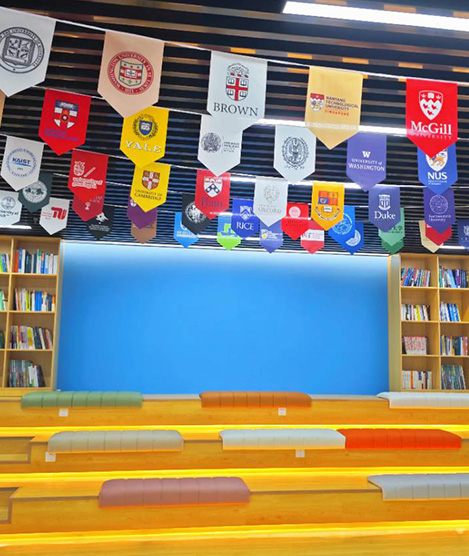
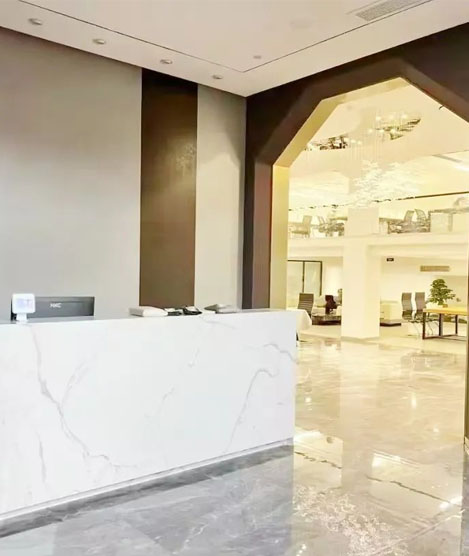
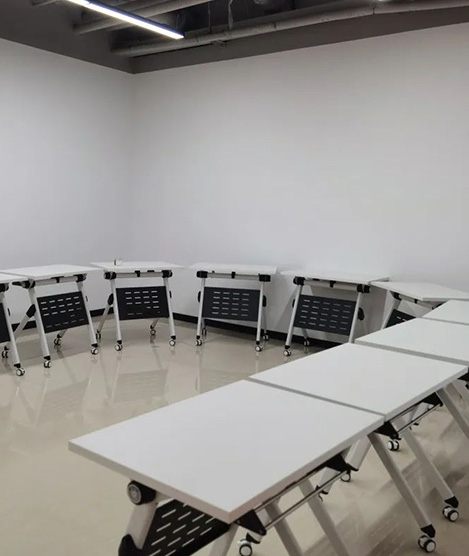
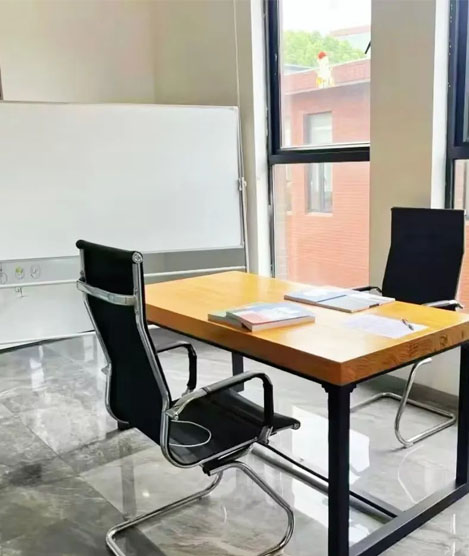
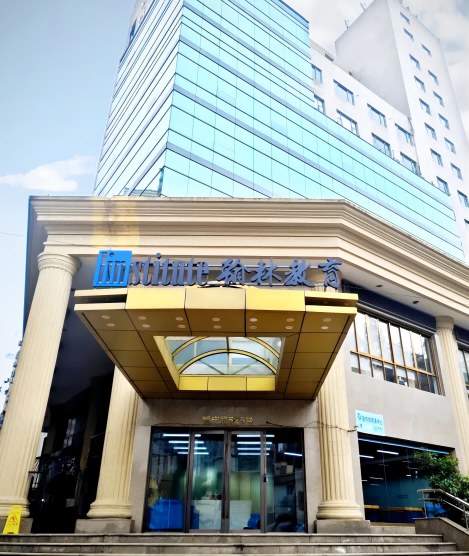
Teaching runs from Hanlin's own centres in Shanghai, Shenzhen, Chengdu and Hangzhou, and online for students elsewhere.


Talk to an advisor
Everything Hanlin does for Imagine Cup, in one conversation.
Entry, planning, coaching and the past papers. An advisor will tell you which of these a student actually needs, including when the answer is none of them.
Competition entry and planning
Which competitions suit this student, in what order, and by when - then we handle the registration, including the ones that can only be entered through a school or a centre.
Competition coaching
Taught by full-time subject tutors, on a course tier chosen by placement paper rather than by year group.
International curriculum tutoring
IB, AP, A-Level, IGCSE and the US high school curriculum, taught alongside school and timed around the exam calendar.
Competition past papers, free
A large library of past papers, mark schemes and syllabus breakdowns across every competition on this site. No charge and no enrolment.
Scan to add an advisor
Say which competition or course you are asking about. Replies in Chinese or English.
Or call +86 21 6352 6630FAQ
The Imagine Cup, briefly answered.
What students and families ask about it.
Can a high-school student enter?
Only if they are already 18. Every competitor must be at least eighteen years old, which in practice makes this a university competition for most people.
What should a younger student enter instead?
The Swift Student Challenge opens at 13; Kaggle, USACO and the Bebras challenge have no age floor at all. An advisor can map what is available at a given age.
Do I have to be enrolled somewhere?
Yes. Student status must be proved through a school email address, a Shibboleth institutional login, or a Microsoft Imagine verification code.
How big can a team be?
The source gives two different answers - at most three in the entry requirements and up to four in the teams section. Confirm with the organiser before forming a team.
Can my team be from different countries?
Yes. Members may come from different academic institutions and different countries. Each competitor may belong to only one team.
Do we need a mentor?
Not required, but recommended. A mentor may come from an academic institution, a non-profit or a private company.
What technology must we use?
The project must use Windows Azure, and the value of the Microsoft platform should be evident in it. Other Microsoft technologies are optional.
What do we submit?
A business plan - Word or PDF of no more than ten pages, or a PowerPoint of no more than twenty slides - covering team, business, AI use, target users and go-to-market, plus the team leader’s LinkedIn profile and a minimum viable product.
What are the prizes?
Up to USD 100,000 for the winner, along with global recognition and a private mentoring session with Microsoft’s chairman and chief executive. Two runner-up teams receive USD 50,000 each.
What support do entrants get?
Access to current AI technology with Azure and OpenAI credits, and one-to-one technical and business mentoring tailored to the team.
Related
What is open now.
Competitions available before eighteen.
Imagine Cup enquiries
Worth knowing about now. Worth entering later.
The Imagine Cup is closed until a student turns eighteen, but the work that wins it - building a product, choosing a market, writing a plan - starts years earlier. Tell us the student’s age and interests, and an advisor will map what is open now and what this leads to.