
Competitions · Computer science · RoboRAVE
RoboRAVE.
Seven events, most of them for children under thirteen, and the teams choose their own opponents and set their own testing schedule. The equipment is barely restricted - which is the point.

At a glance
What the competition is.
RoboRAVE began in New Mexico in 2001 and is sponsored principally by Intel. China joined in 2012 and became the organising country for Asia; the Chinese committee, ITCCC, also serves as the Asia committee.
- Since
- 2001, in New Mexico
- Principal sponsor
- Intel
- Countries
- Beyond the United States the source names China, France, Spain, Japan, Argentina, Colombia, Mexico, the Czech Republic and India, among others
- Who can enter
- Teams, in primary, junior-high and senior-high divisions. Most events are for competitors aged 13 or under
- What a team does
- Designs, builds and programs a fully autonomous robot to complete the event’s task. Some younger events use remote control instead
- Asia round
- February, in Beijing or Guangzhou
- How to register
- Through the international or Asia-committee websites
- Entry fee
- Charged per person, covering conference registration, a personal registration pack, lunch on the day and accident insurance. The Mars colonisation project is charged separately and costs less
- Prizes
- Cash prizes for the champion, runner-up and third place, each with a trophy and a certificate
- Where it leads
- Winning teams in each event and division qualify for the global final
The events
Seven challenges, graded by age and difficulty.
Age limits differ by event and by division, and several events are open only to quite young children. Check the band before planning around one.
| Event | Age | Equipment | What it asks |
|---|---|---|---|
| Line following | Up to 13, or up to 18 in the secondary open division | Autonomous. LEGO or Spike in the set divisions, unrestricted in the open ones | A self-driving delivery scenario - follow the line to the unloading dock, unload the cargo and return by the same route within the time limit. The hardest event here |
| Sumo | Up to 13 for the 1 kg LEGO class, up to 18 for the Spike 1 kg and LEGO 1.5 kg classes | Autonomous LEGO or Spike | Push the opponent out of the ring - through strength, or by dodging and letting them overcommit. Strategy counts as much as power |
| Maze | Up to 13 | Autonomous LEGO | Navigate a continuous run of boards with no external sensors, controlling two wheels alone. A gyroscope is permitted. The simplest event and the most brutal, because accumulated error is the whole problem |
| Curling | Up to 10 in the junior division, up to 13 in the advanced | Remote control, equipment unrestricted | Throw a LEGO wheel rim so it stops in the central scoring zone, or knock the opponent’s out of it |
| Positioning | Up to 10 | Remote control. LEGO WeDo or Spike Essential | Move objects precisely to target positions. Every move changes the whole board, so each step has to be thought through |
| Creative building | Up to 7 in the junior division, up to 10 in the advanced | Large blocks of any brand, or LEGO WeDo or Spike Essential | Building rather than competing - curiosity, imagination, language, cooperation and hand-eye coordination |
| Fun build | Up to 7 | Remote control, using the 9688 kit | Build a robotic arm from blocks on the spot and use it to complete a task released on the day. Assembly order matters, and so does working with a partner |
Only the Spike and 1.5 kg sumo classes and the secondary open line-following division reach age 18. For a senior secondary student, RoboRAVE is a narrow competition - FTC is the better fit.
What makes it different
The child runs the day.
RoboRAVE is deliberately organised to hand control to the competitors, which is unusual for an event aimed at this age group.
Teams schedule their own testing
Rather than being called to the field at fixed times, teams arrange their own debugging and practice runs through the day.
And choose their own opponents
Teams select who they compete against. That is a strategic decision handed to children, and it is a genuine part of the learning.
Equipment is largely unrestricted
Several events place no limit on the kit used, which tests underlying capability rather than familiarity with one manufacturer’s platform.
With inquiry-based learning built in
The organisers describe inquiry-based and project-based learning as being in the competition’s genes, and design the events around that rather than around spectacle.
What a competitor comes away with
More than the medal table suggests.
The award structure reaches everyone who takes part, which suits a competition aimed largely at younger children.
First, second and third in every division
Each event and each age division is awarded separately, and each place carries a cash prize, a trophy and a certificate.
A place at the global final
Winning teams in each event and each age division qualify to go on and compete internationally.
A workshop completion certificate
Issued after the pre-competition training programme, which is built on a task-release model: a learning task is set, the key points are taught, and the work is completed inside a time limit.
And a certificate for everyone else
Teams that do not place receive an Asia round participation certificate. Students who perform notably may receive a letter of recommendation.
Preparation
How Hanlin prepares a RoboRAVE team.
The events differ enough that preparation starts with choosing the right one, not with building a robot.
Picking the event by age and by strength
Age bands differ event by event, and so does what each rewards - precision, strategy, error control or construction. The choice largely determines the result.
Working on error, not on speed
In the maze event no external sensors are permitted, so accumulated drift is the entire problem. Most younger teams lose there rather than anywhere else.
Rehearsing the opponent choice
Because teams pick who they face, understanding the field is a skill. Children rarely think about it in advance, and it decides matches.
And practising the on-the-day build
In the fun build event the task is released on the day and assembly order matters. That is rehearsed as a process rather than as a solution.
Why Hanlin
Preparation for RoboRAVE at Hanlin is taught by full-time subject tutors, on a course tier chosen by placement paper rather than by year group.
Programme formats
Five ways this is taught.
Group size is the whole difference between these. It decides how much of the tutor's attention a student gets and how far the course can bend to them, so it is worth choosing rather than accepting.
| Format | Group size | What it suits |
|---|---|---|
| One-to-one | One student | Content, pace and emphasis set by what this student actually needs rather than by a syllabus. The only format that can be rebuilt mid-course. |
| Small group | Three to eight | Opens at three. Frequent discussion, and the tutor can slow down or move on according to what the group has absorbed. Most students chasing a higher award are taught in this one. |
| Class | Eight to twelve | Taught by the subject lead or a medal coach. Less back-and-forth, so it suits a student who will say when something is unclear. |
| Large class | Ten to twenty | For students in the middle of the placement range, and a way to try a competition before committing. Students often move to a small group or to one-to-one afterwards. |
| Past-paper class | No cap | Past papers worked through in sequence in the weeks before the sitting. Free to students already enrolled. |
Course length for RoboRAVE is set after a placement paper. The gap between where a student is and what the paper asks for is what the course has to close, and that gap is not the same for two students in the same year group.
How it runs
Six steps, four people on your side.
The same process for every student, so that nothing depends on one tutor remembering to do it.
 Step 1
Pre-course assessment
A placement paper before anything is booked, so the course tier is chosen on evidence rather than on a year group.
 Step 2
Tutor matching
A subject tutor is matched to the result, and their full background is provided before you agree to it.
 Step 3
Plan and group
A study group opens with four people on one student: the tutor, a planner, a supervisor and an academic manager.
 Step 4
Scheduled teaching
The teaching office sets the timetable around the competition date and school term, and teaching begins.
 Step 5
After-class reports
What was covered, and how the student handled it, reported after every lesson.
 Step 6
Homework follow-up
The teaching assistant and the form teacher both check that homework is done, which is where most preparation quietly fails.
Free resource pack
Season and build pack
The same material our own RoboRAVE students work from. Scan the code, say what you need, and an advisor sends it.

Tell an advisor which competition and year group, and the material comes back the same day. Free, and you do not have to enrol in anything. If we do not already hold what you need, we will go and find it.
- PDFPast season materials and game manuals
- PDFThe judging rubric, broken down by what earns each point
- DOCXBuild log and documentation checklist
- PDFEntry checklist and the dates for the current cycle
Teaching team
Who would teach it.
Three of the twenty-two tutors on the published Hanlin roster - the ones whose subject this is.
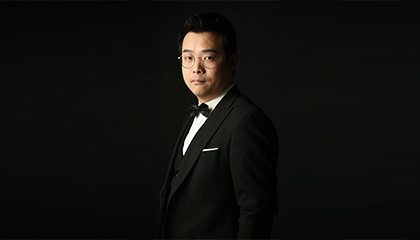
Luo
Bachelor's and master's in computer science from the University of California and ten years in the United States. Works close to the hardware, and teaches for independent problem solving rather than pattern recall.

Tan
Master's in data science from the University of Sydney after a statistics degree at Simon Fraser University, graduating in the top 5% with repeated chancellor's honours; A-Levels at a Cambridge international school, and formerly a data analyst at Tencent. An AMC-accredited coach, a College Board-accredited AP teacher, and holder of a Math League excellent-teacher award.

He
A Cambridge master's after a computer science degree with a mathematics minor at the University of Nebraska-Lincoln, and a US high school GPA of 4.13. Six years overseas and teaches entirely in English, across AMC, Math League, AP Computer Science and AP Calculus.
Where it is taught
Hanlin learning centres.
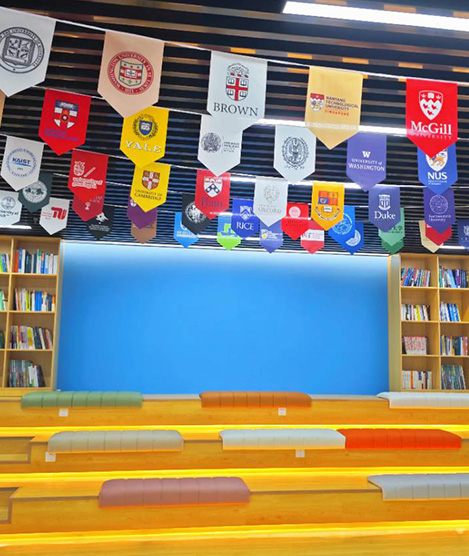
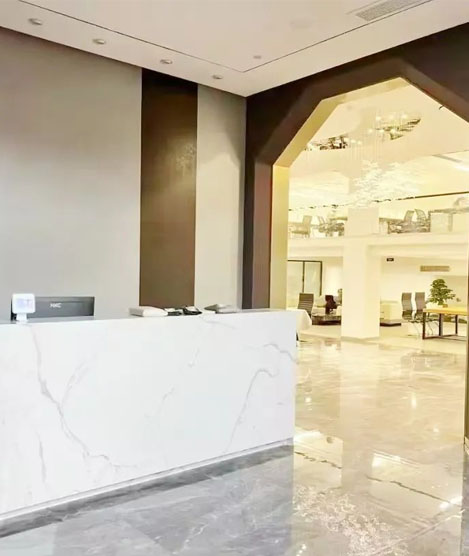
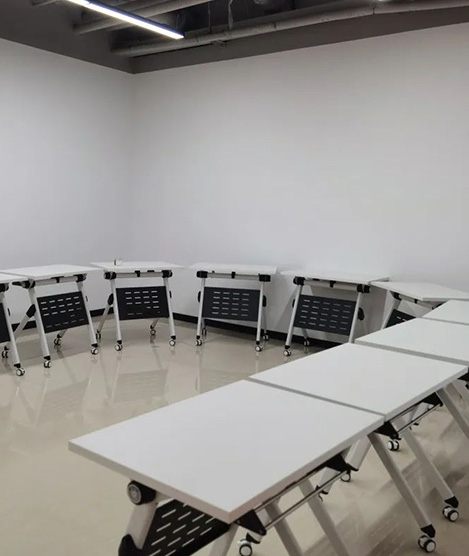
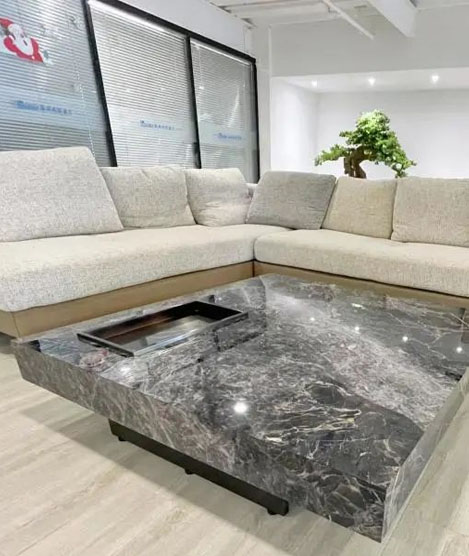
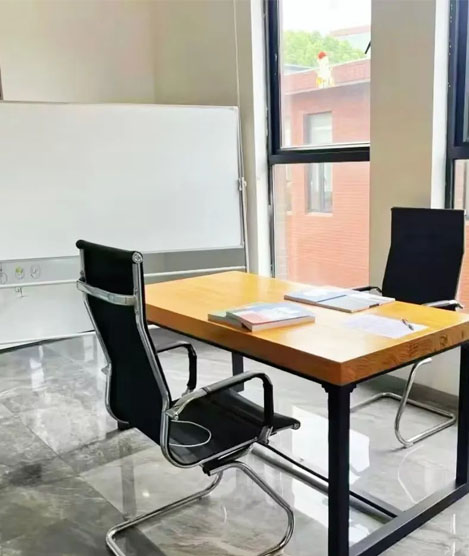
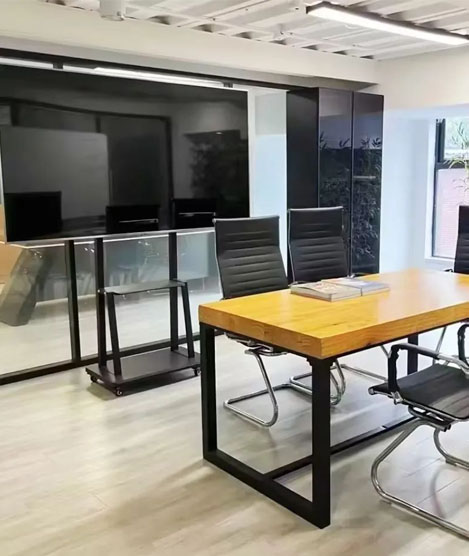
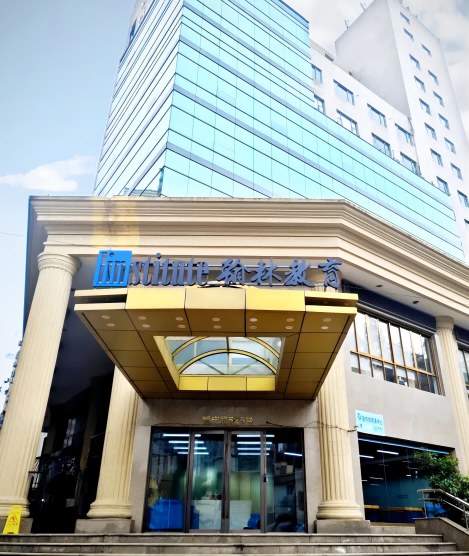
Teaching runs from Hanlin's own centres in Shanghai, Shenzhen, Chengdu and Hangzhou, and online for students elsewhere.
Talk to an advisor
Everything Hanlin does for RoboRAVE, in one conversation.
Entry, planning, coaching and the past papers. An advisor will tell you which of these a student actually needs, including when the answer is none of them.
Competition entry and planning
Which competitions suit this student, in what order, and by when - then we handle the registration, including the ones that can only be entered through a school or a centre.
Competition coaching
Taught by full-time subject tutors, on a course tier chosen by placement paper rather than by year group.
International curriculum tutoring
IB, AP, A-Level, IGCSE and the US high school curriculum, taught alongside school and timed around the exam calendar.
Competition past papers, free
A large library of past papers, mark schemes and syllabus breakdowns across every competition on this site. No charge and no enrolment.
Scan to add an advisor
Say which competition or course you are asking about. Replies in Chinese or English.
Or call +86 21 6352 6630FAQ
RoboRAVE, briefly answered.
What students, teachers and families ask before entering.
Who can enter?
Teams in primary, junior-high and senior-high divisions. Age limits vary by event, and most events are for competitors aged 13 or under. Only two sumo classes and the secondary open line-following division reach age 18.
Is it suitable for a senior secondary student?
Only narrowly. Most events cap at 13, and a senior student is limited to the sumo and open line-following divisions. FTC is the better fit at that age.
Are the robots autonomous?
In the line-following, sumo and maze events, yes - fully autonomous, designed, built and programmed by the team. The younger events - curling, positioning and fun build - use remote control instead.
What equipment do we need?
It varies by event. Some specify LEGO, Spike or the 9688 kit; the open divisions place no restriction on the equipment at all.
What does it cost?
There is a per-person fee for the Asia round covering conference registration, a personal registration pack, lunch on the day and accident insurance, and a smaller separate fee for the Mars colonisation project. Confirm the current amounts with the organiser when you register.
What are the prizes?
A cash prize, a trophy and a certificate for the champion, runner-up and third place, awarded separately in every event and division.
How do we reach the global final?
Winning teams in each event and division qualify.
What if we do not place?
Every team receives an Asia round participation certificate, and there is a completion certificate for the pre-competition workshop. Students who perform notably may receive a letter of recommendation.
When and where is the Asia round?
February, in Beijing or Guangzhou. Registration is through the international or Asia-committee websites.
Related
Robotics and computing.
What students enter alongside or after RoboRAVE.
RoboRAVE enquiries
Choose the event before you build the robot.
Seven events with different age limits, different equipment rules and quite different demands - and the choice largely decides the result. Tell us the child’s age and what they have built before, and an advisor will pick the event.