
Competitions · Computer science · Kaggle
Kaggle.
Open all year, free to join, and every result is a public profile anyone can check. The field includes professional research teams - which is exactly why the tier system, not the prize money, is what a school student should aim at.

Read this first
The prize money is not the target.
Kaggle is worth a school student’s time, but for a different reason from the one the prize figures suggest.
The field is professional
Competitions are posted by companies and research institutions and entered by professional data science teams. Prize money of USD 5,000 to 10,000 is genuinely hard to win, and the annual flagship competition reaches a million dollars.
But the tier system is a real credential
Novice, Contributor, Expert, Master, Grandmaster - earned through competition, notebook and discussion medals. It is public, dated and verifiable by anyone reading an application.
And Expert is genuinely reachable
Two competition bronze medals, five notebook bronzes and fifty discussion bronzes. That is a year of consistent work rather than a stroke of brilliance.
Which makes it a good long project
Rolling entry all year, no registration deadline and no eligibility rules. A student can start today and build toward something across two years.
At a glance
What the platform is.
Kaggle was founded in 2010 by Anthony Goldbloom and Ben Hamner and acquired by Google in 2017. Companies supply data and a real problem; competitors propose solutions; the best one wins. Google, Facebook and Microsoft have all run competitions on it.
- Founded
- 2010. Acquired by Google in 2017
- Who can enter
- Anyone. One account per person
- Best suited to
- High-school students and university students with a computing background
- Entry
- Rolling throughout the year - competitions open and close continuously
- Language
- English throughout
- Format
- Individually or in teams. Competitors may share experience with each other during a competition
- Competition categories
- Featured, Research, Getting Started, Playground, InClass and Analytics - spanning beginner, advanced and recruitment-oriented contests
- Typical prize
- USD 5,000 to 10,000 on a company-sponsored competition. Kaggle’s own annual flagship reaches USD 1 million
- Winners must
- Submit their source code
- Progression
- Five public tiers, earned across competitions, notebooks and discussion
The tiers
What each rank actually requires.
Kaggle grades its members on three dimensions - competitions, published code and community participation - and the thresholds are published. This is the part of Kaggle that functions as a credential.
| Tier | What it takes |
|---|---|
| Novice | Registering an account |
| Contributor | Completing your profile and performing a set of specified actions. Neither of the first two tiers reflects competition results or standing |
| Expert | Two competition bronze medals, five notebook bronze medals, and fifty discussion bronze medals |
| Master | One competition gold and two competition silvers; ten notebook silvers; fifty discussion silvers and two hundred discussion medals in total |
| Grandmaster | Five competition golds, at least one of them won solo; fifteen notebook golds; fifty discussion golds and five hundred discussion medals in total |
Note how much of Expert comes from notebooks and discussion rather than from placings. Publishing good analysis and helping other competitors is a legitimate and under-used route for a school student.
The three formats
And why Code Competitions suit students best.
The format determines what hardware you need, which matters more to a school student than to a research lab.
Simple competitions
The standard format. Accept the rules, download the full dataset at the start, build a model locally or in a notebook, generate predictions and upload them. Most Kaggle competitions work this way.
Two-stage competitions
A second stage builds on the first and introduces a new test dataset released when that stage opens. Entry to stage two usually requires a stage one submission, so reading the timeline matters more here than anywhere else.
Code competitions
Everything is submitted from inside a Kaggle notebook - nothing can be uploaded directly. Every competitor gets the same hardware allowance, so the contest is fairer, and winning models tend to be far simpler because they must run inside the platform’s compute limits.
Getting started
Three competitions designed for beginners.
Kaggle maintains permanent entry-level competitions that never close, and they are the right first move.
Titanic - Machine Learning from Disaster
The classic first challenge: predict which passengers survived. It exists to teach you how the platform works as much as how modelling works.
House Prices - Advanced Regression Techniques
Seventy-nine explanatory variables describing houses in Ames, Iowa, and one task: predict each sale price. The natural second step, and a proper regression problem.
Spaceship Titanic
A modern variant set in 2912 - predict which passengers were transported to another dimension from damaged ship records. Same skills, better story.
Then a Playground competition
Once the beginner tasks are comfortable, Playground competitions offer real problems without the professional field of a Featured competition.
What you need to learn
Three skills, in order.
The organisers set out the sequence, and it is the right one.
A programming language
Even a complete beginner needs one. Python is the recommendation - it is quick to start with and the whole ecosystem assumes it.
Exploratory data analysis
The first real step into data science. Datasets are typically far larger than expected, so learning what to discard and how to find the useful part quickly matters more than any model.
Model training
Getting fluent with the machine learning libraries and building good habits, starting simple and raising the difficulty from there.
And reading other people’s notebooks
Published notebooks are the platform’s main teaching resource, and contributing your own is a third of what Expert status requires.
How to use it
How Hanlin uses Kaggle with students.
An open-ended platform with no deadlines needs structure imposed on it, or a year passes with nothing to show.
Setting a tier as the goal
Expert within a defined period is a concrete, verifiable target. "Enter some Kaggle competitions" is not, and it is how most students end up with nothing.
Choosing Code Competitions deliberately
Equal hardware for everyone removes the compute disadvantage a school student otherwise has, and the simpler winning models are more learnable.
Publishing notebooks as part of the plan
Notebook and discussion medals make up most of the route to Expert. Writing up analysis clearly is a skill worth having anyway.
And pairing it with a graded contest
Kaggle shows what a student can do with data. USAAIO or NOAI, for those eligible, provide the dated award. The two answer different questions.
Why Hanlin
Preparation for Kaggle at Hanlin is taught by full-time subject tutors, on a course tier chosen by placement paper rather than by year group.
Programme formats
Five ways this is taught.
Group size is the whole difference between these. It decides how much of the tutor's attention a student gets and how far the course can bend to them, so it is worth choosing rather than accepting.
| Format | Group size | What it suits |
|---|---|---|
| One-to-one | One student | Content, pace and emphasis set by what this student actually needs rather than by a syllabus. The only format that can be rebuilt mid-course. |
| Small group | Three to eight | Opens at three. Frequent discussion, and the tutor can slow down or move on according to what the group has absorbed. Most students chasing a higher award are taught in this one. |
| Class | Eight to twelve | Taught by the subject lead or a medal coach. Less back-and-forth, so it suits a student who will say when something is unclear. |
| Large class | Ten to twenty | For students in the middle of the placement range, and a way to try a competition before committing. Students often move to a small group or to one-to-one afterwards. |
| Past-paper class | No cap | Past papers worked through in sequence in the weeks before the sitting. Free to students already enrolled. |
Course length for Kaggle is set after a placement paper. The gap between where a student is and what the paper asks for is what the course has to close, and that gap is not the same for two students in the same year group.
How it runs
Six steps, four people on your side.
The same process for every student, so that nothing depends on one tutor remembering to do it.
 Step 1
Pre-course assessment
A placement paper before anything is booked, so the course tier is chosen on evidence rather than on a year group.
 Step 2
Tutor matching
A subject tutor is matched to the result, and their full background is provided before you agree to it.
 Step 3
Plan and group
A study group opens with four people on one student: the tutor, a planner, a supervisor and an academic manager.
 Step 4
Scheduled teaching
The teaching office sets the timetable around the competition date and school term, and teaching begins.
 Step 5
After-class reports
What was covered, and how the student handled it, reported after every lesson.
 Step 6
Homework follow-up
The teaching assistant and the form teacher both check that homework is done, which is where most preparation quietly fails.
Free resource pack
Past papers and preparation pack
The same material our own Kaggle students work from. Scan the code, say what you need, and an advisor sends it.

Tell an advisor which competition and year group, and the material comes back the same day. Free, and you do not have to enrol in anything. If we do not already hold what you need, we will go and find it.
- PDFPast papers, every year the organiser has released
- PDFWorked solutions, where the organiser publishes them
- PDFThe syllabus on one page - every topic, and how heavily it is examined
- PDFEntry checklist and the dates for the current cycle
Teaching team
Who would teach it.
Three of the twenty-two tutors on the published Hanlin roster - the ones whose subject this is.
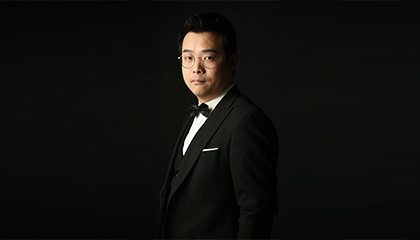
Luo
Bachelor's and master's in computer science from the University of California and ten years in the United States. Works close to the hardware, and teaches for independent problem solving rather than pattern recall.

Tan
Master's in data science from the University of Sydney after a statistics degree at Simon Fraser University, graduating in the top 5% with repeated chancellor's honours; A-Levels at a Cambridge international school, and formerly a data analyst at Tencent. An AMC-accredited coach, a College Board-accredited AP teacher, and holder of a Math League excellent-teacher award.

He
A Cambridge master's after a computer science degree with a mathematics minor at the University of Nebraska-Lincoln, and a US high school GPA of 4.13. Six years overseas and teaches entirely in English, across AMC, Math League, AP Computer Science and AP Calculus.
Student results
What Hanlin students got.
Taken from Hanlin's published record of student honours and rewritten in English. Figures are as the organisers reported them.
Kaggle
- 2020A Bronze medal
Earlier years
- 2019A Gold medal
The full record, across every subject and year, is on the student honours page.
Where it is taught
Hanlin learning centres.
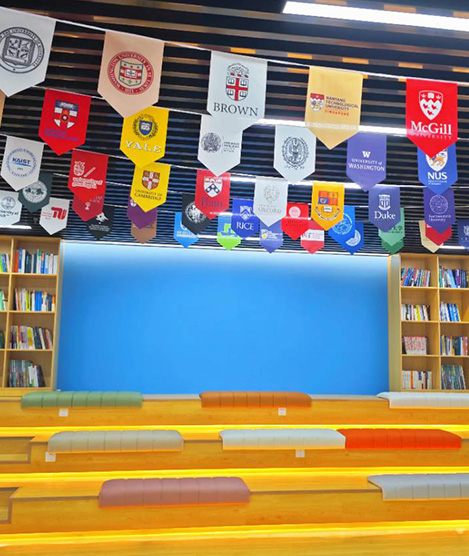
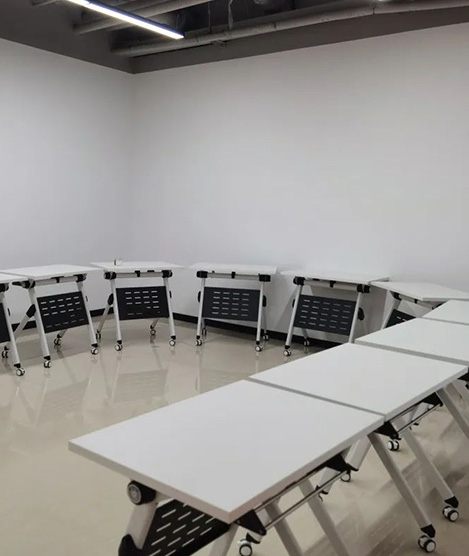
Teaching runs from Hanlin's own centres in Shanghai, Shenzhen, Chengdu and Hangzhou, and online for students elsewhere.





Talk to an advisor
Everything Hanlin does for Kaggle, in one conversation.
Entry, planning, coaching and the past papers. An advisor will tell you which of these a student actually needs, including when the answer is none of them.
Competition entry and planning
Which competitions suit this student, in what order, and by when - then we handle the registration, including the ones that can only be entered through a school or a centre.
Competition coaching
Taught by full-time subject tutors, on a course tier chosen by placement paper rather than by year group.
International curriculum tutoring
IB, AP, A-Level, IGCSE and the US high school curriculum, taught alongside school and timed around the exam calendar.
Competition past papers, free
A large library of past papers, mark schemes and syllabus breakdowns across every competition on this site. No charge and no enrolment.
Scan to add an advisor
Say which competition or course you are asking about. Replies in Chinese or English.
Or call +86 21 6352 6630FAQ
Kaggle, briefly answered.
What students and families ask before starting.
Who can join Kaggle?
Anyone, with one account per person. There is no age limit, no eligibility rule and no registration deadline - competitions open and close throughout the year.
Can a school student realistically win?
Prize money is very hard to win, because the field includes professional data science and research teams. The achievable target is the tier system - and Expert is genuinely within reach.
What are the tiers?
Novice on registration, Contributor after completing your profile, then Expert, Master and Grandmaster earned through competition, notebook and discussion medals. The thresholds are published and every profile is public.
What does Expert require?
Two competition bronze medals, five notebook bronze medals and fifty discussion bronze medals. Most of it comes from publishing and participating rather than from placing.
Where should a beginner start?
Titanic - Machine Learning from Disaster, then House Prices, then Spaceship Titanic. All three are permanent beginner competitions designed to teach the platform as much as the modelling.
What is a Code Competition?
One where all submissions are made inside a Kaggle notebook rather than uploaded. Every competitor has the same hardware allowance, which makes it fairer, and winning models are usually much simpler because they must run inside the platform’s compute limits.
What programming language should I learn?
Python. It is the recommendation for beginners and what the whole data science ecosystem assumes.
Do winners have to share their code?
Yes. Winning teams must submit their source code.
How does it compare with USAAIO?
USAAIO is a high-school AI competition with problems that have broadly standard answers and a graded award structure. Kaggle is open to everyone including research teams, and rewards the highest accuracy on open problems. Kaggle shows capability; USAAIO produces a dated award.
Related
Where the dated award comes from.
Contests to pair with Kaggle work.
Kaggle enquiries
Set a tier, not a placing.
Kaggle has no deadlines, which is why students who join without a target still have nothing a year later. Tell us where the student is starting from and an advisor will set a reachable tier and the route to it.