
Competitions · Biology · INO
INO, the International Neuroscience Olympiad.
Three rounds, and the last one is not an exam at all - twenty finalists receive a case study in advance, draft a research plan, and defend it to a jury of eight neuroscience professors. First prize is a research placement.
At a glance
What the olympiad is, and who sits it.
INO is a research-based competition devoted entirely to neuroscience. Some 12,000 students from more than forty countries have entered it, including China, the United States, Britain, Canada, France, South Korea, Russia, Belgium, Finland, Malaysia, Egypt, India, the Philippines, Kenya and Ghana.
- Subject
- Neuroscience - and the organisers treat it as the interdisciplinary field it is, drawing on biology, chemistry, psychology, medicine, public health, artificial intelligence and philosophy
- Who can enter
- Students in grades 9 to 12. The age requirement is stated inconsistently on the source - 15 to 18 in one place, 13 to 18 in another, and under 18 at the end of the calendar year in a third. Confirm with the organiser
- Also eligible
- Students at accredited high schools, secondary schools and home education programmes, including accredited online courses. University freshmen may enter if they meet the age requirement
- Format
- Individual throughout
- Language
- English
- Rounds
- Three - an open round, a semi-final and a final
- Open round
- A Sunday in late October, 60 minutes, on paper at a partner school. Online sittings may be applied for
- Semi-final
- A Sunday in mid-January, two hours, online
- Final
- By invitation to the top twenty. Date and venue announced each year
- First prize
- A professional research opportunity with faculty at a top-twenty global university, or a cash award of equivalent value
The three rounds
Each round is a different kind of assessment.
The rounds narrow sharply and change character as they go. By the final, the competition has stopped resembling an exam.
| Round | Who takes part | Format | Awards |
|---|---|---|---|
| Open round | Open entry, grades 9 to 12 | 60 minutes. 40 questions - 35 multiple choice and 5 short answer. On paper at a partner school | Global: Honorable Mention, Merit. National: High Distinction top 10%, Distinction top 25%, Credit top 40% |
| Semi-final | Global award winners from the open round | Two hours, online. 20 questions - 10 multiple choice and 10 short answer | Global: Achievement of Excellence. National: the same three bands at 10%, 25% and 40% |
| Final | The top twenty | A case study issued in advance. Candidates draft a research plan, then present their case analysis to a jury of around eight neuroscience professors and experts plus the INO academic committee, and answer its questions | First, second and third prize. A special award is created if none of the top three is a woman |
The proportion of short-answer questions rises from an eighth of the open round to half the semi-final, and then the final has no written paper at all. Preparing only for multiple choice prepares only for the first round.
What it is looking for
Current research, not settled textbook material.
The organisers set out five aims, and together they describe a competition closer to research training than to examination.
Knowledge built on current work
The emphasis is on understanding contemporary neuroscience and keeping up with new developments, then folding them into your own thinking. Textbook knowledge alone is the starting point rather than the answer.
Applied to real problems
Questions present real-world problems and ask for practical application - designing an innovative solution, not recalling a mechanism.
Research skills as the point
The organisers name creativity, critical thinking and analysis as what they are building. Those transfer to every scientific discipline, which is part of the stated purpose.
And collaboration across borders
Bringing students from different backgrounds together for cultural exchange and a global perspective on neuroscience research is one of the five aims.
The subject matter
Where neuroscience actually leads.
The brain is the least understood organ in the body, and the competition is built around that rather than around a syllabus.
Disease and brain health
Alzheimer’s, epilepsy and depression are named directly. These are unsolved problems, which is what makes them worth a competition.
A genuinely interdisciplinary field
Neuroscience draws on biology, chemistry, psychology, medicine, public health, artificial intelligence and philosophy. A student with interests either side of the science divide fits here.
Including where AI meets the brain
The organisers highlight the exchange between neuroscience and artificial intelligence in both directions - insight into the brain informing AI, and the reverse.
And nobody starts with an advantage
Neuroscience is not on any school syllabus, so every entrant begins from reading rather than from coursework.
Cut-offs
The published advancement thresholds.
These are the official marks required to advance, as published. The organisers note that they vary year to year with overall performance and the judging criteria.
| Round | Threshold |
|---|---|
| Open round, 2025 | 45 / 60 |
| Semi-final, 2026 | 59 / 60 |
Both are given out of 60 although the two rounds carry different numbers of questions, so the questions must be weighted differently. Treat these as a guide to how steep the climb is - the semi-final line leaves almost no margin - rather than as a target to compute against.
Preparation
How Hanlin prepares students for INO.
The reading list is published and the rounds demand different things, so preparation is staged rather than uniform.
Working the named texts
The organisers state that questions are drawn from a set of standard references - High-Yield Neuroanatomy, Snell’s Clinical Neuroanatomy, Neuroscience: Exploring the Brain, and a colour atlas of neuroanatomy and neurophysiology. That is where preparation starts.
Then practising short answers
Half the semi-final is written response. Constructing an argument in a few sentences is a separate skill from choosing between five options, and it is where open-round winners tend to lose ground.
Reading current research
The stated emphasis is on keeping up with developments. Following recent work on the named diseases is preparation, not enrichment.
And rehearsing the defence
For a finalist, the last round is a presentation to eight professors followed by their questions. Practising that against real questioning is the only preparation that resembles it.
Why Hanlin
Preparation for INO at Hanlin is taught by full-time subject tutors, on a course tier chosen by placement paper rather than by year group.
Programme formats
Five ways this is taught.
Group size is the whole difference between these. It decides how much of the tutor's attention a student gets and how far the course can bend to them, so it is worth choosing rather than accepting.
| Format | Group size | What it suits |
|---|---|---|
| One-to-one | One student | Content, pace and emphasis set by what this student actually needs rather than by a syllabus. The only format that can be rebuilt mid-course. |
| Small group | Three to eight | Opens at three. Frequent discussion, and the tutor can slow down or move on according to what the group has absorbed. Most students chasing a higher award are taught in this one. |
| Class | Eight to twelve | Taught by the subject lead or a medal coach. Less back-and-forth, so it suits a student who will say when something is unclear. |
| Large class | Ten to twenty | For students in the middle of the placement range, and a way to try a competition before committing. Students often move to a small group or to one-to-one afterwards. |
| Past-paper class | No cap | Past papers worked through in sequence in the weeks before the sitting. Free to students already enrolled. |
Course length for INO is set after a placement paper. The gap between where a student is and what the paper asks for is what the course has to close, and that gap is not the same for two students in the same year group.
How it runs
Six steps, four people on your side.
The same process for every student, so that nothing depends on one tutor remembering to do it.
 Step 1
Pre-course assessment
A placement paper before anything is booked, so the course tier is chosen on evidence rather than on a year group.
 Step 2
Tutor matching
A subject tutor is matched to the result, and their full background is provided before you agree to it.
 Step 3
Plan and group
A study group opens with four people on one student: the tutor, a planner, a supervisor and an academic manager.
 Step 4
Scheduled teaching
The teaching office sets the timetable around the competition date and school term, and teaching begins.
 Step 5
After-class reports
What was covered, and how the student handled it, reported after every lesson.
 Step 6
Homework follow-up
The teaching assistant and the form teacher both check that homework is done, which is where most preparation quietly fails.
Free resource pack
Past papers and preparation pack
The same material our own INO students work from. Scan the code, say what you need, and an advisor sends it.

Tell an advisor which competition and year group, and the material comes back the same day. Free, and you do not have to enrol in anything. If we do not already hold what you need, we will go and find it.
- PDFPast papers, every year the organiser has released
- PDFWorked solutions, where the organiser publishes them
- PDFThe syllabus on one page - every topic, and how heavily it is examined
- PDFEntry checklist and the dates for the current cycle
Teaching team
Who would teach it.
Three of the twenty-two tutors on the published Hanlin roster - the ones whose subject this is.
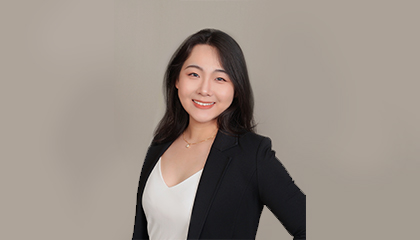
Zhang
Master's in cognitive science at UC San Diego on full scholarship, after double honours in neurobiology and behaviour and in cognitive science at UC Davis. Ten years overseas, a perfect TOEFL speaking score, and named an outstanding education scholar at UCSD.

Yu
Master's in bioinformatics and computational biology from UT Dallas and a nutritional sciences degree from Wisconsin-Madison. Second author on an SCI-indexed paper from the Tanumihardjo vitamin-A laboratory, and formerly at ABS Global.
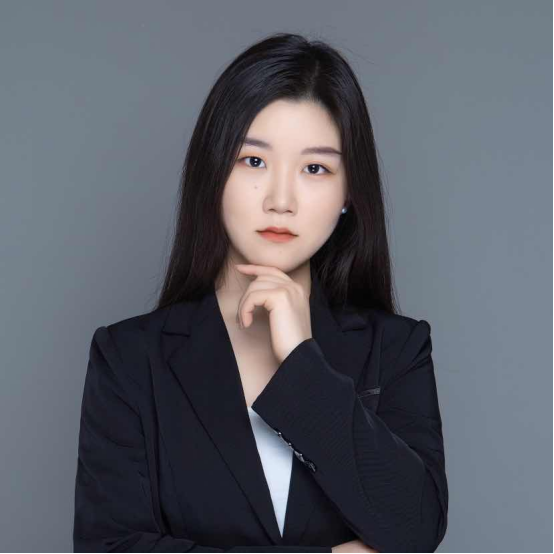
Li
Biology at Emory, biomedical engineering at Georgia Tech, and a bioengineering master's at the University of Pennsylvania. College Board-accredited, teaching from a cross-disciplinary research base and folding research practice into the classroom.
Where it is taught
Hanlin learning centres.
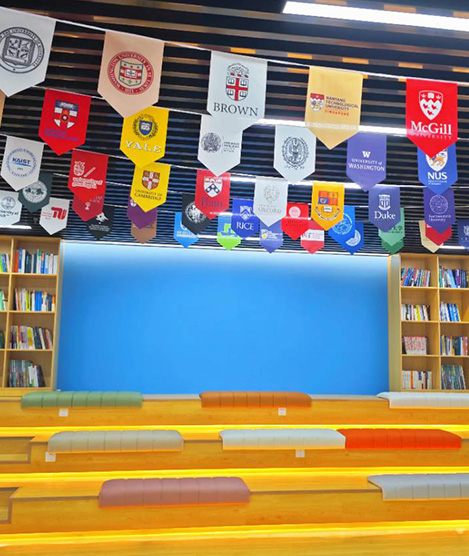
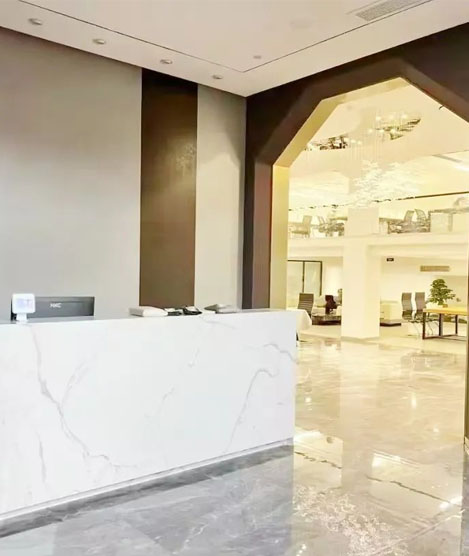
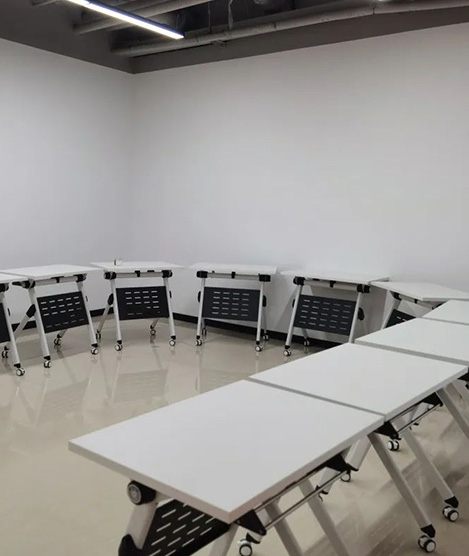
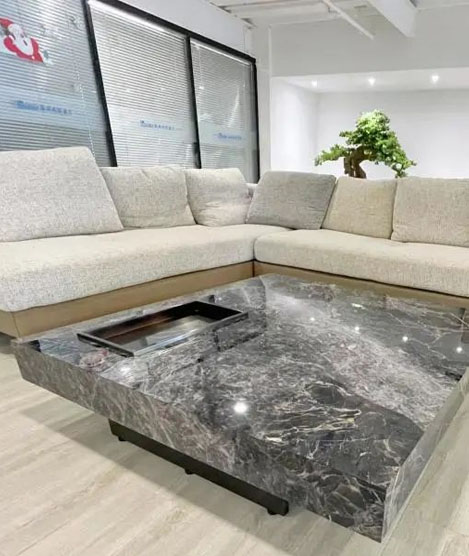
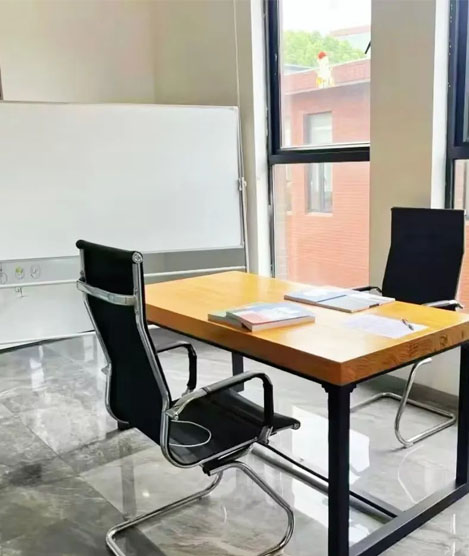
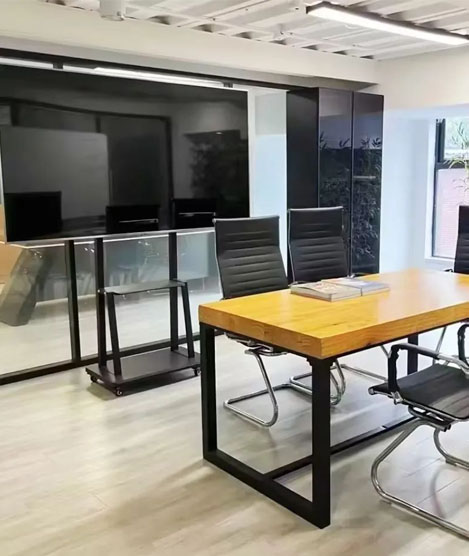
Teaching runs from Hanlin's own centres in Shanghai, Shenzhen, Chengdu and Hangzhou, and online for students elsewhere.
Talk to an advisor
Everything Hanlin does for INO, in one conversation.
Entry, planning, coaching and the past papers. An advisor will tell you which of these a student actually needs, including when the answer is none of them.
Competition entry and planning
Which competitions suit this student, in what order, and by when - then we handle the registration, including the ones that can only be entered through a school or a centre.
Competition coaching
Taught by full-time subject tutors, on a course tier chosen by placement paper rather than by year group.
International curriculum tutoring
IB, AP, A-Level, IGCSE and the US high school curriculum, taught alongside school and timed around the exam calendar.
Competition past papers, free
A large library of past papers, mark schemes and syllabus breakdowns across every competition on this site. No charge and no enrolment.
Scan to add an advisor
Say which competition or course you are asking about. Replies in Chinese or English.
Or call +86 21 6352 6630FAQ
INO, briefly answered.
What students and families ask before entering.
Who can enter INO?
Students in grades 9 to 12 at an accredited high school, secondary school or home education programme, including accredited online courses. University freshmen may enter if they meet the age requirement. The source states that requirement three different ways, so confirm it with the organiser before registering.
Do I need to know any neuroscience first?
No. Neuroscience is not on any school syllabus, so every entrant prepares from reading. The organisers publish the texts the questions are drawn from.
What are the three rounds?
An open round in late October - 60 minutes, 35 multiple-choice and 5 short-answer questions, on paper at a partner school. A two-hour online semi-final in mid-January for global award winners - 10 multiple-choice and 10 short-answer questions. Then a final for the top twenty.
What happens in the final?
Candidates receive a case study in advance and draft a research plan. At the final they present their case analysis to a jury of about eight neuroscience professors and experts, together with the INO academic committee, and answer its questions.
What does the winner receive?
A professional research opportunity with faculty at a top-twenty global university, or a cash award of equivalent value. The top three also receive sponsored prizes, media exposure, research opportunities and recognition. If none of the top three is a woman, a special award is created.
What awards are there in the earlier rounds?
Global awards of Honorable Mention and Merit in the open round, and Achievement of Excellence in the semi-final. National awards in both rounds at the top 10%, 25% and 40% - High Distinction, Distinction and Credit.
What language is it in?
English, throughout all three rounds.
What should I read?
The organisers name High-Yield Neuroanatomy, Snell’s Clinical Neuroanatomy, Neuroscience: Exploring the Brain, a general neuroscience text and a colour atlas of neuroanatomy and neurophysiology. Questions are drawn from these.
How does it compare with Brain Bee?
Both are neuroscience competitions open to students with no background. Brain Bee runs from grade 5, sets its papers in Chinese and ends in a national and then international round. INO is grades 9 to 12, English throughout, and ends in a research presentation to a jury.
Related
Other neuroscience and biology contests.
What students commonly enter alongside INO.
INO enquiries
The final is a research defence, not a paper.
INO ends with twenty students presenting a research plan to a jury of neuroscience professors, and first prize is a placement working with faculty. Tell us the student’s year group and an advisor will map the October open round and what it takes to go further.