
Competitions · Biology · Biology Challenge
The Biology Challenge.
Fifty minutes, and the only competition here that deliberately rewards what you learned outside a classroom - from books, magazines, natural history programmes and knowing the plants and animals around you.
At a glance
What the challenge is, and who sits it.
The Biology Challenge is run by UK Biology Competitions - the body behind the British Biology Olympiad, with twenty-five years of experience running these papers - and managed by the Royal Society of Biology. In 2021 it drew 26,793 students from 346 schools and institutions.
- Organiser
- UK Biology Competitions (UKBC), managed by the Royal Society of Biology
- Who can enter, China region
- Junior-high students in any year
- Who can enter elsewhere
- Students aged 13 to 15 - Years 9 and 10 in England and Wales, Years 10 and 11 in Northern Ireland, S2 and S3 in Scotland, and the equivalent years worldwide
- Format, China region
- In person, individual, with multiple-choice and fill-in questions
- Format elsewhere
- Two online multiple-choice papers of 25 minutes each. Both must be completed to be considered for an award
- Duration
- 50 minutes
- Language
- Chinese and English
- When
- A Sunday morning in early May, with registration closing about ten days earlier
- Invigilation
- By a teacher under normal exam conditions. Registering teachers are verified as belonging to a legitimate school or test centre
- Certificates
- Digital, for Gold through Commended plus participation. Schools are also encouraged to give their own awards using the e-certificates supplied
What makes it different
It rewards curiosity, not only coursework.
Every other biology paper on this site tests a syllabus. The Biology Challenge sets its questions on the school course and then deliberately rewards something else as well.
Reading counts
The organisers say plainly that the challenge rewards students who have built their knowledge from books and magazines. That is unusual enough to be worth planning around.
So does watching and following
Natural history programmes and biology stories in the news are named as sources the paper rewards. Interest accumulated over years pays here.
And knowing what lives around you
A general awareness of local plants and animals is explicitly rewarded. This is field familiarity rather than revision.
Which changes who does well
A student who reads widely about biology but finds exams difficult has a better chance here than in any other paper on this site.
How awards are decided
Thresholds set in Britain, applied everywhere.
The same mechanism the British Biology Olympiad uses, and it works the same way for entrants outside the UK.
Five bands, set on British students
Gold, Silver, Bronze, Highly Commended and Commended are drawn at roughly the top 5%, 15%, 30%, 45% and 60% of British nationals’ scores.
Everyone else is measured against the mark
Students from other countries are compared directly against those thresholds rather than ranked into a proportion, so a strong overseas cohort is not competing against itself for a fixed allocation.
Six certificate categories
Gold, Silver, Bronze, Highly Commended, Commended and participation - all issued digitally.
And schools may add their own
The organisers supply e-certificates and encourage schools to run the challenge in whatever way suits their students, including giving awards of their own.
Before you plan
Check which arrangement applies to you.
The China region and the international arrangement differ in ways that change how a student prepares.
Eligibility is wider in China
The China region is open to junior-high students in any year. Elsewhere the challenge is for 13 to 15 year-olds specifically. Confirm which applies before entering a younger or older student.
One sitting or two papers
The China region sits a single 50-minute paper in person. The international arrangement is two online 25-minute multiple-choice papers, and both must be completed to qualify for an award.
Fill-in questions in China
The China-region paper includes fill-in questions alongside multiple choice. The international papers are multiple choice throughout.
Fifty minutes either way
The total time is the same. What differs is whether it comes in one block or two, which matters for pacing practice.
Preparation
How Hanlin prepares students for the Biology Challenge.
A paper that rewards accumulated interest needs a different approach from one that rewards revision.
Reading that counts as preparation
Because the organisers reward knowledge built from books and magazines, wide reading is preparation here rather than a distraction from it. We suggest what to read and how to make it stick.
Building natural-history familiarity
Recognising common plants and animals, and knowing how they live, is directly rewarded. This is the part school biology covers least.
Practising at pace
Fifty minutes across multiple-choice and fill-in questions rewards quick recognition. Timed sets build that habit.
Planning what comes after
For a student who does well here, the Intermediate Biology Olympiad follows in grade 10 and BBO after that. All three use the same award mechanism, so the ladder is a natural one.
Why Hanlin
Preparation for Biology Challenge at Hanlin is taught by full-time subject tutors, on a course tier chosen by placement paper rather than by year group.
Programme formats
Five ways this is taught.
Group size is the whole difference between these. It decides how much of the tutor's attention a student gets and how far the course can bend to them, so it is worth choosing rather than accepting.
| Format | Group size | What it suits |
|---|---|---|
| One-to-one | One student | Content, pace and emphasis set by what this student actually needs rather than by a syllabus. The only format that can be rebuilt mid-course. |
| Small group | Three to eight | Opens at three. Frequent discussion, and the tutor can slow down or move on according to what the group has absorbed. Most students chasing a higher award are taught in this one. |
| Class | Eight to twelve | Taught by the subject lead or a medal coach. Less back-and-forth, so it suits a student who will say when something is unclear. |
| Large class | Ten to twenty | For students in the middle of the placement range, and a way to try a competition before committing. Students often move to a small group or to one-to-one afterwards. |
| Past-paper class | No cap | Past papers worked through in sequence in the weeks before the sitting. Free to students already enrolled. |
Course length for Biology Challenge is set after a placement paper. The gap between where a student is and what the paper asks for is what the course has to close, and that gap is not the same for two students in the same year group.
How it runs
Six steps, four people on your side.
The same process for every student, so that nothing depends on one tutor remembering to do it.
 Step 1
Pre-course assessment
A placement paper before anything is booked, so the course tier is chosen on evidence rather than on a year group.
 Step 2
Tutor matching
A subject tutor is matched to the result, and their full background is provided before you agree to it.
 Step 3
Plan and group
A study group opens with four people on one student: the tutor, a planner, a supervisor and an academic manager.
 Step 4
Scheduled teaching
The teaching office sets the timetable around the competition date and school term, and teaching begins.
 Step 5
After-class reports
What was covered, and how the student handled it, reported after every lesson.
 Step 6
Homework follow-up
The teaching assistant and the form teacher both check that homework is done, which is where most preparation quietly fails.
Free resource pack
Past papers and preparation pack
The same material our own Biology Challenge students work from. Scan the code, say what you need, and an advisor sends it.

Tell an advisor which competition and year group, and the material comes back the same day. Free, and you do not have to enrol in anything. If we do not already hold what you need, we will go and find it.
- PDFPast papers, every year the organiser has released
- PDFWorked solutions, where the organiser publishes them
- PDFThe syllabus on one page - every topic, and how heavily it is examined
- PDFEntry checklist and the dates for the current cycle
Teaching team
Who would teach it.
Three of the twenty-two tutors on the published Hanlin roster - the ones whose subject this is.

Yu
Master's in bioinformatics and computational biology from UT Dallas and a nutritional sciences degree from Wisconsin-Madison. Second author on an SCI-indexed paper from the Tanumihardjo vitamin-A laboratory, and formerly at ABS Global.

Zhang
Master's in cognitive science at UC San Diego on full scholarship, after double honours in neurobiology and behaviour and in cognitive science at UC Davis. Ten years overseas, a perfect TOEFL speaking score, and named an outstanding education scholar at UCSD.

Li
Biology at Emory, biomedical engineering at Georgia Tech, and a bioengineering master's at the University of Pennsylvania. College Board-accredited, teaching from a cross-disciplinary research base and folding research practice into the classroom.
Where it is taught
Hanlin learning centres.
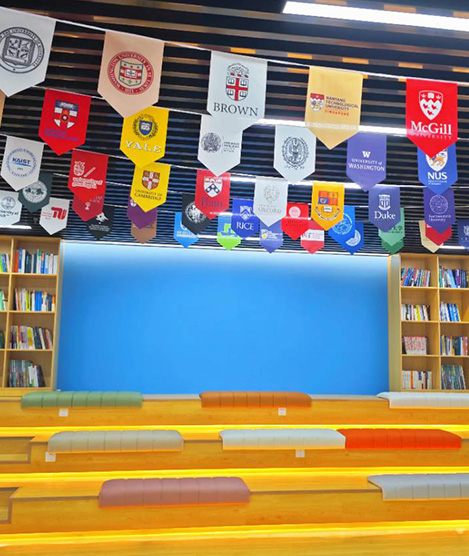
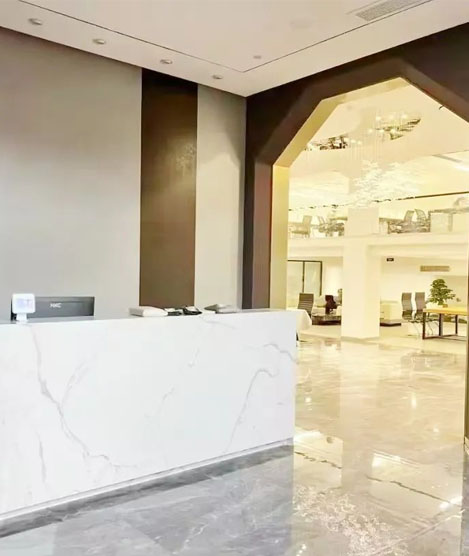
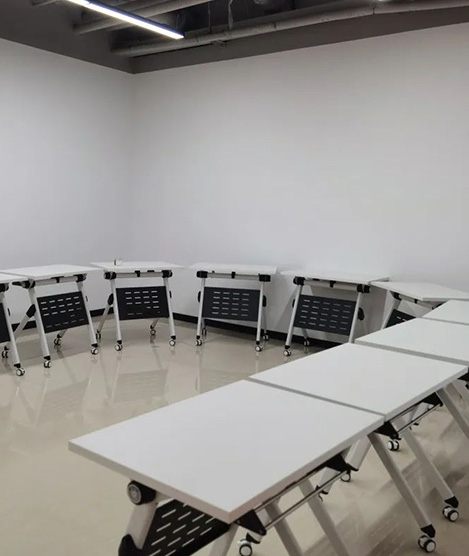
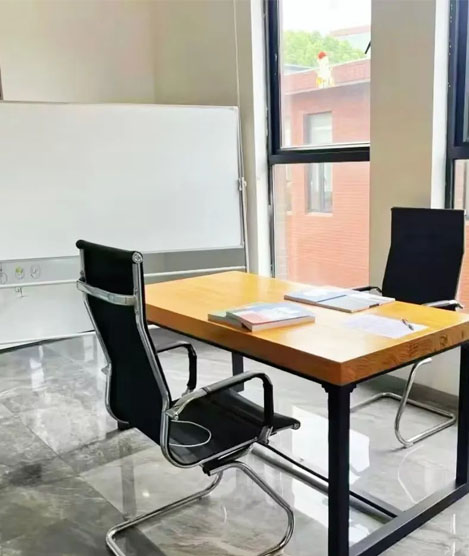
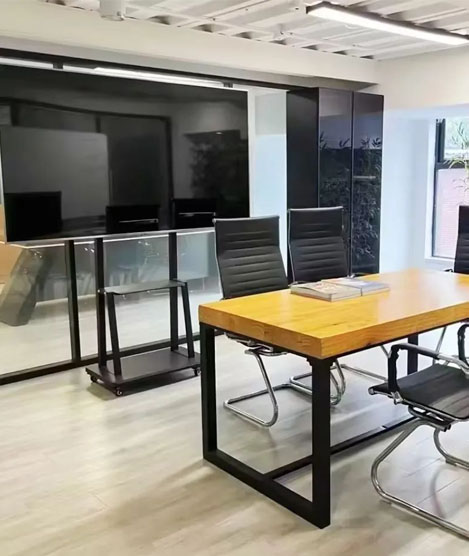
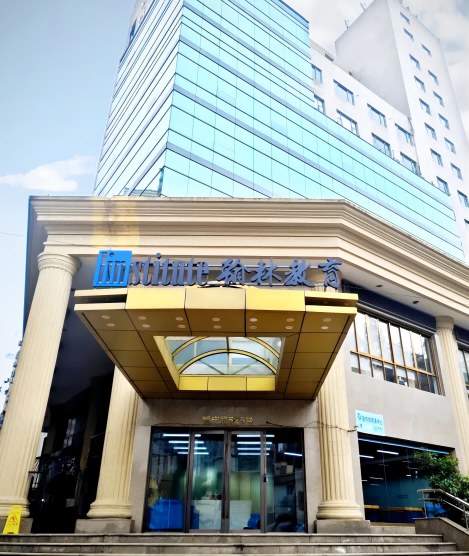
Teaching runs from Hanlin's own centres in Shanghai, Shenzhen, Chengdu and Hangzhou, and online for students elsewhere.

Talk to an advisor
Everything Hanlin does for Biology Challenge, in one conversation.
Entry, planning, coaching and the past papers. An advisor will tell you which of these a student actually needs, including when the answer is none of them.
Competition entry and planning
Which competitions suit this student, in what order, and by when - then we handle the registration, including the ones that can only be entered through a school or a centre.
Competition coaching
Taught by full-time subject tutors, on a course tier chosen by placement paper rather than by year group.
International curriculum tutoring
IB, AP, A-Level, IGCSE and the US high school curriculum, taught alongside school and timed around the exam calendar.
Competition past papers, free
A large library of past papers, mark schemes and syllabus breakdowns across every competition on this site. No charge and no enrolment.
Scan to add an advisor
Say which competition or course you are asking about. Replies in Chinese or English.
Or call +86 21 6352 6630FAQ
The Biology Challenge, briefly answered.
What students, teachers and families ask before entering.
Who can enter?
In the China region, junior-high students in any year. Elsewhere the challenge is for students aged 13 to 15 - Years 9 and 10 in England and Wales, Years 10 and 11 in Northern Ireland, S2 and S3 in Scotland, and equivalent years worldwide.
What is the paper?
Fifty minutes in total. The China region sits one in-person paper with multiple-choice and fill-in questions. Elsewhere it is two online multiple-choice papers of 25 minutes each, and both must be completed to be considered for an award.
What language is it in?
Chinese and English.
What does it test?
Questions are set on the school course, but the challenge also rewards knowledge built from books, magazines, natural history programmes and biology in the news, along with a general awareness of local plants and animals.
How are awards decided?
Gold, Silver, Bronze, Highly Commended and Commended thresholds are drawn at about the top 5%, 15%, 30%, 45% and 60% of British nationals’ scores. Students elsewhere are measured against those marks rather than ranked into a proportion.
What certificates are issued?
Digital certificates for Gold, Silver, Bronze, Highly Commended, Commended and participation. Schools are also given e-certificates to make awards of their own.
Who runs it?
UK Biology Competitions, the body behind the British Biology Olympiad, managed by the Royal Society of Biology.
What should I sit after this?
The Intermediate Biology Olympiad in November of grade 10, then BBO. All three share the same award mechanism, and the Biology Challenge is the entry point.
Related
Where students go next.
The British biology ladder, in order.
Biology Challenge enquiries
The paper that rewards reading.
Most competitions test what a course covered. This one also rewards what a student picked up from books, television and looking at the world. Tell us the year group and an advisor will confirm which arrangement applies and map the May entry.