
Competitions · Biology · U of T NBC
U of T NBC, the National Biology Competition.
Fifty questions in seventy-five minutes, set by University of Toronto faculty, with a third of a mark deducted for every wrong answer. It is also the theory round of the Canadian olympiad - and unlike that olympiad, it is open to schools abroad.
At a glance
What the competition is, and how to get into it.
Run by the University of Toronto since 1995 - twenty-four editions by 2019 - and now the sole theoretical selection criterion for the Canadian Biology Olympiad alongside its laboratory portfolio.
- Organiser
- The University of Toronto. Questions are written and reviewed by faculty in the departments of ecology and evolutionary biology and of cell and systems biology
- Who can enter
- Students in grades 9 to 12, including first-year CEGEP students in Quebec
- Open to schools abroad
- Yes. The competition accepts registrations from schools outside Canada, though there is currently no host organisation in China
- Minimum entrants per school
- At least 3 students for schools in Canada and the United States. At least 10 students for schools elsewhere
- Format
- 50 multiple-choice questions, five options each with one best answer
- Duration
- 75 minutes, started inside a fixed Eastern-time window on the contest day
- Language
- English only - materials are not supplied in any other language
- Calculators
- Not permitted
- Marking
- Correct answers score 1; wrong answers lose one third of a mark; blanks score nothing and lose nothing
- When
- Early April, inside a window opening one morning and closing the next. Registration closes the day before it opens
- Where
- Online
The marking rule
When to guess, worked out rather than guessed at.
The mark scheme is score = correct − wrong/3, on questions with five options. That makes the decision about whether to answer a piece of arithmetic, not a matter of temperament.
A blind guess loses marks
One chance in five of gaining a mark against four chances in five of losing a third. The expected value is about −0.07 of a mark, so guessing at random is worse than leaving it blank.
Eliminating one option breaks even
With four options left, the expected value is exactly zero - a quarter of a mark gained against three quarters of a third lost. Answering neither helps nor hurts.
Eliminating two makes it worth answering
With three options left the expected value turns positive, at about +0.11 of a mark. From here on, answering is the better choice.
So the rule is simple
Answer if you can rule out two options. Leave it blank if you cannot rule out any. One eliminated option is a coin toss either way.
The syllabus
Ten areas, published in full.
The competition covers the whole of high-school biology, pitched at content common to secondary curricula across the Canadian provinces.
| Area | What it covers |
|---|---|
| General biochemistry | Basic chemical concepts, chemical bonds, biochemical reactions, biologically important organic molecules |
| Cell structure and processes | Cell structure and function, membrane structure, transport across membranes |
| Cell metabolism | Energy in the cell, enzymes, cellular respiration, photosynthesis, mitosis, the cell cycle |
| Genetics | Meiosis, sexual and asexual reproduction, Mendelian inheritance, DNA, genes and chromosomes, protein synthesis, mutation, human genetic disorders, gene expression and manipulation |
| Evolution | Historical context for evolutionary theory, evidence for evolution, population genetics, evolutionary mechanisms, adaptation, speciation, extinction |
| Biological diversity | Taxonomy, phylogeny, the origin of life, microbial, fungal, plant and animal diversity |
| Plant structure and function | Structure, growth and reproduction, transport mechanisms, growth regulators |
| Vertebrate structure and function | Digestion, circulation, gas exchange, reproduction, development, homeostasis, excretion, and the nervous, endocrine and immune systems |
| Ecology | Species interactions, matter exchange and energy flow, population dynamics, human ecology, conservation biology |
| Biology in the news | Current topics of public interest in biology - the one area no textbook covers |
The last row is the one to plan for deliberately. Everything else can be revised from a course; following biology in the news is a habit that has to be built over months.
Awards
Certificates, cash and a school ranking.
Canadian and overseas entrants are ranked separately, which matters: a student abroad is measured against other students abroad.
Scholar certificates at 5% and 1%
The top 5% of students at Canadian schools are named National Biology Scholars and the top 1% National Biology Scholars with Distinction. Students at schools outside Canada receive the International equivalents on the same thresholds.
Cash prizes within the top 1%
In each of the two groups: USD 300 for first, USD 200 for second, USD 100 for third, and USD 50 each for the rest of the top 1%.
A certificate for each school’s best
Every school entering ten or more students receives an achievement certificate for its top scorer. Smaller schools receive one too if their best student places in the overall top 30%.
And a Top Schools ranking
Schools with at least five eligible students are ranked on the sum of their top five scores. The leading three Canadian and three overseas schools receive certificates of excellence.
Before you plan
Two practical points that decide whether entry is possible.
Both are about logistics rather than biology, and both are easy to discover too late.
Ten students, or no entry
Schools outside Canada and the United States must enter at least ten students. This is not an individual competition in practice - a school has to organise a cohort.
No host organisation in China
The competition accepts overseas registrations, but there is currently no body running it within China. A school registers directly with the organiser.
A fixed Eastern-time window
The paper must be started inside a fixed Eastern-time window on the contest day, which can fall in the small hours in China - a real scheduling problem worth confirming with the organiser before entering.
English only
Materials are supplied in English alone. Unlike the British and Australian papers on this site, there is no bilingual option.
Preparation
How Hanlin prepares students for U of T NBC.
A negatively marked paper with a published ten-area syllabus rewards two things: coverage, and judgement about when to answer.
Drilling the guessing rule
Knowing that two eliminations make answering worthwhile is not the same as doing it under time pressure. Practice papers build the reflex, and it is worth several marks.
Auditing all ten areas
Fifty questions across ten published areas means about five each. A gap anywhere is expensive, so preparation is a sweep rather than a deep dive.
Following biology in the news
One syllabus area is current topics. Building a habit of reading science news through the year is the only preparation that works for it.
Ninety seconds a question
Seventy-five minutes for fifty questions with no calculator. Timed sets teach students to recognise which questions to leave.
Why Hanlin
Preparation for U of T NBC at Hanlin is taught by full-time subject tutors, on a course tier chosen by placement paper rather than by year group.
Programme formats
Five ways this is taught.
Group size is the whole difference between these. It decides how much of the tutor's attention a student gets and how far the course can bend to them, so it is worth choosing rather than accepting.
| Format | Group size | What it suits |
|---|---|---|
| One-to-one | One student | Content, pace and emphasis set by what this student actually needs rather than by a syllabus. The only format that can be rebuilt mid-course. |
| Small group | Three to eight | Opens at three. Frequent discussion, and the tutor can slow down or move on according to what the group has absorbed. Most students chasing a higher award are taught in this one. |
| Class | Eight to twelve | Taught by the subject lead or a medal coach. Less back-and-forth, so it suits a student who will say when something is unclear. |
| Large class | Ten to twenty | For students in the middle of the placement range, and a way to try a competition before committing. Students often move to a small group or to one-to-one afterwards. |
| Past-paper class | No cap | Past papers worked through in sequence in the weeks before the sitting. Free to students already enrolled. |
Course length for U of T NBC is set after a placement paper. The gap between where a student is and what the paper asks for is what the course has to close, and that gap is not the same for two students in the same year group.
How it runs
Six steps, four people on your side.
The same process for every student, so that nothing depends on one tutor remembering to do it.
 Step 1
Pre-course assessment
A placement paper before anything is booked, so the course tier is chosen on evidence rather than on a year group.
 Step 2
Tutor matching
A subject tutor is matched to the result, and their full background is provided before you agree to it.
 Step 3
Plan and group
A study group opens with four people on one student: the tutor, a planner, a supervisor and an academic manager.
 Step 4
Scheduled teaching
The teaching office sets the timetable around the competition date and school term, and teaching begins.
 Step 5
After-class reports
What was covered, and how the student handled it, reported after every lesson.
 Step 6
Homework follow-up
The teaching assistant and the form teacher both check that homework is done, which is where most preparation quietly fails.
Free resource pack
Past papers and preparation pack
The same material our own U of T NBC students work from. Scan the code, say what you need, and an advisor sends it.

Tell an advisor which competition and year group, and the material comes back the same day. Free, and you do not have to enrol in anything. If we do not already hold what you need, we will go and find it.
- PDFPast papers, every year the organiser has released
- PDFWorked solutions, where the organiser publishes them
- PDFThe syllabus on one page - every topic, and how heavily it is examined
- PDFEntry checklist and the dates for the current cycle
Teaching team
Who would teach it.
Three of the twenty-two tutors on the published Hanlin roster - the ones whose subject this is.

Yu
Master's in bioinformatics and computational biology from UT Dallas and a nutritional sciences degree from Wisconsin-Madison. Second author on an SCI-indexed paper from the Tanumihardjo vitamin-A laboratory, and formerly at ABS Global.

Zhang
Master's in cognitive science at UC San Diego on full scholarship, after double honours in neurobiology and behaviour and in cognitive science at UC Davis. Ten years overseas, a perfect TOEFL speaking score, and named an outstanding education scholar at UCSD.

Li
Biology at Emory, biomedical engineering at Georgia Tech, and a bioengineering master's at the University of Pennsylvania. College Board-accredited, teaching from a cross-disciplinary research base and folding research practice into the classroom.
Where it is taught
Hanlin learning centres.
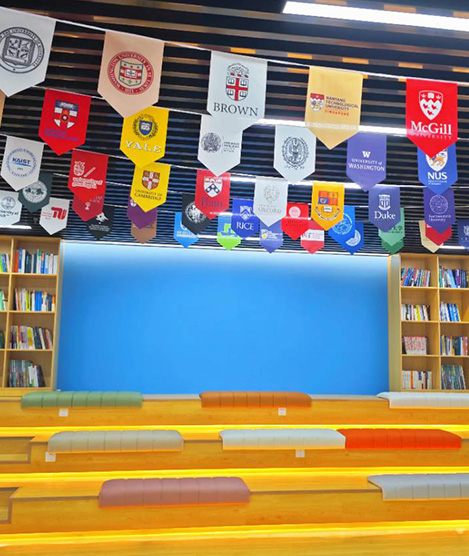
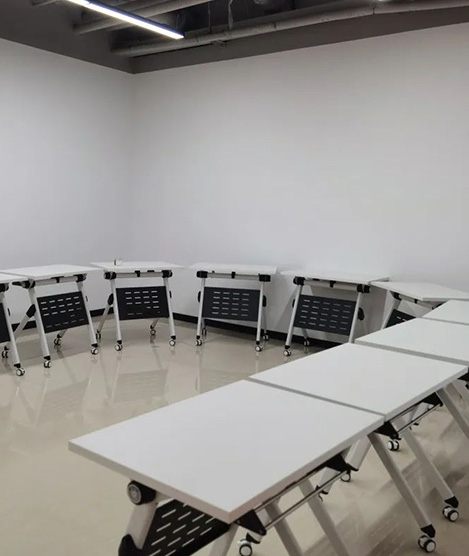
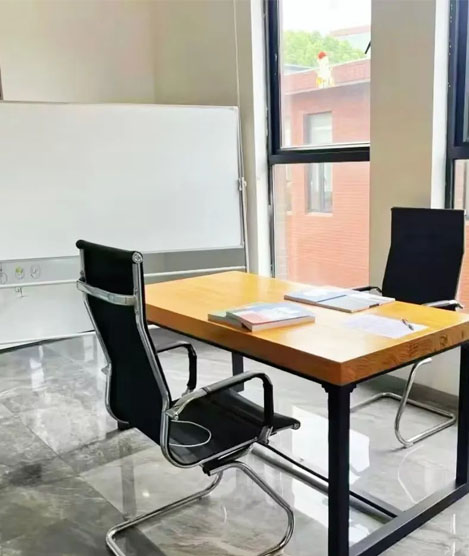
Teaching runs from Hanlin's own centres in Shanghai, Shenzhen, Chengdu and Hangzhou, and online for students elsewhere.



Talk to an advisor
Everything Hanlin does for U of T NBC, in one conversation.
Entry, planning, coaching and the past papers. An advisor will tell you which of these a student actually needs, including when the answer is none of them.
Competition entry and planning
Which competitions suit this student, in what order, and by when - then we handle the registration, including the ones that can only be entered through a school or a centre.
Competition coaching
Taught by full-time subject tutors, on a course tier chosen by placement paper rather than by year group.
International curriculum tutoring
IB, AP, A-Level, IGCSE and the US high school curriculum, taught alongside school and timed around the exam calendar.
Competition past papers, free
A large library of past papers, mark schemes and syllabus breakdowns across every competition on this site. No charge and no enrolment.
Scan to add an advisor
Say which competition or course you are asking about. Replies in Chinese or English.
Or call +86 21 6352 6630FAQ
U of T NBC, briefly answered.
What students, teachers and families ask before entering.
Can a school in China enter?
Yes. The competition accepts registrations from schools outside Canada, although there is currently no host organisation in China, so a school registers directly with the organiser. Overseas schools must enter at least ten students.
Who can enter?
Students in grades 9 to 12, including first-year CEGEP students in Quebec.
What is the paper?
Fifty multiple-choice questions in seventy-five minutes, five options each with one best answer, written and reviewed by University of Toronto faculty. No calculators.
How is it marked?
A correct answer scores 1, a wrong answer loses one third of a mark, and a blank scores nothing and loses nothing.
Should I guess?
Only if you can eliminate at least two of the five options. A blind guess has a negative expected value; eliminating one option brings it to exactly zero; eliminating two makes answering worthwhile.
What language is it in?
English only. Materials are not supplied in any other language.
When is it held?
Early April, inside a window that opens one morning and closes the next. The paper itself must be started between 13:00 and 15:00 Eastern time.
What awards are there?
The top 5% at Canadian schools are named National Biology Scholars and the top 1% National Biology Scholars with Distinction; students at overseas schools receive the International equivalents. Cash prizes go to the top 1% of each group - USD 300, 200 and 100 for the first three, and USD 50 each for the rest.
Is there a team element?
Yes. Schools entering at least five eligible students are ranked on the sum of their best five scores, and the leading three Canadian and three overseas schools receive certificates of excellence.
How does this relate to the Canadian olympiad?
It is the theoretical selection round for the Canadian Biology Olympiad, alongside that olympiad’s laboratory portfolio. CBO itself is open only to students at Canadian schools; this paper is not.
Related
The olympiad it feeds, and the alternatives.
Where this paper sits among the biology contests here.
U of T NBC enquiries
Ten students, and a paper that punishes guessing.
Overseas schools need a cohort of at least ten, and the negative marking means knowing when not to answer is worth real marks. Tell us about your school and an advisor will map the registration and the preparation.