
Competitions · Biology · HOSA
HOSA, Future Health Professionals.
A subject test whose syllabus overlaps 95% with IB Biology, or a thirty-second public service film you write, shoot and cut yourself. HOSA runs both, and a student may enter one of each.
At a glance
What HOSA is, and how it is structured.
HOSA has run for around forty-five years. Its challenges and its student organisation are recognised by the US Department of Education and by more than a hundred health and medical companies and institutions, with over 5,600 member schools worldwide.
- Also known as
- iHOSA - the programme is now styled that way in the China region
- Scale
- More than 250,000 students a year, and around 2.8 million reached cumulatively
- Recognition
- Certified as a Career and Technical Student Organization, and recommended to American high-school students by the National Association of Secondary School Principals
- Who can enter
- Students in grades 9 to 12
- Language
- English
- Categories
- Two - ATC, the academic testing category, and BCE, the public-good practice category. A student may enter one or both, but only one project within each
- Stages
- Three - a preliminary stage, the China stage, and the global summit
- Advancement
- Only the top three in each project advance to the global summit, an advancement rate of about 5%
- Pre-registration
- Mid-June to late August
- Preliminary stage
- Online submissions in mid-to-late December; the online objective test in late December
- What every entrant receives
- An official HOSA participation certificate
The ATC category
Five subject tests, and their syllabus overlap is published.
This is the most useful thing HOSA publishes. Each test states how closely it overlaps with AP, IB and A-Level, which turns "is this worth my time?" into a question with an answer.
| Project | Year group | What it covers | AP / IB / A-Level overlap |
|---|---|---|---|
| Biology, Division I | Grades 9-10 | Principles of cellular life, genetics, botany, zoology | 82% / 95% / 83% |
| Biology, Division II | Grades 11-12 | Principles of cellular life, genetics, evolution, botany, zoology | 82% / 95% / 83% |
| Basic chemistry, Division I | Grades 9-10 | Chemistry fundamentals, atoms, molecules and ions, stoichiometry, thermodynamics, chemical bonding, kinetics | 80% / 65% / 79% |
| Basic chemistry, Division II | Grades 11-12 | As Division I, plus chemical equilibrium | 80% / 65% / 79% |
| Psychology | Grades 9-12 | Heredity and environment, learning, memory, psychological disorders, treatment | 82% / 57% / 75% |
All five are sat as a 45-minute online objective test: 45 multiple-choice questions plus 5 further multiple-choice questions used only to break ties. For an IB Biology student the 95% overlap means this is revision that also produces a result.
The BCE category
Teams of three to six, and no subject requirement.
BCE is open to any student regardless of subject, which makes it the entry point for someone interested in health without wanting another science exam.
A thirty-second public service film
Conceive it, script it, shoot it and cut it - an original thirty-second public service advertisement, submitted online. The brief is to make someone remember your point, and ideally change what they do.
Or a public health class
Choose an audience, set teaching objectives, design a public-health lesson and teach it live. Submitted as a lesson-design portfolio. It rewards breaking a technical subject into something a real audience follows.
Two routes, judged separately
An annual theme set by the organisers and announced in September, and a self-selected theme. Self-selected topics must address a specific issue in physical, mental, social or environmental health.
And it suits different students
Media and social-science students are explicitly welcome. Nothing here requires the biology the ATC tests assume.
The three stages
Preliminary, China, global.
Each stage is a different experience, and only the last two involve travelling anywhere.
Preliminary - online
Open to grades 9 to 12. BCE work is submitted online in mid-to-late December, and the ATC objective tests are sat online in late December.
China stage - in person
For students who advance. Industry problems set by leading biology, chemistry and psychology companies with corporate mentors; a first-aid certification centre taught by pre-hospital emergency staff; a youth public-good exhibition with seed funding for strong projects; and three days of it.
Global summit
Around 150 organisations and a thousand industry professionals, exhibitors including the Duke University School of Medicine and the American Red Cross, and more than a hundred workshops across public health, biotechnology, mental health and emergency response.
Awards
National and regional honours, on the same three bands.
Every project is awarded separately, and the two honour levels are calculated in sequence rather than in parallel.
National Honor first
Within each project, the top 5% receive National Gold Honor, 5-15% National Silver and 15-30% National Bronze, ranked across the whole country.
Then Regional Honor, on what remains
National honour winners are removed, and the same 5%, 5-15% and 15-30% bands are applied within each region. A strong student in a strong region can still take a regional honour this way.
Five China regions
North, East, South, West and Central China, each awarding every project separately.
And a certificate for everyone
Every entrant receives an official HOSA participation certificate regardless of placing.
Preparation
How Hanlin prepares students for HOSA.
The two categories need entirely different preparation, and the published overlap figures make the first one unusually easy to plan.
Choosing the project on the overlap figures
A student on IB Biology gets 95% overlap; the same student on IB Chemistry gets 65%. Picking the project that matches the course already being studied is the single highest-value decision here.
Practising at a minute a question
Forty-five questions in forty-five minutes, plus five tie-breakers. This is a pace test as much as a knowledge test, and timed sets are the preparation.
Working from the published resource list
The organisers state that test questions are drawn directly from the resources listed in the event guide, and that no practice tests exist for any HOSA event. The listed texts are therefore the preparation.
And building a BCE team early
Three to six students, an original film or a taught lesson, and a December deadline. This is a term-long project, so teams form in September when the annual theme is announced.
Why Hanlin
Preparation for HOSA at Hanlin is taught by full-time subject tutors, on a course tier chosen by placement paper rather than by year group.
Programme formats
Five ways this is taught.
Group size is the whole difference between these. It decides how much of the tutor's attention a student gets and how far the course can bend to them, so it is worth choosing rather than accepting.
| Format | Group size | What it suits |
|---|---|---|
| One-to-one | One student | Content, pace and emphasis set by what this student actually needs rather than by a syllabus. The only format that can be rebuilt mid-course. |
| Small group | Three to eight | Opens at three. Frequent discussion, and the tutor can slow down or move on according to what the group has absorbed. Most students chasing a higher award are taught in this one. |
| Class | Eight to twelve | Taught by the subject lead or a medal coach. Less back-and-forth, so it suits a student who will say when something is unclear. |
| Large class | Ten to twenty | For students in the middle of the placement range, and a way to try a competition before committing. Students often move to a small group or to one-to-one afterwards. |
| Past-paper class | No cap | Past papers worked through in sequence in the weeks before the sitting. Free to students already enrolled. |
Course length for HOSA is set after a placement paper. The gap between where a student is and what the paper asks for is what the course has to close, and that gap is not the same for two students in the same year group.
How it runs
Six steps, four people on your side.
The same process for every student, so that nothing depends on one tutor remembering to do it.
 Step 1
Pre-course assessment
A placement paper before anything is booked, so the course tier is chosen on evidence rather than on a year group.
 Step 2
Tutor matching
A subject tutor is matched to the result, and their full background is provided before you agree to it.
 Step 3
Plan and group
A study group opens with four people on one student: the tutor, a planner, a supervisor and an academic manager.
 Step 4
Scheduled teaching
The teaching office sets the timetable around the competition date and school term, and teaching begins.
 Step 5
After-class reports
What was covered, and how the student handled it, reported after every lesson.
 Step 6
Homework follow-up
The teaching assistant and the form teacher both check that homework is done, which is where most preparation quietly fails.
Free resource pack
Past papers and preparation pack
The same material our own HOSA students work from. Scan the code, say what you need, and an advisor sends it.

Tell an advisor which competition and year group, and the material comes back the same day. Free, and you do not have to enrol in anything. If we do not already hold what you need, we will go and find it.
- PDFPast papers, every year the organiser has released
- PDFWorked solutions, where the organiser publishes them
- PDFThe syllabus on one page - every topic, and how heavily it is examined
- PDFEntry checklist and the dates for the current cycle
Teaching team
Who would teach it.
Three of the twenty-two tutors on the published Hanlin roster - the ones whose subject this is.

Yu
Master's in bioinformatics and computational biology from UT Dallas and a nutritional sciences degree from Wisconsin-Madison. Second author on an SCI-indexed paper from the Tanumihardjo vitamin-A laboratory, and formerly at ABS Global.
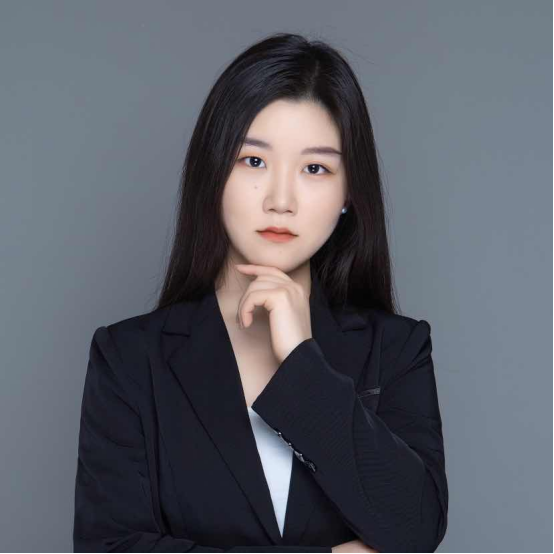
Li
Biology at Emory, biomedical engineering at Georgia Tech, and a bioengineering master's at the University of Pennsylvania. College Board-accredited, teaching from a cross-disciplinary research base and folding research practice into the classroom.
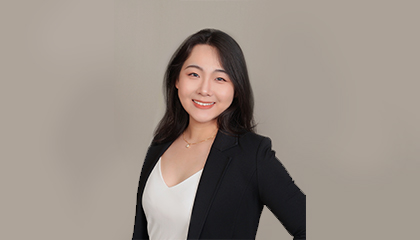
Zhang
Master's in cognitive science at UC San Diego on full scholarship, after double honours in neurobiology and behaviour and in cognitive science at UC Davis. Ten years overseas, a perfect TOEFL speaking score, and named an outstanding education scholar at UCSD.
Student results
What Hanlin students got.
Taken from Hanlin's published record of student honours and rewritten in English. Figures are as the organisers reported them.
HOSA
- 2024At the international conference, one Gold and one Bronze in biology and a national Silver in chemistry
- 2023First nationally in emergency preparedness
Earlier years
- 2022First nationally in emergency preparedness
The full record, across every subject and year, is on the student honours page.
Where it is taught
Hanlin learning centres.
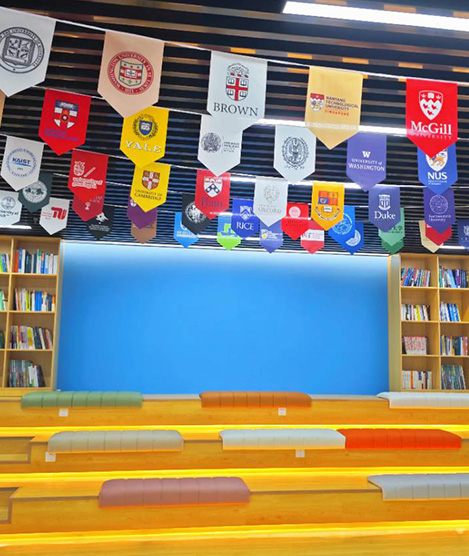
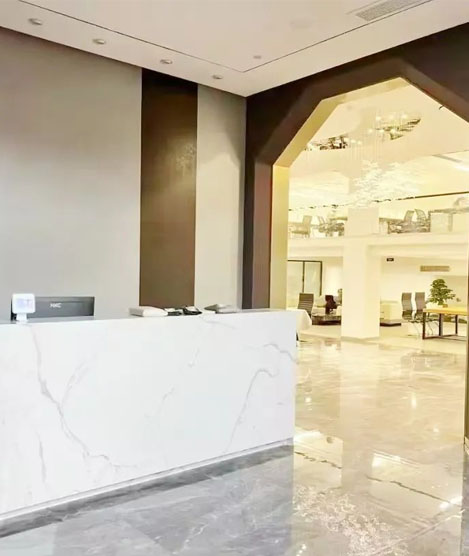
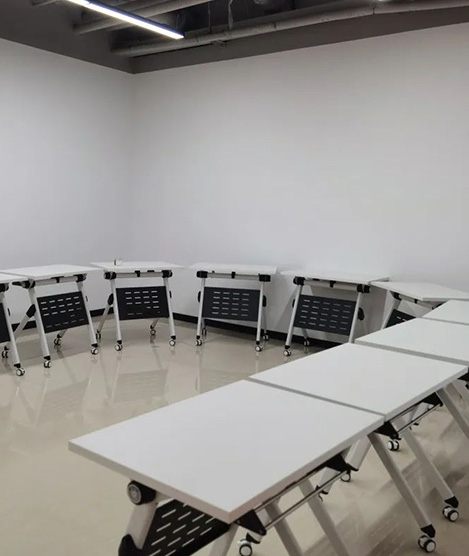
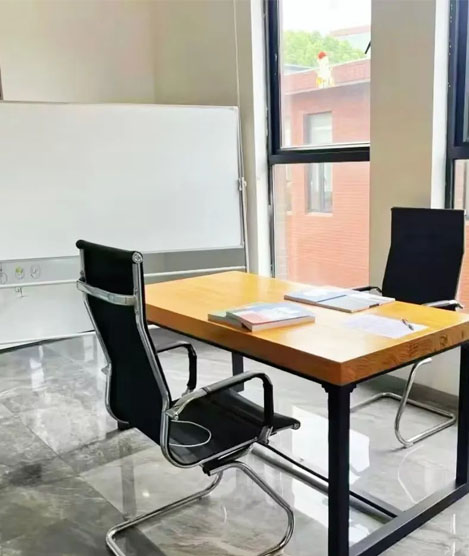
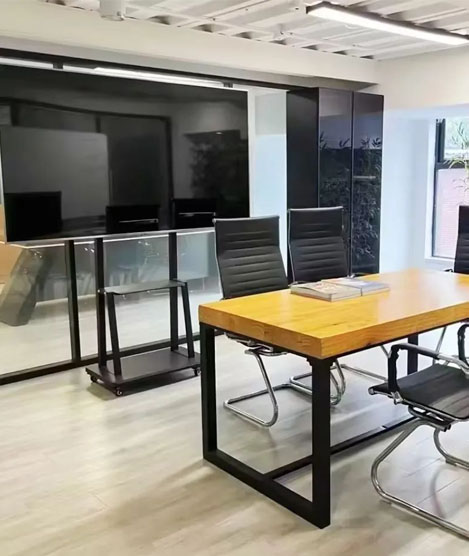
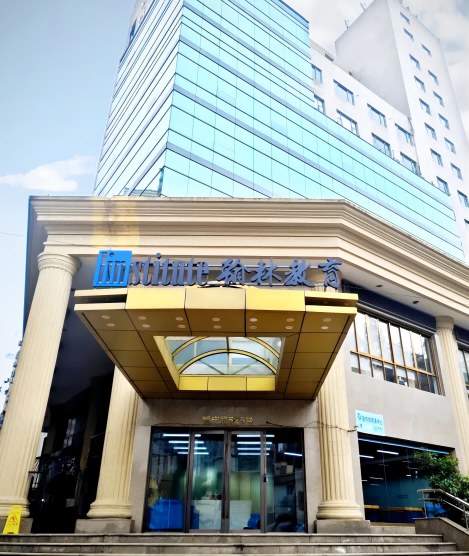
Teaching runs from Hanlin's own centres in Shanghai, Shenzhen, Chengdu and Hangzhou, and online for students elsewhere.

Talk to an advisor
Everything Hanlin does for HOSA, in one conversation.
Entry, planning, coaching and the past papers. An advisor will tell you which of these a student actually needs, including when the answer is none of them.
Competition entry and planning
Which competitions suit this student, in what order, and by when - then we handle the registration, including the ones that can only be entered through a school or a centre.
Competition coaching
Taught by full-time subject tutors, on a course tier chosen by placement paper rather than by year group.
International curriculum tutoring
IB, AP, A-Level, IGCSE and the US high school curriculum, taught alongside school and timed around the exam calendar.
Competition past papers, free
A large library of past papers, mark schemes and syllabus breakdowns across every competition on this site. No charge and no enrolment.
Scan to add an advisor
Say which competition or course you are asking about. Replies in Chinese or English.
Or call +86 21 6352 6630FAQ
HOSA, briefly answered.
What students, teachers and families ask before entering.
What is HOSA?
HOSA - Future Health Professionals, now also styled iHOSA - is a global student platform in biology and health, recognised by the US Department of Education and by more than a hundred health and medical companies, with over 5,600 member schools.
Who can enter?
Students in grades 9 to 12. The competition is in English.
What are the two categories?
ATC, the academic testing category, with five subject tests in biology, basic chemistry and psychology; and BCE, the public-good practice category, entered in teams of three to six. A student may enter one or both, but only one project within each.
How much does the ATC syllabus overlap with my course?
The organisers publish it. Biology overlaps 82% with AP, 95% with IB and 83% with A-Level. Basic chemistry overlaps 80%, 65% and 79%. Psychology overlaps 82%, 57% and 75%.
What is the ATC test format?
A 45-minute online objective test - 45 multiple-choice questions plus 5 further multiple-choice questions used only to break ties.
What are the BCE projects?
An original thirty-second public service advertisement, planned, filmed and produced by the team and submitted online; or a public health class - choose an audience, set teaching objectives, design the lesson and teach it live, submitting a lesson-design portfolio.
How does a student reach the global summit?
Through the preliminary stage in December and then the China stage. Only the top three in each project advance, an advancement rate of about 5%.
What awards are there?
Within each project, National Gold, Silver and Bronze Honors at the top 5%, 5-15% and 15-30% nationally. National honour winners are then removed and the same bands are applied within each of the five China regions for Regional Honors. Every entrant receives a participation certificate.
Are there practice tests?
No. The organisers state that no practice tests exist for any HOSA event, and that test questions are taken directly from the resources listed in the event guide. The guide also contains a test plan and sample questions.
What happens at the China stage?
Real industry problems set by leading biology, chemistry and psychology companies with corporate mentors; a first-aid certification centre taught by pre-hospital emergency staff, covering the Heimlich manoeuvre, trauma and fractures; a youth public-good exhibition with judging and seed funding for strong projects; and a three-day programme alongside it.
Related
Other biology and health contests.
What students commonly enter alongside HOSA.
HOSA enquiries
Ninety-five per cent of it, you are already studying.
For an IB Biology student the HOSA biology test overlaps almost entirely with the course - revision that produces a result. For a student who would rather make a film about public health, there is a category for that too. Tell us the year group and the course, and an advisor will pick the project.