
Competitions · Biology · USABO
USABO, the USA Biology Olympiad.
Fifty questions, fifty minutes, no penalty for a wrong answer - and the hardest biology paper below the international olympiad. Round one is open to the world. Rounds two and three are not.
Read this first
Round one is open to everyone. Nothing after it is.
USABO is a three-round selection process for the American international team, and the citizenship requirement starts at round two. This is the single most important thing to understand before planning a route.
The Open Exam is genuinely open
Round one, in early February, is open to students anywhere in the world. This is the paper the China region sits, and a strong score on it is a real result.
The semi-final requires US status
Round two, in mid-April, is restricted to US citizens and green-card holders. An international student cannot advance to it regardless of their round-one score.
And so does the national final
Round three takes the top twenty semi-finalists to a twelve-day residential camp, again US citizens and permanent residents only. Four are selected for the international team.
So plan round one as the destination
For a student outside the US, USABO is a single paper with a published award structure - not a ladder. Preparing for it as though the semi-final were reachable wastes a year.
At a glance
The China-region paper.
The Center for Excellence in Education, a non-profit founded in 1983, runs USABO and selects and trains the American team for the international olympiad. ASDAN China brought the contest to the China region in 2016 under the same marking standard.
- Organiser
- The Center for Excellence in Education (CEE), founded 1983
- Scale
- More than 10,000 American high-school students a year
- Who can enter
- Students in grades 8 to 12
- Format
- Individual written paper - 50 multiple-choice questions, one mark each, no penalty for a wrong answer
- Duration
- 50 minutes
- Language
- English
- How it is sat
- Online, with a camera-equipped computer, or in person at a centre school. Students at a centre school are advised to sit there
- When
- Early April for the China region, with registration closing about ten days earlier
- Level
- AP Biology plus first-year university general biology
- Global awards
- None. USABO does not award globally - the China region has its own award structure
- Where it leads
- For US citizens and permanent residents only: a semi-final, a national final, and selection for the international team
The syllabus
Seven areas, with published weights - the same seven as BBO.
This is why the two papers are usually prepared together. The areas and their weights are identical; what differs is the level, which USABO pitches at AP and first-year university.
| Area | Weight |
|---|---|
| Animal anatomy and physiology | 25% |
| Cell biology | 20% |
| Genetics and evolution | 20% |
| Plant anatomy and physiology | 15% |
| Ecology | 10% |
| Ethology (animal behaviour) | 5% |
| Biosystematics (taxonomy) | 5% |
| Added from 2025 | Neurobiology and bioinformatics, announced as additions to the published syllabus |
The seven weighted areas sum to 100. Neurobiology and bioinformatics were added to the syllabus without a stated weight, so treat them as content that may appear rather than as a fixed share of the paper.
Cut-offs
What each award has required, out of fifty.
These are the published mark thresholds. A Top Gold band appears from 2025 onward; before that the table runs Gold, Silver, Bronze.
| Year | Top Gold | Gold | Silver | Bronze |
|---|---|---|---|---|
| 2026 | 45 | 40 | 33 | 25 |
| 2025 | 38 | 33 | 27 | 22 |
| 2024 | — | 25 | 20 | 18 |
| 2023 | — | 32 | 27 | 24 |
| 2022 | — | 23 | 19 | 18 |
The gold line has ranged from 23 to 40 out of 50 - a seventeen-mark swing that tracks how hard the paper was that year. A target set from last year’s figure is unreliable; the award proportions below are the steadier guide.
Awards
How the China region is ranked.
Because USABO awards nothing globally, the China-region structure is what an entrant here is actually competing for.
Gold, top 15%
Awarded on total score across the China region. The proportion is fixed, so this is a ranking against the other entrants rather than against a mark.
Silver top 30%, Bronze top 45%
The three national bands together reach not quite half the field, which is generous by olympiad standards and reflects that this is round one of three.
Regional distinction, top 25% of each region
Awarded within each region to the top quarter of students who did not take a national award. It gives a second route to a result.
But nothing global
The source is explicit that USABO has no global awards. A China-region gold is a China-region gold, and should be described that way in an application.
What the paper is like
Theory only, and wider than AP.
The organisers position USABO against the exams students already sit, which makes its level easy to place.
No practical component
USABO tests theory only. The laboratory work enters at the national final, which international entrants do not reach.
Broader and harder than AP Biology
Both in the range of topics and in the difficulty of shared topics. A student comfortable with AP Biology should expect to be stretched rather than tested on the same ground.
A minute a question
Fifty questions in fifty minutes leaves no time to work anything out at length. This rewards secure recall far more than the duration alone suggests.
And no penalty for guessing
A wrong answer costs nothing, so every question should be answered. Leaving blanks on this paper is pure loss.
Preparation
How Hanlin prepares students for USABO.
The overlap with BBO and with AP Biology is the thing to exploit - one body of preparation serves three assessments.
Preparing BBO and USABO together
The seven areas and their weights are identical. What differs is depth, so a single revision plan works for both with USABO setting the ceiling.
Building on AP Biology
The source names AP and first-year general biology as the level. Students already taking AP Biology are most of the way there and need extension rather than a separate course.
Practising at one minute a question
Timed sets are essential. The constraint is pace, not difficulty of working, and that is a habit rather than a body of knowledge.
Covering the two new areas
Neurobiology and bioinformatics were added to the syllabus and sit outside most school courses. They are the most likely gap in an otherwise well-prepared student.
Why Hanlin
Hanlin has been entering students for USABO for years, and publishes what they got. The record is further down this page.
Programme formats
Five ways this is taught.
Group size is the whole difference between these. It decides how much of the tutor's attention a student gets and how far the course can bend to them, so it is worth choosing rather than accepting.
| Format | Group size | What it suits |
|---|---|---|
| One-to-one | One student | Content, pace and emphasis set by what this student actually needs rather than by a syllabus. The only format that can be rebuilt mid-course. |
| Small group | Three to eight | Opens at three. Frequent discussion, and the tutor can slow down or move on according to what the group has absorbed. Most students chasing a higher award are taught in this one. |
| Class | Eight to twelve | Taught by the subject lead or a medal coach. Less back-and-forth, so it suits a student who will say when something is unclear. |
| Large class | Ten to twenty | For students in the middle of the placement range, and a way to try a competition before committing. Students often move to a small group or to one-to-one afterwards. |
| Past-paper class | No cap | Past papers worked through in sequence in the weeks before the sitting. Free to students already enrolled. |
Course tiers
Which course, and on what evidence.
Every tier for USABO is entered from a placement paper rather than from a year group. These are the actual standards.
| Course | Hours | Who it is for |
|---|---|---|
| Full course | 60 hours | IGCSE biology behind you and eight to fourteen correct on the placement paper |
| Intensive | 40 hours | AS, AP or IB DP1 biology and more than fourteen correct |
| Sprint | 20 hours | Revision and past papers, for a student who will not work through papers alone |
| Past-paper class | 12 hours | Selected past papers worked through. Free to students already enrolled |
Ask for the placement paper before choosing a tier. It takes an hour and it settles the question.
How it runs
Six steps, four people on your side.
The same process for every student, so that nothing depends on one tutor remembering to do it.
 Step 1
Pre-course assessment
A placement paper before anything is booked, so the course tier is chosen on evidence rather than on a year group.
 Step 2
Tutor matching
A subject tutor is matched to the result, and their full background is provided before you agree to it.
 Step 3
Plan and group
A study group opens with four people on one student: the tutor, a planner, a supervisor and an academic manager.
 Step 4
Scheduled teaching
The teaching office sets the timetable around the competition date and school term, and teaching begins.
 Step 5
After-class reports
What was covered, and how the student handled it, reported after every lesson.
 Step 6
Homework follow-up
The teaching assistant and the form teacher both check that homework is done, which is where most preparation quietly fails.
Free resource pack
USABO past papers and preparation pack
The same material our own USABO students work from. Scan the code, say what you need, and an advisor sends it.

Tell an advisor which competition and year group, and the material comes back the same day. Free, and you do not have to enrol in anything. If we do not already hold what you need, we will go and find it.
- PDFPast Open Exam papers with answer keys
- PDFThe Campbell chapters that carry the most marks
- PDFSemifinal format and what changes at that round
- PDFRegistration checklist - entry is through a school
Teaching team
Who would teach it.
Three of the twenty-two tutors on the published Hanlin roster - the ones whose subject this is.

Yu
Master's in bioinformatics and computational biology from UT Dallas and a nutritional sciences degree from Wisconsin-Madison. Second author on an SCI-indexed paper from the Tanumihardjo vitamin-A laboratory, and formerly at ABS Global.
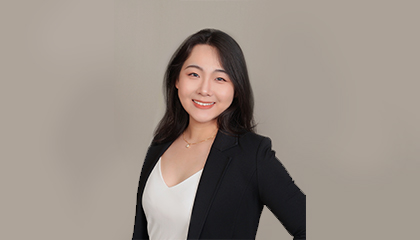
Zhang
Master's in cognitive science at UC San Diego on full scholarship, after double honours in neurobiology and behaviour and in cognitive science at UC Davis. Ten years overseas, a perfect TOEFL speaking score, and named an outstanding education scholar at UCSD.
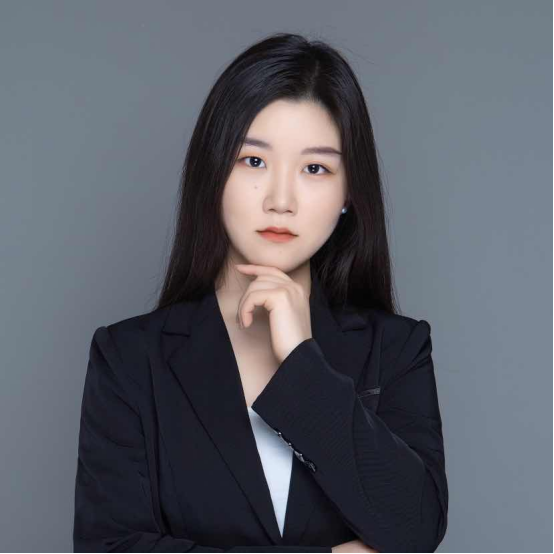
Li
Biology at Emory, biomedical engineering at Georgia Tech, and a bioengineering master's at the University of Pennsylvania. College Board-accredited, teaching from a cross-disciplinary research base and folding research practice into the classroom.
Student results
What Hanlin students got.
Taken from Hanlin's published record of student honours and rewritten in English. Figures are as the organisers reported them.
A US-region Finalist, 2025
One line from Hanlin's published USABO record. The rest of it is below.
USABO
- 202517 Super Gold, 45 Gold, 37 Silver and 51 Bronze. In the US region 6 students reached the Semifinal and one became a Finalist, the top 0.3%
- 202436 Gold
- 202337 Gold
Earlier years
- 202249 Gold
- 202121 Gold, including the fifth-placed student nationally
The full record, across every subject and year, is on the student honours page.
Where it is taught
Hanlin learning centres.
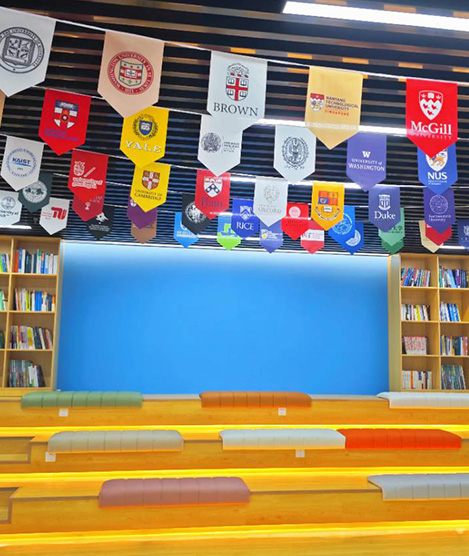
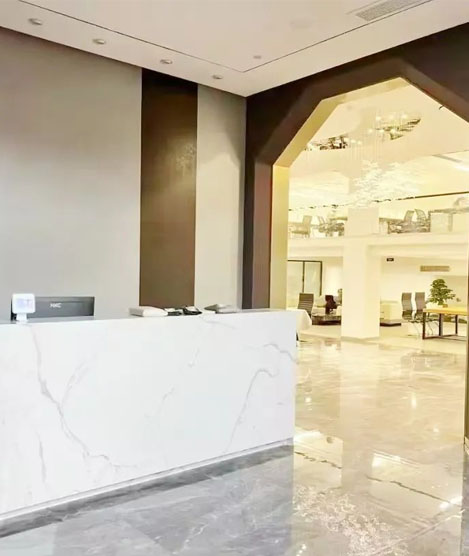
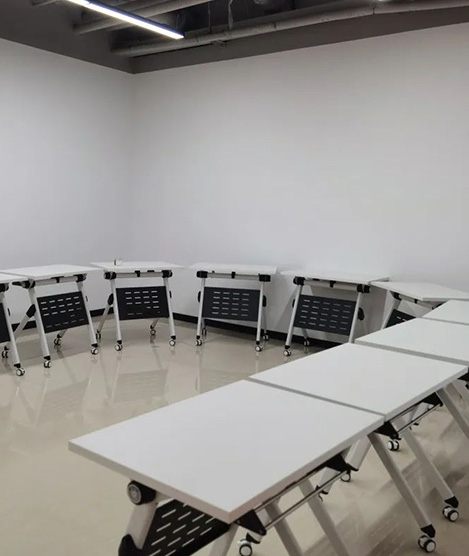
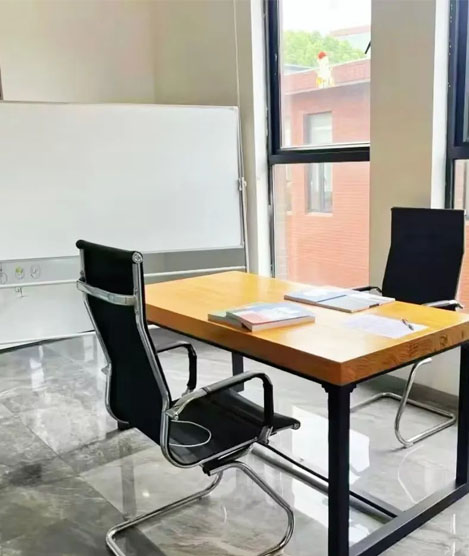
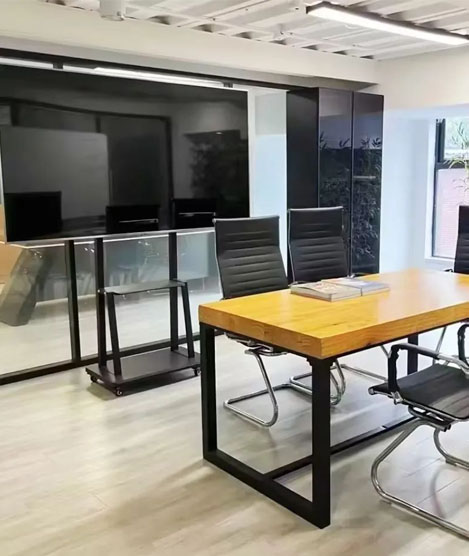
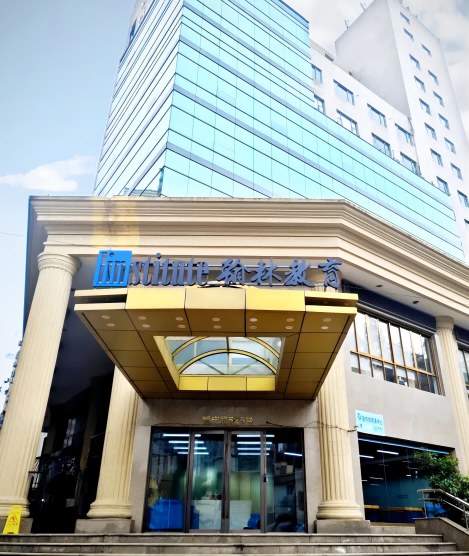
Teaching runs from Hanlin's own centres in Shanghai, Shenzhen, Chengdu and Hangzhou, and online for students elsewhere.

Talk to an advisor
Everything Hanlin does for USABO, in one conversation.
Entry, planning, coaching and the past papers. An advisor will tell you which of these a student actually needs, including when the answer is none of them.
Competition entry and planning
Which competitions suit this student, in what order, and by when - then we handle the registration, including the ones that can only be entered through a school or a centre.
Competition coaching
Taught by full-time subject tutors, on a course tier chosen by placement paper rather than by year group.
International curriculum tutoring
IB, AP, A-Level, IGCSE and the US high school curriculum, taught alongside school and timed around the exam calendar.
Competition past papers, free
A large library of past papers, mark schemes and syllabus breakdowns across every competition on this site. No charge and no enrolment.
Scan to add an advisor
Say which competition or course you are asking about. Replies in Chinese or English.
Or call +86 21 6352 6630FAQ
USABO, briefly answered.
What students and families ask before entering.
Can international students enter USABO?
Yes, but only round one. The Open Exam is open to students worldwide; the semi-final and the national final are restricted to US citizens and permanent residents. Plan round one as the destination.
Who can enter in the China region?
Students in grades 8 to 12. There is no qualifying requirement.
What is the paper?
Fifty multiple-choice questions in fifty minutes, one mark each, with no penalty for a wrong answer. It is theory only - there is no practical.
How hard is it compared with AP Biology?
Harder, in both breadth and depth. The source places it at AP Biology plus first-year university general biology.
Should I answer every question?
Yes. Wrong answers are not penalised, so a blank is a wasted mark.
What does the syllabus cover?
Animal anatomy and physiology 25%, cell biology 20%, genetics and evolution 20%, plant anatomy and physiology 15%, ecology 10%, ethology 5%, biosystematics 5%. Neurobiology and bioinformatics were added from 2025.
What awards are there?
None globally - the source is explicit about that. In the China region: gold at the top 15%, silver at the top 30%, bronze at the top 45%, and a regional distinction for the top 25% of each region outside the national awards.
Can I prepare for USABO and BBO together?
Yes, and it is the efficient route. The seven syllabus areas and their weights are identical; USABO is the deeper of the two, so preparing to its level covers both.
What language is it in?
English.
Related
Other biology contests.
What students commonly enter alongside USABO.
USABO enquiries
One paper, and it is worth doing properly.
International entrants sit round one and stop there, so the whole of a USABO plan sits in fifty questions in April. Tell us what biology the student has covered and an advisor will map the preparation - usually alongside BBO, since the syllabus is the same.