
Competitions · Chemistry · ASOC
ASOC, the Australian Chemistry Olympiad.
Two hours and ten minutes of chemistry that asks you to explain yourself. Multiple choice and open-ended questions together, with answers that have to be set out in clear language and diagrams rather than simply arrived at.
At a glance
What the olympiad is, and where it sits.
ASOC is the chemistry component of the Australian Science Olympiads, the same series that runs the physics, biology and earth science papers. ASDAN China has hosted the China region since 2019.
- Part of
- The Australian Science Olympiads
- Who can enter
- High-school students in any year
- Format
- Individual, written, with no practical component
- Question types
- Multiple choice and open-ended questions in the same paper
- Duration
- A 130-minute window, matching the physics paper in the same series
- Language
- English
- Where
- At test centre schools
- When
- Mid-October, on a Saturday morning
- What it tests
- Applying chemical reasoning to described situations, and explaining the reasoning clearly
- Where it leads
- The series selects and trains Australia’s teams for the international science olympiads
What it asks
Reasoning, and then explaining the reasoning.
ASOC is explicit that it is not testing recall. It is testing whether a student can work something out and then make somebody else understand it.
Chemical reasoning in a described scene
Questions set out a situation and ask what chemistry governs it. The difficulty sits in identifying the relevant principle rather than in executing a known method.
Explained in language and diagrams
Open-ended answers must be presented clearly, with diagrams where they help. Reaching the right conclusion privately is not the same as scoring for it.
And under a real time constraint
The organisers name time management and working under pressure as part of what is being assessed, not as an incidental condition of the exam.
Two question types, two habits
Multiple choice rewards fast recognition; open-ended questions reward careful construction. Both appear in the same paper, so a student has to switch modes within it.
The series
ASOC and ASOP run on the same model.
If a student is considering both the chemistry and physics papers, the good news is that the preparation habits transfer.
Same philosophy
Both papers test applying reasoning to a described scenario rather than recalling content. A student who has prepared for one understands what the other is asking.
Same October window
Both sit in mid-October within a 130-minute slot. A student entering both is preparing for one season rather than two.
Same national purpose
The series selects and trains Australia’s teams for the international olympiads in physics, chemistry, biology and earth science.
Different subject demands
What does not transfer is the content. Chemistry rewards breadth across the syllabus where physics rewards depth in a smaller set of principles.
Preparation
How Hanlin prepares students for ASOC.
A reasoning paper with written answers needs two things a school course does not usually build: transfer, and presentation.
Applying chemistry to unfamiliar settings
Practice uses problems stated as situations rather than as equations, because turning the first into the second is the skill being assessed.
Writing an answer somebody can follow
Open-ended responses are marked on clarity as well as correctness. Students practise writing up reasoning, including drawing a diagram when it explains faster than words.
Switching between question types
Moving from multiple choice to extended answer within one paper is a real adjustment. Timed practice covers the full paper rather than one section.
Auditing breadth
Chemistry papers of this kind sample widely. Preparation closes gaps across the whole syllabus rather than deepening a strong area.
Why Hanlin
Preparation for ASOC at Hanlin is taught by full-time subject tutors, on a course tier chosen by placement paper rather than by year group.
Programme formats
Five ways this is taught.
Group size is the whole difference between these. It decides how much of the tutor's attention a student gets and how far the course can bend to them, so it is worth choosing rather than accepting.
| Format | Group size | What it suits |
|---|---|---|
| One-to-one | One student | Content, pace and emphasis set by what this student actually needs rather than by a syllabus. The only format that can be rebuilt mid-course. |
| Small group | Three to eight | Opens at three. Frequent discussion, and the tutor can slow down or move on according to what the group has absorbed. Most students chasing a higher award are taught in this one. |
| Class | Eight to twelve | Taught by the subject lead or a medal coach. Less back-and-forth, so it suits a student who will say when something is unclear. |
| Large class | Ten to twenty | For students in the middle of the placement range, and a way to try a competition before committing. Students often move to a small group or to one-to-one afterwards. |
| Past-paper class | No cap | Past papers worked through in sequence in the weeks before the sitting. Free to students already enrolled. |
Course length for ASOC is set after a placement paper. The gap between where a student is and what the paper asks for is what the course has to close, and that gap is not the same for two students in the same year group.
How it runs
Six steps, four people on your side.
The same process for every student, so that nothing depends on one tutor remembering to do it.
 Step 1
Pre-course assessment
A placement paper before anything is booked, so the course tier is chosen on evidence rather than on a year group.
 Step 2
Tutor matching
A subject tutor is matched to the result, and their full background is provided before you agree to it.
 Step 3
Plan and group
A study group opens with four people on one student: the tutor, a planner, a supervisor and an academic manager.
 Step 4
Scheduled teaching
The teaching office sets the timetable around the competition date and school term, and teaching begins.
 Step 5
After-class reports
What was covered, and how the student handled it, reported after every lesson.
 Step 6
Homework follow-up
The teaching assistant and the form teacher both check that homework is done, which is where most preparation quietly fails.
Free resource pack
Past papers and preparation pack
The same material our own ASOC students work from. Scan the code, say what you need, and an advisor sends it.

Tell an advisor which competition and year group, and the material comes back the same day. Free, and you do not have to enrol in anything. If we do not already hold what you need, we will go and find it.
- PDFPast papers, every year the organiser has released
- PDFWorked solutions, where the organiser publishes them
- PDFThe syllabus on one page - every topic, and how heavily it is examined
- PDFEntry checklist and the dates for the current cycle
Teaching team
Who would teach it.
Three of the twenty-two tutors on the published Hanlin roster - the ones whose subject this is.
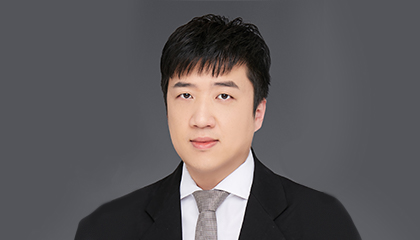
Dr Li
A Fudan postdoctoral researcher with a PhD in organic chemistry from HKUST, a master's in medicinal chemistry and nano-engineering from East China University of Science and Technology jointly with Myongji University, and a first degree in pharmaceutics. College Board-accredited.

Qiu
PhD in organic chemistry from the Institute of Chemistry, Chinese Academy of Sciences, after materials physics at East China University of Science and Technology. College Board-accredited, with published papers on organic small-molecule catalysis in internationally recognised journals.

Shi
Master's in water science and engineering from TU Dresden - one of Germany's TU9 institutes - after environmental engineering at Ocean University of China. A researcher in environmental chemistry at the Helmholtz Centre for Environmental Research, a DAAD scholarship holder, and College Board-accredited.
Student results
What Hanlin students got.
Taken from Hanlin's published record of student honours and rewritten in English. Figures are as the organisers reported them.
ASOC
- 2025One student was selected for the Australian chemistry olympiad national training camp
- 2024A first prize
Earlier years
- 2020A first prize
The full record, across every subject and year, is on the student honours page.
Where it is taught
Hanlin learning centres.
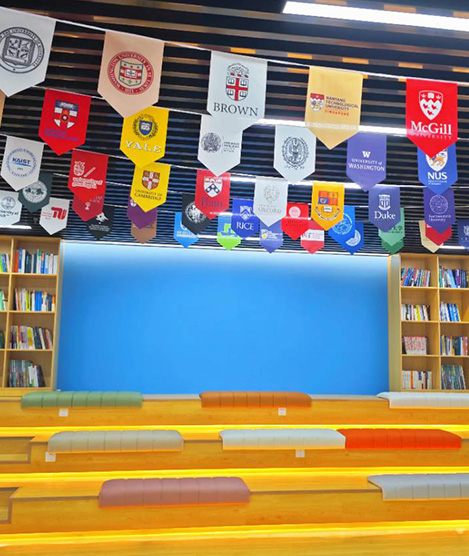
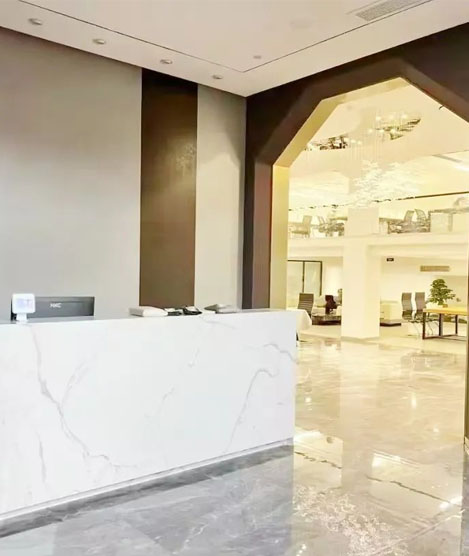
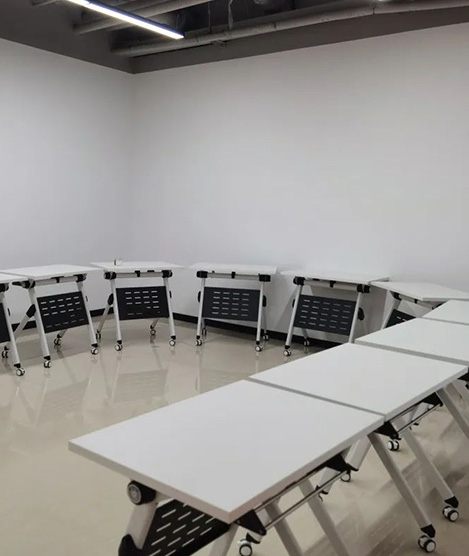
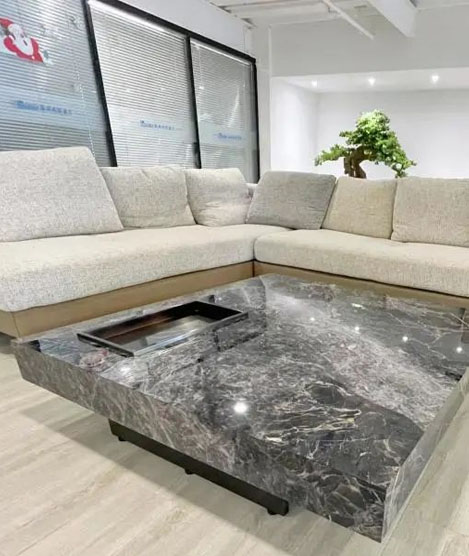
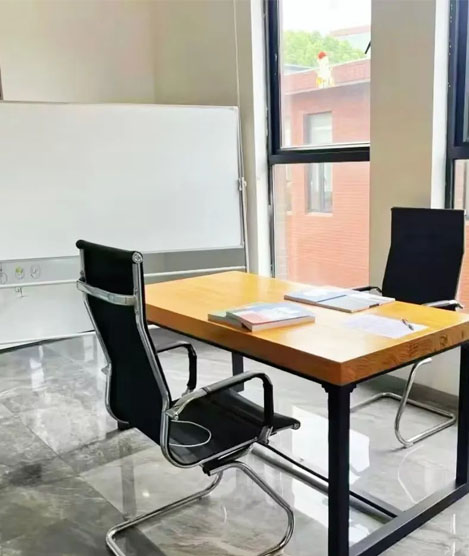
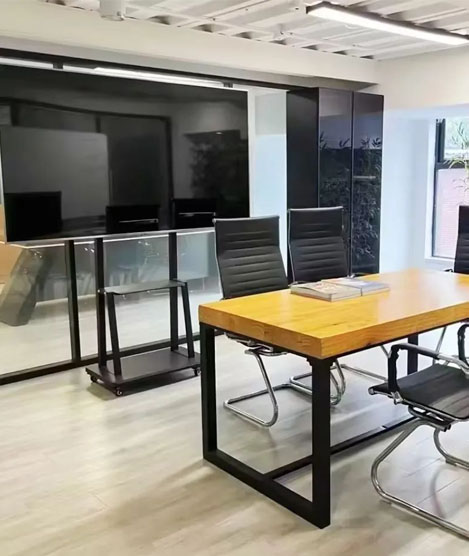
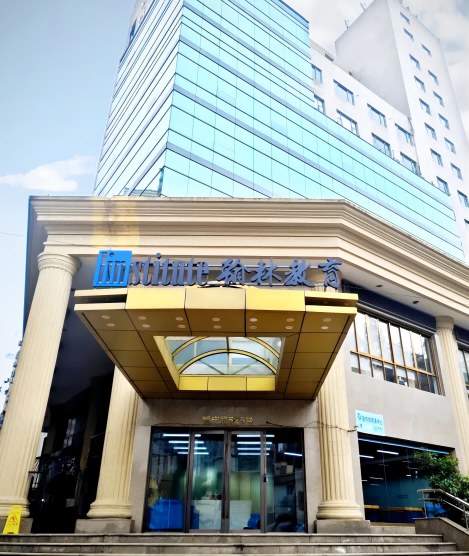
Teaching runs from Hanlin's own centres in Shanghai, Shenzhen, Chengdu and Hangzhou, and online for students elsewhere.
Talk to an advisor
Everything Hanlin does for ASOC, in one conversation.
Entry, planning, coaching and the past papers. An advisor will tell you which of these a student actually needs, including when the answer is none of them.
Competition entry and planning
Which competitions suit this student, in what order, and by when - then we handle the registration, including the ones that can only be entered through a school or a centre.
Competition coaching
Taught by full-time subject tutors, on a course tier chosen by placement paper rather than by year group.
International curriculum tutoring
IB, AP, A-Level, IGCSE and the US high school curriculum, taught alongside school and timed around the exam calendar.
Competition past papers, free
A large library of past papers, mark schemes and syllabus breakdowns across every competition on this site. No charge and no enrolment.
Scan to add an advisor
Say which competition or course you are asking about. Replies in Chinese or English.
Or call +86 21 6352 6630FAQ
ASOC, briefly answered.
What students and families ask before entering.
What is ASOC?
The chemistry component of the Australian Science Olympiads, the series that also covers physics, biology, and earth and environmental science, and which selects Australia’s teams for the international olympiads.
Who can enter?
High-school students in any year. The paper is calibrated for students competing at olympiad level, so it is not a first competition.
What kind of questions are there?
Both multiple-choice and open-ended questions in the same paper. Open-ended answers must be explained clearly, using diagrams where they help.
How long is it?
A 130-minute window, matching the physics paper in the same series.
Is there a practical component?
No. It is an individual written paper.
What is actually being tested?
Applying chemical reasoning to situations the questions describe, and communicating that reasoning clearly. The organisers also name time management and working under pressure as part of the assessment.
Can I sit both ASOC and ASOP?
Yes. Both sit in mid-October under the same model, so the preparation habits transfer even though the content does not.
What language is it in?
English.
Related
The rest of the series, and other chemistry.
What students commonly enter alongside ASOC.
ASOC enquiries
Working it out is half the mark.
ASOC asks students to find the chemistry in a described situation and then explain it clearly enough to be followed. Tell us the year group and what they have already sat, and an advisor will map the October entry.