
Competitions · Physics · JPC
JPC, the Junior Physics Challenge.
The entry point to the British Physics Olympiad system, for students in grades 7 to 9. Sixty questions in fifty minutes, sat bilingually, and marked on the same scale as the British entrants - so a Chinese student is placed directly against the UK field.
At a glance
What the challenge is, and who runs it.
JPC is run by the British Physics Olympiad, which is hosted at the Denys Wilkinson Building in Oxford’s physics department, is a UK registered charity, and selects Britain’s team for the International Physics Olympiad.
- Organiser
- The British Physics Olympiad, jointly operated in China with ASDAN China
- Where BPhO sits
- Oxford’s physics department, as a registered UK charity, with exclusive sponsorship from a global quantitative fund
- What JPC is
- The official entry-level paper in the BPhO sequence, aimed at junior secondary students
- Who can enter
- Grades 7 to 9 in the China region. Students holding UK school registration cannot enter through the China region
- Format
- 60 multiple-choice questions in 50 minutes, on a bilingual Chinese-English paper
- Rounds
- A preliminary with no practical component, and a final that includes experiments
- Where
- On paper at partner school test centres. An online sitting can be applied for in special circumstances
- When
- The preliminary is in late November, with registration closing about ten days earlier
- Marking
- Assessed by BPhO. Chinese and British students share one scale and one ranking
- What the fee covers
- The paper, marking, invigilation, past papers and the certificate
Two regions
The China format is not the British one.
JPC runs differently in the two regions, and the China version is the larger undertaking of the two.
| United Kingdom | China region | |
|---|---|---|
| Year group | Year 10, with Y9 and Y11 also accepted | Grades 7 to 9 |
| Structure | Two online tests of 25 minutes | One 50-minute paper |
| Questions | 60 in total | 60 |
| Language | English | Bilingual Chinese and English |
| Further rounds | None at this level | A final round, including experiments |
Despite the different formats, students in both regions are assessed by BPhO against the same scale and appear in the same ranking.
Why it matters
The value is where it leads.
JPC is not the most demanding paper on this site. Its significance is structural: it is the first step in a sequence that runs for years.
The start of the BPhO sequence
JPC is the official entry point to the full British Physics Olympiad ladder. Preparing for it is preparation for three to five years of physics that follows.
Ranked against British students
Because BPhO marks both regions on the same scale, a Chinese entrant’s result is directly comparable with the standard of top British junior students rather than with a local field.
And it reads in applications
A JPC award is used in applications to overseas secondary schools and later to universities, which is unusual for a paper sat at this age.
Designed for a range of abilities
The organisers state the aim as sparking interest, observation and critical thinking across all ability levels rather than filtering the strongest. It is a reasonable first international paper.
The paper
Sixty questions, fifty minutes, seven topics.
Fifty seconds a question means recognition rather than derivation - and the syllabus reaches beyond what a physics course usually covers.
Core physics
Dynamics, electricity, optics, thermal physics, units and waves. This is the material a junior secondary course covers, tested at speed.
Plus astronomy
Astronomy sits alongside the core topics, which a school syllabus at this level often does not reach at all.
And the history of physics
Questions draw on the history of the subject as well as its content - the kind of thing a curious reader picks up outside class rather than in it.
And everyday knowledge
General knowledge about how physics shows up in ordinary life is explicitly part of the scope. Interest counts here, not only study.
Preparation
How Hanlin prepares students for JPC.
Fifty seconds a question and a syllabus that includes history and everyday physics calls for something other than working through a textbook.
Practising at the real pace
Sixty questions in fifty minutes is fast. Students practise deciding quickly whether they know something, can reason to it, or should move on.
Covering the topics school leaves out
Astronomy and the history of physics are on the syllabus and usually not in the course. They are covered deliberately rather than left to chance.
Preparing for the final’s experiments
The China-region final includes a practical component that the preliminary does not. Students in reach of the final prepare for it before results arrive, not after.
Thinking past this paper
JPC is the first step of the BPhO ladder. Preparation is set up so it carries forward into the senior papers rather than being self-contained.
Why Hanlin
Preparation for JPC at Hanlin is taught by full-time subject tutors, on a course tier chosen by placement paper rather than by year group.
Programme formats
Five ways this is taught.
Group size is the whole difference between these. It decides how much of the tutor's attention a student gets and how far the course can bend to them, so it is worth choosing rather than accepting.
| Format | Group size | What it suits |
|---|---|---|
| One-to-one | One student | Content, pace and emphasis set by what this student actually needs rather than by a syllabus. The only format that can be rebuilt mid-course. |
| Small group | Three to eight | Opens at three. Frequent discussion, and the tutor can slow down or move on according to what the group has absorbed. Most students chasing a higher award are taught in this one. |
| Class | Eight to twelve | Taught by the subject lead or a medal coach. Less back-and-forth, so it suits a student who will say when something is unclear. |
| Large class | Ten to twenty | For students in the middle of the placement range, and a way to try a competition before committing. Students often move to a small group or to one-to-one afterwards. |
| Past-paper class | No cap | Past papers worked through in sequence in the weeks before the sitting. Free to students already enrolled. |
Course length for JPC is set after a placement paper. The gap between where a student is and what the paper asks for is what the course has to close, and that gap is not the same for two students in the same year group.
How it runs
Six steps, four people on your side.
The same process for every student, so that nothing depends on one tutor remembering to do it.
 Step 1
Pre-course assessment
A placement paper before anything is booked, so the course tier is chosen on evidence rather than on a year group.
 Step 2
Tutor matching
A subject tutor is matched to the result, and their full background is provided before you agree to it.
 Step 3
Plan and group
A study group opens with four people on one student: the tutor, a planner, a supervisor and an academic manager.
 Step 4
Scheduled teaching
The teaching office sets the timetable around the competition date and school term, and teaching begins.
 Step 5
After-class reports
What was covered, and how the student handled it, reported after every lesson.
 Step 6
Homework follow-up
The teaching assistant and the form teacher both check that homework is done, which is where most preparation quietly fails.
Free resource pack
Past papers and preparation pack
The same material our own JPC students work from. Scan the code, say what you need, and an advisor sends it.

Tell an advisor which competition and year group, and the material comes back the same day. Free, and you do not have to enrol in anything. If we do not already hold what you need, we will go and find it.
- PDFPast papers, every year the organiser has released
- PDFWorked solutions, where the organiser publishes them
- PDFThe syllabus on one page - every topic, and how heavily it is examined
- PDFEntry checklist and the dates for the current cycle
Teaching team
Who would teach it.
Three of the twenty-two tutors on the published Hanlin roster - the ones whose subject this is.
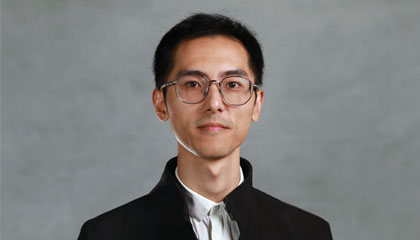
Huang
A College Board-accredited AP teacher. Read mathematics and physics in Southeast University's honours programme, took a master's in aerospace engineering at George Washington University under the lead of NASA's Sigma programme, and a second master's in robotics and AI at Melbourne. Five years teaching international curricula and competitions.
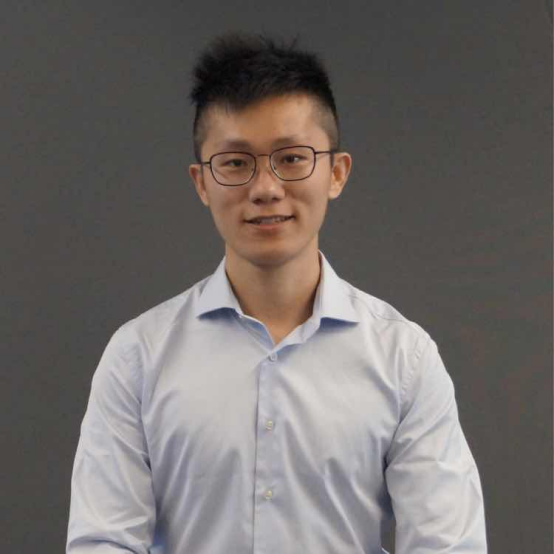
Ding
Master's in physics from Brown University after the physics honours programme at Central China Normal University, with a Berkeley BISP exchange. Two years as a graduate teaching assistant, then teaching alongside Professor Enrico Pajer (cosmology) and Professor Anastasia Romanou (exoplanets). College Board-accredited.

Lu
Master's in astrophysics from UCL after an astronomy degree at Xiamen University. In international education since 2019, teaching for logical structure and framework first - efficient methods and flexible problem-solving over rote coverage.
Where it is taught
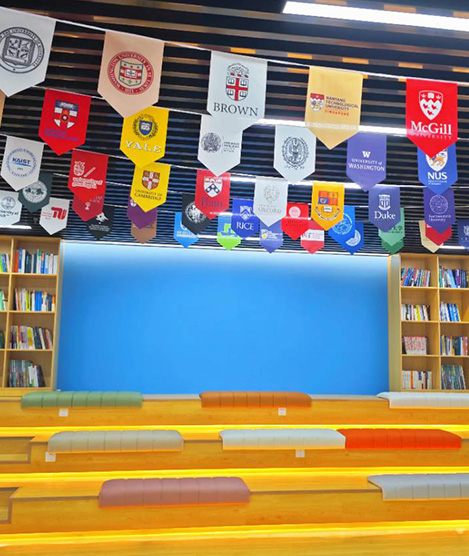
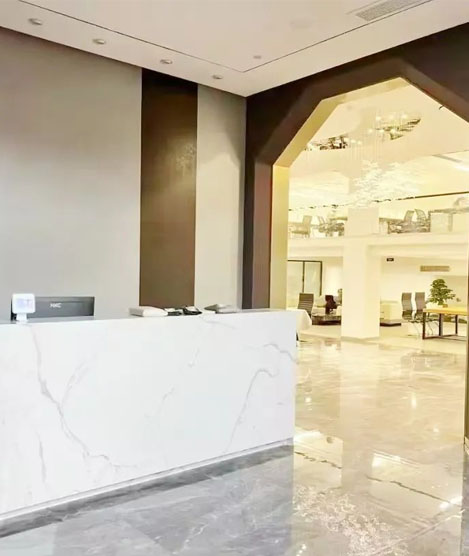
Hanlin learning centres.
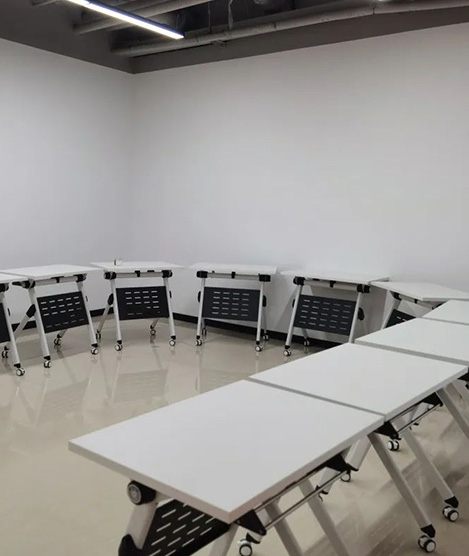
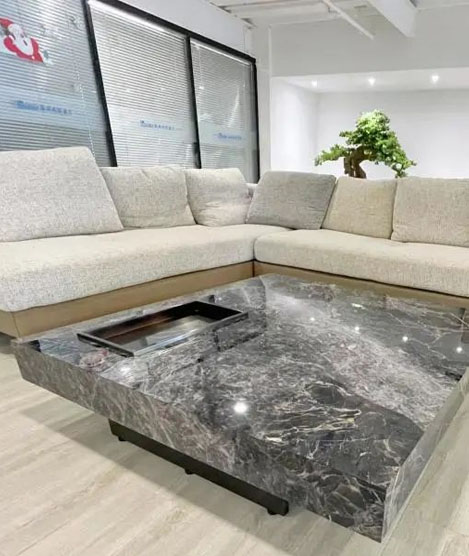
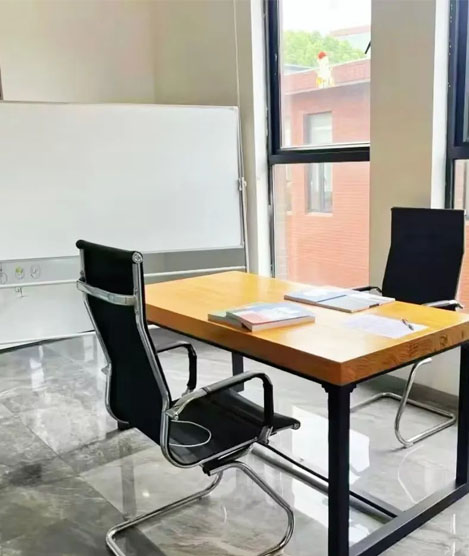
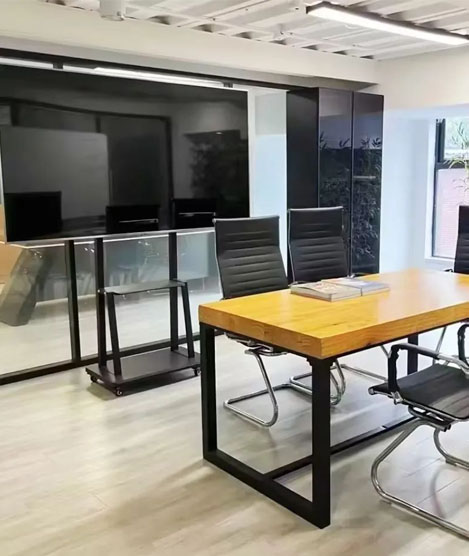
Teaching runs from Hanlin's own centres in Shanghai, Shenzhen, Chengdu and Hangzhou, and online for students elsewhere.
Talk to an advisor
Everything Hanlin does for JPC, in one conversation.
Entry, planning, coaching and the past papers. An advisor will tell you which of these a student actually needs, including when the answer is none of them.
Competition entry and planning
Which competitions suit this student, in what order, and by when - then we handle the registration, including the ones that can only be entered through a school or a centre.
Competition coaching
Taught by full-time subject tutors, on a course tier chosen by placement paper rather than by year group.
International curriculum tutoring
IB, AP, A-Level, IGCSE and the US high school curriculum, taught alongside school and timed around the exam calendar.
Competition past papers, free
A large library of past papers, mark schemes and syllabus breakdowns across every competition on this site. No charge and no enrolment.
Scan to add an advisor
Say which competition or course you are asking about. Replies in Chinese or English.
Or call +86 21 6352 6630FAQ
JPC, briefly answered.
What students and families ask before entering.
Who can enter JPC?
Students in grades 7 to 9 in the China region. In the UK the paper is aimed at Year 10, also accepting Y9 and Y11. Students holding UK school registration cannot enter through the China region.
What is the format?
In the China region, 60 multiple-choice questions in 50 minutes on a bilingual Chinese-English paper. In the UK the same 60 questions are split across two 25-minute online tests.
Is there more than one round?
In the China region, yes - the preliminary is followed by a final that includes experiments. The preliminary itself has no practical component.
Am I ranked against Chinese students only?
No. BPhO assesses both regions against the same scale and places students in the same ranking, so the result is directly comparable with the British field.
What topics are covered?
Dynamics, electricity, optics, thermal physics, units, waves and astronomy, plus the history of physics and everyday physical knowledge.
Do I need good English?
Not in the China region - the paper is bilingual, so only the physics is being tested.
Where is it sat?
On paper at partner school test centres. An online sitting can be applied for in special circumstances.
What does it lead to?
JPC is the official entry point to the British Physics Olympiad sequence, which continues through the senior challenges and BPhO itself over the following years.
Related
Where the BPhO ladder goes.
The papers that follow JPC, and others at this age.
JPC enquiries
The first rung of a ladder that runs for years.
JPC is where the British Physics Olympiad sequence starts, and a result here is marked against British students directly. Tell us the student’s year group and an advisor will map the November entry and what follows it.