
Competitions · Physics · BAAO Junior
BAAO Junior, the British Junior Astro Challenge.
Sixty multiple-choice questions in fifty minutes, sat bilingually by students in grades 7 to 10. The organisers describe it as closer to a quiz than an exam - and that is not modesty, it is the design.
At a glance
What the challenge is, and who sits it.
BAAO Junior comes from the same committee as BPhO and the senior astronomy olympiad - Oxford University, the Institute of Physics and the Ogden Trust. ASDAN China introduced it in 2019.
- Organiser
- The British Physics Olympiad committee
- Who can enter
- Students in grades 7 to 10
- Format
- Individual, multiple choice
- Structure
- Two papers of 25 minutes, each carrying 30 questions
- Duration
- 50 minutes in total - about 50 seconds a question
- Language
- Bilingual. Papers are supplied in Chinese and English, so English is not a barrier
- Where
- At partner schools, or online
- When
- Mid-November, with registration closing about ten days earlier
- Awards
- Gold, silver and bronze, with a certificate
- What it is for
- Building interest in astronomy, physics and spaceflight rather than sorting a field
What it actually is
A quiz, deliberately.
This is the most important thing to understand before entering, particularly for a family who has read about the senior olympiad. BAAO Junior is not a small version of it.
The organisers say so themselves
Their description is that this is more like an enjoyable quiz than an examination. Approaching it as a junior olympiad leads to preparing for something the paper does not ask.
Fifty seconds a question
Sixty questions across two 25-minute papers leaves under a minute each. There is no time for derivation, and none is expected - these are recognition questions.
Some are answerable by elimination
The organisers note that some questions are designed to be worked out by ruling options out rather than by knowing the answer outright. That is a skill worth practising in itself.
And some are simply general knowledge
Parts of the paper cover material a school course is unlikely to teach at all. Curiosity about astronomy is genuinely useful preparation here, which is rarely true of a competition.
What is examined
Seven areas, none of them requiring physics machinery.
The scope is astronomy as a subject rather than physics applied to astronomy, which is the clearest difference from the senior paper.
The history of astronomy
How our understanding of the sky developed. This is knowledge rather than calculation, and it is the part most likely to be new to a student.
The solar system and the Moon
Planets, moons and their behaviour, with the Moon treated as a topic in its own right. Familiar ground for many students, and a reliable source of marks.
Observation and the daily cycle
How astronomers actually observe, and how the sky moves through a day. Practical astronomy rather than theoretical.
Stellar patterns and general knowledge
Constellations and stellar behaviour, plus general astronomical knowledge. The breadth is deliberate - the paper samples widely rather than testing depth.
Preparation
How Hanlin prepares students for BAAO Junior.
The organisers publish their own preparation advice, and it is sensible. What follows builds on it.
Sort past questions by topic
Break the published multiple-choice questions into categories - solar physics, cosmology, observation and so on - and work each category as a set. Patterns emerge quickly.
Build a map, not a list
Connecting concepts across the branches of astronomy into a single picture works far better here than memorising facts separately, because the paper samples across the whole field.
Practise against the real clock
Fifty minutes for sixty questions has to be rehearsed. The skill is deciding fast whether you know something, can eliminate to it, or should move on.
Let curiosity do some of the work
Because parts of the paper are general astronomical knowledge, a student who reads about astronomy for pleasure arrives better prepared than one who has only drilled questions.
Why Hanlin
Preparation for BAAO Junior at Hanlin is taught by full-time subject tutors, on a course tier chosen by placement paper rather than by year group.
Programme formats
Five ways this is taught.
Group size is the whole difference between these. It decides how much of the tutor's attention a student gets and how far the course can bend to them, so it is worth choosing rather than accepting.
| Format | Group size | What it suits |
|---|---|---|
| One-to-one | One student | Content, pace and emphasis set by what this student actually needs rather than by a syllabus. The only format that can be rebuilt mid-course. |
| Small group | Three to eight | Opens at three. Frequent discussion, and the tutor can slow down or move on according to what the group has absorbed. Most students chasing a higher award are taught in this one. |
| Class | Eight to twelve | Taught by the subject lead or a medal coach. Less back-and-forth, so it suits a student who will say when something is unclear. |
| Large class | Ten to twenty | For students in the middle of the placement range, and a way to try a competition before committing. Students often move to a small group or to one-to-one afterwards. |
| Past-paper class | No cap | Past papers worked through in sequence in the weeks before the sitting. Free to students already enrolled. |
Course length for BAAO Junior is set after a placement paper. The gap between where a student is and what the paper asks for is what the course has to close, and that gap is not the same for two students in the same year group.
How it runs
Six steps, four people on your side.
The same process for every student, so that nothing depends on one tutor remembering to do it.
 Step 1
Pre-course assessment
A placement paper before anything is booked, so the course tier is chosen on evidence rather than on a year group.
 Step 2
Tutor matching
A subject tutor is matched to the result, and their full background is provided before you agree to it.
 Step 3
Plan and group
A study group opens with four people on one student: the tutor, a planner, a supervisor and an academic manager.
 Step 4
Scheduled teaching
The teaching office sets the timetable around the competition date and school term, and teaching begins.
 Step 5
After-class reports
What was covered, and how the student handled it, reported after every lesson.
 Step 6
Homework follow-up
The teaching assistant and the form teacher both check that homework is done, which is where most preparation quietly fails.
Free resource pack
Past papers and preparation pack
The same material our own BAAO Junior students work from. Scan the code, say what you need, and an advisor sends it.

Tell an advisor which competition and year group, and the material comes back the same day. Free, and you do not have to enrol in anything. If we do not already hold what you need, we will go and find it.
- PDFPast papers, every year the organiser has released
- PDFWorked solutions, where the organiser publishes them
- PDFThe syllabus on one page - every topic, and how heavily it is examined
- PDFEntry checklist and the dates for the current cycle
Teaching team
Who would teach it.
Three of the twenty-two tutors on the published Hanlin roster - the ones whose subject this is.
Huang
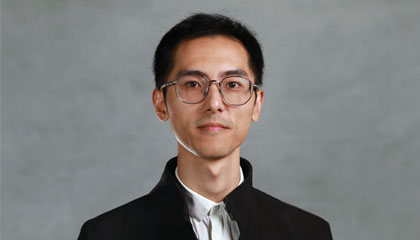
A College Board-accredited AP teacher. Read mathematics and physics in Southeast University's honours programme, took a master's in aerospace engineering at George Washington University under the lead of NASA's Sigma programme, and a second master's in robotics and AI at Melbourne. Five years teaching international curricula and competitions.
Ding
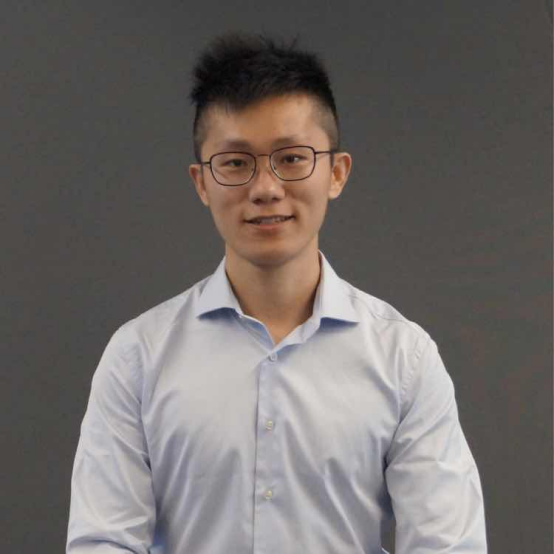
Master's in physics from Brown University after the physics honours programme at Central China Normal University, with a Berkeley BISP exchange. Two years as a graduate teaching assistant, then teaching alongside Professor Enrico Pajer (cosmology) and Professor Anastasia Romanou (exoplanets). College Board-accredited.

Lu
Master's in astrophysics from UCL after an astronomy degree at Xiamen University. In international education since 2019, teaching for logical structure and framework first - efficient methods and flexible problem-solving over rote coverage.
Where it is taught
Hanlin learning centres.
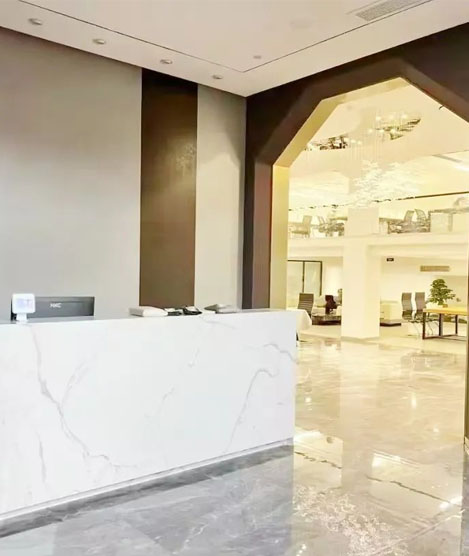
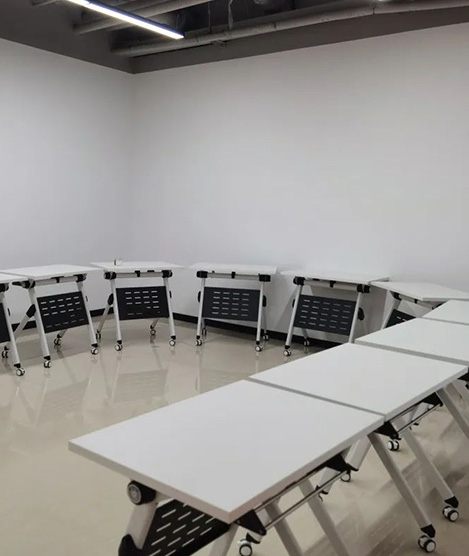
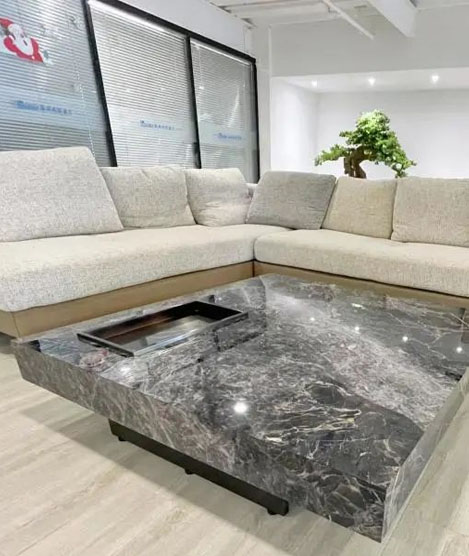
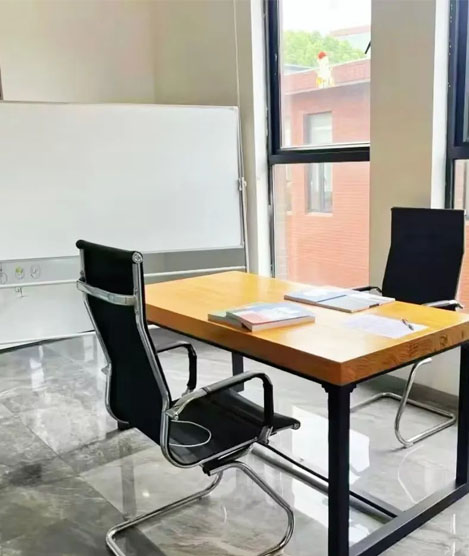
Teaching runs from Hanlin's own centres in Shanghai, Shenzhen, Chengdu and Hangzhou, and online for students elsewhere.

Talk to an advisor
Everything Hanlin does for BAAO Junior, in one conversation.
Entry, planning, coaching and the past papers. An advisor will tell you which of these a student actually needs, including when the answer is none of them.
Competition entry and planning
Which competitions suit this student, in what order, and by when - then we handle the registration, including the ones that can only be entered through a school or a centre.
Competition coaching
Taught by full-time subject tutors, on a course tier chosen by placement paper rather than by year group.
International curriculum tutoring
IB, AP, A-Level, IGCSE and the US high school curriculum, taught alongside school and timed around the exam calendar.
Competition past papers, free
A large library of past papers, mark schemes and syllabus breakdowns across every competition on this site. No charge and no enrolment.
Scan to add an advisor
Say which competition or course you are asking about. Replies in Chinese or English.
Or call +86 21 6352 6630FAQ
BAAO Junior, briefly answered.
What students and families ask before entering.
Who can enter BAAO Junior?
Students in grades 7 to 10. It is the junior counterpart to the senior astronomy olympiad, which is aimed at years 12 and 13.
Is it a smaller version of BAAO?
No, and this matters. The senior olympiad is three long derivation problems over three hours. BAAO Junior is sixty multiple-choice questions in fifty minutes, which the organisers describe as closer to a quiz than an exam.
What is the paper like?
Two papers of 25 minutes, each with 30 multiple-choice questions - about fifty seconds a question in total.
Do I need good English?
No. Papers are supplied bilingually in Chinese and English, so only the astronomy is being tested.
What topics does it cover?
The history of astronomy, the solar system, the Moon, observation techniques, the daily cycle, stellar patterns and general astronomical knowledge.
Do I need to have studied astronomy at school?
No. Some questions cover material a school course is unlikely to teach, some can be answered by elimination, and some do come from the school curriculum. Reading about astronomy for interest is genuinely useful preparation.
Where is it sat?
At partner schools in person, or online.
What awards are given?
Gold, silver and bronze, with a certificate.
Related
Where it leads.
The senior papers in the same series, and other physics at this age.
BAAO Junior enquiries
Curiosity counts here more than technique.
Fifty seconds a question and a syllabus that includes the history of astronomy rewards a student who finds the subject interesting. Tell us the year group and an advisor will map the November entry.