
Competitions · Physics · F=ma
F=ma, the first round of the US Physics Olympiad.
Twenty-five mechanics questions in seventy-five minutes, and the entry point to the route that ends with five students representing the United States at the International Physics Olympiad. It is harder than AP Physics C Mechanics and needs no calculus at all.

Read this first
Who is actually allowed to enter.
F=ma is open to United States citizens, United States permanent residents holding a green card, and students currently enrolled at a school in the United States. It is not open to students outside that group, wherever they study.
The second round, USAPhO, is narrower again: it requires US citizenship or permanent residence, and the candidate must be physically in the United States to sit it. A Chinese national studying at an American high school can therefore sit F=ma but cannot progress to USAPhO. Invitation to the training camp beyond that requires eligibility for the International Physics Olympiad, which again means citizenship or a green card.
None of this makes F=ma pointless for an international student at a US school - a strong result is a real credential. But the route to the national team closes after round one, and it is better to know that before planning around it.
At a glance
What the paper is.
F=ma is run by the American Association of Physics Teachers, which together with the American Institute of Physics sponsors the students who represent the United States internationally.
- Organiser
- The American Association of Physics Teachers (AAPT), with the American Institute of Physics
- What it is
- The first round of selection for the US Physics Team, analogous to what AMC is in mathematics
- Format
- 25 single-answer multiple-choice questions
- Duration
- 75 minutes - three minutes a question
- Marking
- One mark per correct answer. Nothing is deducted for a wrong answer or a blank
- Subject
- Mechanics only
- Calculus
- Not required. Every problem is solvable without it
- Age limit
- Not over 20 on 30 June of the competition year
- Calculators
- The basic functions of a simple scientific calculator. Stored data and programs must be cleared first
- Scratch paper
- Only paper supplied by the invigilator may be used
- When
- February, with registration closing in late January
The route
From twenty-five questions to five students.
F=ma is the widest point of a funnel that narrows sharply. Each stage below is a genuine cut, not a formality.
F=ma
The open round. Everyone eligible sits the same 75-minute mechanics paper.
USAPhO, about 400 students
The top F=ma performers are invited to the US Physics Olympiad: three hours in two 90-minute halves, short-answer and mostly calculation, across all of introductory physics. Some questions here do require calculus.
The training camp, about 20 students
Ten days at the University of Maryland. Students must be able to attend the full ten days, and must be eligible for the international olympiad to be invited.
IPhO, five students
Five students are selected from the camp to represent the United States at the International Physics Olympiad.
Where it sits
Why F=ma rather than Physics Bowl.
The two American physics contests occupy different places, and the argument for F=ma is fairly specific.
Physics Bowl overlaps heavily with AP
Much of Physics Bowl covers ground an AP course already teaches, which makes it accessible but limits how much a strong result actually demonstrates.
USAPhO is not an entry point
The second round is genuinely difficult and reached only through F=ma. It is not something a student enters directly.
F=ma sits between them
It extends what an AP course covers rather than repeating it, and a result there demonstrates something an AP grade does not. That is the case for entering it.
And the field is smaller
Physics Bowl has no eligibility restriction and its cut-offs have risen steadily as a result. F=ma is closed to students outside the US system, so the field is narrower and an award correspondingly more reachable.
The paper
Mechanics only, and harder than it sounds.
A single-subject paper with no calculus might read as a gentle option. It is not: the difficulty sits above a calculus-based AP course.
What is examined
Kinematics, statics, Newton’s laws, momentum and energy, oscillations, orbital mechanics, fluids and basic data analysis. Nothing outside mechanics appears.
Above AP Physics C Mechanics
The organisers place it above that course in difficulty - while AP Physics C is calculus-based and F=ma is not. The difficulty is therefore in physical insight, not mathematical machinery.
No penalty for a wrong answer
One mark for a correct answer and nothing deducted otherwise. Every question should carry a response; leaving one blank is strictly worse than guessing.
Three minutes a question
Twenty-five questions in seventy-five minutes. Generous compared with Physics Bowl’s minute-per-question, which is consistent with problems that need thinking rather than recall.
Sitting the paper
The invigilation rules are strict and specific.
AAPT is unusually prescriptive about who may supervise and how the paper is handled. These rules catch out home-schooled and independent candidates most often.
Never a relative
A parent or relative may not invigilate, in any circumstance. A parent may register their child, but somebody else must supervise the paper.
A two-year degree, in any subject
The invigilator should hold at least a two-year degree, which need not be in physics. Libraries may supervise at a public library provided they can observe the candidate throughout.
Identity has to be verifiable
The invigilator should use an official school email tied to a district or accredited private school. Where that is impossible, they must supply further contact details, and a test centre must provide a URL confirming its status.
Printed, scanned, emailed back
The paper and answer sheet arrive as a printable PDF. The invigilator prints them, then scans the completed answer sheet and emails it to AAPT. Every student at a given school must sit at the same time.
USAPhO medals
What the second round awards.
F=ma itself awards progression rather than medals - the top performers are invited onward. Medals are given at USAPhO, on approximate bands.
Preparation
How Hanlin prepares students for F=ma.
The syllabus is narrow, which makes preparation unusually well-defined. The difficulty is depth within mechanics rather than breadth across physics.
Build on AP Physics C Mechanics
The organisers position F=ma above that course, so it is the natural foundation. Students who have taken it work upward from there rather than starting fresh.
Insight without calculus
Because no problem needs calculus, the skill being trained is finding the physical argument that avoids the computation. That is practised on past papers, which AAPT publishes.
Answer all twenty-five
Nothing is deducted for a wrong answer, so a blank is always the worst outcome. Students practise ensuring every question carries a response before time is called.
Arranging invigilation early
The supervision rules rule out parents and require verifiable credentials. For an independent candidate this takes arranging well before the January deadline, not after it.
Why Hanlin
Preparation for F=ma at Hanlin is taught by full-time subject tutors, on a course tier chosen by placement paper rather than by year group.
Programme formats
Five ways this is taught.
Group size is the whole difference between these. It decides how much of the tutor's attention a student gets and how far the course can bend to them, so it is worth choosing rather than accepting.
| Format | Group size | What it suits |
|---|---|---|
| One-to-one | One student | Content, pace and emphasis set by what this student actually needs rather than by a syllabus. The only format that can be rebuilt mid-course. |
| Small group | Three to eight | Opens at three. Frequent discussion, and the tutor can slow down or move on according to what the group has absorbed. Most students chasing a higher award are taught in this one. |
| Class | Eight to twelve | Taught by the subject lead or a medal coach. Less back-and-forth, so it suits a student who will say when something is unclear. |
| Large class | Ten to twenty | For students in the middle of the placement range, and a way to try a competition before committing. Students often move to a small group or to one-to-one afterwards. |
| Past-paper class | No cap | Past papers worked through in sequence in the weeks before the sitting. Free to students already enrolled. |
Course length for F=ma is set after a placement paper. The gap between where a student is and what the paper asks for is what the course has to close, and that gap is not the same for two students in the same year group.
How it runs
Six steps, four people on your side.
The same process for every student, so that nothing depends on one tutor remembering to do it.
 Step 1
Pre-course assessment
A placement paper before anything is booked, so the course tier is chosen on evidence rather than on a year group.
 Step 2
Tutor matching
A subject tutor is matched to the result, and their full background is provided before you agree to it.
 Step 3
Plan and group
A study group opens with four people on one student: the tutor, a planner, a supervisor and an academic manager.
 Step 4
Scheduled teaching
The teaching office sets the timetable around the competition date and school term, and teaching begins.
 Step 5
After-class reports
What was covered, and how the student handled it, reported after every lesson.
 Step 6
Homework follow-up
The teaching assistant and the form teacher both check that homework is done, which is where most preparation quietly fails.
Free resource pack
Past papers and preparation pack
The same material our own F=ma students work from. Scan the code, say what you need, and an advisor sends it.

Tell an advisor which competition and year group, and the material comes back the same day. Free, and you do not have to enrol in anything. If we do not already hold what you need, we will go and find it.
- PDFPast papers, every year the organiser has released
- PDFWorked solutions, where the organiser publishes them
- PDFThe syllabus on one page - every topic, and how heavily it is examined
- PDFEntry checklist and the dates for the current cycle
Teaching team
Who would teach it.
Three of the twenty-two tutors on the published Hanlin roster - the ones whose subject this is.

Huang
A College Board-accredited AP teacher. Read mathematics and physics in Southeast University's honours programme, took a master's in aerospace engineering at George Washington University under the lead of NASA's Sigma programme, and a second master's in robotics and AI at Melbourne. Five years teaching international curricula and competitions.

Ding
Master's in physics from Brown University after the physics honours programme at Central China Normal University, with a Berkeley BISP exchange. Two years as a graduate teaching assistant, then teaching alongside Professor Enrico Pajer (cosmology) and Professor Anastasia Romanou (exoplanets). College Board-accredited.

Lu
Master's in astrophysics from UCL after an astronomy degree at Xiamen University. In international education since 2019, teaching for logical structure and framework first - efficient methods and flexible problem-solving over rote coverage.
Student results
What Hanlin students got.
Taken from Hanlin's published record of student honours and rewritten in English. Figures are as the organisers reported them.
F=ma
- 20255 students passed the qualifying line for the second round, and one US high school student was selected for the USAPhO national camp - one of twenty places in the country
The full record, across every subject and year, is on the student honours page.
Where it is taught
Hanlin learning centres.
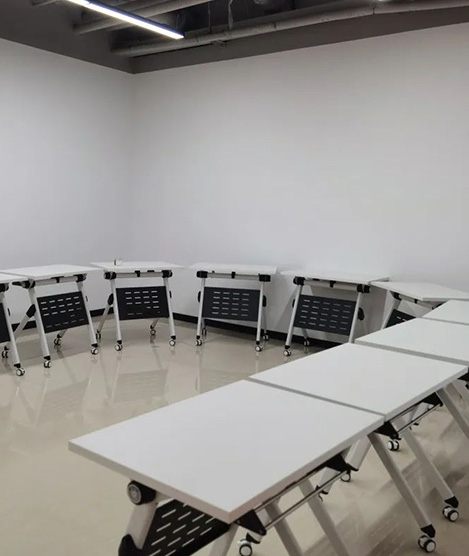
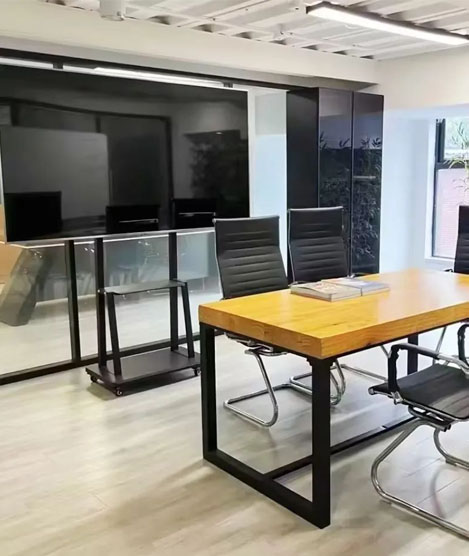
Teaching runs from Hanlin's own centres in Shanghai, Shenzhen, Chengdu and Hangzhou, and online for students elsewhere.





Talk to an advisor
Everything Hanlin does for F=ma, in one conversation.
Entry, planning, coaching and the past papers. An advisor will tell you which of these a student actually needs, including when the answer is none of them.
Competition entry and planning
Which competitions suit this student, in what order, and by when - then we handle the registration, including the ones that can only be entered through a school or a centre.
Competition coaching
Taught by full-time subject tutors, on a course tier chosen by placement paper rather than by year group.
International curriculum tutoring
IB, AP, A-Level, IGCSE and the US high school curriculum, taught alongside school and timed around the exam calendar.
Competition past papers, free
A large library of past papers, mark schemes and syllabus breakdowns across every competition on this site. No charge and no enrolment.
Scan to add an advisor
Say which competition or course you are asking about. Replies in Chinese or English.
Or call +86 21 6352 6630FAQ
F=ma, briefly answered.
What students and families ask before entering.
Who can sit F=ma?
United States citizens, United States permanent residents holding a green card, and students currently enrolled at a school in the United States. Entrants must not be over 20 on 30 June of the competition year.
I am a Chinese national at a US high school. Can I compete?
You can sit F=ma. You cannot progress to USAPhO, which requires citizenship or permanent residence and being physically in the United States. The route to the national team therefore closes after the first round, though a strong F=ma result remains a real credential.
What is on the paper?
Mechanics only: kinematics, statics, Newton’s laws, momentum and energy, oscillations, orbital mechanics, fluids and basic data analysis. Twenty-five multiple-choice questions in seventy-five minutes.
Do I need calculus?
Not for F=ma - every problem is solvable without it, even though the paper is pitched above the calculus-based AP Physics C Mechanics course. Some USAPhO questions in the second round do require calculus.
Is there a penalty for a wrong answer?
No. One mark for a correct answer and nothing deducted for a wrong one or a blank, so every question should be attempted.
Who can invigilate?
Not a parent or any relative, in any circumstance. The invigilator should hold at least a two-year degree in any subject and should use an official school email. Home-schooled candidates commonly arrange supervision through a community college, university or library.
How many students advance?
About 400 from F=ma to USAPhO, about 20 from there to the ten-day training camp at the University of Maryland, and five from the camp to the International Physics Olympiad.
How should I prepare?
Work upward from AP Physics C Mechanics and then through AAPT’s published past papers. Because the syllabus is narrow, depth within mechanics is a better use of time than breadth.
Related
Other physics contests.
What students enter alongside F=ma, or instead of it.
F=ma enquiries
Check eligibility before you plan a route.
F=ma is open to students in the US system only, and the second round is narrower still. Tell us the student’s status and where they study, and an advisor will say plainly how far this route goes for them.