
Competitions · Humanities and writing · NHD
NHD, National History Day.
A year of primary research, presented as a paper, an exhibit, a documentary, a website or a live performance. Judged 80% on the history and 20% on how you present it - which is the right way round, and unusual.

Read this first
Three things that decide whether this is available.
NHD runs through school affiliates rather than by individual entry, and the China arrangements have their own conditions.
The China contest is for international schools
Eligibility in the China region is stated as students enrolled at international schools in mainland China. Check this before planning a year of work.
A teacher has to register first
The school’s designated NHD sponsor or teacher must create an account before any student can register. A student with no sponsor should contact the affiliate coordinator directly.
And the China region has been cancelled before
In a past cycle the China contest did not run, and Chinese students competed through other affiliates - Singapore and Thailand among them - instead. For a project that takes a year, that is worth knowing.
The calendar starts in October
Registration opens in early October and closes in mid-December, with work due at the end of February and the contest in March. Deciding in January is deciding too late.
At a glance
What the competition is.
National History Day was founded in 1974 and runs as a non-profit from the University of Maryland, College Park. More than half a million students a year take an annual theme, spend the year on primary research, and present their conclusions in one of five formats.
- Divisions
- Junior for grades 6 to 8, Senior for grades 9 to 12. Some affiliates also admit grades 4 and 5 - ask your local coordinator
- Team
- Individually or in teams of two to five, all in the same division
- One exception
- The Paper category is individual only
- Original work
- The entry must be created during the current competition year
- Five categories
- Paper, Exhibit, Documentary, Website, Performance
- Judging
- Quality of the historical documentation 80%, clarity of presentation 20%
- The theme
- Released each autumn and used as a lens for the whole year’s research
- The route
- Affiliate contest, then the national contest at the University of Maryland in June. US entrants also have a state round
- China registration
- Early October to mid-December
- China submission
- End of February
- China contest day
- A Saturday in late March, in Shanghai
- Fee
- A registration fee applies. It is arranged through the school - the organiser asks students not to pay through the website
The five categories
Every format has a hard limit.
Choose the category for what the research actually is, then work to its limit from the start. These are the numbers that get entries disqualified.
| Category | Limit | What you submit |
|---|---|---|
| Paper individual only | 1,500 to 2,500 words | A PDF. A traditional essay or another form of creative writing. Every citation and borrowed idea must be attributed, and the grammar has to be right |
| Exhibit | 500 words of exhibit text | A PDF of the exhibit plus a PDF of written materials - title page, process paper and annotated bibliography. The exhibit must be made digitally, in any design software, and the layout must be no larger than 74 inches wide by 72 inches high |
| Documentary | 10 minutes | An MP4 plus the same PDF written materials. Every image, piece of music and film clip must be credited |
| Website | 1,200 words, and 3 minutes of multimedia in total | Built in NHDWebCentral, with the PDF written materials submitted alongside |
| Performance | 10 minutes | A live performance, which may use multimedia support. It may dramatise, but it must not distort the history |
The word limits are much tighter than they look. Five hundred words across an entire exhibit is about a page of prose spread over several panels, and 1,200 words across a whole website is less than one good essay. In both cases the research has to be visible in the selection, not in the volume.
The 80/20 rule
Four fifths of the mark is the history.
This is the single most useful thing on the page, and it should decide where the year goes.
Historical documentation, 80%
The quality of the research and the sources behind it. Primary material, properly read and properly cited, is what the competition is actually measuring.
Clarity of presentation, 20%
How clearly the conclusion is communicated. It matters, and it is one fifth of the mark - not half.
Which is the opposite of how students allocate time
A beautiful documentary on thin research loses to a plain paper on deep research. The format is a vehicle, not the work.
And it makes the annotated bibliography central
Four of the five categories require one. It is where the eighty percent becomes visible to a judge who cannot see the months of reading behind the entry.
The awards
And one title worth knowing about.
Awards are given in each category within each division, so the field a student competes in is narrower than the entry list suggests.
First, second, third and finalist
In each category and each division, with certificates, medals or trophies, and prize money.
First place carries a title
The first-place award is sponsored by the National Endowment for the Humanities, and winners receive the title of NEH Scholar. That is a named distinction from a federal humanities body, not a competition medal.
Plus special and scholarship awards
Separate special awards, scholarship awards and outstanding work awards run alongside the placings.
Ten fields, not one
Five categories times two divisions means ten separate award sets. Choosing a category the student can genuinely execute matters more than choosing an impressive one.
Registering
The order matters, and group entries have an extra step.
The registration sequence trips up teams in particular, because it depends on one member going first.
Teacher first, then students
The school’s NHD sponsor or teacher creates an account before students can register. Every student registers individually, even for a group project.
One team member creates the entry
The first student to register creates the entry and receives a team or project key. The others enter that key when they register, which links them to the same entry.
A parent completes the waiver
The student permission and waiver section is completed together with a parent or guardian as part of registration.
And do not pay through the website
The organiser states that registration fees are arranged through the school. Payment is followed up after registration closes, or settled on the contest day.
Preparation
How Hanlin prepares an NHD entry.
A year is a long time and the deadlines are far apart, which is exactly why projects drift.
Narrowing the topic against the theme
The annual theme is a lens, not a subject. The hardest and most valuable early work is turning a broad interest into a question small enough to research properly and large enough to matter.
Finding genuine primary sources
Eighty percent of the mark. Locating material a student can actually read - in archives, digitised collections, newspapers, oral histories - is the difference between a strong entry and a summary of secondary reading.
Writing the annotated bibliography as you go
Reconstructing it in February from a year of half-remembered reading is miserable and shows. Keeping it current is the single best habit here.
And choosing the format early
A documentary needs footage rights and editing time; a performance needs rehearsal; an exhibit needs design. Choosing in January leaves too little of the year.
Why Hanlin
Preparation for NHD at Hanlin is taught by full-time subject tutors, on a course tier chosen by placement paper rather than by year group.
Programme formats
Five ways this is taught.
Group size is the whole difference between these. It decides how much of the tutor's attention a student gets and how far the course can bend to them, so it is worth choosing rather than accepting.
| Format | Group size | What it suits |
|---|---|---|
| One-to-one | One student | Content, pace and emphasis set by what this student actually needs rather than by a syllabus. The only format that can be rebuilt mid-course. |
| Small group | Three to eight | Opens at three. Frequent discussion, and the tutor can slow down or move on according to what the group has absorbed. Most students chasing a higher award are taught in this one. |
| Class | Eight to twelve | Taught by the subject lead or a medal coach. Less back-and-forth, so it suits a student who will say when something is unclear. |
| Large class | Ten to twenty | For students in the middle of the placement range, and a way to try a competition before committing. Students often move to a small group or to one-to-one afterwards. |
| Past-paper class | No cap | Past papers worked through in sequence in the weeks before the sitting. Free to students already enrolled. |
Course length for NHD is set after a placement paper. The gap between where a student is and what the paper asks for is what the course has to close, and that gap is not the same for two students in the same year group.
How it runs
Six steps, four people on your side.
The same process for every student, so that nothing depends on one tutor remembering to do it.
 Step 1
Pre-course assessment
A placement paper before anything is booked, so the course tier is chosen on evidence rather than on a year group.
 Step 2
Tutor matching
A subject tutor is matched to the result, and their full background is provided before you agree to it.
 Step 3
Plan and group
A study group opens with four people on one student: the tutor, a planner, a supervisor and an academic manager.
 Step 4
Scheduled teaching
The teaching office sets the timetable around the competition date and school term, and teaching begins.
 Step 5
After-class reports
What was covered, and how the student handled it, reported after every lesson.
 Step 6
Homework follow-up
The teaching assistant and the form teacher both check that homework is done, which is where most preparation quietly fails.
Free resource pack
Past questions and writing pack
The same material our own NHD students work from. Scan the code, say what you need, and an advisor sends it.

Tell an advisor which competition and year group, and the material comes back the same day. Free, and you do not have to enrol in anything. If we do not already hold what you need, we will go and find it.
- PDFEvery past question the competition has set
- PDFShortlisted and published essays, to calibrate the standard
- PDFStructure, referencing and word-count guide
- PDFEntry checklist and the dates for the current cycle
Teaching team
Who would teach it.
Three of the twenty-two tutors on the published Hanlin roster - the ones whose subject this is.

Lu
Master's in education from the University of Pennsylvania and a double major in psychology and philosophy at Mount Holyoke. Cross-cultural teaching experience across China and the US, with research work in child and adolescent development, cognition, and international students' identity.

Yang
Educated at American Heritage School, then English literature and philosophy at the University of British Columbia and a master's in language education at Toronto. Eleven years in North America, with a close working knowledge of the international curricula and overseas admissions.

He
A Cambridge master's after a computer science degree with a mathematics minor at the University of Nebraska-Lincoln, and a US high school GPA of 4.13. Six years overseas and teaches entirely in English, across AMC, Math League, AP Computer Science and AP Calculus.
Where it is taught
Hanlin learning centres.
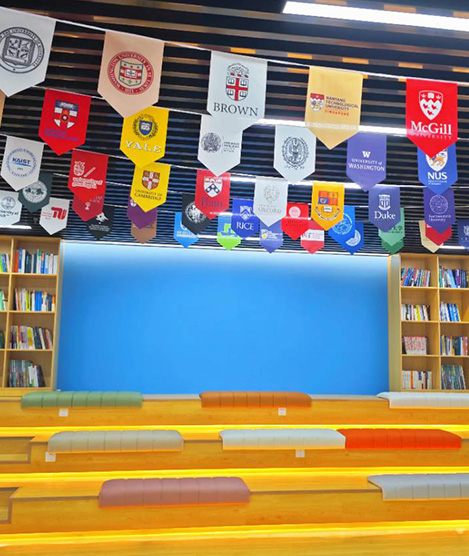
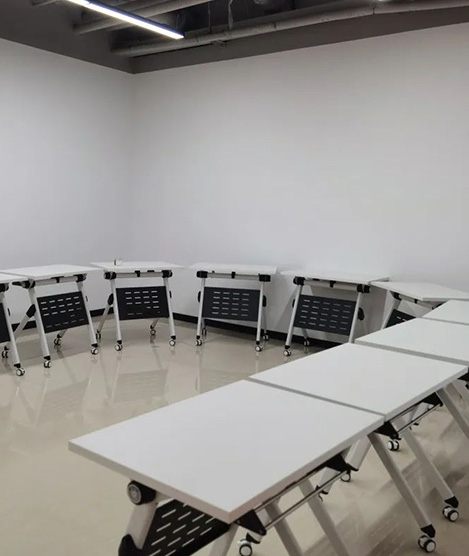
Teaching runs from Hanlin's own centres in Shanghai, Shenzhen, Chengdu and Hangzhou, and online for students elsewhere.





Talk to an advisor
Everything Hanlin does for NHD, in one conversation.
Entry, planning, coaching and the past papers. An advisor will tell you which of these a student actually needs, including when the answer is none of them.
Competition entry and planning
Which competitions suit this student, in what order, and by when - then we handle the registration, including the ones that can only be entered through a school or a centre.
Competition coaching
Taught by full-time subject tutors, on a course tier chosen by placement paper rather than by year group.
International curriculum tutoring
IB, AP, A-Level, IGCSE and the US high school curriculum, taught alongside school and timed around the exam calendar.
Competition past papers, free
A large library of past papers, mark schemes and syllabus breakdowns across every competition on this site. No charge and no enrolment.
Scan to add an advisor
Say which competition or course you are asking about. Replies in Chinese or English.
Or call +86 21 6352 6630FAQ
NHD, briefly answered.
What students and families ask before entering.
Who can enter?
Students in grades 6 to 8 in the Junior division and grades 9 to 12 in the Senior division. Some affiliates also admit grades 4 and 5, so ask your local coordinator. In the China region, eligibility is stated as students at international schools in mainland China.
What are the five categories?
Paper, Exhibit, Documentary, Website and Performance. The Paper category is individual only; the others may be entered individually or in teams of two to five from the same division.
What are the limits?
Paper 1,500 to 2,500 words. Exhibit 500 words of text, with a layout no larger than 74 by 72 inches. Documentary 10 minutes. Website 1,200 words with no more than three minutes of multimedia in total. Performance 10 minutes.
How is it judged?
Quality of the historical documentation counts for 80% and clarity of presentation for 20%.
Does the work have to be new?
Yes. The entry must be original work created during the current competition year.
How do I register?
Your school’s designated NHD sponsor or teacher creates an account first. Every student then registers individually, even within a group. For a group, the first member to register creates the entry and shares a team or project key with the others. A parent or guardian completes the permission and waiver section.
How do I pay?
A registration fee applies, arranged through the school. The organiser asks students not to pay through the website - payment is followed up after registration closes or settled on the contest day.
What is the annual theme?
A new theme is released each autumn and serves as the lens for the year’s research. Confirm the current one with the organiser before starting - the theme in wide circulation is the fiftieth-anniversary one.
What can you win?
First, second, third and finalist awards in each category and division, with certificates, medals or trophies and prize money, plus separate special, scholarship and outstanding work awards. First place is sponsored by the National Endowment for the Humanities and carries the title of NEH Scholar.
Where does it lead?
From the affiliate contest to the national contest at the University of Maryland, College Park, in June. US entrants also pass through a state round.
When are the China deadlines?
Registration opens in early October and closes in mid-December, work is due at the end of February, and the contest is held on a Saturday in late March in Shanghai.
Related
Other humanities and writing competitions.
What students enter alongside NHD.
NHD enquiries
A year of research, and eighty percent of the mark is the research.
NHD rewards depth over polish, which makes it one of the more honest competitions here - and it needs a teacher at the school to open the door. Tell us where the student studies and what period interests them, and an advisor will help find a question worth a year.