
Competitions · Humanities and writing · ISSCY
ISSCY, the humanities and social sciences research competition.
You submit a proposal first, not a paper. Only if it is selected are you invited to write the thing - and around eighty entrants a year end up published in the journal.
How it works
A proposal, then an invitation, then the paper.
This two-stage structure is the reason to look at ISSCY. It is how academic research actually gets commissioned, and almost no school competition works this way.
Stage one is a proposal
Entrants submit a research proposal rather than a finished paper. What is being judged first is the question and the plan for answering it.
Stage two is by invitation
Only proposals selected by the review committee are invited to the final round, where the full paper is submitted.
And the outcome is publication
After screening by the judging panel, more than eighty young researchers a year are given the chance to publish their work in the ISSCY online journal.
Which makes it a long process
The organisers describe the competition as demanding, with a rigorous selection process over an extended cycle. It is not a single deadline.
At a glance
The essentials.
ISSCY is organised and sponsored by the World Federation of United Nations Associations, YOUTHECA USA and other international non-governmental organisations, to encourage secondary students worldwide to undertake research in the humanities and social sciences.
- Who can enter
- High school students in grades 9 to 12, worldwide
- How you enter
- Individually
- Language
- English
- Stage one
- A research proposal
- Stage two
- The full paper, by invitation only
- Subjects
- Any field within the humanities or the social sciences
- Humanities include
- Classics, history, literature, linguistics, performing arts, philosophy, religion, anthropology and music
- Citation style
- MLA, applied consistently across every field
- Visual material
- Charts, tables and figures must be presented clearly and cited properly where applicable
- Language quality
- Spelling and grammar must be exemplary - the panel assesses quality with publication in mind
- Disqualification
- Submissions that do not meet the format and submission guidelines are disqualified
- Outcome
- Around eighty research papers published in the ISSCY online journal each year
Why the format rules matter here
The judges are reading as editors.
ISSCY assesses papers with publication in view, which changes what the presentation requirements are for.
MLA, across every field
The requirement applies regardless of discipline, so a student working in economics or anthropology still uses MLA rather than the convention of their field.
Figures must be publication-ready
Charts, tables and graphs need to be clearly presented and properly cited. A screenshot of someone else’s graph is not that.
And the prose has to be clean
The organisers state that spelling and grammar must be exemplary because the panel evaluates the quality of each paper before publishing it.
Format failures are disqualifying
Submissions not meeting the format and submission guidelines are disqualified rather than marked down. Read the guidance twice.
Writing the proposal
The stage most entrants underprepare.
Everything depends on the proposal, and it is the part students treat as paperwork before the real work.
A question, not a subject
A proposal that says "I will research the French Revolution" has no question in it. One that names something specific and arguable does.
With sources you can actually reach
A proposal is a promise to produce a paper. Establishing before you submit that the material exists and is accessible is what makes the promise keepable.
And a method that fits the discipline
Humanities and social science research look different - textual analysis, archival work, survey data, comparative study. Naming which one you are doing shows you know what you are attempting.
It is judged by the committee
The review committee decides which proposals are invited to the final round. Nothing else about the entry matters until that decision is made.
Preparation
How Hanlin prepares an ISSCY entry.
A two-stage research competition rewards students who start with a genuine question rather than a topic they were told sounds impressive.
Narrowing to something answerable
The single most useful piece of work. A question small enough to research at school age and large enough to be worth publishing is a real thing to find.
Learning MLA properly, early
It is required across every field and it is disqualifying to get wrong. Learning it at proposal stage costs nothing later.
Building figures that stand alone
Charts and tables that a reader can understand without the surrounding text - which is what a journal needs and what school work rarely produces.
And planning for the second stage
An invitation to the final round means writing a full paper to a deadline. Students who have not thought past the proposal find that difficult.
Why Hanlin
Preparation for ISSCY at Hanlin is taught by full-time subject tutors, on a course tier chosen by placement paper rather than by year group.
Programme formats
Five ways this is taught.
Group size is the whole difference between these. It decides how much of the tutor's attention a student gets and how far the course can bend to them, so it is worth choosing rather than accepting.
| Format | Group size | What it suits |
|---|---|---|
| One-to-one | One student | Content, pace and emphasis set by what this student actually needs rather than by a syllabus. The only format that can be rebuilt mid-course. |
| Small group | Three to eight | Opens at three. Frequent discussion, and the tutor can slow down or move on according to what the group has absorbed. Most students chasing a higher award are taught in this one. |
| Class | Eight to twelve | Taught by the subject lead or a medal coach. Less back-and-forth, so it suits a student who will say when something is unclear. |
| Large class | Ten to twenty | For students in the middle of the placement range, and a way to try a competition before committing. Students often move to a small group or to one-to-one afterwards. |
| Past-paper class | No cap | Past papers worked through in sequence in the weeks before the sitting. Free to students already enrolled. |
Course length for ISSCY is set after a placement paper. The gap between where a student is and what the paper asks for is what the course has to close, and that gap is not the same for two students in the same year group.
How it runs
Six steps, four people on your side.
The same process for every student, so that nothing depends on one tutor remembering to do it.
 Step 1
Pre-course assessment
A placement paper before anything is booked, so the course tier is chosen on evidence rather than on a year group.
 Step 2
Tutor matching
A subject tutor is matched to the result, and their full background is provided before you agree to it.
 Step 3
Plan and group
A study group opens with four people on one student: the tutor, a planner, a supervisor and an academic manager.
 Step 4
Scheduled teaching
The teaching office sets the timetable around the competition date and school term, and teaching begins.
 Step 5
After-class reports
What was covered, and how the student handled it, reported after every lesson.
 Step 6
Homework follow-up
The teaching assistant and the form teacher both check that homework is done, which is where most preparation quietly fails.
Free resource pack
Past questions and writing pack
The same material our own ISSCY students work from. Scan the code, say what you need, and an advisor sends it.
Tell an advisor which competition and year group, and the material comes back the same day. Free, and you do not have to enrol in anything. If we do not already hold what you need, we will go and find it.
- PDFEvery past question the competition has set
- PDFShortlisted and published essays, to calibrate the standard
- PDFStructure, referencing and word-count guide
- PDFEntry checklist and the dates for the current cycle
Teaching team
Who would teach it.
Three of the twenty-two tutors on the published Hanlin roster - the ones whose subject this is.

Lu
Master's in education from the University of Pennsylvania and a double major in psychology and philosophy at Mount Holyoke. Cross-cultural teaching experience across China and the US, with research work in child and adolescent development, cognition, and international students' identity.

Yang
Educated at American Heritage School, then English literature and philosophy at the University of British Columbia and a master's in language education at Toronto. Eleven years in North America, with a close working knowledge of the international curricula and overseas admissions.

Zhang
Master's in engineering management from NYU and a double degree in finance and supply-chain management from Syracuse. Nearly nine years overseas and in finance, including at a well-known venture firm - experience that feeds scenario-based teaching. College Board-accredited.
Where it is taught
Hanlin learning centres.
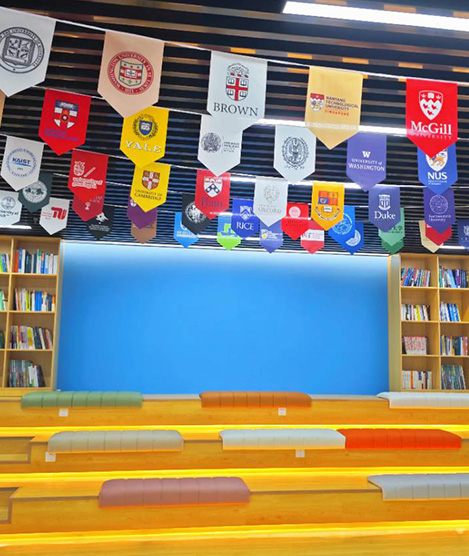
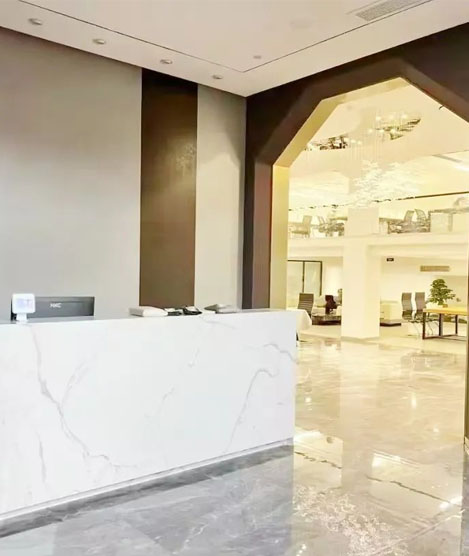
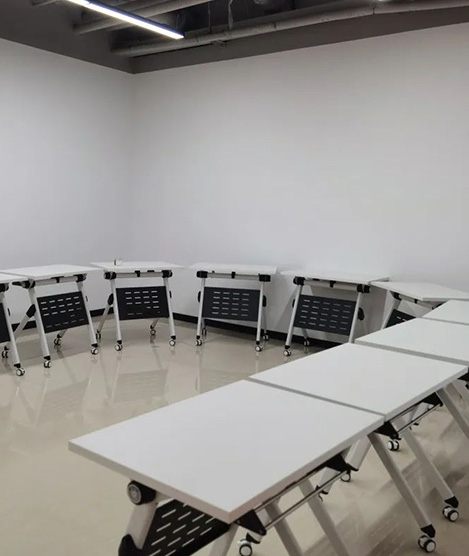
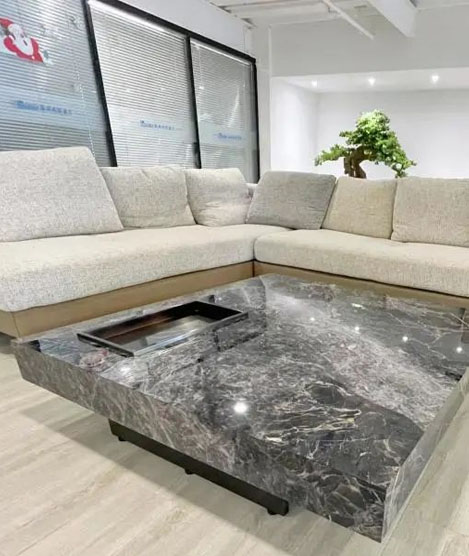
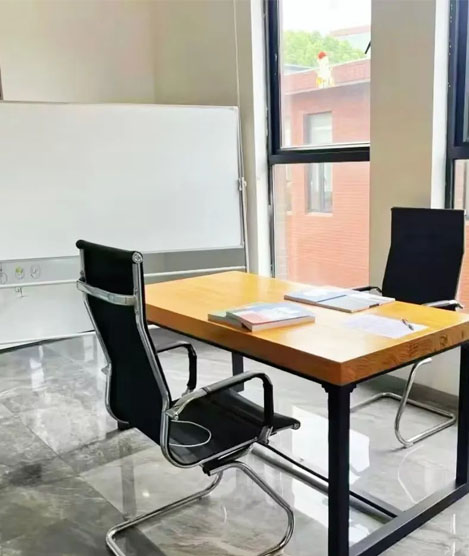
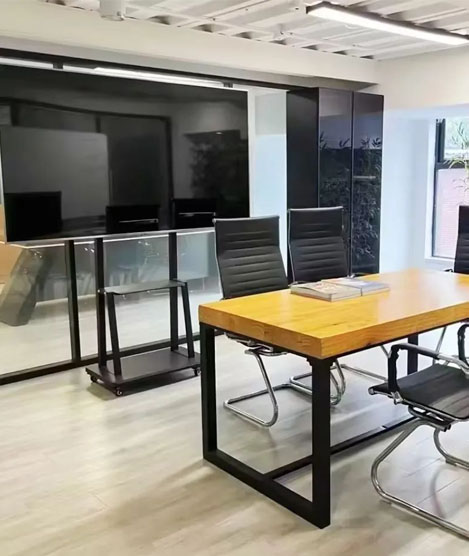
Teaching runs from Hanlin's own centres in Shanghai, Shenzhen, Chengdu and Hangzhou, and online for students elsewhere.
Talk to an advisor
Everything Hanlin does for ISSCY, in one conversation.
Entry, planning, coaching and the past papers. An advisor will tell you which of these a student actually needs, including when the answer is none of them.
Competition entry and planning
Which competitions suit this student, in what order, and by when - then we handle the registration, including the ones that can only be entered through a school or a centre.
Competition coaching
Taught by full-time subject tutors, on a course tier chosen by placement paper rather than by year group.
International curriculum tutoring
IB, AP, A-Level, IGCSE and the US high school curriculum, taught alongside school and timed around the exam calendar.
Competition past papers, free
A large library of past papers, mark schemes and syllabus breakdowns across every competition on this site. No charge and no enrolment.
Scan to add an advisor
Say which competition or course you are asking about. Replies in Chinese or English.
Or call +86 21 6352 6630FAQ
ISSCY, briefly answered.
What students and families ask before entering.
Who can enter?
High school students in grades 9 to 12, worldwide, entering individually.
What do I submit first?
A research proposal. Only if the review committee selects it are you invited to the final round to submit the full paper.
What subjects are accepted?
Any field in the humanities or the social sciences - classics, history, literature, linguistics, performing arts, philosophy, religion, anthropology and music among them.
What citation style is required?
MLA, applied across every research field. Visual material such as charts, tables and figures must be presented clearly and cited where applicable.
What happens if the formatting is wrong?
Submissions that do not meet the format and submission guidelines are disqualified.
How many entrants are published?
Around eighty research papers are selected for publication in the ISSCY online journal each year, after screening by the judging panel.
Who organises it?
The World Federation of United Nations Associations, YOUTHECA USA and other international non-governmental organisations.
How difficult is it?
The organisers describe it as highly competitive, with a demanding and rigorous selection process running over an extended cycle.
What language is it in?
English, and the organisers state that spelling and grammar must be exemplary because papers are assessed with publication in mind.
Related
Other research and writing competitions.
What students enter alongside ISSCY.
ISSCY enquiries
The proposal decides everything.
ISSCY judges the question before it judges the paper, which makes it the closest thing here to how research actually gets commissioned. Tell us what the student wants to investigate and an advisor will help turn it into a proposal worth inviting.