
Competitions · Humanities and writing · DNA Day Essay Contest
The DNA Day Essay Contest.
Seven hundred and fifty words on a question in human genetics, read by at least three judges each - and a dozen or more if it scores well. Your teacher has to submit it, and your name cannot appear on it.
Read this first
A teacher submits, and you are anonymous.
Two procedural rules shape the entry, and both exist for good reasons that are worth understanding.
Only a teacher or administrator can submit
Students cannot submit their own essays. A teacher or school administrator does it. For home-schooled students, a parent may submit.
Your name must not appear in the essay
The organisers ask for this explicitly so that judging is impartial. An essay with a name on it undermines the blind review.
Individual work only
The essay must be written by one student. Group submissions are not accepted.
Which means planning around a teacher
A student who writes a strong essay and has no teacher lined up to submit it cannot enter. Arrange that first, not last.
At a glance
What the contest is.
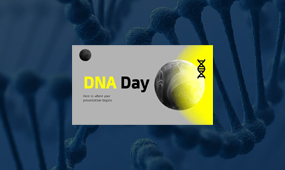
The DNA Day Essay Contest is supported by the American Society of Human Genetics and commemorates two events - the completion of the Human Genome Project in April 2003 and the discovery of the DNA double helix in 1953. It asks students to research, question and reflect on important ideas in human genetics.
- Who can enter
- Students in grades 9 to 12, in the United States and internationally
- Who submits
- A teacher or school administrator. A parent may submit for a home-schooled student
- Individual only
- Group submissions are not accepted
- Language
- English
- Length
- No more than 750 words. In-text citations count toward that; the bibliography does not
- Anonymity
- The student’s name must not appear in the essay
- References
- At least one is required, documented both as an in-text citation and in a reference list. The list goes in the References section of the submission page, entered separately
- Citation style
- APA or MLA
- How many references
- No limit - but the judges want the student’s view, not the sources’, so too many works against you
- Judging
- Three rounds. Every essay is read by at least three judges, and the highest-scoring essays are typically read by a dozen or more
- Editions so far
- Thirteen
The AI policy
The clearest statement of principle on this site.
The organisers explain not just what the rule is but why, and the reasoning is worth reading whatever competition a student is entering.
No large language model may be credited as an author
The organisers state that authorship carries responsibility for the work, and an AI tool cannot bear that responsibility. So a model cannot be listed as an author.
But use must be documented
Students who use LLM tools are asked to record that use in the citations section. Declaring is the requirement; concealing is the breach.
Which is a coherent position
It separates the question of who is responsible for a piece of writing from the question of what tools were used to produce it. Very few competitions distinguish the two so clearly.
And it is easy to comply with
If a tool was used, say so in the citations. That is the whole obligation.
What the essay has to do
Take a position, and justify it personally.
The prompts are not knowledge questions. A recent one shows what the contest is actually asking for.
It puts you in the situation
A recent prompt asked students to suppose that they, or someone they care about, had a particular condition, and to say whether they would choose a given treatment.
With specific factors to weigh
The same prompt named the patient’s age, overall health and the cost of treatment as considerations to work through. It wants a reasoned decision, not a survey of the science.
Grounded in evidence
The organisers expect a substantial, reasonable, evidence-based argument. Personal framing does not mean personal opinion unsupported.
In 750 words
Which is roughly a page and a half. There is no room to explain the underlying genetics at length - the argument has to carry the essay.
Preparation
How Hanlin prepares a DNA Day entry.
It suits a student who is strong at science and can write - which is a narrower group than either alone.
Understanding the genetics properly
The prompt assumes real knowledge of the condition and the treatment in question. Reading the actual literature, not a summary, is what makes the argument credible.
Writing a decision, not an essay about a decision
The strongest entries take a position and defend it. Balanced surveys that reach no conclusion are answering a different question.
Citing sparingly and precisely
At least one reference is required and there is no upper limit, but the organisers say too many crowd out the student’s own view. Two or three well-used sources beat ten listed ones.
And arranging the submitting teacher early
Nothing can be entered without one. This is the single most common practical obstacle for students outside the United States.
Why Hanlin
Preparation for DNA Day Essay Contest at Hanlin is taught by full-time subject tutors, on a course tier chosen by placement paper rather than by year group.
Programme formats
Five ways this is taught.
Group size is the whole difference between these. It decides how much of the tutor's attention a student gets and how far the course can bend to them, so it is worth choosing rather than accepting.
| Format | Group size | What it suits |
|---|---|---|
| One-to-one | One student | Content, pace and emphasis set by what this student actually needs rather than by a syllabus. The only format that can be rebuilt mid-course. |
| Small group | Three to eight | Opens at three. Frequent discussion, and the tutor can slow down or move on according to what the group has absorbed. Most students chasing a higher award are taught in this one. |
| Class | Eight to twelve | Taught by the subject lead or a medal coach. Less back-and-forth, so it suits a student who will say when something is unclear. |
| Large class | Ten to twenty | For students in the middle of the placement range, and a way to try a competition before committing. Students often move to a small group or to one-to-one afterwards. |
| Past-paper class | No cap | Past papers worked through in sequence in the weeks before the sitting. Free to students already enrolled. |
Course length for DNA Day Essay Contest is set after a placement paper. The gap between where a student is and what the paper asks for is what the course has to close, and that gap is not the same for two students in the same year group.
How it runs
Six steps, four people on your side.
The same process for every student, so that nothing depends on one tutor remembering to do it.
 Step 1
Pre-course assessment
A placement paper before anything is booked, so the course tier is chosen on evidence rather than on a year group.
 Step 2
Tutor matching
A subject tutor is matched to the result, and their full background is provided before you agree to it.
 Step 3
Plan and group
A study group opens with four people on one student: the tutor, a planner, a supervisor and an academic manager.
 Step 4
Scheduled teaching
The teaching office sets the timetable around the competition date and school term, and teaching begins.
 Step 5
After-class reports
What was covered, and how the student handled it, reported after every lesson.
 Step 6
Homework follow-up
The teaching assistant and the form teacher both check that homework is done, which is where most preparation quietly fails.
Free resource pack
Past questions and writing pack
The same material our own DNA Day Essay Contest students work from. Scan the code, say what you need, and an advisor sends it.

Tell an advisor which competition and year group, and the material comes back the same day. Free, and you do not have to enrol in anything. If we do not already hold what you need, we will go and find it.
- PDFEvery past question the competition has set
- PDFShortlisted and published essays, to calibrate the standard
- PDFStructure, referencing and word-count guide
- PDFEntry checklist and the dates for the current cycle
Teaching team
Who would teach it.
Three of the twenty-two tutors on the published Hanlin roster - the ones whose subject this is.

Lu
Master's in education from the University of Pennsylvania and a double major in psychology and philosophy at Mount Holyoke. Cross-cultural teaching experience across China and the US, with research work in child and adolescent development, cognition, and international students' identity.
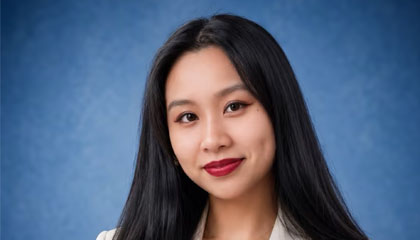
Yang
Educated at American Heritage School, then English literature and philosophy at the University of British Columbia and a master's in language education at Toronto. Eleven years in North America, with a close working knowledge of the international curricula and overseas admissions.
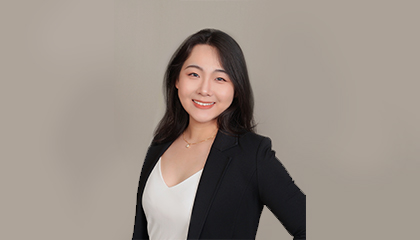
Zhang
Master's in cognitive science at UC San Diego on full scholarship, after double honours in neurobiology and behaviour and in cognitive science at UC Davis. Ten years overseas, a perfect TOEFL speaking score, and named an outstanding education scholar at UCSD.
Where it is taught
Hanlin learning centres.
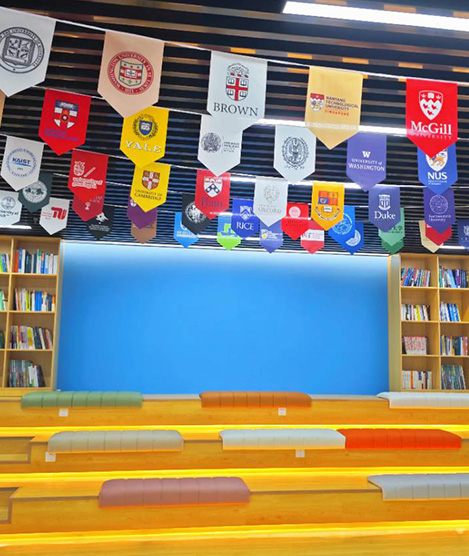
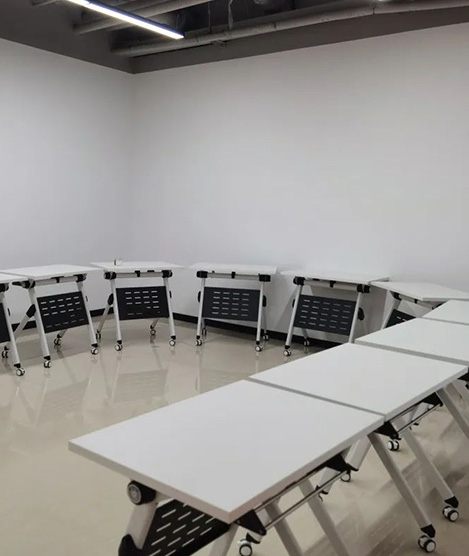
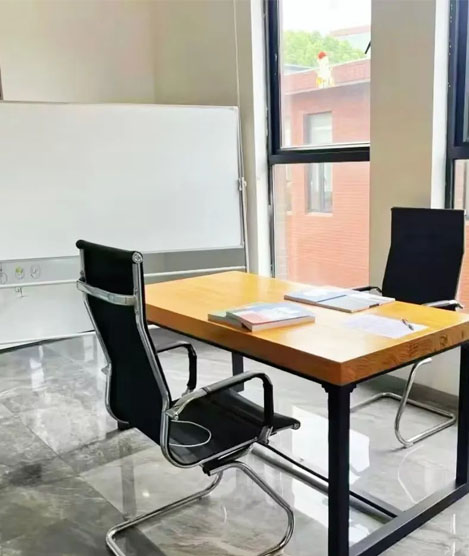
Teaching runs from Hanlin's own centres in Shanghai, Shenzhen, Chengdu and Hangzhou, and online for students elsewhere.




Talk to an advisor
Everything Hanlin does for DNA Day Essay Contest, in one conversation.
Entry, planning, coaching and the past papers. An advisor will tell you which of these a student actually needs, including when the answer is none of them.
Competition entry and planning
Which competitions suit this student, in what order, and by when - then we handle the registration, including the ones that can only be entered through a school or a centre.
Competition coaching
Taught by full-time subject tutors, on a course tier chosen by placement paper rather than by year group.
International curriculum tutoring
IB, AP, A-Level, IGCSE and the US high school curriculum, taught alongside school and timed around the exam calendar.
Competition past papers, free
A large library of past papers, mark schemes and syllabus breakdowns across every competition on this site. No charge and no enrolment.
Scan to add an advisor
Say which competition or course you are asking about. Replies in Chinese or English.
Or call +86 21 6352 6630FAQ
The DNA Day Essay Contest, briefly answered.
What students and families ask before entering.
Who can enter?
Students in grades 9 to 12, in the United States and internationally. Essays must be written by one student - group submissions are not accepted.
Can I submit my own essay?
No. Essays must be submitted by a teacher or school administrator. For a home-schooled student, a parent may submit.
How long can the essay be?
No more than 750 words. In-text citations count toward the limit; the bibliography does not.
Should my name be on the essay?
No. The organisers ask that the student’s name does not appear, so that judging is impartial.
How many references do I need?
At least one, documented as an in-text citation and in a reference list entered separately in the References section of the submission page. There is no upper limit, but the judges want your view rather than your sources’, so avoid piling them up.
What citation style?
APA or MLA.
Can I use AI tools?
A large language model cannot be credited as an author, because authorship carries responsibility for the work and an AI tool cannot bear it. Students who use such tools should document that use in the citations section.
How is it judged?
In three rounds. Every essay is read by at least three judges, and the highest-scoring essays are typically read by a dozen judges or more.
What sort of question is set?
A question in human genetics that asks the student to take a position - for example whether they would choose a particular treatment for themselves or someone close to them, weighing age, overall health and cost.
Who runs it?
It is supported by the American Society of Human Genetics, and commemorates the completion of the Human Genome Project in April 2003 and the discovery of the double helix in 1953.
Related
Other science writing and biology competitions.
What students enter alongside DNA Day.
DNA Day enquiries
Science, argued in 750 words, submitted by a teacher.
This is the rare competition that asks a science student to take a position and defend it personally. Tell us what the student has studied and an advisor will help build the argument - and check the teacher can submit.