
Competitions · Humanities and writing · IPO
IPO, the International Philosophy Olympiad.
You write your philosophy essay in a language that is not your own - not your mother tongue, not an official language of your country. The only thing you may bring is a paper dictionary.
The language rule
Not your language, and no computer.
This is the defining condition of the olympiad and the reason it is so different from an essay competition. Read it before deciding anything else.
Write in a language that is not yours
The essay must be written in one of the four IPO languages, and it may not be the entrant’s mother tongue or an official language of their country. A French entrant may not write in French.
A paper dictionary is the only aid
One bilingual dictionary - the entrant’s own language and the competition language they have chosen. It must be a printed book. No electronic format of any kind is permitted.
Which changes what is being tested
Writing philosophy under time pressure in a second language, without translation tools, tests thinking and expression together in a way almost nothing else does.
And it puts everyone on similar ground
Every entrant is working in a language they were not raised in, so no country has a home advantage in the way it would at an essay competition run in English.
At a glance
What the olympiad is.
IPO was established in 1993 and has been organised since 2001 by FISP, the International Federation of Philosophical Societies, together with UNESCO. It is held each May in a different participating country, and exists to promote philosophy teaching in schools and philosophical reflection on cultural and social life.
- Who can enter
- High school students under 20, worldwide
- When
- Each May, in a different host country
- Language
- One of four IPO languages, chosen by the entrant - and not their mother tongue or a national official language
- Permitted aid
- A printed bilingual dictionary. Nothing electronic
- The topics
- Four, selected by the FISP steering committee
- How topics are set
- Team leaders submit a proposal by 1 March. Each proposal is a short quotation of no more than five lines, or a question, in at least one IPO language, with the source given correctly
- Who chooses
- FISP members of the steering committee choose four topics from those submitted, and from others they select themselves
- Publication
- The chosen topics are printed in all four IPO languages
- Awards
- Gold, silver and bronze medals, and honourable mentions
- In China
- Historically very few Chinese entrants and no national organising body. A Shanghai project committee was formed in March 2018 to run clubs, courses, training and selection
How it is judged
Three rounds, with a mechanism for disagreement.
The judging process is published in unusual detail, and it includes an explicit rule for what happens when judges disagree - which most competitions do not.
| Round | What happens |
|---|---|
| Round one | Four judges score each essay. If their scores differ by more than three points, a fifth judge scores it as well. An essay averaging above 7 goes through |
| Round two | Two independent judges score the surviving essays. The final mark combines both rounds. The IPO jury then chooses the essays it considers best for the third stage |
| Round three | The steering committee decides the rankings and the distribution of awards |
The five-judge rule is worth noticing. A three-point spread between four philosophers reading the same essay triggers an extra reader rather than being averaged away - which is a sensible way to handle genuine disagreement about philosophical writing.
The topics
A quotation, or a question. Nothing more.
The way topics are set tells you what kind of essay is expected, and it is not a research paper.
Five lines at most
A topic proposal is a short quotation of no more than five lines, or a single question. That is the entire prompt an entrant is given.
With the source cited properly
Proposals must give the source correctly. Entrants are responding to a real passage from a real text, not to an invented scenario.
Printed in all four languages
The four selected topics appear in every IPO language, so the choice of topic and the choice of language are independent decisions.
And they come from the community
Team leaders propose them; the FISP steering committee selects four, from the proposals and from its own suggestions. The questions come from people who teach philosophy.
Preparation
How Hanlin prepares an IPO entrant.
Two things have to improve together: the philosophy and the second language. Neither works without the other here.
Writing philosophy in the chosen language
Reading philosophy in English is one skill; constructing an argument in it under time pressure, with only a paper dictionary, is another. Practising in the actual conditions is the only preparation that counts.
Reading primary texts, not summaries
The prompt is a quotation. A student who has read the philosophers rather than accounts of them has something to say when a passage appears.
Summarising concepts in your own words
The organisers’ own advice: take notes while reading, and try restating philosophical concepts and theories in your own language to check you have understood them.
And finding a route in
There has been no national organising body in China historically, though a Shanghai project committee has run selection and training since 2018. Establishing how to enter is the first practical step.
Why Hanlin
Preparation for IPO at Hanlin is taught by full-time subject tutors, on a course tier chosen by placement paper rather than by year group.
Programme formats
Five ways this is taught.
Group size is the whole difference between these. It decides how much of the tutor's attention a student gets and how far the course can bend to them, so it is worth choosing rather than accepting.
| Format | Group size | What it suits |
|---|---|---|
| One-to-one | One student | Content, pace and emphasis set by what this student actually needs rather than by a syllabus. The only format that can be rebuilt mid-course. |
| Small group | Three to eight | Opens at three. Frequent discussion, and the tutor can slow down or move on according to what the group has absorbed. Most students chasing a higher award are taught in this one. |
| Class | Eight to twelve | Taught by the subject lead or a medal coach. Less back-and-forth, so it suits a student who will say when something is unclear. |
| Large class | Ten to twenty | For students in the middle of the placement range, and a way to try a competition before committing. Students often move to a small group or to one-to-one afterwards. |
| Past-paper class | No cap | Past papers worked through in sequence in the weeks before the sitting. Free to students already enrolled. |
Course length for IPO is set after a placement paper. The gap between where a student is and what the paper asks for is what the course has to close, and that gap is not the same for two students in the same year group.
How it runs
Six steps, four people on your side.
The same process for every student, so that nothing depends on one tutor remembering to do it.
 Step 1
Pre-course assessment
A placement paper before anything is booked, so the course tier is chosen on evidence rather than on a year group.
 Step 2
Tutor matching
A subject tutor is matched to the result, and their full background is provided before you agree to it.
 Step 3
Plan and group
A study group opens with four people on one student: the tutor, a planner, a supervisor and an academic manager.
 Step 4
Scheduled teaching
The teaching office sets the timetable around the competition date and school term, and teaching begins.
 Step 5
After-class reports
What was covered, and how the student handled it, reported after every lesson.
 Step 6
Homework follow-up
The teaching assistant and the form teacher both check that homework is done, which is where most preparation quietly fails.
Free resource pack
Past papers and preparation pack
The same material our own IPO students work from. Scan the code, say what you need, and an advisor sends it.
Tell an advisor which competition and year group, and the material comes back the same day. Free, and you do not have to enrol in anything. If we do not already hold what you need, we will go and find it.
- PDFPast papers, every year the organiser has released
- PDFWorked solutions, where the organiser publishes them
- PDFThe syllabus on one page - every topic, and how heavily it is examined
- PDFEntry checklist and the dates for the current cycle
Teaching team
Who would teach it.
Three of the twenty-two tutors on the published Hanlin roster - the ones whose subject this is.

Lu
Master's in education from the University of Pennsylvania and a double major in psychology and philosophy at Mount Holyoke. Cross-cultural teaching experience across China and the US, with research work in child and adolescent development, cognition, and international students' identity.

Yang
Educated at American Heritage School, then English literature and philosophy at the University of British Columbia and a master's in language education at Toronto. Eleven years in North America, with a close working knowledge of the international curricula and overseas admissions.

Dr Zhuang
PhD in mathematics from the University of Denver, working in mathematical logic, after a first degree in applied mathematics at Southeast University. A repeat conference speaker on his research, with three years lecturing and assisting on undergraduate mathematics at Denver.
Where it is taught
Hanlin learning centres.
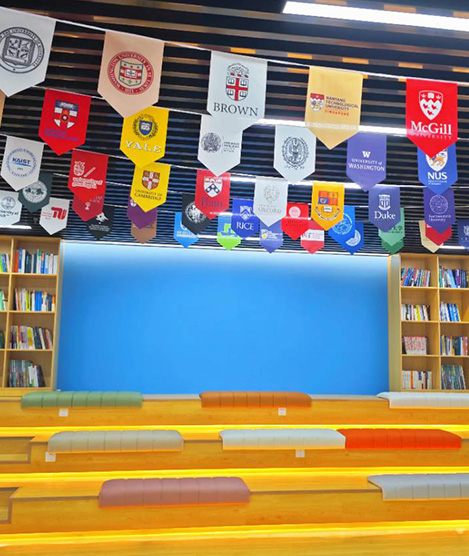
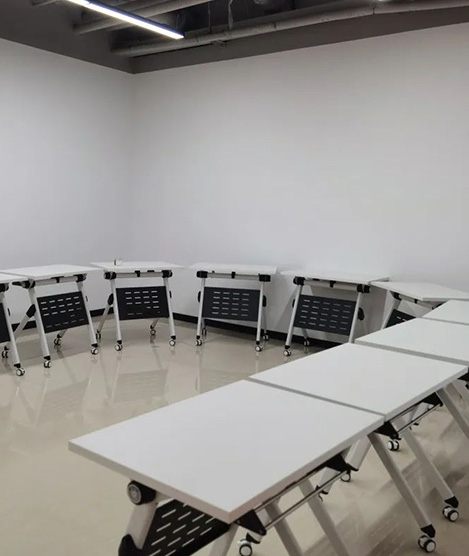
Teaching runs from Hanlin's own centres in Shanghai, Shenzhen, Chengdu and Hangzhou, and online for students elsewhere.




Talk to an advisor
Everything Hanlin does for IPO, in one conversation.
Entry, planning, coaching and the past papers. An advisor will tell you which of these a student actually needs, including when the answer is none of them.
Competition entry and planning
Which competitions suit this student, in what order, and by when - then we handle the registration, including the ones that can only be entered through a school or a centre.
Competition coaching
Taught by full-time subject tutors, on a course tier chosen by placement paper rather than by year group.
International curriculum tutoring
IB, AP, A-Level, IGCSE and the US high school curriculum, taught alongside school and timed around the exam calendar.
Competition past papers, free
A large library of past papers, mark schemes and syllabus breakdowns across every competition on this site. No charge and no enrolment.
Scan to add an advisor
Say which competition or course you are asking about. Replies in Chinese or English.
Or call +86 21 6352 6630FAQ
IPO, briefly answered.
What students and families ask before entering.
Who can enter?
High school students under 20 from anywhere in the world.
What language do I write in?
One of the four IPO languages - but not your mother tongue, and not an official language of your country. A French entrant may not write in French.
What can I bring?
A printed bilingual dictionary between your own language and the competition language you have chosen. No electronic dictionary or device of any kind is permitted.
What are the topics?
Four, each a short quotation of no more than five lines or a single question, with the source given. They are chosen by the FISP steering committee from proposals submitted by team leaders by 1 March, and from its own suggestions.
How is it judged?
In three rounds. Four judges score each essay in the first, with a fifth brought in if their scores differ by more than three points, and an average above 7 goes through. Two independent judges score in the second and the marks are combined. The steering committee decides rankings and awards in the third.
What awards are there?
Gold, silver and bronze medals, and honourable mentions.
Who organises it?
FISP, the International Federation of Philosophical Societies, together with UNESCO. It has run since 1993 and has been organised this way since 2001.
Where and when is it held?
Each May, in a different participating country.
How do students in China take part?
Historically there has been no national organising body and very few Chinese entrants. A Shanghai project committee formed in March 2018 runs philosophy clubs, courses, training camps and selection for regional and international rounds.
Related
Other humanities olympiads and essay competitions.
What students enter alongside IPO.
IPO enquiries
Philosophy, in a language you had to learn.
The language rule makes IPO the hardest and most interesting thing in this section, and the route in from China needs establishing before anything else. Tell us what the student reads and which languages they work in, and an advisor will map it.