
Competitions · Research and innovation · PDR
PDR, Positive Discovery Research.
You are not ranked against anyone. Score 85 and the certificate says Superior Research, however many other teams also did. The research is interviews and surveys in your own community, so the entry barrier is a decision rather than a laboratory.

What makes it different
Graded against a standard, not against each other.
Almost every competition on this site awards a fixed proportion of entrants. PDR does not, and that changes the calculation entirely.
Absolute scoring bands
The review committee assesses each team’s report against published criteria. Reach the score and every member of the team receives the corresponding certificate, regardless of how anyone else did.
Three bands, and a floor below them
Superior Research at 85 and above, Excellence Research from 75 to 84, and Honorable Mention Research from 60 to 74. Teams below 60 still receive a participation certificate and still have a completed piece of work.
So a team competes with itself
There is no advantage in a weak field and no penalty in a strong one. The only question is whether the research is good enough.
And the work exists either way
The organisers note explicitly that the finished report can be used as academic or project experience whatever the score. Nothing is wasted.
At a glance
What the programme is.
PDR is a global programme encouraging secondary students to do research through practice - to make positive discoveries in the real world. Students define a topic around their own interests and then investigate it in their community, through survey and interview.
- Who can enter
- Students in grades 9 to 12 worldwide
- Team
- Six to ten students working together on one piece of research
- The method
- Primary research - surveys and interviews conducted in the community, interpreted from a secondary student’s perspective
- The barrier
- Low by design. Unlike projects requiring computing skills or laboratory access, PDR asks for the determination to notice a social problem and investigate it
- What you produce
- A structured research report in English
- Support
- A mentor reviews the research question, gives one-to-one comment throughout, and the programme supplies online courses in research and writing skills, plus a research framework to follow step by step
- Assessment
- Against absolute standards rather than a ranking
- Publication
- Strong papers are published, after independent review, in the Positive Discovery Research Review
- The symposium
- An annual event where PDR researchers present and exchange. Outstanding researchers are invited to present to peers and an audience
What to research
Four broad directions, and the examples are worth reading.
The suggested topics show what kind of question works here - specific, local, and answerable by talking to people.
Health, environment and public policy
The published examples include the effect of wildfire air pollution on public health, and preventive conservation as a route for Chinese architectural heritage.
Economics and culture
Examples given include the relationship between tourist-destination influencer shops and the transmission of traditional culture, and livestreaming and rural e-commerce.
Education and society
Bullying at school, contemporary educational inequality and social justice, family culture, and academic resilience.
Media and cultural communication
The somatisation of social media, how young people in one region perceive another through short-video platforms, and the relationship between Chinese-style animation and cultural identity among young people.
How the programme runs
Four kinds of support, and the first one is the most useful.
PDR is structured as a taught programme rather than a submission window, and the mentoring starts before the research does.
The research question is reviewed first
A PDR mentor reviews every team’s research question before the work begins, to make sure it is a good enough question to guide a project. This is where most student research goes wrong, and it is caught here.
One-to-one comment throughout
Mentors give individual feedback and guidance across the whole research process, rather than only at submission.
Online courses in the skills
Research and writing skills are taught rather than assumed - which is what makes the low entry barrier real rather than nominal.
And a framework to follow
Students work through the research and write the paper step by step against the PDR framework, so nobody has to invent the structure.
Who it suits
Including students who already have a project.
The organisers answer two questions directly that most programmes leave ambiguous.
Humanities and social science applicants
PDR lets a student demonstrate depth of understanding in the field they intend to study - which is harder to evidence than laboratory science.
And science applicants too
A student heading for a scientific subject can choose a topic connected to it - biology and public health, for instance - and use the result as academic extension.
You may bring an existing project
A student can deepen work already done or under way by adding primary research and data and rewriting it to the PDR standard.
And it will not count against you
The organisers state plainly that whether a project has been worked on before is not among the scoring criteria. The marking rubric is published.
Preparation
How Hanlin supports a PDR project.
The programme supplies the framework and the mentoring, so support is most useful in choosing the question and running the fieldwork.
Finding a question that can be answered
The best PDR topics are narrow, local and answerable by asking people. "Why is education unequal" is not a project; how a specific policy changed a specific group’s experience is.
Organising six to ten people
This is a larger team than most research competitions permit, which helps with fieldwork and hinders writing. Dividing interviews and consolidating a single voice are both real tasks.
Doing interviews properly
Designing questions that do not lead, recording answers faithfully and handling what people tell you responsibly. Very few students have been taught this.
And writing to the published rubric
The criteria are published and the bands are absolute. Knowing what 85 requires before writing is a straightforward advantage.
Why Hanlin
Preparation for PDR at Hanlin is taught by full-time subject tutors, on a course tier chosen by placement paper rather than by year group.
Programme formats
Five ways this is taught.
Group size is the whole difference between these. It decides how much of the tutor's attention a student gets and how far the course can bend to them, so it is worth choosing rather than accepting.
| Format | Group size | What it suits |
|---|---|---|
| One-to-one | One student | Content, pace and emphasis set by what this student actually needs rather than by a syllabus. The only format that can be rebuilt mid-course. |
| Small group | Three to eight | Opens at three. Frequent discussion, and the tutor can slow down or move on according to what the group has absorbed. Most students chasing a higher award are taught in this one. |
| Class | Eight to twelve | Taught by the subject lead or a medal coach. Less back-and-forth, so it suits a student who will say when something is unclear. |
| Large class | Ten to twenty | For students in the middle of the placement range, and a way to try a competition before committing. Students often move to a small group or to one-to-one afterwards. |
| Past-paper class | No cap | Past papers worked through in sequence in the weeks before the sitting. Free to students already enrolled. |
Course length for PDR is set after a placement paper. The gap between where a student is and what the paper asks for is what the course has to close, and that gap is not the same for two students in the same year group.
How it runs
Six steps, four people on your side.
The same process for every student, so that nothing depends on one tutor remembering to do it.
 Step 1
Pre-course assessment
A placement paper before anything is booked, so the course tier is chosen on evidence rather than on a year group.
 Step 2
Tutor matching
A subject tutor is matched to the result, and their full background is provided before you agree to it.
 Step 3
Plan and group
A study group opens with four people on one student: the tutor, a planner, a supervisor and an academic manager.
 Step 4
Scheduled teaching
The teaching office sets the timetable around the competition date and school term, and teaching begins.
 Step 5
After-class reports
What was covered, and how the student handled it, reported after every lesson.
 Step 6
Homework follow-up
The teaching assistant and the form teacher both check that homework is done, which is where most preparation quietly fails.
Free resource pack
Project and submission pack
The same material our own PDR students work from. Scan the code, say what you need, and an advisor sends it.

Tell an advisor which competition and year group, and the material comes back the same day. Free, and you do not have to enrol in anything. If we do not already hold what you need, we will go and find it.
- PDFPast finalist project titles and abstracts
- PDFCategory definitions and the judging criteria, broken down
- DOCXA project timeline working back from the submission date
- PDFEntry checklist and the dates for the current cycle
Teaching team
Who would teach it.
Three of the twenty-two tutors on the published Hanlin roster - the ones whose subject this is.

Dr An
Mathematics at Illinois Urbana-Champaign with highest honours and the Elizabeth R. Bennett scholarship, then a PhD in mathematics at Johns Hopkins on full funding with the Owen fellowship and the Joel Dean award for excellent teaching. Years of US university teaching, translating high-level mathematics into language students can use.

Yu
Master's in bioinformatics and computational biology from UT Dallas and a nutritional sciences degree from Wisconsin-Madison. Second author on an SCI-indexed paper from the Tanumihardjo vitamin-A laboratory, and formerly at ABS Global.

Tan
Master's in data science from the University of Sydney after a statistics degree at Simon Fraser University, graduating in the top 5% with repeated chancellor's honours; A-Levels at a Cambridge international school, and formerly a data analyst at Tencent. An AMC-accredited coach, a College Board-accredited AP teacher, and holder of a Math League excellent-teacher award.
Where it is taught
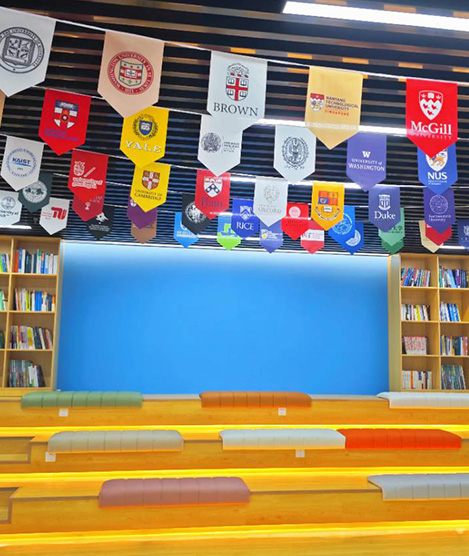
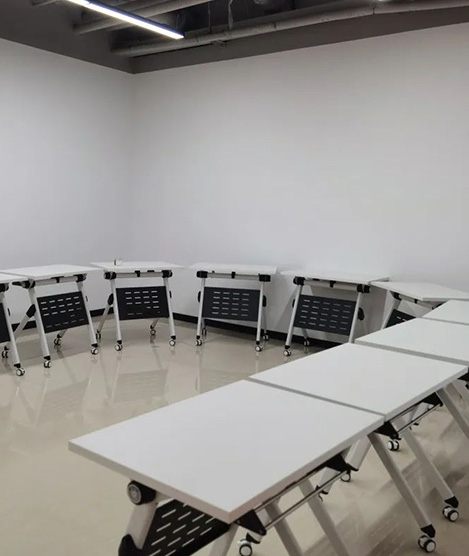
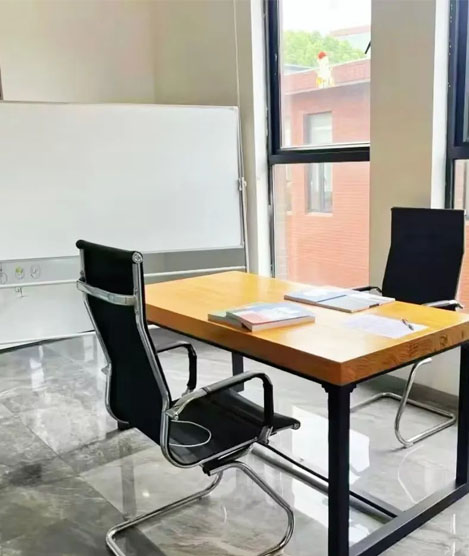
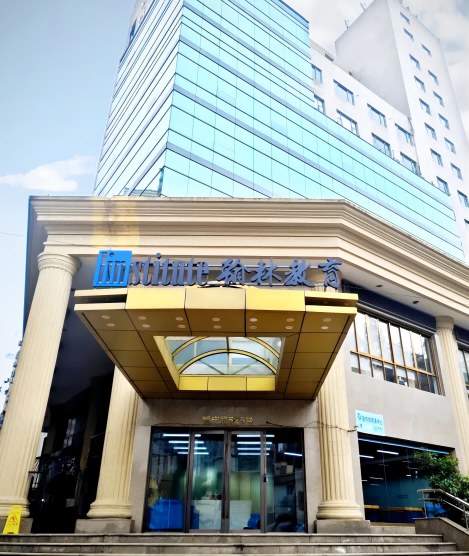
Hanlin learning centres.
Teaching runs from Hanlin's own centres in Shanghai, Shenzhen, Chengdu and Hangzhou, and online for students elsewhere.



Talk to an advisor
Everything Hanlin does for PDR, in one conversation.
Entry, planning, coaching and the past papers. An advisor will tell you which of these a student actually needs, including when the answer is none of them.
Competition entry and planning
Which competitions suit this student, in what order, and by when - then we handle the registration, including the ones that can only be entered through a school or a centre.
Competition coaching
Taught by full-time subject tutors, on a course tier chosen by placement paper rather than by year group.
International curriculum tutoring
IB, AP, A-Level, IGCSE and the US high school curriculum, taught alongside school and timed around the exam calendar.
Competition past papers, free
A large library of past papers, mark schemes and syllabus breakdowns across every competition on this site. No charge and no enrolment.
Scan to add an advisor
Say which competition or course you are asking about. Replies in Chinese or English.
Or call +86 21 6352 6630FAQ
PDR, briefly answered.
What students and families ask before entering.
Am I ranked against other teams?
No. Reports are assessed against absolute standards. Score 85 or above and every member of the team receives a Superior Research certificate, regardless of how many others also did.
What are the bands?
Superior Research at 85 and above, Excellence Research from 75 to 84, and Honorable Mention Research from 60 to 74. Teams below 60 receive a participation certificate and still have a completed report.
Who can enter?
Students in grades 9 to 12 worldwide, in teams of six to ten.
Do I need laboratory access or programming skills?
No, and that is deliberate. PDR asks for primary research in the community - surveys and interviews - rather than experiments or code.
What kind of topic works?
Something specific and local that can be investigated by talking to people. The published directions cover health, environment and public policy; economics and culture; education and society; and media and cultural communication.
What support is provided?
A mentor reviews the research question before the work starts and gives one-to-one feedback throughout. The programme also provides online courses in research and writing skills, and a framework to follow step by step.
Can I use a project I have already started?
Yes. You can deepen existing or ongoing work by adding primary research and data and writing it to the PDR standard. The organisers state that whether a project has been worked on before is not part of the scoring.
What happens to a strong report?
After independent review, strong papers are published in the Positive Discovery Research Review, and outstanding researchers are invited to present at the annual PDR symposium.
How can I use this in an application?
The certification can be listed among activities, the report itself demonstrates academic capability as a project, and the experience of doing it gives you something specific to write about.
What language is the report in?
English.
Related
Other research programmes.
What students enter alongside PDR.
PDR enquiries
No laboratory, no ranking, no wasted work.
PDR asks a team to notice something in their own community and investigate it properly, and grades the result against a standard rather than against other teams. Tell us what the students are curious about and an advisor will help turn it into a question that can be answered.