
Competitions · Research and innovation · VEX
VEX, the Robotics Competition.
Guinness has certified it three times as the largest robotics competition in the world. It runs from preschool to university, and the material changes as you climb - plastic, then metal, then industrial.

At a glance
What the competition is.
VEX was founded in 2003 by the Robotics Education and Competition Foundation, the largest robotics competition platform in the world. It draws millions of young people across more than forty countries, and was entered in the Guinness World Records in 2016 as the largest robotics competition anywhere - a record it broke again in 2018 and 2021.
- Organiser
- The Robotics Education and Competition Foundation (REC)
- Since
- 2003
- Who can enter
- Students from primary school through university, across three competition levels
- What it combines
- Physics, mathematics, computer programming, digital prototyping and design
- Competition levels
- VEX IQ for primary and junior-high students, VEX VRC for secondary students, and VEX U for university
- Match types
- A teamwork challenge and a skills challenge, both run at every event
- Match length
- Three minutes in the metal-robot divisions - fifteen seconds autonomous, then two minutes forty-five driver-controlled. VEX IQ runs to sixty seconds
- Changes each year
- The theme, the rules and the field layout are all different every season
- What stays the same
- Every match has an autonomous scoring period followed by driver control
The three levels
Plastic, metal, industrial.
The material a division uses tells you most of what you need to know about the demands it makes.
| Level | Ages | Material | What it asks |
|---|---|---|---|
| VEX IQ | 8 to 14 - grade 1 through junior high | ABS plastic parts | Building and rebuilding easily. The emphasis is on iteration and on soft skills: problem solving, time management, communication and dividing work between teammates |
| VEX VRC | 11 to 18 - junior to senior high | All-metal robots | Real hand strength and manual capability. Built with real tools, fasteners, high-end sensors and programming, with room to bring in techniques as advanced as artificial intelligence |
| VEX U | 18 and over, at university | Industrial-grade metal | The highest demands across every capability. This is the division a student progresses toward rather than enters |
The ages overlap deliberately. A capable junior-high student can be in either IQ or VRC, and the choice is about whether they are ready for metal construction rather than about their year group.
The learning ladder
Four stages, starting before school.
VEX runs a progression separate from its competition levels, which is what makes it usable as a curriculum rather than only as a contest.
VEX 123 and VEX GO - preschool
A first encounter with robots, moving in sequence from building to driving to programming. The aim is structured, purposeful problem solving at an age before any of it is abstract.
VEX IQ - grade 1 to junior high
Plastic components, and an immersive introduction to robotics, engineering and competition alongside the teamwork skills the format demands.
VEX V5 - junior to senior high
Metal parts, real tools and fasteners, high-end sensors, programming and practical application - up to and including artificial intelligence techniques.
VEX PRO - university
Industrial-grade metal, as a competition experience kit for university students. The most demanding tier across every dimension.
The teamwork challenge
You are allied with a team you did not choose.
The teamwork format is what makes VEX distinctive at the younger levels, and it is deliberately cooperative rather than adversarial.
Two teams, one score
Two teams form an alliance and both receive the same score. There is no way to win individually within a match - your result depends on a team you have just met.
Randomly assigned
The system allocates alliances at random. Over a qualification round a team will partner with several others, which is the point.
And you swap drivers mid-match
In VEX IQ each team fields two drivers who must hand over control between 35 and 25 seconds remaining. A handover under pressure, every match.
Ranked on your average
Qualification ranking uses each team’s average score across its matches, so one weak partner does not sink a season. The final is decided in a single match, with the highest-scoring alliance taking the title.
The skills challenge
One team, alone, twice over.
The skills challenge runs alongside the teamwork challenge and rewards something completely different.
Driver skills
One team on the field at a time, first come first served, scoring as much as possible under driver control.
Autonomous skills
The same field, with the robot running its own program and no driver input at all. This is where the programming shows.
Ranked on the sum of your bests
A team’s skills ranking is the highest driver score plus the highest autonomous score - each taken from its best attempt rather than from a single run.
Which suits a different team
A team with a strong programmer but no alliance luck can place well here. It is the part of VEX least dependent on other people.
Preparation
How Hanlin prepares a VEX team.
With the theme changing annually and the alliance random, preparation is about the robot and the habits rather than about the year’s task.
Building the autonomous routine
Fifteen seconds of autonomous scoring in VRC, and a whole separate skills category for it. It is the most improvable part of a VEX season and the part teams most often leave until last.
Rehearsing the driver handover
Swapping control mid-match, on a clock, is a practised skill. Teams that have never rehearsed it lose seconds every single match.
Playing well with strangers
Alliances are random and both teams take the same score. Communicating a strategy to a team you have just met, quickly, is a real capability and it is coachable.
And choosing the right level
IQ and VRC overlap in age. The question is whether a student is ready to build in metal, not what year they are in.
Why Hanlin
Preparation for VEX at Hanlin is taught by full-time subject tutors, on a course tier chosen by placement paper rather than by year group.
Programme formats
Five ways this is taught.
Group size is the whole difference between these. It decides how much of the tutor's attention a student gets and how far the course can bend to them, so it is worth choosing rather than accepting.
| Format | Group size | What it suits |
|---|---|---|
| One-to-one | One student | Content, pace and emphasis set by what this student actually needs rather than by a syllabus. The only format that can be rebuilt mid-course. |
| Small group | Three to eight | Opens at three. Frequent discussion, and the tutor can slow down or move on according to what the group has absorbed. Most students chasing a higher award are taught in this one. |
| Class | Eight to twelve | Taught by the subject lead or a medal coach. Less back-and-forth, so it suits a student who will say when something is unclear. |
| Large class | Ten to twenty | For students in the middle of the placement range, and a way to try a competition before committing. Students often move to a small group or to one-to-one afterwards. |
| Past-paper class | No cap | Past papers worked through in sequence in the weeks before the sitting. Free to students already enrolled. |
Course length for VEX is set after a placement paper. The gap between where a student is and what the paper asks for is what the course has to close, and that gap is not the same for two students in the same year group.
How it runs
Six steps, four people on your side.
The same process for every student, so that nothing depends on one tutor remembering to do it.
 Step 1
Pre-course assessment
A placement paper before anything is booked, so the course tier is chosen on evidence rather than on a year group.
 Step 2
Tutor matching
A subject tutor is matched to the result, and their full background is provided before you agree to it.
 Step 3
Plan and group
A study group opens with four people on one student: the tutor, a planner, a supervisor and an academic manager.
 Step 4
Scheduled teaching
The teaching office sets the timetable around the competition date and school term, and teaching begins.
 Step 5
After-class reports
What was covered, and how the student handled it, reported after every lesson.
 Step 6
Homework follow-up
The teaching assistant and the form teacher both check that homework is done, which is where most preparation quietly fails.
Free resource pack
Season and build pack
The same material our own VEX students work from. Scan the code, say what you need, and an advisor sends it.

Tell an advisor which competition and year group, and the material comes back the same day. Free, and you do not have to enrol in anything. If we do not already hold what you need, we will go and find it.
- PDFPast season materials and game manuals
- PDFThe judging rubric, broken down by what earns each point
- DOCXBuild log and documentation checklist
- PDFEntry checklist and the dates for the current cycle
Teaching team
Who would teach it.
Three of the twenty-two tutors on the published Hanlin roster - the ones whose subject this is.

Dr An
Mathematics at Illinois Urbana-Champaign with highest honours and the Elizabeth R. Bennett scholarship, then a PhD in mathematics at Johns Hopkins on full funding with the Owen fellowship and the Joel Dean award for excellent teaching. Years of US university teaching, translating high-level mathematics into language students can use.

Yu
Master's in bioinformatics and computational biology from UT Dallas and a nutritional sciences degree from Wisconsin-Madison. Second author on an SCI-indexed paper from the Tanumihardjo vitamin-A laboratory, and formerly at ABS Global.

Tan
Master's in data science from the University of Sydney after a statistics degree at Simon Fraser University, graduating in the top 5% with repeated chancellor's honours; A-Levels at a Cambridge international school, and formerly a data analyst at Tencent. An AMC-accredited coach, a College Board-accredited AP teacher, and holder of a Math League excellent-teacher award.
Where it is taught
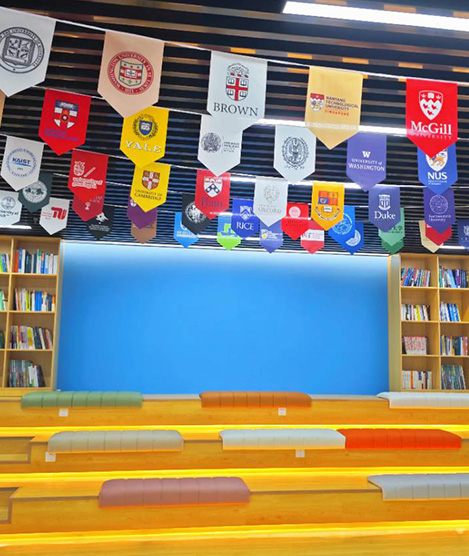
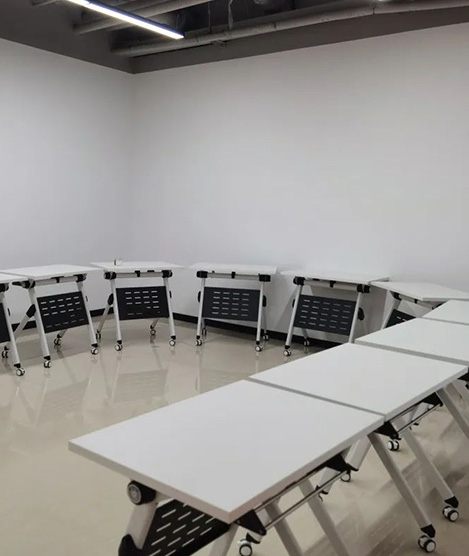
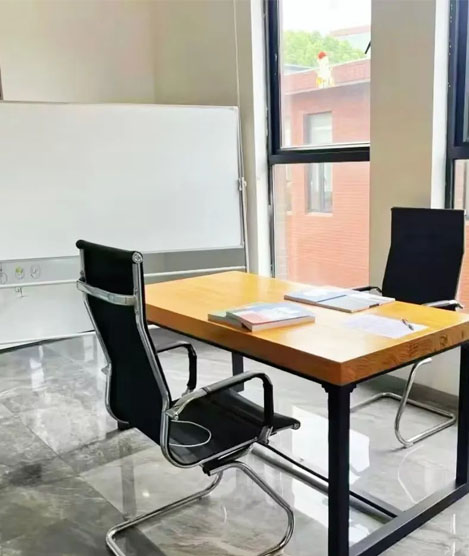
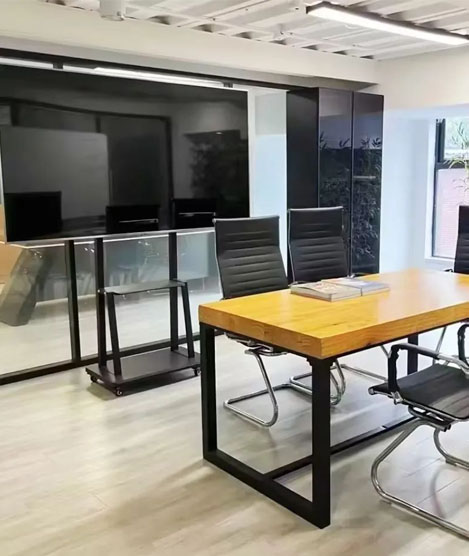
Hanlin learning centres.
Teaching runs from Hanlin's own centres in Shanghai, Shenzhen, Chengdu and Hangzhou, and online for students elsewhere.



Talk to an advisor
Everything Hanlin does for VEX, in one conversation.
Entry, planning, coaching and the past papers. An advisor will tell you which of these a student actually needs, including when the answer is none of them.
Competition entry and planning
Which competitions suit this student, in what order, and by when - then we handle the registration, including the ones that can only be entered through a school or a centre.
Competition coaching
Taught by full-time subject tutors, on a course tier chosen by placement paper rather than by year group.
International curriculum tutoring
IB, AP, A-Level, IGCSE and the US high school curriculum, taught alongside school and timed around the exam calendar.
Competition past papers, free
A large library of past papers, mark schemes and syllabus breakdowns across every competition on this site. No charge and no enrolment.
Scan to add an advisor
Say which competition or course you are asking about. Replies in Chinese or English.
Or call +86 21 6352 6630FAQ
VEX, briefly answered.
What students, teachers and families ask before entering.
Who can enter VEX?
Students from primary school through university, across three levels: VEX IQ for ages 8 to 14, VEX VRC for ages 11 to 18, and VEX U for university students of 18 and over.
What is the difference between the levels?
The material. VEX IQ uses ABS plastic parts that assemble and disassemble easily. VEX VRC uses all-metal robots requiring real tools and manual capability. VEX U uses industrial-grade metal.
How long is a match?
Three minutes in the metal divisions - fifteen seconds of autonomous scoring followed by two minutes forty-five of driver control. VEX IQ teamwork matches run to sixty seconds.
How does the teamwork challenge work?
Two teams are randomly allied and both receive the same score. In VEX IQ each team fields two drivers who hand over control between 35 and 25 seconds remaining. Qualification is ranked on each team’s average score, and the final is decided in a single match.
How does the skills challenge work?
One team competes at a time, first come first served, in two separate categories - driver skills and autonomous skills. Ranking is the sum of a team’s highest score in each.
Does the competition change each year?
Yes. The theme, the rules and the field layout are all different every season. What stays constant is the autonomous period followed by driver control.
How big is VEX?
Millions of students across more than forty countries. It entered the Guinness World Records in 2016 as the largest robotics competition in the world and broke that record again in 2018 and 2021.
Is there a route for younger children?
Yes. VEX 123 and VEX GO are designed for preschool children, moving from building to driving to programming before VEX IQ begins.
How does VEX compare with FRC and FTC?
VEX starts far younger and runs a lighter, cheaper build. FRC needs a workshop with machine tools and a 68-kilogram robot; FTC sits between the two. A school new to robotics usually starts with VEX IQ or FTC.
Related
Other robotics competitions.
What teams enter alongside VEX.
VEX enquiries
The question is metal or plastic, not what year they are in.
VEX IQ and VRC overlap in age, and the real difference is whether a student is ready to build in metal. Tell us the child’s age and what they have built before, and an advisor will place them and map the season.