
Competitions · Research and innovation · DI
Destination Imagination.
You spend eight to twelve weeks building a device and writing an eight-minute play around it. Then you walk into a room and are given a second challenge you know nothing about.

The two halves
One you prepare for months. One you cannot prepare for at all.
Every team completes both, and they demand almost opposite things. This is the competition’s whole design.
The Team Challenge, over eight to twelve weeks
Chosen from five categories, prepared over months. Teams build devices, write scripts and rehearse - and present the result as an eight-minute performance that has to integrate the engineering with the drama.
The Instant Challenge, on the day
Completely confidential beforehand. A team receives no information at all until it is in the room, and must respond within a set time.
And both are scored
Every solution is presented at the competition and marked by a judging panel. A team that is brilliant at one and unprepared for the other does not place.
Which is why the instant half is trainable
You cannot rehearse the problem, but you can rehearse how a team behaves when handed one. That is a practisable skill and most teams neglect it.
At a glance
What the competition is.
The DI association was founded in 1983 and is based in New Jersey, holding its global finals in the United States each May. Each year it sets challenges across STEM, the arts, service and early learning.
- Since
- 1983
- Team
- Two to seven students, plus one adult - a teacher, a parent or another adult
- Can I enter alone
- No. DI is a team competition only
- Age levels
- Rising Stars from preschool to grade 2; Elementary from kindergarten to grade 5; Middle for grades 6 to 8; Secondary for grades 9 to 12; and a College and University level
- Also eligible
- Senior high-school students already taking credit-bearing university courses may enter at university level
- Team number
- USD 105, in two kinds - Team Challenge, and Early Learning Rising Stars for children aged four to seven
- Who picks the challenge
- Any member can read the full challenge details once the team number is bought, but only the team leader can select the final challenge in the account
- The China route
- Provincial and city competitions in October and November, the China final in December, and the global final the following May
- Preparation time
- Eight to twelve weeks for the team challenge
- Who sets the problems
- Senior American education specialists. There is no single correct answer, and solutions are required to be original
The Team Challenge
Five categories, and every one of them pairs two disciplines.
This is the structural idea behind DI. Each category deliberately joins a technical field to a creative one, so no team can succeed on engineering or on performance alone.
| Challenge | What it combines |
|---|---|
| A | Technical and mechanical |
| B | Science and stage arts |
| C | Theatre and music |
| D | Improvisation and art |
| E | Structural engineering and design |
Recent challenge titles give a sense of the range: a projectile-range engineering challenge, a pinball-themed technical challenge, a history-reconstruction science challenge, an improvisation challenge built around unusual performers, and a kinetic arts challenge.
What a team actually does
Seven stages, and only two of them are building.
The published process is a good description of what a DI season demands, and it explains why a team of seven works better than a team of two.
Form the team, then open out the problem
Find teammates who build well, think oddly, enjoy performing and have some artistic ability. Then study the scenario the challenge sets and what it requires you to present.
Divide the work by strength
Settle the research direction and the presentation direction, then assign tasks so each member is doing what they are good at.
Write the script
The story is created from the challenge. This stage is really a test of how well the team has understood what was asked.
Then build, perform, and improvise
Making props and backdrops, programming, soldering circuits and constructing the set. Then telling the story clearly on stage. Then the instant challenge, where the team has minutes to react.
Who it suits
The competition for a student who is not one thing.
DI is explicit that it joins hand and mind, technology and art, natural and social science. That framing decides who does well.
A team needs several kinds of person
Someone who builds, someone who writes, someone who performs, someone who solves problems fast. A team of seven engineers will lose to a mixed team of five.
And it runs from preschool upward
Rising Stars starts before school and the levels continue through university. Very few competitions on this site span that range.
The skills are named specifically
The organisers list creativity, critical thinking, writing, project management, perseverance, risk-taking, project budgeting and conflict management. Budgeting and conflict management are unusual things for a school competition to claim.
And the season is long enough to build them
Eight to twelve weeks of team work, then a provincial round, a national final and potentially a global one. This is a year, not an afternoon.
Preparation
How Hanlin supports a DI team.
The long challenge needs project management. The instant challenge needs something else entirely.
Casting the team properly
Two to seven students, and the mix matters more than the number. Someone has to want to perform, and someone has to be able to solder.
Integrating the build with the story
Eight minutes has to contain both the device and the drama, and they have to be the same thing. Teams that build first and write a play around it afterwards usually show the seam.
Rehearsing instant challenges
You cannot know the problem, but you can practise the first ninety seconds - who speaks, how ideas get collected, when the team commits. That is where instant challenges are won.
And managing eight to twelve weeks
Props, script, programming, set. The teams that finish are the ones that treated it as a project with deadlines rather than as a term of meetings.
Why Hanlin
Preparation for DI at Hanlin is taught by full-time subject tutors, on a course tier chosen by placement paper rather than by year group.
Programme formats
Five ways this is taught.
Group size is the whole difference between these. It decides how much of the tutor's attention a student gets and how far the course can bend to them, so it is worth choosing rather than accepting.
| Format | Group size | What it suits |
|---|---|---|
| One-to-one | One student | Content, pace and emphasis set by what this student actually needs rather than by a syllabus. The only format that can be rebuilt mid-course. |
| Small group | Three to eight | Opens at three. Frequent discussion, and the tutor can slow down or move on according to what the group has absorbed. Most students chasing a higher award are taught in this one. |
| Class | Eight to twelve | Taught by the subject lead or a medal coach. Less back-and-forth, so it suits a student who will say when something is unclear. |
| Large class | Ten to twenty | For students in the middle of the placement range, and a way to try a competition before committing. Students often move to a small group or to one-to-one afterwards. |
| Past-paper class | No cap | Past papers worked through in sequence in the weeks before the sitting. Free to students already enrolled. |
Course length for DI is set after a placement paper. The gap between where a student is and what the paper asks for is what the course has to close, and that gap is not the same for two students in the same year group.
How it runs
Six steps, four people on your side.
The same process for every student, so that nothing depends on one tutor remembering to do it.
 Step 1
Pre-course assessment
A placement paper before anything is booked, so the course tier is chosen on evidence rather than on a year group.
 Step 2
Tutor matching
A subject tutor is matched to the result, and their full background is provided before you agree to it.
 Step 3
Plan and group
A study group opens with four people on one student: the tutor, a planner, a supervisor and an academic manager.
 Step 4
Scheduled teaching
The teaching office sets the timetable around the competition date and school term, and teaching begins.
 Step 5
After-class reports
What was covered, and how the student handled it, reported after every lesson.
 Step 6
Homework follow-up
The teaching assistant and the form teacher both check that homework is done, which is where most preparation quietly fails.
Free resource pack
Season and build pack
The same material our own DI students work from. Scan the code, say what you need, and an advisor sends it.

Tell an advisor which competition and year group, and the material comes back the same day. Free, and you do not have to enrol in anything. If we do not already hold what you need, we will go and find it.
- PDFPast season materials and game manuals
- PDFThe judging rubric, broken down by what earns each point
- DOCXBuild log and documentation checklist
- PDFEntry checklist and the dates for the current cycle
Teaching team
Who would teach it.
Three of the twenty-two tutors on the published Hanlin roster - the ones whose subject this is.

Dr An
Mathematics at Illinois Urbana-Champaign with highest honours and the Elizabeth R. Bennett scholarship, then a PhD in mathematics at Johns Hopkins on full funding with the Owen fellowship and the Joel Dean award for excellent teaching. Years of US university teaching, translating high-level mathematics into language students can use.

Yu
Master's in bioinformatics and computational biology from UT Dallas and a nutritional sciences degree from Wisconsin-Madison. Second author on an SCI-indexed paper from the Tanumihardjo vitamin-A laboratory, and formerly at ABS Global.

Tan
Master's in data science from the University of Sydney after a statistics degree at Simon Fraser University, graduating in the top 5% with repeated chancellor's honours; A-Levels at a Cambridge international school, and formerly a data analyst at Tencent. An AMC-accredited coach, a College Board-accredited AP teacher, and holder of a Math League excellent-teacher award.
Where it is taught
Hanlin learning centres.
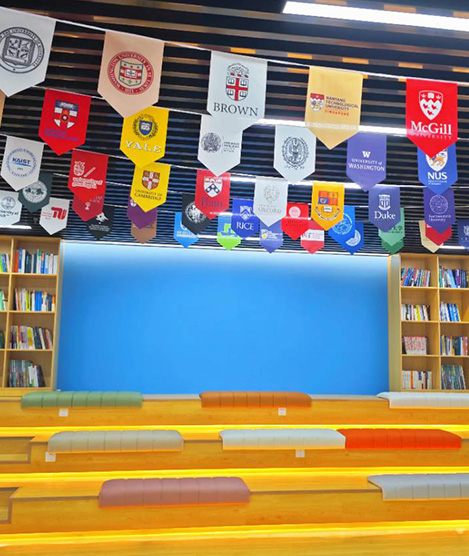
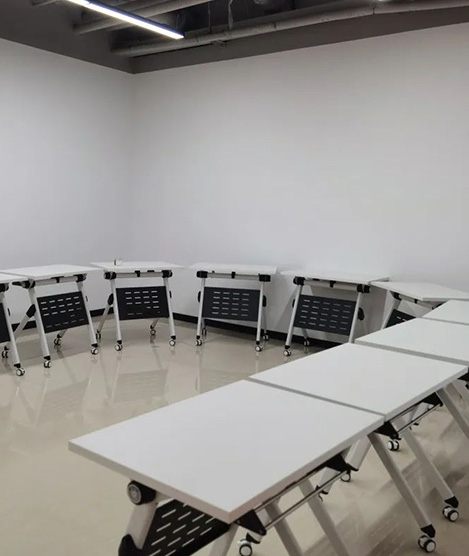
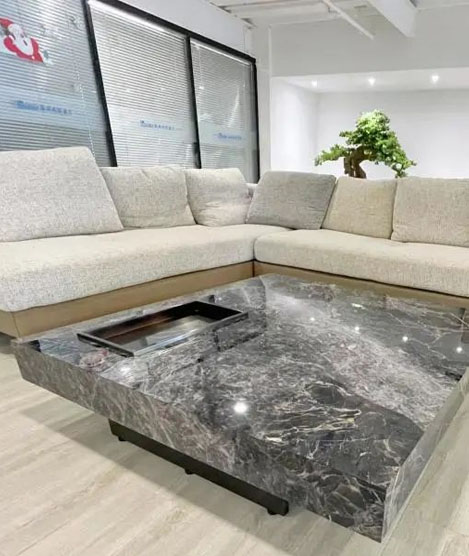
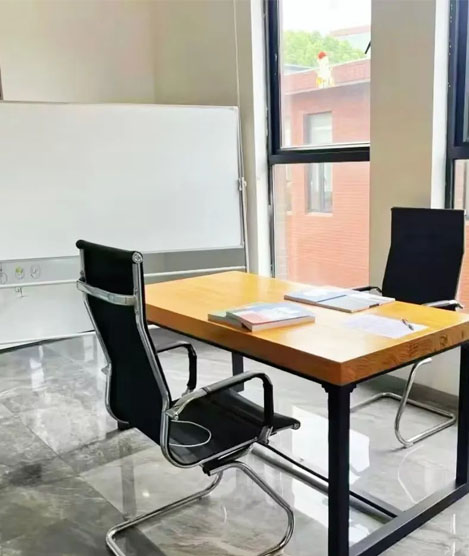
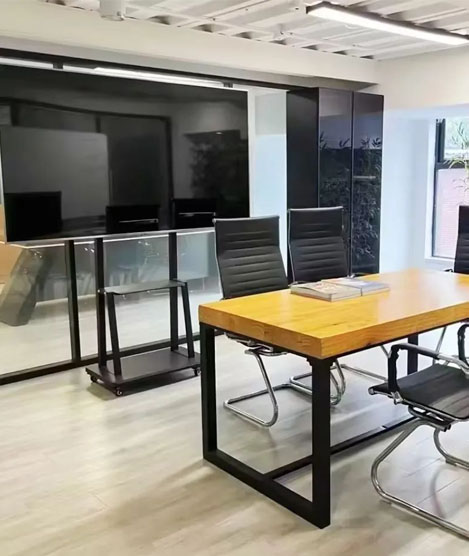
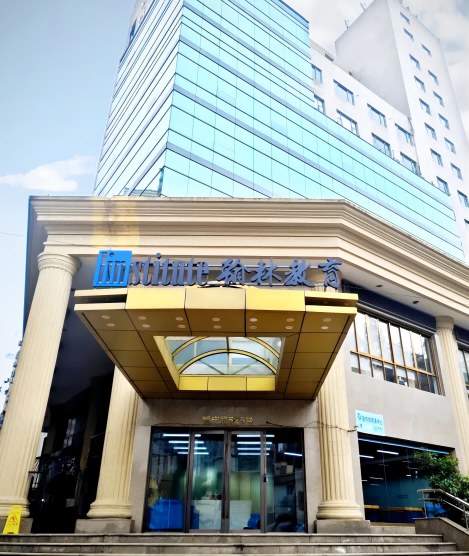
Teaching runs from Hanlin's own centres in Shanghai, Shenzhen, Chengdu and Hangzhou, and online for students elsewhere.

Talk to an advisor
Everything Hanlin does for DI, in one conversation.
Entry, planning, coaching and the past papers. An advisor will tell you which of these a student actually needs, including when the answer is none of them.
Competition entry and planning
Which competitions suit this student, in what order, and by when - then we handle the registration, including the ones that can only be entered through a school or a centre.
Competition coaching
Taught by full-time subject tutors, on a course tier chosen by placement paper rather than by year group.
International curriculum tutoring
IB, AP, A-Level, IGCSE and the US high school curriculum, taught alongside school and timed around the exam calendar.
Competition past papers, free
A large library of past papers, mark schemes and syllabus breakdowns across every competition on this site. No charge and no enrolment.
Scan to add an advisor
Say which competition or course you are asking about. Replies in Chinese or English.
Or call +86 21 6352 6630FAQ
Destination Imagination, briefly answered.
What students, teachers and families ask before entering.
Can I enter on my own?
No. DI is a team competition. A team is two to seven students plus one adult, who may be a teacher, a parent or another adult.
What are the two challenges?
A Team Challenge chosen from five categories and prepared over eight to twelve weeks, presented as an eight-minute performance; and an Instant Challenge that is completely confidential beforehand, with no information given to the team in advance.
What do the five team challenge categories cover?
Technical and mechanical; science and stage arts; theatre and music; improvisation and art; and structural engineering and design. Every category pairs a technical field with a creative one.
What age groups are there?
Rising Stars from preschool to grade 2, Elementary from kindergarten to grade 5, Middle for grades 6 to 8, Secondary for grades 9 to 12, and a College and University level.
What does it cost to enter?
A team number costs USD 105. There are two kinds - Team Challenge, and Early Learning Rising Stars for children aged four to seven.
Who chooses which challenge we do?
Any team member can read the full details once the team number is purchased, but only the team leader can select the final challenge in the account.
How does a team in China reach the global final?
Through a provincial or city competition in October or November, then the China final in December, then the global final the following May.
Is there a correct answer?
No. The problems are designed by senior American education specialists to allow many solutions, and originality is a requirement rather than a bonus.
How long does the team challenge take to prepare?
Eight to twelve weeks, covering the build, the script, the props and set, and rehearsal.
What does the eight-minute performance have to include?
Both the technical work and a short play, integrated together. Teams need to draw on natural and social science knowledge, build their own devices, and write and perform a story around them.
Related
Other team competitions.
What students enter alongside DI.
Destination Imagination enquiries
Build something, then write a play about it.
DI asks a team to engineer and to perform, and then hands them a second problem they have never seen. Tell us who is on the team and what they are each good at, and an advisor will pick the challenge category and map the eight to twelve weeks.