
Competitions · Research and innovation · Youthmaker
Youthmaker, the young makers science fair.
A science fair compressed into three months rather than eighteen - submit in August, defend in October. Teams of two at most, entirely in English, and the top prize is a letter from the professor who judged you.
Why it exists
A science fair that fits in a summer.
Youthmaker borrows its structure from the major international science fairs and deliberately shortens it. That is the whole proposition.
Three months, not a year
Registration in August, project submission through August and September, semi-finalists announced in September, and the final in the autumn. ISEF, by contrast, runs seventeen months from district entry to team selection.
Built from the big fairs, simplified
The organisers say the format is adapted from the general process of GSF, ISEF and MIT THINK, and then simplified - from online paper submission through to the final defence.
Which suits a student with a full summer
The stated appeal is a short overall timeline, a clear process and simple operation - designed for students whose summers are already committed.
And it runs entirely in English
From the written submission to the spoken defence. There is no bilingual option, which is worth planning for.
At a glance
What the fair is.
Youthmaker asks young people to take on engineering design, hands-on project work and scientific experiment, and to produce something original with social value. It has run since 2017 and has drawn more than 2,000 students and over 500 submitted projects.
- Since
- 2017
- Who can enter
- Students who are at least 13 at registration. Turning 19 during the submission phase does not cost eligibility
- Team
- Individually or in a team of two. No larger teams are permitted
- Consent
- Every entrant needs the agreement of a parent or legal guardian
- Language
- English throughout - the paper and the defence
- How to register
- An account on the organiser’s site, created with a personal email address. Each member of a pair registers separately
- The season
- Registration in August, submission through August and September, semi-finalists announced and revised projects submitted in September, and the opening ceremony and forum in the autumn
- Judges
- Past panels have included a Marr Prize winner, the dean of the Carnegie Mellon robotics institute, a co-founder of the Fab Foundation and Fab Lab, and the dean of computational sciences at Minerva
- The framework
- Four modules - design, imagination, logic and realisation
What you submit
Four parts, and a chance to revise.
The submission is a standard research write-up. What is unusual is the opportunity to improve it after the first cut.
The problem and the background
The question investigated and the hypothesis, or the problem being solved and the result expected.
The research plan
What research was done within the chosen category, and how it shaped the project.
Testing and results
How the experiment was run or the solution tested, in detail.
And the conclusion
How the experiment answered the question - or why it did not - and whether the results met expectations.
How it is judged
Four dimensions, and half of them are not technical.
The published criteria give as much weight to what a project is for and how well it is explained as to how hard it was.
| Dimension | The questions the panel asks |
|---|---|
| Technical capability | Does the project reflect genuinely interdisciplinary work? How hard was the problem it solves? How original is it? |
| Social value | How does the project contribute to people? Does the research apply to a broad audience rather than a narrow one? |
| Presentation | How well does the entrant convey the science in the project and demonstrate its value? |
| Solution | How complete is the project? Is it finished, or is it a promising direction? |
The completeness criterion is worth taking literally in a competition this short. A smaller question answered properly scores better here than an ambitious one left open.
The awards
Thirty, then ten, then one.
The award structure narrows quickly and each level offers something different in kind rather than in size.
Top 30 - the regional final
Regional finalists attend the offline final in person, including an open day, master lectures and the awards dinner.
Top 10 - the global shortlist
Global finalists get face-to-face discussion with the professors on the panel - the part most students name as the reason to enter.
Grand prize - a recommendation
The overall winner has the opportunity to receive a letter of recommendation from one of the judging professors. Very few competitions offer that as a prize.
Preparation
How Hanlin supports a Youthmaker entry.
Three months is not long, and English is required from the first submission to the last question.
Scoping to the timeline honestly
A project that can be completed and written up between August and September is a different animal from one built over a school year. Choosing the right size of question is most of the work.
Making the social value explicit
One of the four criteria asks how the project contributes and whether it applies broadly. A student who has thought about that answers a question others improvise.
Writing and defending in English
The paper and the defence are both in English. Preparing the argument in English from the beginning avoids translating a finished piece of thinking under time pressure.
And using the revision round
Semi-finalists submit an improved version. That feedback loop is the most valuable thing in the format, and teams that treat the first submission as final waste it.
Why Hanlin
Preparation for Youthmaker at Hanlin is taught by full-time subject tutors, on a course tier chosen by placement paper rather than by year group.
Programme formats
Five ways this is taught.
Group size is the whole difference between these. It decides how much of the tutor's attention a student gets and how far the course can bend to them, so it is worth choosing rather than accepting.
| Format | Group size | What it suits |
|---|---|---|
| One-to-one | One student | Content, pace and emphasis set by what this student actually needs rather than by a syllabus. The only format that can be rebuilt mid-course. |
| Small group | Three to eight | Opens at three. Frequent discussion, and the tutor can slow down or move on according to what the group has absorbed. Most students chasing a higher award are taught in this one. |
| Class | Eight to twelve | Taught by the subject lead or a medal coach. Less back-and-forth, so it suits a student who will say when something is unclear. |
| Large class | Ten to twenty | For students in the middle of the placement range, and a way to try a competition before committing. Students often move to a small group or to one-to-one afterwards. |
| Past-paper class | No cap | Past papers worked through in sequence in the weeks before the sitting. Free to students already enrolled. |
Course length for Youthmaker is set after a placement paper. The gap between where a student is and what the paper asks for is what the course has to close, and that gap is not the same for two students in the same year group.
How it runs
Six steps, four people on your side.
The same process for every student, so that nothing depends on one tutor remembering to do it.
 Step 1
Pre-course assessment
A placement paper before anything is booked, so the course tier is chosen on evidence rather than on a year group.
 Step 2
Tutor matching
A subject tutor is matched to the result, and their full background is provided before you agree to it.
 Step 3
Plan and group
A study group opens with four people on one student: the tutor, a planner, a supervisor and an academic manager.
 Step 4
Scheduled teaching
The teaching office sets the timetable around the competition date and school term, and teaching begins.
 Step 5
After-class reports
What was covered, and how the student handled it, reported after every lesson.
 Step 6
Homework follow-up
The teaching assistant and the form teacher both check that homework is done, which is where most preparation quietly fails.
Free resource pack
Project and submission pack
The same material our own Youthmaker students work from. Scan the code, say what you need, and an advisor sends it.

Tell an advisor which competition and year group, and the material comes back the same day. Free, and you do not have to enrol in anything. If we do not already hold what you need, we will go and find it.
- PDFPast finalist project titles and abstracts
- PDFCategory definitions and the judging criteria, broken down
- DOCXA project timeline working back from the submission date
- PDFEntry checklist and the dates for the current cycle
Teaching team
Who would teach it.
Three of the twenty-two tutors on the published Hanlin roster - the ones whose subject this is.

Dr An
Mathematics at Illinois Urbana-Champaign with highest honours and the Elizabeth R. Bennett scholarship, then a PhD in mathematics at Johns Hopkins on full funding with the Owen fellowship and the Joel Dean award for excellent teaching. Years of US university teaching, translating high-level mathematics into language students can use.

Yu
Master's in bioinformatics and computational biology from UT Dallas and a nutritional sciences degree from Wisconsin-Madison. Second author on an SCI-indexed paper from the Tanumihardjo vitamin-A laboratory, and formerly at ABS Global.

Tan
Master's in data science from the University of Sydney after a statistics degree at Simon Fraser University, graduating in the top 5% with repeated chancellor's honours; A-Levels at a Cambridge international school, and formerly a data analyst at Tencent. An AMC-accredited coach, a College Board-accredited AP teacher, and holder of a Math League excellent-teacher award.
Where it is taught
Hanlin learning centres.
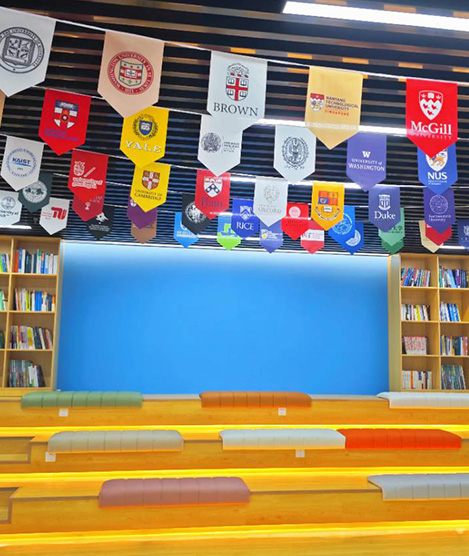
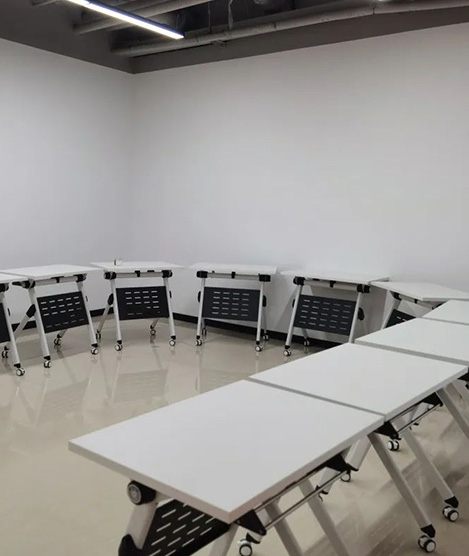
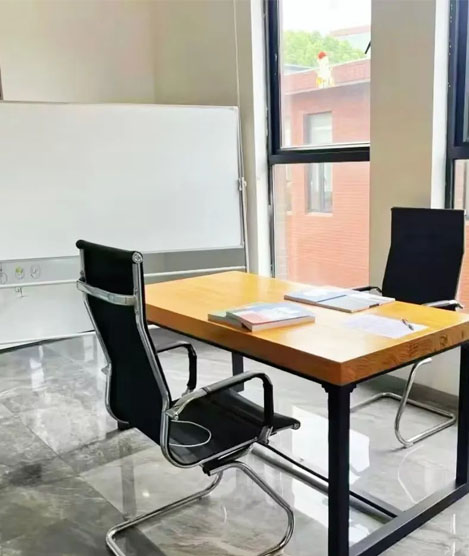
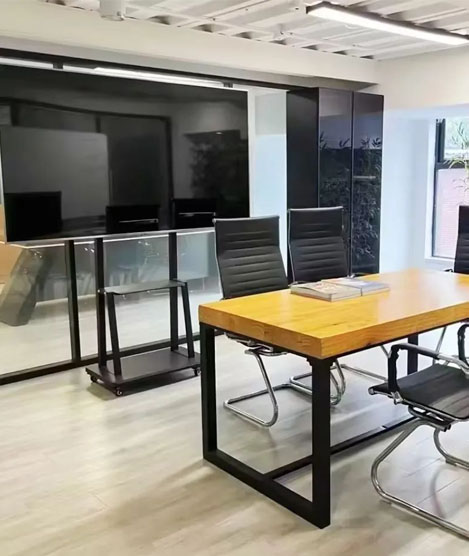
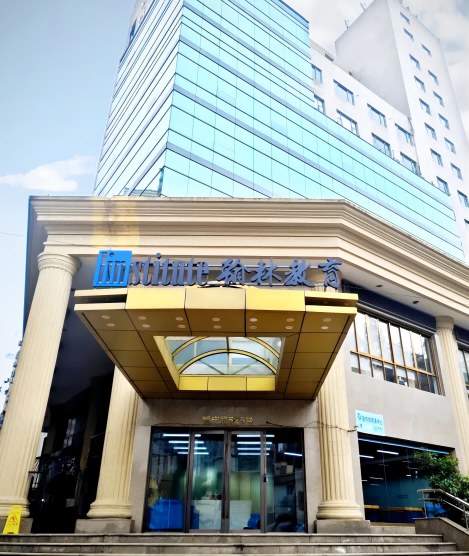
Teaching runs from Hanlin's own centres in Shanghai, Shenzhen, Chengdu and Hangzhou, and online for students elsewhere.


Talk to an advisor
Everything Hanlin does for Youthmaker, in one conversation.
Entry, planning, coaching and the past papers. An advisor will tell you which of these a student actually needs, including when the answer is none of them.
Competition entry and planning
Which competitions suit this student, in what order, and by when - then we handle the registration, including the ones that can only be entered through a school or a centre.
Competition coaching
Taught by full-time subject tutors, on a course tier chosen by placement paper rather than by year group.
International curriculum tutoring
IB, AP, A-Level, IGCSE and the US high school curriculum, taught alongside school and timed around the exam calendar.
Competition past papers, free
A large library of past papers, mark schemes and syllabus breakdowns across every competition on this site. No charge and no enrolment.
Scan to add an advisor
Say which competition or course you are asking about. Replies in Chinese or English.
Or call +86 21 6352 6630FAQ
Youthmaker, briefly answered.
What students and families ask before entering.
Who can enter?
Students who are at least 13 at the point of registration. Turning 19 during the submission phase does not affect eligibility. A parent or legal guardian must consent.
How big can a team be?
Two at most. Entries may also be individual, and no larger teams are permitted.
What language is it in?
English throughout - from the written submission to the final defence. There is no bilingual option.
How long does it take?
Registration in August, submission through August and September, semi-finalist announcement and revised submissions in September, and the final event in the autumn.
What do I submit?
The problem and background, the research plan, the testing and results, and the conclusion.
Can I improve my project after submitting?
Yes. Semi-finalists submit an optimised version of their project after the first round of selection.
How is it judged?
On technical capability - interdisciplinarity, difficulty and originality; social value; presentation; and how complete the solution is.
What are the awards?
The top 30 become regional finalists and attend the offline final with an open day, master lectures and an awards dinner. The top 10 get face-to-face discussion with the judging professors. The grand prize winner may receive a letter of recommendation from one of them.
How does it compare with ISEF?
The format is adapted from the major fairs and deliberately simplified. ISEF runs through affiliated fairs over more than a year; Youthmaker runs from August to the autumn and is entered directly.
Related
Other research competitions.
What students enter alongside Youthmaker.
Youthmaker enquiries
A science fair that fits between two school years.
August to autumn, teams of two at most, and everything in English. Tell us what the student wants to build and an advisor will help scope it to a question that can actually be finished in the time.