
Competitions · Research and innovation · IEYI
IEYI, the Exhibition for Young Inventors.
The only international invention exhibition that charges neither an entry fee nor a stand fee. You stand at your booth for the whole show - and your teacher may be there, but may not explain your work for you.
Two rules that define it
It costs nothing, and you have to speak for yourself.
Both are unusual among invention exhibitions, and together they say a good deal about what IEYI is for.
No entry fee and no stand fee
The organisers describe IEYI as currently the only international invention exhibition charging neither. For comparison, entering a fair like IENA means a booth deposit, a booth fee, stand electricity and a list of travel costs on top.
You stay at your booth throughout
Entrants are required to be at their stand for the whole exhibition. This is a trade show, and being present to talk about the work is the point of attending.
And the teacher may not speak for you
A supervising teacher may be present at the booth but must not explain the work on the student’s behalf. Whatever the child cannot say about their own invention does not get said.
Which is why presentation is a quarter of the marks
Level and quality of presentation carries 25% - exactly the same weight as innovativeness. The rule and the mark scheme are the same decision.
At a glance
What the exhibition is.
IEYI was founded in 2004, with the first exhibition held in Tokyo to mark the centenary of the Japan Institute of Invention and Innovation. It now spans close to forty member countries and regions.
- Since
- 2004
- Who can enter
- School students. The source gives the range as 6 to 18 in one place and 6 to 19 in another, so confirm before entering an older student
- Age groups
- Junior for ages 6 to 14 and senior for 15 to 19. A mixed-age team is placed by its oldest member
- Team
- One to three people for invention entries. Drawing entries are individual only
- Multiple entries
- A student may register more than one team, entered into different invention groups
- Two stages
- A China exhibition, then the international exhibition
- Two streams
- Invention and creation, or science-fiction creative drawing
- Language
- All registration information, including the title of the work, must be submitted in English
- What you submit
- A work description, the entrant registration form and the supervising teacher’s details
- What you bring
- Two A0-size posters for the display
- Cost
- No entry fee and no stand fee
How it is judged
Five criteria, and two of them are about the market.
This is what separates IEYI from a science fair. Nearly half the marks go to whether the invention could exist commercially and whether you can sell it in person.
| Criterion | Weight | What it assesses |
|---|---|---|
| Innovativeness | 25% | Whether the work solves a new problem, and how new the method is where the problem is an existing one |
| Presentation | 25% | How clearly the entrant conveys the unique features and functions of the project while presenting it |
| Commercialisation and competitiveness | 20% | The likelihood of commercial success and sales, including the size of the market and where it is |
| Workability and practicality | 15% | Design complexity, safety, environmental impact, ease of operation, and compatibility with other systems or equipment |
| Appearance | 15% | Colour, detail, materials, interface and usability |
The weights sum to exactly 100. Note that presentation matches innovativeness and beats practicality and appearance combined - and that the person doing the presenting has to be the student.
The two streams
Build something, or draw the future.
The drawing stream is a genuine route rather than a side event, with its own age groups and its own judging.
Invention and creation
Categories span disaster response, sport and leisure, agriculture and food technology, green energy, safety and health, social care, education, care for older people and everyday convenience. A second list on the same source adds materials, healthcare, mobile applications and industrial design - confirm the current categories before choosing.
Science-fiction creative drawing
Built around a future technology theme: what will the future look like, what new technologies might we have, and how might the environment and our cities change. Individual entry only.
With three drawing age groups
Lower primary for grades 1 to 3, upper primary for grades 4 to 6, and secondary for grades 7 to 12.
And a category statement is required
Every team chooses a category and must explain, in both the summary and the full description of the work, how the entry relates to the category chosen.
What may be exhibited
It has to be an invention, and it has to be safe.
The eligibility rules exclude two things students often bring, and one of them is a category of project rather than a substance.
Not art, and not basic research
An IEYI entry must be an invention. Artworks, and basic research or observation reports about the natural world, do not qualify - those belong at a science fair.
And nothing dangerous
No explosives, flammables, toxic materials, unstable substances or living organisms. Entries must pose no risk of harm to people or the environment.
Materials are the entrant’s choice
Within limits: whatever is used must be durable, not fragile, and consistent with the safety rules.
Done by the entrant
Each project must be completed by the entrant themselves - which the booth rule about teachers not speaking is there to enforce.
IEYI and IENA
Two invention exhibitions, and they are not alike.
Both take a student to an international invention fair. Almost everything else differs.
Cost
IEYI charges no entry fee and no stand fee. IENA publishes its cost as a list of a dozen components - booth deposit and fee, flights, hotel, insurance, meals, passport, excess baggage, stand electricity and more.
Age
IEYI runs from about age 6 through secondary school. IENA is aimed at inventors generally, with student entries routed through a national expert review.
Status
IEYI runs an annual cycle with a China stage and an international stage. The 2026 IENA fair is paused.
And what is assessed
IEYI publishes weights that put a quarter of the marks on the student presenting in person. IENA judges the invention as an exhibit for a professional audience.
Preparation
How Hanlin supports an IEYI entry.
A free exhibition where a quarter of the marks come from a child talking about their own work needs a specific kind of preparation.
Rehearsing the booth
Standing at a stand for a full exhibition and explaining an invention to strangers, repeatedly, in English, is the assessed skill. Practising it is the single highest return on preparation time.
Taking the commercial question seriously
Twenty per cent goes to commercial prospects, market size and where that market is. Most student inventors have never been asked this, and it changes the design.
Designing the two posters
Two A0 posters are the whole visual display. What goes on them, and what is left for the student to say, is a real editorial decision.
And writing the category link
Every entry must explain how it relates to the category chosen, in both the summary and the full description. Vagueness here is easy to avoid and often overlooked.
Why Hanlin
Preparation for IEYI at Hanlin is taught by full-time subject tutors, on a course tier chosen by placement paper rather than by year group.
Programme formats
Five ways this is taught.
Group size is the whole difference between these. It decides how much of the tutor's attention a student gets and how far the course can bend to them, so it is worth choosing rather than accepting.
| Format | Group size | What it suits |
|---|---|---|
| One-to-one | One student | Content, pace and emphasis set by what this student actually needs rather than by a syllabus. The only format that can be rebuilt mid-course. |
| Small group | Three to eight | Opens at three. Frequent discussion, and the tutor can slow down or move on according to what the group has absorbed. Most students chasing a higher award are taught in this one. |
| Class | Eight to twelve | Taught by the subject lead or a medal coach. Less back-and-forth, so it suits a student who will say when something is unclear. |
| Large class | Ten to twenty | For students in the middle of the placement range, and a way to try a competition before committing. Students often move to a small group or to one-to-one afterwards. |
| Past-paper class | No cap | Past papers worked through in sequence in the weeks before the sitting. Free to students already enrolled. |
Course length for IEYI is set after a placement paper. The gap between where a student is and what the paper asks for is what the course has to close, and that gap is not the same for two students in the same year group.
How it runs
Six steps, four people on your side.
The same process for every student, so that nothing depends on one tutor remembering to do it.
 Step 1
Pre-course assessment
A placement paper before anything is booked, so the course tier is chosen on evidence rather than on a year group.
 Step 2
Tutor matching
A subject tutor is matched to the result, and their full background is provided before you agree to it.
 Step 3
Plan and group
A study group opens with four people on one student: the tutor, a planner, a supervisor and an academic manager.
 Step 4
Scheduled teaching
The teaching office sets the timetable around the competition date and school term, and teaching begins.
 Step 5
After-class reports
What was covered, and how the student handled it, reported after every lesson.
 Step 6
Homework follow-up
The teaching assistant and the form teacher both check that homework is done, which is where most preparation quietly fails.
Free resource pack
Project and submission pack
The same material our own IEYI students work from. Scan the code, say what you need, and an advisor sends it.

Tell an advisor which competition and year group, and the material comes back the same day. Free, and you do not have to enrol in anything. If we do not already hold what you need, we will go and find it.
- PDFPast finalist project titles and abstracts
- PDFCategory definitions and the judging criteria, broken down
- DOCXA project timeline working back from the submission date
- PDFEntry checklist and the dates for the current cycle
Teaching team
Who would teach it.
Three of the twenty-two tutors on the published Hanlin roster - the ones whose subject this is.

Dr An
Mathematics at Illinois Urbana-Champaign with highest honours and the Elizabeth R. Bennett scholarship, then a PhD in mathematics at Johns Hopkins on full funding with the Owen fellowship and the Joel Dean award for excellent teaching. Years of US university teaching, translating high-level mathematics into language students can use.

Yu
Master's in bioinformatics and computational biology from UT Dallas and a nutritional sciences degree from Wisconsin-Madison. Second author on an SCI-indexed paper from the Tanumihardjo vitamin-A laboratory, and formerly at ABS Global.

Tan
Master's in data science from the University of Sydney after a statistics degree at Simon Fraser University, graduating in the top 5% with repeated chancellor's honours; A-Levels at a Cambridge international school, and formerly a data analyst at Tencent. An AMC-accredited coach, a College Board-accredited AP teacher, and holder of a Math League excellent-teacher award.
Where it is taught
Hanlin learning centres.
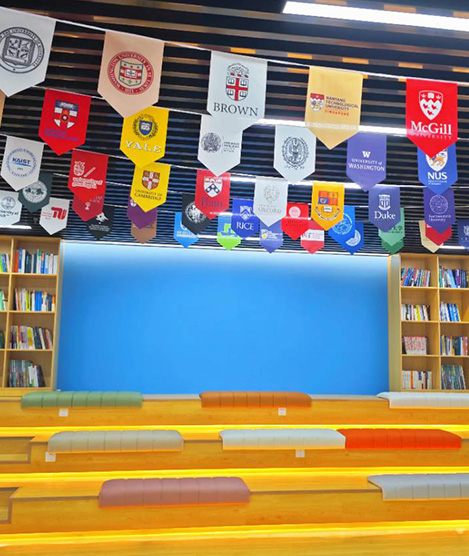
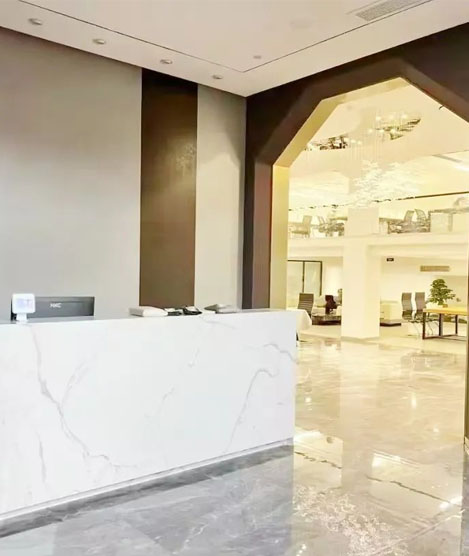
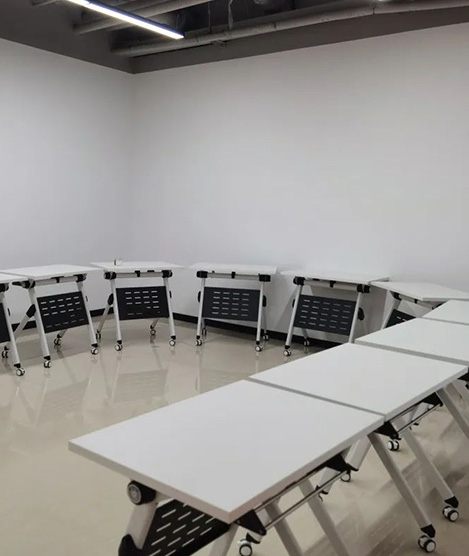
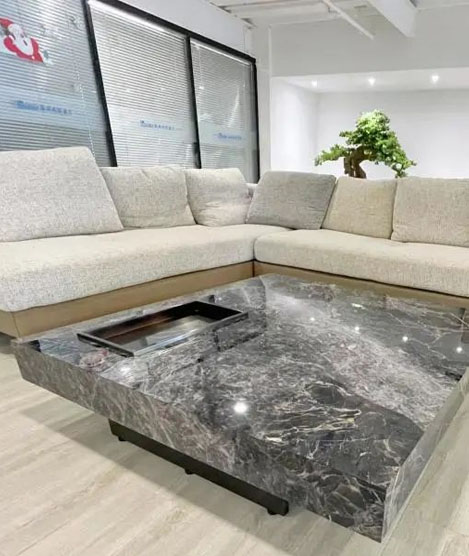
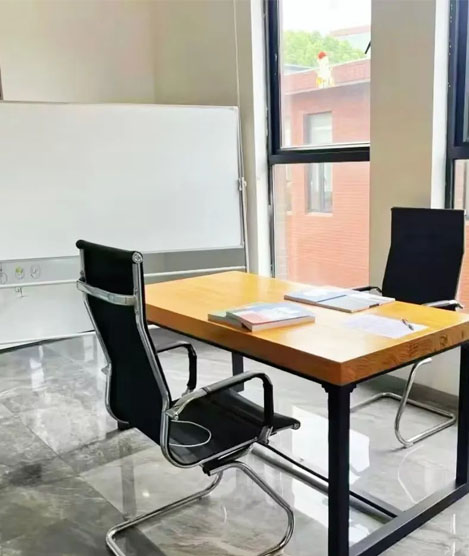
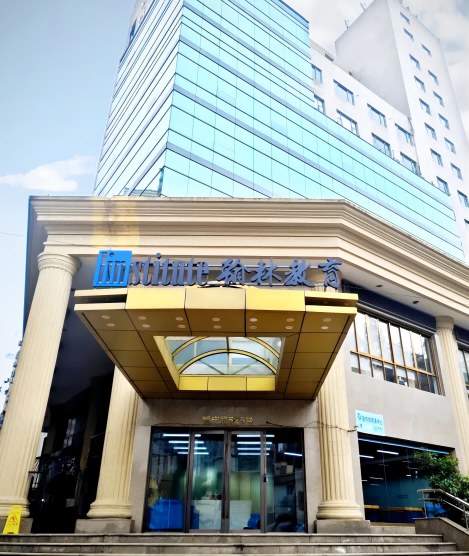
Teaching runs from Hanlin's own centres in Shanghai, Shenzhen, Chengdu and Hangzhou, and online for students elsewhere.

Talk to an advisor
Everything Hanlin does for IEYI, in one conversation.
Entry, planning, coaching and the past papers. An advisor will tell you which of these a student actually needs, including when the answer is none of them.
Competition entry and planning
Which competitions suit this student, in what order, and by when - then we handle the registration, including the ones that can only be entered through a school or a centre.
Competition coaching
Taught by full-time subject tutors, on a course tier chosen by placement paper rather than by year group.
International curriculum tutoring
IB, AP, A-Level, IGCSE and the US high school curriculum, taught alongside school and timed around the exam calendar.
Competition past papers, free
A large library of past papers, mark schemes and syllabus breakdowns across every competition on this site. No charge and no enrolment.
Scan to add an advisor
Say which competition or course you are asking about. Replies in Chinese or English.
Or call +86 21 6352 6630FAQ
IEYI, briefly answered.
What students, teachers and families ask before entering.
What does it cost?
Nothing. The organisers describe IEYI as currently the only international invention exhibition that charges neither an entry fee nor a stand fee.
Who can enter?
School students, in two age groups - junior for ages 6 to 14 and senior for 15 to 19. The source gives the overall range as 6 to 18 in one place and 6 to 19 in another, so confirm before entering an older student.
How big can a team be?
One to three people for invention entries. Drawing entries are individual only. A mixed-age team is placed by its oldest member, and a student may register more than one team into different invention groups.
Can my teacher present with me?
A supervising teacher may be at the booth but must not explain the work on the student’s behalf. Entrants must be at their stand throughout the exhibition.
How is it judged?
Innovativeness 25%, presentation 25%, commercialisation and competitiveness 20%, workability and practicality 15%, and appearance 15%.
What are the two streams?
Invention and creation, across categories from disaster response and green energy to education and care for older people; and science-fiction creative drawing on a future technology theme, entered individually.
What language do I submit in?
English. All registration information including the title of the work must be in English.
What do I need to bring?
Two A0-size posters for the display, along with the work itself.
What is not eligible?
Artworks, and basic research or observation reports about the natural world - IEYI is for inventions. Nothing may involve explosives, flammables, toxic materials, unstable substances or living organisms.
How does it compare with IENA?
IEYI charges nothing and puts a quarter of the marks on the student presenting in person. IENA publishes its cost as a dozen separate components, routes entries through a national expert review, and has paused its 2026 fair.
Related
Other invention and innovation competitions.
What students enter alongside IEYI.
IEYI enquiries
Free to enter, and you do the talking.
A quarter of the marks go to how well a student explains their own invention at the booth, and the teacher is barred from doing it for them. Tell us the child’s age and what they have built, and an advisor will map the category and the presentation practice.