
Competitions · Research and innovation · IRPrO
IRPrO, formerly the World Innovative Science Fair.
A research olympiad conducted entirely online, defence included. Twelve pages, two abstracts in two languages, and evidence that your English is good enough to be questioned in it.
First, the name
WISF is now IRPrO.
The competition was rebuilt and renamed. If you have been searching one name and finding the other, this is why.
It began as WISF
The World Innovative Science Fair, an international competition on innovative science problems for primary and secondary students worldwide.
And became IRPrO
The International Research Project Olympiad, described by the organisers as an iteration and upgrade built on the WISF competition rather than a replacement for it.
Run from Indonesia, entered through Shanghai
The competition is run by an Indonesian science and technology association. Students in the Shanghai region enter through the international exchange department of the Shanghai youth science society.
The purpose is unchanged
Bringing young people together to compete, and to exchange and present technological and scientific innovations and ideas.
At a glance
What the olympiad is.
IRPrO is a research competition that runs entirely online - the presentation and the defence as well as the submission - which makes it one of the few international research competitions that involves no travel at all.
- Who can enter
- Students in grades 5 to 11, measured at the end of June
- Team
- Individual or group projects. Group entries take at most three authors, and all must be from the same school
- Categories
- Science - chemistry, life science, physics and astronomy, medicine and health science. Engineering - technology and computing, behavioural and social science, environment and energy
- Format
- Online presentation followed by online defence
- Language requirement
- English at a good level or above across listening, speaking, reading and writing - and evidence of it must be submitted
- What is required
- A complete scientific research project. Work in progress does not qualify
- The paper
- In English, as a PDF, and no more than twelve pages
- Awards
- A special prize, then gold, silver, bronze and finalist
- The season
- Applications close in mid-May, the shortlist is published in mid-June, and the event runs over four days in late July
How it is judged
Five criteria, weighted.
The weights are published and they sum to a hundred, which makes this one of the more transparent research competitions to prepare for.
| Criterion | Weight |
|---|---|
| Innovativeness | 25% |
| Novelty and originality | 20% |
| Quality and impact | 20% |
| Presentation and communication | 20% |
| Project execution | 15% |
Innovation and originality together carry 45%, and presentation carries as much as quality. Execution - whether the work was carried out well - is the lowest weighted of the five, which is unusual and worth knowing.
What you submit
Four documents, and the formatting is prescribed.
The abstract requirements are unusually specific, down to the typeface. They are worth following exactly.
A Chinese abstract
A4, SimSun at 12 point, no more than 350 characters, in a single paragraph, as a PDF. It must carry the project title, subject, author names, school and keywords, and must contain no tables, charts or images.
An English abstract
A4, Times New Roman at 11 point, no more than 250 words, single paragraph, PDF, with the same header details and the same prohibition on tables and images.
The research paper
In English, as a PDF, and limited to twelve pages. Both abstracts must summarise the background and purpose, the method and results, and the conclusion and outlook.
And proof of English ability
Evidence of English proficiency is a required submission in its own right - a condition few research competitions impose in advance.
The paper
Four sections, and two of them want figures.
The published structure is short, and the organisers say where they want to see data presented visually.
Research question or engineering objective
Why the topic was chosen, and the question or hypothesis. The organisers suggest presenting the core of it as charts or images, though they do not require it.
Methodology and project design
The research methods and experimental design, set out itemised. Computing projects must supply a design framework.
Data analysis and results
The key data supporting the conclusion, presented as tables and charts rather than described in prose.
Interpretation and conclusion
What the research concluded, along with possible practical applications and what it offers to further research.
Preparation
How Hanlin supports an IRPrO entry.
Twelve pages and a spoken defence in English make this a competition about compression and confidence.
Writing to twelve pages
Short by research standards. Deciding what to leave out while keeping the argument whole is the editorial work, and it is easier with the weighting in front of you.
Preparing for a defence in English
The presentation and the questioning are both online and both in English. It is worth rehearsing against real questions rather than reading a script.
Making the innovation explicit
Innovation and originality carry 45% between them. A project that is well executed but familiar is competing for the other 55%.
And formatting the abstracts exactly
Typeface, point size, word count, single paragraph, no images. These are easy marks to keep and easy ones to lose through carelessness.
Why Hanlin
Preparation for IRPrO at Hanlin is taught by full-time subject tutors, on a course tier chosen by placement paper rather than by year group.
Programme formats
Five ways this is taught.
Group size is the whole difference between these. It decides how much of the tutor's attention a student gets and how far the course can bend to them, so it is worth choosing rather than accepting.
| Format | Group size | What it suits |
|---|---|---|
| One-to-one | One student | Content, pace and emphasis set by what this student actually needs rather than by a syllabus. The only format that can be rebuilt mid-course. |
| Small group | Three to eight | Opens at three. Frequent discussion, and the tutor can slow down or move on according to what the group has absorbed. Most students chasing a higher award are taught in this one. |
| Class | Eight to twelve | Taught by the subject lead or a medal coach. Less back-and-forth, so it suits a student who will say when something is unclear. |
| Large class | Ten to twenty | For students in the middle of the placement range, and a way to try a competition before committing. Students often move to a small group or to one-to-one afterwards. |
| Past-paper class | No cap | Past papers worked through in sequence in the weeks before the sitting. Free to students already enrolled. |
Course length for IRPrO is set after a placement paper. The gap between where a student is and what the paper asks for is what the course has to close, and that gap is not the same for two students in the same year group.
How it runs
Six steps, four people on your side.
The same process for every student, so that nothing depends on one tutor remembering to do it.
 Step 1
Pre-course assessment
A placement paper before anything is booked, so the course tier is chosen on evidence rather than on a year group.
 Step 2
Tutor matching
A subject tutor is matched to the result, and their full background is provided before you agree to it.
 Step 3
Plan and group
A study group opens with four people on one student: the tutor, a planner, a supervisor and an academic manager.
 Step 4
Scheduled teaching
The teaching office sets the timetable around the competition date and school term, and teaching begins.
 Step 5
After-class reports
What was covered, and how the student handled it, reported after every lesson.
 Step 6
Homework follow-up
The teaching assistant and the form teacher both check that homework is done, which is where most preparation quietly fails.
Free resource pack
Project and submission pack
The same material our own IRPrO students work from. Scan the code, say what you need, and an advisor sends it.

Tell an advisor which competition and year group, and the material comes back the same day. Free, and you do not have to enrol in anything. If we do not already hold what you need, we will go and find it.
- PDFPast finalist project titles and abstracts
- PDFCategory definitions and the judging criteria, broken down
- DOCXA project timeline working back from the submission date
- PDFEntry checklist and the dates for the current cycle
Teaching team
Who would teach it.
Three of the twenty-two tutors on the published Hanlin roster - the ones whose subject this is.

Dr An
Mathematics at Illinois Urbana-Champaign with highest honours and the Elizabeth R. Bennett scholarship, then a PhD in mathematics at Johns Hopkins on full funding with the Owen fellowship and the Joel Dean award for excellent teaching. Years of US university teaching, translating high-level mathematics into language students can use.

Yu
Master's in bioinformatics and computational biology from UT Dallas and a nutritional sciences degree from Wisconsin-Madison. Second author on an SCI-indexed paper from the Tanumihardjo vitamin-A laboratory, and formerly at ABS Global.

Tan
Master's in data science from the University of Sydney after a statistics degree at Simon Fraser University, graduating in the top 5% with repeated chancellor's honours; A-Levels at a Cambridge international school, and formerly a data analyst at Tencent. An AMC-accredited coach, a College Board-accredited AP teacher, and holder of a Math League excellent-teacher award.
Where it is taught
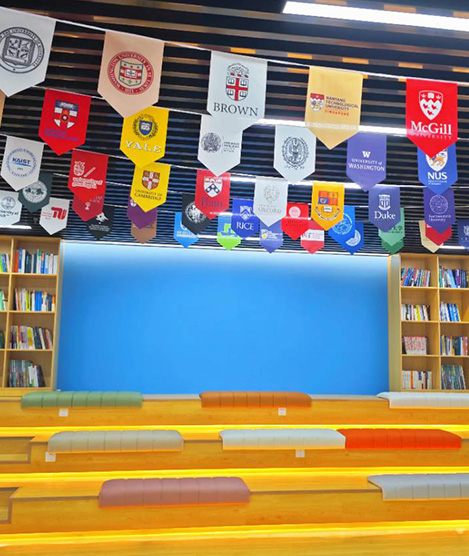
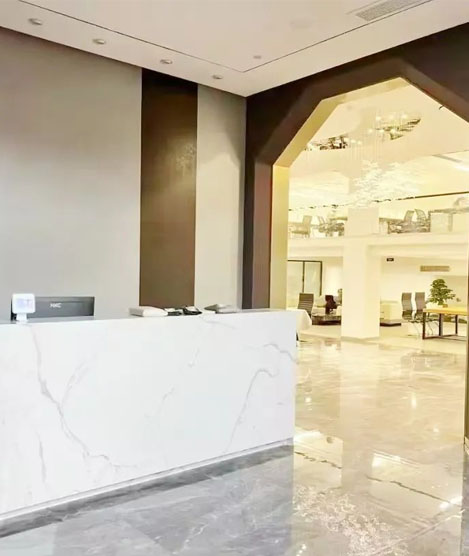
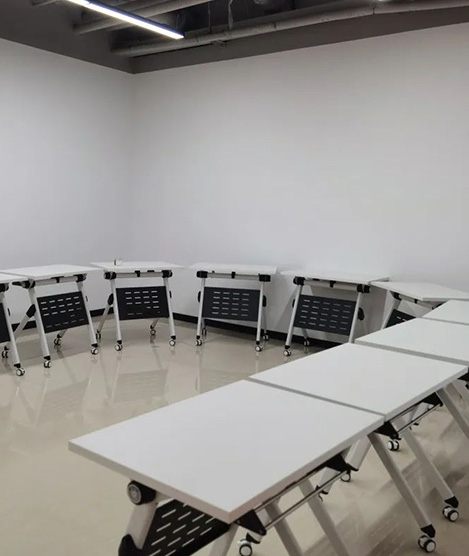
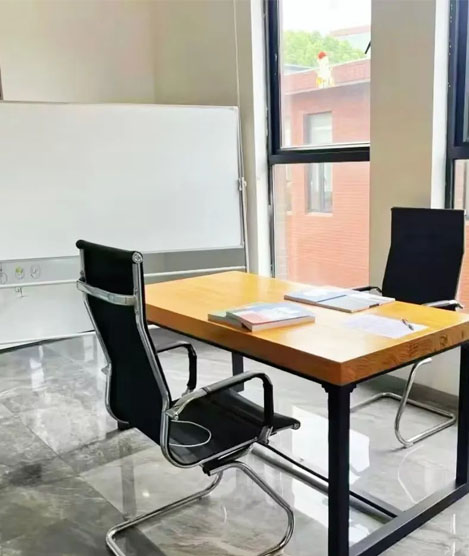
Hanlin learning centres.
Teaching runs from Hanlin's own centres in Shanghai, Shenzhen, Chengdu and Hangzhou, and online for students elsewhere.


Talk to an advisor
Everything Hanlin does for IRPrO, in one conversation.
Entry, planning, coaching and the past papers. An advisor will tell you which of these a student actually needs, including when the answer is none of them.
Competition entry and planning
Which competitions suit this student, in what order, and by when - then we handle the registration, including the ones that can only be entered through a school or a centre.
Competition coaching
Taught by full-time subject tutors, on a course tier chosen by placement paper rather than by year group.
International curriculum tutoring
IB, AP, A-Level, IGCSE and the US high school curriculum, taught alongside school and timed around the exam calendar.
Competition past papers, free
A large library of past papers, mark schemes and syllabus breakdowns across every competition on this site. No charge and no enrolment.
Scan to add an advisor
Say which competition or course you are asking about. Replies in Chinese or English.
Or call +86 21 6352 6630FAQ
IRPrO, briefly answered.
What students and families ask before entering.
Is IRPrO the same as WISF?
Yes. The International Research Project Olympiad is described by its organisers as an iteration and upgrade of the World Innovative Science Fair. Both names refer to the same competition.
Who can enter?
Students in grades 5 to 11, measured at the end of June, with a complete scientific research project.
Can we enter as a team?
Yes, with at most three authors, and all authors must be from the same school.
Do I need to travel?
No. The presentation and the defence are both conducted online, which makes this one of the few international research competitions with no travel at all.
What language is it in?
English. Entrants need English at a good level or above across all four skills, and evidence of proficiency is a required part of the submission.
What do I submit?
A Chinese abstract of up to 350 characters, an English abstract of up to 250 words, an English research paper of no more than twelve pages, and evidence of English ability. Both abstracts must be single paragraphs with no tables, charts or images.
How is it judged?
Innovativeness 25%, novelty and originality 20%, quality and impact 20%, presentation and communication 20%, and project execution 15%.
What categories are there?
Science - chemistry, life science, physics and astronomy, and medicine and health science. Engineering - technology and computing, behavioural and social science, and environment and energy.
What awards are given?
A special prize, then gold, silver, bronze and finalist awards.
When does it run?
Applications close in mid-May, the shortlist is announced in mid-June, and the event runs over four days in late July.
Related
Other research competitions.
What students enter alongside IRPrO.
IRPrO enquiries
A research olympiad you never leave home for.
Everything happens online, including the defence - but you have to prove your English before you are accepted, and the paper is capped at twelve pages. Tell us about the project and an advisor will map the May deadline.