
Competitions · Research and innovation · NSB
NSB, the National Science Bowl.
A buzzer question is worth four points and you may not confer. Answer it and you unlock a ten-point team question you must confer on. The whole competition sits in that asymmetry.

The mechanic
Individual speed buys team points.
Understanding how the two question types interact is the difference between a team that trains usefully and one that just revises.
Toss-up: four points, no conferring
The host reads a question and any player may buzz within five seconds. Conferring is not allowed. Once buzzed, a team has about seven seconds to respond.
Bonus: ten points, and you must confer
Only a team that answers the toss-up correctly earns the bonus. That one is worked together, with roughly twenty seconds to produce an answer.
So the buzzer is worth more than four points
It is worth four plus the chance at ten. A player who is quick but not certain is still the most valuable person on the team, provided they are usually right.
And a wrong bonus costs nothing but the turn
No marks are deducted. The question passes to the other team. Guessing on a bonus is therefore free; guessing on a toss-up costs you the toss-up.
At a glance
What the competition is.
The National Science Bowl has been run by the US Department of Energy since 1991 to encourage students into science and mathematics. More than 275,000 students have taken part, making it one of the largest science competitions in the United States.
- Organiser
- The United States Department of Energy
- Since
- 1991
- Who can enter
- Middle-school students in grades 6 to 8 and high-school students in grades 9 to 12, entering through their school
- Team
- Four or five students - four players plus an alternate - and a coach who is at least 18 and recognised by the school
- One school, one team
- All team members must attend the same school. Club teams are not permitted, and a student may play for only one team
- School limits
- A school may enter no more than three teams in a regional, and may not enter more than one regional
- Years of eligibility
- No more than three years in the middle-school division and four in the high-school division. The two may not be entered at the same time
- Format
- Two teams head to head, answering on the buzzer
- Questions per match
- Fifteen for middle school, eighteen for high school
- Route
- A regional science bowl, then the national final
- When
- Registration opens in October, regionals run from January to March, and the national event falls at the turn of April and May
- Where
- Recent regionals have been held virtually over video conference rather than in person
The subjects
Six at high school, five at middle school.
There is no question bank and no defined syllabus. The organisers state that the competition demands both breadth and depth of scientific knowledge, which is what makes the subject list the only planning tool available.
| Division | Subjects |
|---|---|
| High school | Earth and space science, energy, mathematics, physics, biology and chemistry |
| Middle school | Earth and space science, energy, mathematics, physical science and life science |
The difference is real rather than cosmetic. High school splits the life sciences into biology and chemistry as separate subjects, where middle school has a single combined life science and a single physical science. Energy is a named subject in both, which is unusual and follows from who runs the competition.
The rules that catch teams out
Four things worth knowing before the first match.
These are the ones that cost points or places rather than the ones about how to score.
A question is read once
Once a question has been read completely it is not repeated. There is no clarifying and no second chance to hear it.
The first hand the judge sees wins the buzz
The player is recognised before giving an answer. Blurting out early is not penalised, but it does not win the buzz either.
Nothing may be recorded
No part of any question may be recorded by audio, video, writing or any other means. This applies to coaches watching the video conference as well as to players.
And late withdrawal has consequences
Cancelling more than 48 hours before the first round carries no penalty. Cancelling inside 48 hours, or not giving notice at all, may disqualify that team - and potentially the school’s students - from the following year.
Registering
The coach registers, and places are not first come first served.
Entry runs through the school and the regional coordinator, in a sequence with its own deadlines.
Pre-registration secures the school a slot
The coach submits a school pre-registration first, which the regional coordinator then approves. Nothing else happens until that approval arrives.
Then the first team, by early December
Team one is registered against a December deadline. Second and third teams can be submitted at any point after pre-registration is approved.
But they are not approved early
Second and third teams are not approved until later in December, and no first-come-first-served approval happens before the new year.
And a lottery decides if space runs out
Where there is not room for every team, second and third teams are selected by lottery. Registering early does not secure a second team a place.
The national final
Round robin, then double elimination.
The two divisions advance on different rules, and the middle-school route is the more forgiving of the two.
Groups drawn by lot
Teams are drawn into preliminary groups and play a round robin. A win is worth two points, a draw one, a loss none, alongside the overall score.
High school: two from each group of eight
The two winning teams from each group of eight go through to a double-elimination tournament.
Middle school: sixteen advance
The top two from each of six groups, plus four of the six third-placed teams. A third place is genuinely worth playing for here.
And matches turn late
The organisers note that the atmosphere is intense and that the last few seconds frequently reverse a result. Composure at the end of a match is a real skill.
Before you plan
Check whether your school can enter.
NSB runs through American regional events, and the entry structure follows from that.
Entry is through a regional coordinator
A school pre-registers with the coordinator for its region. Confirm with the organiser whether a school outside the United States can be assigned one before planning a season.
Home-school teams are treated as a school
With documentation - a dated notice of intent filed with the state or county, a current home-school association membership, or dated proof of buying this year’s curriculum. All members must live within their regional’s geographic bounds.
And graduates cannot play
Students who have already graduated may not compete, though they may register as volunteers under the published rules.
If it is closed to you
The same quiz-format skills transfer to other buzzer competitions, and Brain Bee and IJSO both reward the breadth of scientific knowledge NSB is built on.
Preparation
How Hanlin prepares an NSB team.
No question bank and no syllabus means preparation is about coverage, speed and the division of roles.
Assigning subjects to people
Six subjects and four players on the field. Teams that assign primary and secondary coverage buzz faster than teams where everyone half-knows everything.
Practising the five-second buzz
Deciding whether you know an answer before you have finished hearing the question is the core skill, and it only improves against a real buzzer under time.
And practising the twenty-second confer
Bonus questions are worked aloud, quickly, with four people talking. Teams that have never rehearsed it lose most of the twenty seconds to deciding who speaks.
Reading widely, especially in energy
Energy is a named subject in both divisions and is covered by no school syllabus. It is the most reliable place to find marks other teams have not prepared for.
Why Hanlin
Preparation for NSB at Hanlin is taught by full-time subject tutors, on a course tier chosen by placement paper rather than by year group.
Programme formats
Five ways this is taught.
Group size is the whole difference between these. It decides how much of the tutor's attention a student gets and how far the course can bend to them, so it is worth choosing rather than accepting.
| Format | Group size | What it suits |
|---|---|---|
| One-to-one | One student | Content, pace and emphasis set by what this student actually needs rather than by a syllabus. The only format that can be rebuilt mid-course. |
| Small group | Three to eight | Opens at three. Frequent discussion, and the tutor can slow down or move on according to what the group has absorbed. Most students chasing a higher award are taught in this one. |
| Class | Eight to twelve | Taught by the subject lead or a medal coach. Less back-and-forth, so it suits a student who will say when something is unclear. |
| Large class | Ten to twenty | For students in the middle of the placement range, and a way to try a competition before committing. Students often move to a small group or to one-to-one afterwards. |
| Past-paper class | No cap | Past papers worked through in sequence in the weeks before the sitting. Free to students already enrolled. |
Course length for NSB is set after a placement paper. The gap between where a student is and what the paper asks for is what the course has to close, and that gap is not the same for two students in the same year group.
How it runs
Six steps, four people on your side.
The same process for every student, so that nothing depends on one tutor remembering to do it.
 Step 1
Pre-course assessment
A placement paper before anything is booked, so the course tier is chosen on evidence rather than on a year group.
 Step 2
Tutor matching
A subject tutor is matched to the result, and their full background is provided before you agree to it.
 Step 3
Plan and group
A study group opens with four people on one student: the tutor, a planner, a supervisor and an academic manager.
 Step 4
Scheduled teaching
The teaching office sets the timetable around the competition date and school term, and teaching begins.
 Step 5
After-class reports
What was covered, and how the student handled it, reported after every lesson.
 Step 6
Homework follow-up
The teaching assistant and the form teacher both check that homework is done, which is where most preparation quietly fails.
Free resource pack
Motions and case-file pack
The same material our own NSB students work from. Scan the code, say what you need, and an advisor sends it.

Tell an advisor which competition and year group, and the material comes back the same day. Free, and you do not have to enrol in anything. If we do not already hold what you need, we will go and find it.
- PDFPast motions and topic areas
- DOCXA case-file template, ready to fill in
- PDFFormat, speaking times and the judging criteria
- PDFEntry checklist and the dates for the current cycle
Teaching team
Who would teach it.
Three of the twenty-two tutors on the published Hanlin roster - the ones whose subject this is.

Dr An
Mathematics at Illinois Urbana-Champaign with highest honours and the Elizabeth R. Bennett scholarship, then a PhD in mathematics at Johns Hopkins on full funding with the Owen fellowship and the Joel Dean award for excellent teaching. Years of US university teaching, translating high-level mathematics into language students can use.

Yu
Master's in bioinformatics and computational biology from UT Dallas and a nutritional sciences degree from Wisconsin-Madison. Second author on an SCI-indexed paper from the Tanumihardjo vitamin-A laboratory, and formerly at ABS Global.

Tan
Master's in data science from the University of Sydney after a statistics degree at Simon Fraser University, graduating in the top 5% with repeated chancellor's honours; A-Levels at a Cambridge international school, and formerly a data analyst at Tencent. An AMC-accredited coach, a College Board-accredited AP teacher, and holder of a Math League excellent-teacher award.
Where it is taught
Hanlin learning centres.
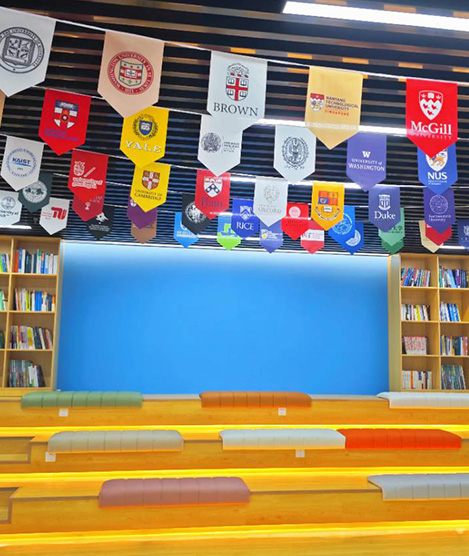
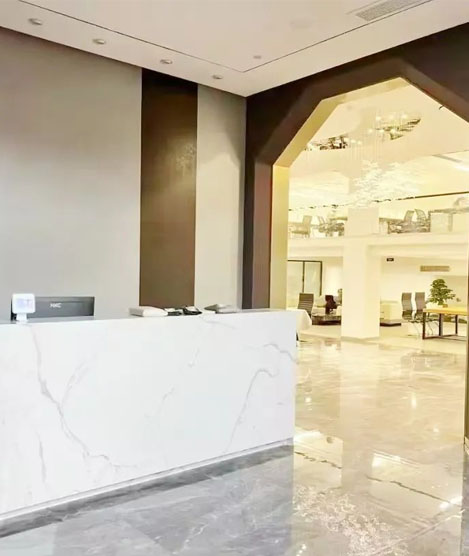
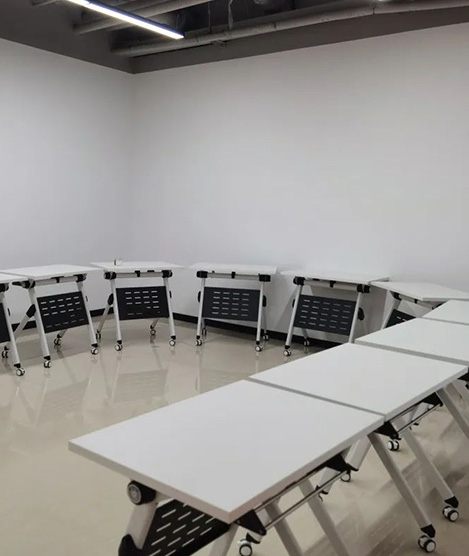
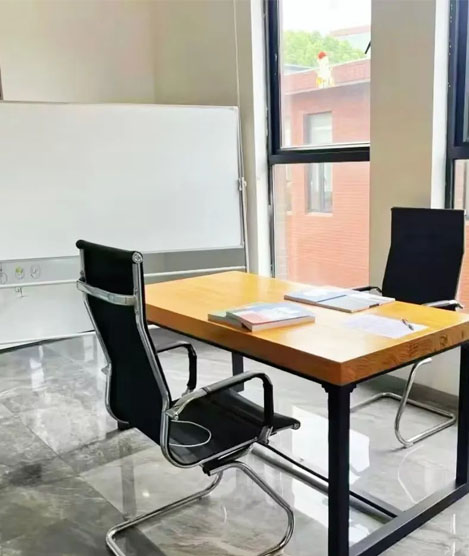
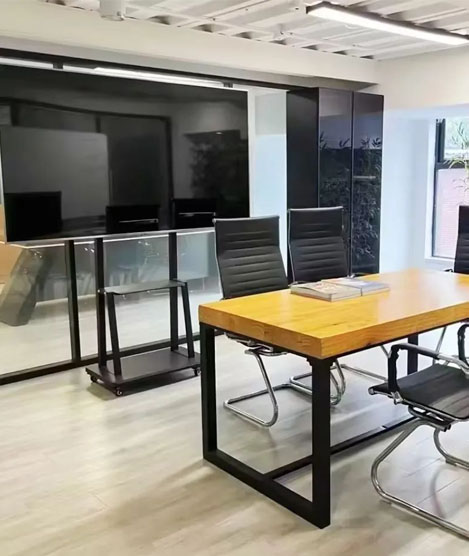
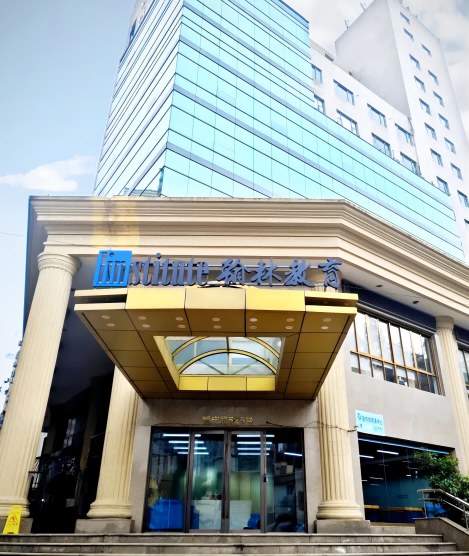
Teaching runs from Hanlin's own centres in Shanghai, Shenzhen, Chengdu and Hangzhou, and online for students elsewhere.
Talk to an advisor
Everything Hanlin does for NSB, in one conversation.
Entry, planning, coaching and the past papers. An advisor will tell you which of these a student actually needs, including when the answer is none of them.
Competition entry and planning
Which competitions suit this student, in what order, and by when - then we handle the registration, including the ones that can only be entered through a school or a centre.
Competition coaching
Taught by full-time subject tutors, on a course tier chosen by placement paper rather than by year group.
International curriculum tutoring
IB, AP, A-Level, IGCSE and the US high school curriculum, taught alongside school and timed around the exam calendar.
Competition past papers, free
A large library of past papers, mark schemes and syllabus breakdowns across every competition on this site. No charge and no enrolment.
Scan to add an advisor
Say which competition or course you are asking about. Replies in Chinese or English.
Or call +86 21 6352 6630FAQ
NSB, briefly answered.
What students, teachers and schools ask before entering.
Who can enter?
Middle-school students in grades 6 to 8 and high-school students in grades 9 to 12, entering through their school. All members of a team must attend the same school, and club teams are not permitted.
How big is a team?
Four or five students - four players plus an alternate - with a coach who is at least 18 and recognised by the school.
How does the scoring work?
Toss-up questions are worth four points and are answered on the buzzer with no conferring. Answering one correctly earns a bonus question worth ten points, which the team works on together. A wrong bonus answer is not penalised but passes to the other team.
How long do we have to answer?
About five seconds to buzz on a toss-up and about seven to respond. Roughly twenty seconds on a bonus - the source gives both twenty and twenty-two with a five-second warning, so confirm the current timing.
What subjects are covered?
High school: earth and space science, energy, mathematics, physics, biology and chemistry. Middle school: earth and space science, energy, mathematics, physical science and life science. There is no question bank and no defined syllabus.
How many years can I compete?
No more than three in the middle-school division and four in the high-school division. You cannot compete in both at the same time.
How does a school register?
The coach submits a school pre-registration for the regional coordinator to approve, then registers the first team against a December deadline. Second and third teams are approved later, and if there is not enough room they are chosen by lottery rather than by order of registration.
How does the national final work?
Preliminary groups drawn by lot play a round robin - two points for a win, one for a draw. High school advances two teams from each group of eight into a double-elimination tournament. Middle school advances sixteen: the top two from each of six groups plus four third-placed teams.
Can a school outside the United States enter?
Entry runs through American regional coordinators, so confirm with the organiser whether your school can be assigned a region before planning a season.
Can we record the questions?
No. No part of any question may be recorded by audio, video, writing or any other means, by players or by coaches watching.
Related
Other science competitions.
What students enter alongside NSB.
National Science Bowl enquiries
Four points for knowing. Ten for knowing together.
NSB rewards an individual who can buzz and a team that can confer, in that order, and it covers six subjects with no syllabus to revise from. Tell us about your school and an advisor will confirm whether a regional is open to you.