
Competitions · Research and innovation · ISSDC
ISSDC, the Space Settlement Design Competition.
You qualify by beating other teams. Then you are merged with four of them into a single company, run by a real chief executive, and given twenty-four hours to design a city in space.

The conceit
You are a contractor bidding for a contract.
ISSDC does not set questions. It runs a procurement, and every rule follows from that.
The committee is a company
The organising committee acts as the Foundation Society, an aerospace prime contractor putting a project out to tender from its head office.
It issues a request for proposal
The RFP sets out in detail everything required to build a settlement housing thousands of people - in cis-lunar space, on the Moon, on Mercury, on Mars or in the asteroid belt.
Your team is a bidder
Student teams are the contractors submitting proposals. Foundation Society selects its supplier on the strength of them.
And it is judged like a bid
The winning proposal is the one that best fits what aerospace manufacturing can actually deliver, meets the most stated requirements, and carries the most reasonable budget. Elegance without costing is not a bid.
At a glance
What the competition is.
ISSDC was started by American aerospace specialists, engineers and astronauts and grew out of a Boy Scouts of America summer programme in 1984. It is supported by Boeing, Disney, NASA and the Jet Propulsion Laboratory, runs across five continents, and has been in China since 2013.
- Who can enter
- High-school students in grades 9 to 12
- Team size
- Six to fifteen students. Twelve is recommended
- The submission
- A space settlement design proposal answering the RFP - written in English and submitted as a PDF
- Length
- No more than 40 pages of body text, excluding the cover, the team information page, section dividers and references
- Preparation time
- One to three months, depending on when the team receives the RFP
- Rounds
- Four - a global preliminary, the China station, the Asia station and the global final
- Scale
- More than 20 countries, 200 schools and 10,000 students
- The season
- Teams form from March, the new RFP is published in April, proposals are due in early September, the China station falls in mid-November, the Asia station in February and the global final in July
- For global finalists
- An in-depth visit to NASA
The proposal
Eight sections, and each has four or five subsections.
This is the whole of the first round. Forty pages covering everything a city in space needs, from where the water goes to what the spacesuits look like.
| Section | What it must cover |
|---|---|
| 1. Executive summary | The proposal in brief, as a bid document opens |
| 2. Structural engineering | A safe and comfortable environment to live and work in - one recent brief specified 11,000 permanent residents and 300 short-stay visitors - with each level allocated to residential, industrial, commercial or agricultural use |
| 3. Operations and infrastructure | The orbital location, the materials and where they come from, atmosphere and weather control, food production, power generation, water management, domestic and industrial waste, internal and external communications, internal transport, and the day-night cycle |
| 4. Human factors | A comfortable modern community: varied goods, public facilities, residential designs with room dimensions, and spacesuit design |
| 5. Automation design and services | The quantity and type of every piece of information-processing equipment - personal devices, network hardware, service robots for public areas with their designs and dimensions - plus backup systems, maintenance, and emergency plans |
| 6. Schedule and costs | The timing and the cost of each phase of construction |
| 7. Business development | The commercial and industrial operations the settlement will run - passenger ship ports, cargo container handling, shuttle bases |
| 8. Appendices | Bibliography, references and a compliance matrix |
The organisers give one piece of advice explicitly: read the final RFP very carefully, meet every minimum requirement first, and only then use the remaining space to exceed them. A proposal that is brilliant in one section and silent in another loses on the compliance matrix.
The four departments
How a team of twelve divides the work.
The departments mirror how a real engineering bid is put together, and each has to hand information to the others.
Structure
Fixes the settlement’s overall physical design and external dimensions, and must supply those dimensions to every other department. It also has to demonstrate how the design meets the RFP’s crew capacity, cargo capacity and demographic requirements.
Operations
Designs or subcontracts the base systems - life support, atmosphere control, power delivery - and tells the other departments how each system works and integrates. Communications requirements usually sit here.
Human factors
Designs a modern community for the settlers: consumables and their quantities, floor plans for a typical residence, spacesuits with their purpose and numbers. Recreation is a substantial part of the brief.
Automation
Specifies and designs the computing systems - servers, personal computers, network equipment - along with robotics for maintenance, repair and security, and systems that make the community more liveable.
The national round
Twenty-four hours, and you work with the teams you beat.
This is the part that makes ISSDC different from every other competition on this site, and it is worth understanding before entering.
Rival teams merge into one company
Twenty to twenty-five teams qualify from the China preliminary, and are grouped four or five at a time into a single virtual company. You now have fifty colleagues, most of whom you have never met.
Run by a real chief executive
The organisers appoint an actual company CEO, or an experienced aerospace professional, to manage each virtual company through the challenge.
And the students elect their own executives
A President runs the company and controls progress. A Vice President Engineering manages the four departments. A Vice President Marketing owns the final presentation and the defence. Four Heads of Department run the design work and the people in it.
Then twenty-four hours
A timed design challenge producing a presentation, delivered and defended. The whole event runs three days: opening, lectures, training, the executive elections, the challenge, the defence and the close.
The route
Four rounds, and the format changes at the second.
The first round is a written bid prepared over months. Everything after it is a twenty-four-hour sprint.
Global preliminary - written, online
One brief set by the global committee and judged by each regional committee. Teams register with their regional committee, receive the RFP and submit by the deadline.
China station - 20 to 25 teams
Merged into virtual companies for the twenty-four-hour challenge and the defence.
Asia station - 6 to 8 teams
The same twenty-four-hour format, against the strongest teams in the region.
Global final
In July, with an in-depth NASA visit for the teams that reach it.
Preparation
How Hanlin prepares an ISSDC team.
Two entirely different skills are needed, and most teams prepare only the first.
Writing a compliant bid
Forty pages, eight sections, four or five subsections each, and a compliance matrix at the end. Meeting every stated minimum before adding anything is the discipline that gets a team through round one.
Costing the thing
Schedule and cost is a full section, and the winning bid is described as the one with the most reasonable budget. Teams that treat costing as an afterthought lose on it.
Rehearsing collaboration with strangers
At the national round you work with four rival teams under an elected structure. Being useful quickly to people you have just met is the skill, and it is practisable.
And practising the defence
The Vice President Marketing presents and defends the work of fifty people after twenty-four hours without sleep. That role should go to someone who has rehearsed it.
Why Hanlin
Preparation for ISSDC at Hanlin is taught by full-time subject tutors, on a course tier chosen by placement paper rather than by year group.
Programme formats
Five ways this is taught.
Group size is the whole difference between these. It decides how much of the tutor's attention a student gets and how far the course can bend to them, so it is worth choosing rather than accepting.
| Format | Group size | What it suits |
|---|---|---|
| One-to-one | One student | Content, pace and emphasis set by what this student actually needs rather than by a syllabus. The only format that can be rebuilt mid-course. |
| Small group | Three to eight | Opens at three. Frequent discussion, and the tutor can slow down or move on according to what the group has absorbed. Most students chasing a higher award are taught in this one. |
| Class | Eight to twelve | Taught by the subject lead or a medal coach. Less back-and-forth, so it suits a student who will say when something is unclear. |
| Large class | Ten to twenty | For students in the middle of the placement range, and a way to try a competition before committing. Students often move to a small group or to one-to-one afterwards. |
| Past-paper class | No cap | Past papers worked through in sequence in the weeks before the sitting. Free to students already enrolled. |
Course length for ISSDC is set after a placement paper. The gap between where a student is and what the paper asks for is what the course has to close, and that gap is not the same for two students in the same year group.
How it runs
Six steps, four people on your side.
The same process for every student, so that nothing depends on one tutor remembering to do it.
 Step 1
Pre-course assessment
A placement paper before anything is booked, so the course tier is chosen on evidence rather than on a year group.
 Step 2
Tutor matching
A subject tutor is matched to the result, and their full background is provided before you agree to it.
 Step 3
Plan and group
A study group opens with four people on one student: the tutor, a planner, a supervisor and an academic manager.
 Step 4
Scheduled teaching
The teaching office sets the timetable around the competition date and school term, and teaching begins.
 Step 5
After-class reports
What was covered, and how the student handled it, reported after every lesson.
 Step 6
Homework follow-up
The teaching assistant and the form teacher both check that homework is done, which is where most preparation quietly fails.
Free resource pack
Project and submission pack
The same material our own ISSDC students work from. Scan the code, say what you need, and an advisor sends it.

Tell an advisor which competition and year group, and the material comes back the same day. Free, and you do not have to enrol in anything. If we do not already hold what you need, we will go and find it.
- PDFPast finalist project titles and abstracts
- PDFCategory definitions and the judging criteria, broken down
- DOCXA project timeline working back from the submission date
- PDFEntry checklist and the dates for the current cycle
Teaching team
Who would teach it.
Three of the twenty-two tutors on the published Hanlin roster - the ones whose subject this is.

Dr An
Mathematics at Illinois Urbana-Champaign with highest honours and the Elizabeth R. Bennett scholarship, then a PhD in mathematics at Johns Hopkins on full funding with the Owen fellowship and the Joel Dean award for excellent teaching. Years of US university teaching, translating high-level mathematics into language students can use.

Yu
Master's in bioinformatics and computational biology from UT Dallas and a nutritional sciences degree from Wisconsin-Madison. Second author on an SCI-indexed paper from the Tanumihardjo vitamin-A laboratory, and formerly at ABS Global.

Tan
Master's in data science from the University of Sydney after a statistics degree at Simon Fraser University, graduating in the top 5% with repeated chancellor's honours; A-Levels at a Cambridge international school, and formerly a data analyst at Tencent. An AMC-accredited coach, a College Board-accredited AP teacher, and holder of a Math League excellent-teacher award.
Where it is taught
Hanlin learning centres.
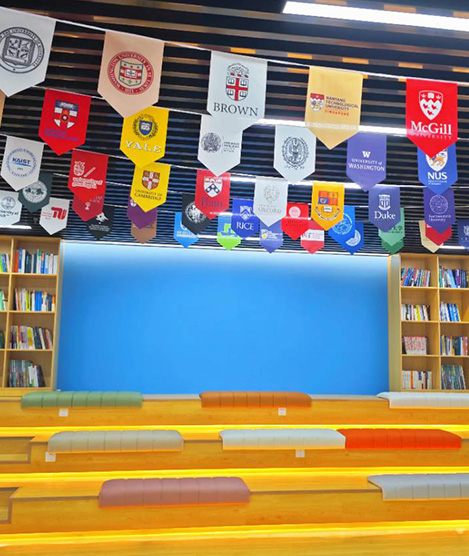
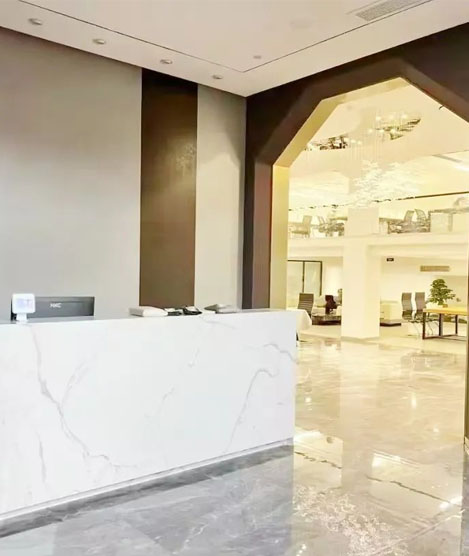
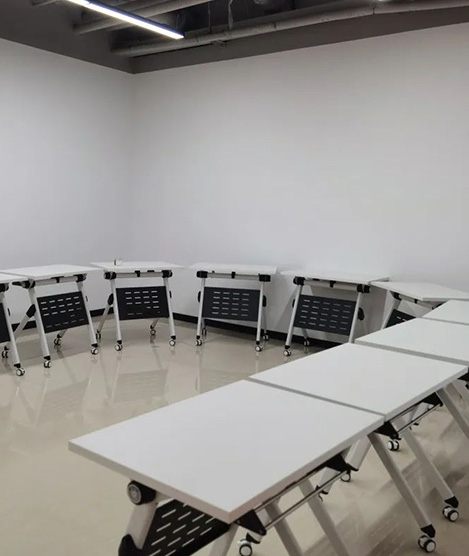
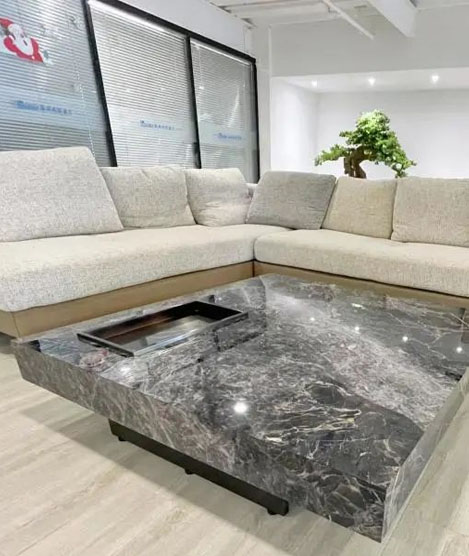
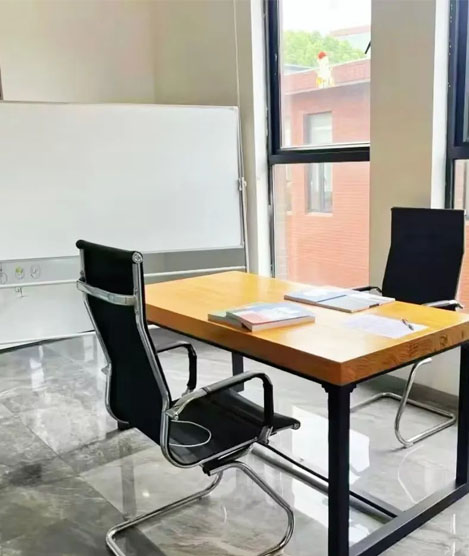
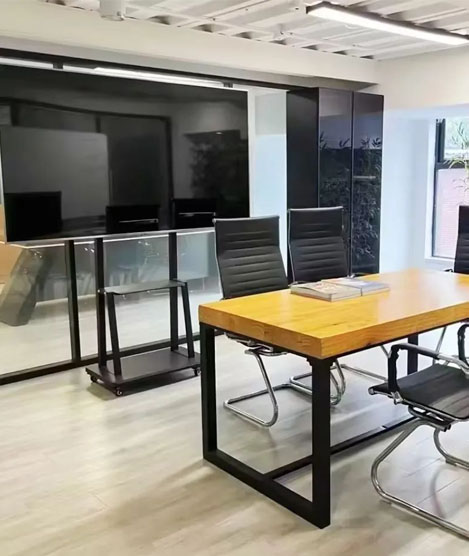
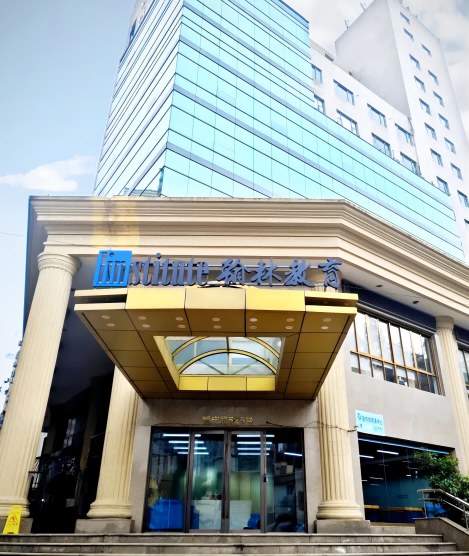
Teaching runs from Hanlin's own centres in Shanghai, Shenzhen, Chengdu and Hangzhou, and online for students elsewhere.
Talk to an advisor
Everything Hanlin does for ISSDC, in one conversation.
Entry, planning, coaching and the past papers. An advisor will tell you which of these a student actually needs, including when the answer is none of them.
Competition entry and planning
Which competitions suit this student, in what order, and by when - then we handle the registration, including the ones that can only be entered through a school or a centre.
Competition coaching
Taught by full-time subject tutors, on a course tier chosen by placement paper rather than by year group.
International curriculum tutoring
IB, AP, A-Level, IGCSE and the US high school curriculum, taught alongside school and timed around the exam calendar.
Competition past papers, free
A large library of past papers, mark schemes and syllabus breakdowns across every competition on this site. No charge and no enrolment.
Scan to add an advisor
Say which competition or course you are asking about. Replies in Chinese or English.
Or call +86 21 6352 6630FAQ
ISSDC, briefly answered.
What students, teachers and families ask before entering.
Who can enter?
High-school students in grades 9 to 12, in teams of six to fifteen. Twelve is the recommended size.
What does a team submit?
A space settlement design proposal answering the request for proposal, written in English and submitted as a PDF, with no more than forty pages of body text excluding the cover, team information page, dividers and references.
What does the proposal have to cover?
Eight sections: executive summary, structural engineering, operations and infrastructure, human factors, automation design and services, schedule and costs, business development, and appendices with a compliance matrix. Each has four or five subsections.
How is a team organised?
Into four departments - structure, operations, human factors and automation - each responsible for part of the design and for passing information to the others.
What happens at the China station?
Twenty to twenty-five qualifying teams are grouped four or five at a time into a virtual company, managed by a real company CEO or an experienced aerospace professional, with student executives elected on the spot. The company then has twenty-four hours to produce a design and defend it.
Which executive roles are elected?
A President running the company and controlling progress, a Vice President Engineering managing the four departments, a Vice President Marketing owning the presentation and defence, and four Heads of Department.
How long is the national event?
Three days - opening ceremony, lectures, training, the executive elections, the twenty-four-hour design challenge, the defence and judging, and the close.
How do teams advance?
From the global preliminary to the China station, then six to eight teams to the Asia station, then the global final in July.
How long do we get for the written proposal?
One to three months, depending on when your team receives the RFP. The new season’s RFP is published in April and proposals are due in early September.
What do global finalists get?
An in-depth visit to NASA.
Related
Other research and engineering competitions.
What students enter alongside ISSDC.
ISSDC enquiries
Compete to qualify, then collaborate with the teams you beat.
A forty-page engineering bid over three months, then twenty-four hours in a company of fifty strangers run by a real chief executive. Tell us how many students you have and an advisor will map the RFP season and the roles.