
Competitions · Research and innovation · JSHS
JSHS, the Junior Science and Humanities Symposia.
Twelve minutes to present your research and six to defend it, in front of judges drawn from professional research. Sponsored by the US Army, Navy and Air Force, and it pays undergraduate scholarships at every level.

Read this first
US citizens and permanent residents only.
JSHS exists to widen the pool of researchers available for work the sponsoring departments consider nationally important, and its eligibility follows from that.
Citizenship or a green card is required
Competitors must be US citizens or permanent residents. There is no route for a student without one of the two, whatever their research.
And your school picks your regional
A student may enter only one regional symposium, and which one is determined by the address of their school or organisation. It is not a choice.
The reach extends beyond the mainland US
Regional and national symposia cover more than 8,000 students and teachers across the United States, Puerto Rico, and Department of Defense schools in Europe and the Pacific.
If this is closed to you
ISEF is open through affiliated fairs worldwide, and the Yau Science Award runs an Asia and a North America region. Both accept research of the same kind.
At a glance
What the symposium is.
JSHS is a STEM programme sponsored by the US Army, Navy and Air Force. It promotes original research and experimentation at high-school level and publicly recognises students who do it well, connecting them with teachers and working research professionals at affiliated symposia.
- Sponsors
- The United States Army, Navy and Air Force
- Who can enter
- Students in grades 9 to 12 who are US citizens or permanent residents
- Which regional
- One only, determined by the address of the student’s school or organisation
- Format
- An individual research paper and an oral defence
- Teams
- Team entries are accepted. The team leader presents by default, and the presentation must set out each member’s division of work and effort and state the contributions of team members, students and teachers alike
- The presentation
- 12 minutes to present, then 6 minutes of questions
- Subject categories
- Eight, across environmental science, biomedical sciences, life sciences, medicine and behavioural sciences, engineering and technology, mathematics and computing, physical sciences and chemistry
- Season
- Regional entry from September to December, regional symposia from January to March, and the national symposium in April or May
- What it pays
- Undergraduate scholarships at both regional and national level
What you submit
Five items, and one of them is a declaration.
The submission set is short but each part is assessed, including the one most entrants treat as paperwork.
A research paper
Between five and twenty pages including appendices - short by research standards. Submission deadlines differ from region to region, so check yours rather than assuming a date common to the programme.
A 250-word abstract
It must accurately convey the essential nature of the research and its most important conclusions - and, the organisers add, catch the interest of a non-specialist reader well enough to start a conversation.
A poster and a timed presentation
Twelve minutes of presentation followed by six minutes of questions, with a poster displayed alongside. The clock is part of the assessment rather than a courtesy to the schedule.
And a Statement on Outside Assistance
Every competitor declares their own contribution to the research. The supervising teacher or mentor also declares - commenting on the student’s personal contribution, and confirming that any animal or human research followed the proper procedures and protocols.
How it is judged
Five criteria, and one of them is time spent.
Regional and national judges apply the same published criteria, and the list is worth reading before choosing a project.
Identifying and articulating the question
The first criterion, and the one that most often separates a good project from a merely well-executed one. A clearly framed question carries the rest of the work with it.
Scientific thinking, creativity - and duration
Judges explicitly weigh how long the research took alongside its originality. A sustained investigation is credited as such.
Design and procedure
How the research was constructed and how it was actually carried out, judged separately from what the work went on to find.
Conclusions, learning and contribution - then delivery
Whether the conclusions follow logically from the question, what the student learned, and what the work contributes to the field. Presentation ability is the fifth criterion in its own right.
The scholarships
What JSHS pays, at both levels.
This is unusual among research competitions: the awards are undergraduate scholarships rather than prize money, and they are given at regional level as well as national.
| Level | Placing | Award |
|---|---|---|
| Regional | Top three | Undergraduate scholarships, scaled by place |
| National | Top three in each subject category | Larger scholarships at every step |
The organiser publishes the scholarship amounts for each season. Placing regionally is itself worth money, which is not true of most research competitions at this level.
Reaching the national symposium
Top five go, but they do different things there.
How a student places regionally determines not only whether they advance but what they compete for at the national event.
The top five are invited
The Army, Navy and Air Force departments invite the five leading finalists from each regional symposium to present their original research nationally.
First and second present orally
They deliver their research in the oral competition, competing for the national JSHS scholarships.
Third, fourth and fifth present posters
They compete in the poster competition for cash awards rather than in the oral competition.
Which makes second place a real threshold
The gap between second and third regionally decides whether a student presents orally at nationals for the larger scholarships. It is worth knowing before the regional.
Preparation
How Hanlin supports a JSHS entry.
For an eligible student, the distinguishing demand is the defence - eighteen minutes in front of professional researchers.
Rehearsing twelve and six
A twelve-minute presentation and six minutes of questions is a specific format. Practising against real questioning, from people who know the field, is the only preparation that works.
Framing the question first
Identifying and articulating the research question is the first judging criterion. Projects that begin from a method rather than a question struggle here regardless of their results.
Starting early enough to count
Judges weigh how long the research took. A sustained investigation reads differently from one assembled in a term, and that difference is explicitly assessed.
And writing to five to twenty pages
A short paper by research standards. Deciding what to leave out, while keeping the argument whole, is the editorial work.
Why Hanlin
Preparation for JSHS at Hanlin is taught by full-time subject tutors, on a course tier chosen by placement paper rather than by year group.
Programme formats
Five ways this is taught.
Group size is the whole difference between these. It decides how much of the tutor's attention a student gets and how far the course can bend to them, so it is worth choosing rather than accepting.
| Format | Group size | What it suits |
|---|---|---|
| One-to-one | One student | Content, pace and emphasis set by what this student actually needs rather than by a syllabus. The only format that can be rebuilt mid-course. |
| Small group | Three to eight | Opens at three. Frequent discussion, and the tutor can slow down or move on according to what the group has absorbed. Most students chasing a higher award are taught in this one. |
| Class | Eight to twelve | Taught by the subject lead or a medal coach. Less back-and-forth, so it suits a student who will say when something is unclear. |
| Large class | Ten to twenty | For students in the middle of the placement range, and a way to try a competition before committing. Students often move to a small group or to one-to-one afterwards. |
| Past-paper class | No cap | Past papers worked through in sequence in the weeks before the sitting. Free to students already enrolled. |
Course length for JSHS is set after a placement paper. The gap between where a student is and what the paper asks for is what the course has to close, and that gap is not the same for two students in the same year group.
How it runs
Six steps, four people on your side.
The same process for every student, so that nothing depends on one tutor remembering to do it.
 Step 1
Pre-course assessment
A placement paper before anything is booked, so the course tier is chosen on evidence rather than on a year group.
 Step 2
Tutor matching
A subject tutor is matched to the result, and their full background is provided before you agree to it.
 Step 3
Plan and group
A study group opens with four people on one student: the tutor, a planner, a supervisor and an academic manager.
 Step 4
Scheduled teaching
The teaching office sets the timetable around the competition date and school term, and teaching begins.
 Step 5
After-class reports
What was covered, and how the student handled it, reported after every lesson.
 Step 6
Homework follow-up
The teaching assistant and the form teacher both check that homework is done, which is where most preparation quietly fails.
Free resource pack
Project and submission pack
The same material our own JSHS students work from. Scan the code, say what you need, and an advisor sends it.

Tell an advisor which competition and year group, and the material comes back the same day. Free, and you do not have to enrol in anything. If we do not already hold what you need, we will go and find it.
- PDFPast finalist project titles and abstracts
- PDFCategory definitions and the judging criteria, broken down
- DOCXA project timeline working back from the submission date
- PDFEntry checklist and the dates for the current cycle
Teaching team
Who would teach it.
Three of the twenty-two tutors on the published Hanlin roster - the ones whose subject this is.

Dr An
Mathematics at Illinois Urbana-Champaign with highest honours and the Elizabeth R. Bennett scholarship, then a PhD in mathematics at Johns Hopkins on full funding with the Owen fellowship and the Joel Dean award for excellent teaching. Years of US university teaching, translating high-level mathematics into language students can use.

Yu
Master's in bioinformatics and computational biology from UT Dallas and a nutritional sciences degree from Wisconsin-Madison. Second author on an SCI-indexed paper from the Tanumihardjo vitamin-A laboratory, and formerly at ABS Global.

Tan
Master's in data science from the University of Sydney after a statistics degree at Simon Fraser University, graduating in the top 5% with repeated chancellor's honours; A-Levels at a Cambridge international school, and formerly a data analyst at Tencent. An AMC-accredited coach, a College Board-accredited AP teacher, and holder of a Math League excellent-teacher award.
Student results
What Hanlin students got.
Taken from Hanlin's published record of student honours and rewritten in English. Figures are as the organisers reported them.
JSHS
- 2023-24A regional top-ten placing and a national fair Finalist
- 2021-22A Semifinalist
Earlier years
- 2020-21A national qualifier
- 2019-20A second award in engineering
The full record, across every subject and year, is on the student honours page.
Where it is taught
Hanlin learning centres.
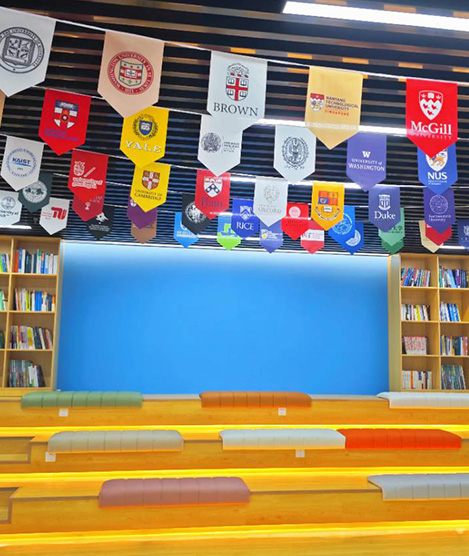
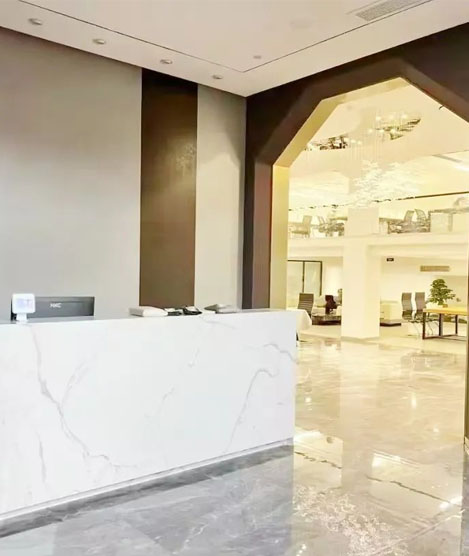
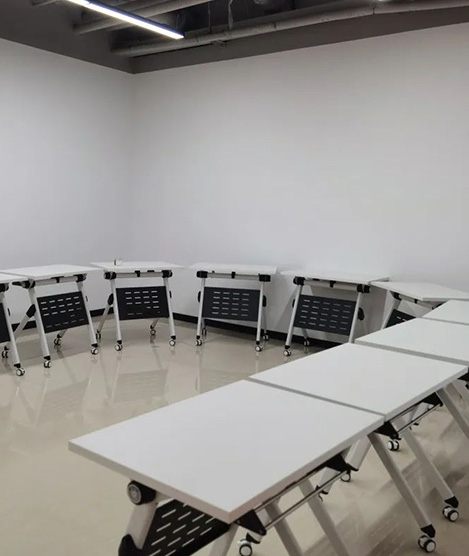
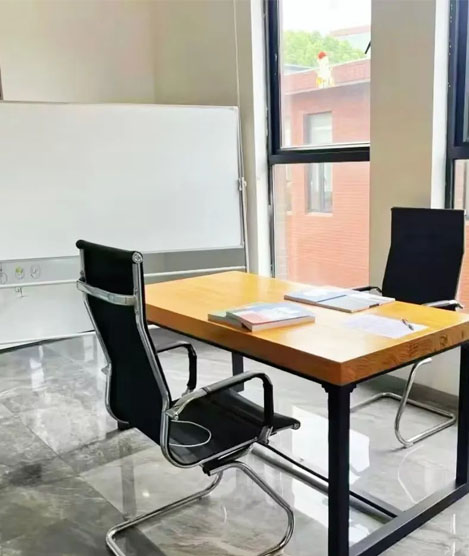
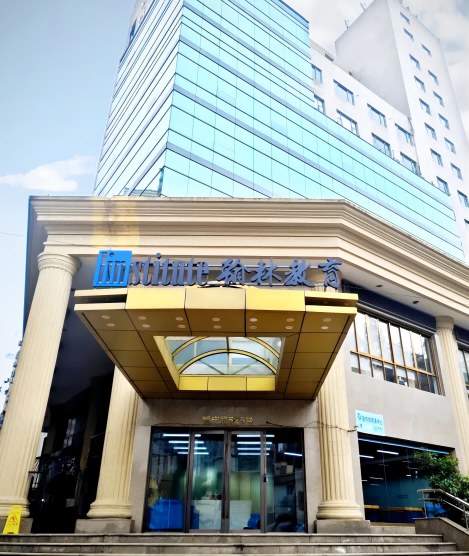
Teaching runs from Hanlin's own centres in Shanghai, Shenzhen, Chengdu and Hangzhou, and online for students elsewhere.


Talk to an advisor
Everything Hanlin does for JSHS, in one conversation.
Entry, planning, coaching and the past papers. An advisor will tell you which of these a student actually needs, including when the answer is none of them.
Competition entry and planning
Which competitions suit this student, in what order, and by when - then we handle the registration, including the ones that can only be entered through a school or a centre.
Competition coaching
Taught by full-time subject tutors, on a course tier chosen by placement paper rather than by year group.
International curriculum tutoring
IB, AP, A-Level, IGCSE and the US high school curriculum, taught alongside school and timed around the exam calendar.
Competition past papers, free
A large library of past papers, mark schemes and syllabus breakdowns across every competition on this site. No charge and no enrolment.
Scan to add an advisor
Say which competition or course you are asking about. Replies in Chinese or English.
Or call +86 21 6352 6630FAQ
JSHS, briefly answered.
What students and families ask before entering.
Can a student in China enter?
No. Competitors must be US citizens or permanent residents, and a student may enter only the regional symposium determined by their school’s address.
What should a student in China enter instead?
ISEF, which is open worldwide through affiliated fairs, or the Yau Science Award, which runs an Asia region and a North America region.
Who can enter?
Students in grades 9 to 12 who are US citizens or permanent residents, at schools in the United States, Puerto Rico, or Department of Defense schools in Europe and the Pacific.
Can I enter as a team?
Yes. The team leader presents by default, and the presentation must set out each member’s division of work and state the contributions of all team members, students and teachers.
What do I submit?
A research paper of five to twenty pages including appendices, a 250-word abstract, a poster, a timed presentation, and a Statement on Outside Assistance.
What is the Statement on Outside Assistance?
A declaration of your own contribution to the research. Your supervising teacher or mentor also declares - commenting on your personal contribution and confirming that any animal or human research followed the proper procedures and protocols.
How long is the presentation?
Twelve minutes to present, then six minutes of questions.
How is it judged?
On identifying and articulating the research question; scientific thinking, creativity and the time the research took; the design and procedure; conclusions, what you learned and what the work contributes to the field; and presentation ability.
What are the awards?
Undergraduate scholarships for the top three at each regional symposium, and larger national scholarships for the top three in each subject category at the national event. The organiser publishes the current amounts each season.
How do I reach the national symposium?
By finishing in the top five at your regional. First and second place present orally and compete for the national scholarships; third, fourth and fifth compete in the poster competition for cash awards.
Related
Other research competitions.
What students enter alongside or instead of JSHS.
JSHS enquiries
Placing regionally already pays for university.
JSHS awards undergraduate scholarships at the regional level as well as the national, which few research competitions do - but it is open only to US citizens and permanent residents. Tell us the student’s status and school, and an advisor will confirm whether this route is available.