
Competitions · Research and innovation · Technovation Girls
Technovation Girls.
Build an app that solves a problem in your community, with a volunteer mentor and no coding background required. It is free to enter, and one of the four jobs on a team is writing the business plan.

At a glance
What the programme is.
Technovation is a global technology-education non-profit founded in 2006. Its Girls programme launched in 2010 and is the largest and longest-running technology programme built specifically for girls - more than 23,000 participants from over a hundred countries in its first nine years.
- Organiser
- Technovation, a global non-profit
- Since
- 2010
- Cost
- Free. Technovation Girls is a free programme
- Who can enter
- Students aged 8 to 18. The organisers state that participants must be female, transgender, non-binary or gender non-conforming; students assigned male at birth who identify as male may not compete
- Team
- One to five students. A student may join only one team, but a team may have any number of mentors, and a mentor may work with more than one team
- Age divisions
- Set by the oldest member of the team - 8 to 12, 13 to 15, and 16 to 18. A team with three fourteen-year-olds and one fifteen-year-old competes in the older band
- Language
- English
- Regions
- Five - Asia, Europe, Latin America, North America and Africa
- Repeat entry
- Students may take part across several seasons until they turn 18, with the same teammates and mentors. A team may return to the same problem, but the app or AI prototype must be different or improved each year
- The season
- Registration from August to mid-March, final submission in late April, quarter-final judging from late April, semi-finals from late May, and the global final in October
What it actually asks
Creativity first. Coding is learnable.
The organisers are explicit that technical proficiency is not the entry requirement, and their advice about how to start is worth repeating exactly.
Start from a problem, not an app
The advice given is direct: do not rush into building. Think carefully about whether society actually needs this app and whether it solves a real problem. Creativity is what is assessed.
Choose one area
Poverty, environment, peace, equality or education. The wider theme list follows the United Nations sustainable development goals, from clean water and affordable energy to life below water and on land.
No programming background needed to begin
But a willingness to learn is not optional - as the organisers put it, otherwise the app does not get finished.
And a volunteer mentor helps
Teams work with volunteer mentors. There is no limit on how many a team may have, and a mentor may support several teams.
The four jobs
Only one of them is coding.
The suggested team structure is the reason this competition suits a group of friends with different strengths rather than a group of programmers.
The one who finds the problem
Starts from a social problem and conceives an app that addresses it. Suits a student who thinks about the world rather than about software.
The one who writes the code
Builds the app. This is the role that needs the technical learning, and it is one role of four.
The one who writes the business plan
Five pages, required for the senior division. Suits a student interested in business - and there are few competitions where that is a genuine technical role.
And the one who makes the films
A three-to-five-minute pitch video and a demonstration video. A student who is good with a camera is doing real, assessed work here.
What you submit
Nine items, and the code has a permitted list.
The submission set is specific, and the source-code rule catches teams that built in the wrong tool.
| Item | Requirement |
|---|---|
| Pitch video | Three to five minutes |
| Demonstration video | Showing the app in use |
| App name and description | The description in 100 words |
| Team introduction | With photographs |
| Source code | Accepted only from Thunkable, App Inventor, Thunkable Classic, Swift or Java, uploaded as a compressed file. An App Inventor project must be uploaded as an .aia file |
| Business plan | Five pages as a PDF - senior division only |
| App screenshots | Between two and six |
| Code listing | Submitted alongside the source |
| Pitch deck | The presentation material |
Check the source-code rule before choosing a development tool. A finished app built in something outside the permitted list cannot be submitted, and that is discovered in April rather than in September.
The awards
Regional scholarships, then a global final.
The award structure pays at more than one level, and the global finalist prize is substantial.
Regional winners take USD 1,000
One winning team in each of the junior and senior divisions in every region receives a USD 1,000 scholarship.
Ten global finalists, at about USD 10,000 each
Ten teams worldwide reach the global final, and each receives roughly USD 10,000. Reaching the final is itself the substantial award.
And a grand prize in each division
One team in each of the junior and senior divisions takes the Technovation Girls grand prize, a USD 3,000 scholarship.
Plus two special awards
A Technology award and a People’s Choice award, given to two further teams at the global final.
Registering
Three routes, by age.
How a student joins depends on how old they are, and the youngest need an adult to set it up.
Self-registration, 13 to 18
Students create their own account on the platform and create or join a team. A parent or guardian still signs the consent form.
Assisted registration, 8 to 12
A parent or guardian creates the account, helps the child create or join a team, and signs the consent form.
Creating a team, 18 and over
Women of 18 or over can create a team and lead it, mentoring the members through the programme.
And the divisions follow the eldest
A team is placed by its oldest member, so bringing in one older student moves the whole team up a band.
Preparation
How Hanlin supports a Technovation team.
A free programme with a long season needs structure more than it needs teaching.
Spending real time on the problem
The organisers say creativity is the main criterion and warn against building too early. The weeks spent establishing that a problem is real are the ones that decide the result.
Casting the four roles honestly
A team of five where one codes, one writes the plan, one films and two think about the problem outperforms five people all half-building an app.
Learning enough of one permitted tool
Thunkable, App Inventor, Swift or Java. Choosing early and learning one properly beats sampling several.
And rehearsing the pitch
Three to five minutes of video, plus a deck and a demonstration. This is a pitch competition as much as a build, and pitching is rehearsable.
Why Hanlin
Preparation for Technovation Girls at Hanlin is taught by full-time subject tutors, on a course tier chosen by placement paper rather than by year group.
Programme formats
Five ways this is taught.
Group size is the whole difference between these. It decides how much of the tutor's attention a student gets and how far the course can bend to them, so it is worth choosing rather than accepting.
| Format | Group size | What it suits |
|---|---|---|
| One-to-one | One student | Content, pace and emphasis set by what this student actually needs rather than by a syllabus. The only format that can be rebuilt mid-course. |
| Small group | Three to eight | Opens at three. Frequent discussion, and the tutor can slow down or move on according to what the group has absorbed. Most students chasing a higher award are taught in this one. |
| Class | Eight to twelve | Taught by the subject lead or a medal coach. Less back-and-forth, so it suits a student who will say when something is unclear. |
| Large class | Ten to twenty | For students in the middle of the placement range, and a way to try a competition before committing. Students often move to a small group or to one-to-one afterwards. |
| Past-paper class | No cap | Past papers worked through in sequence in the weeks before the sitting. Free to students already enrolled. |
Course length for Technovation Girls is set after a placement paper. The gap between where a student is and what the paper asks for is what the course has to close, and that gap is not the same for two students in the same year group.
How it runs
Six steps, four people on your side.
The same process for every student, so that nothing depends on one tutor remembering to do it.
 Step 1
Pre-course assessment
A placement paper before anything is booked, so the course tier is chosen on evidence rather than on a year group.
 Step 2
Tutor matching
A subject tutor is matched to the result, and their full background is provided before you agree to it.
 Step 3
Plan and group
A study group opens with four people on one student: the tutor, a planner, a supervisor and an academic manager.
 Step 4
Scheduled teaching
The teaching office sets the timetable around the competition date and school term, and teaching begins.
 Step 5
After-class reports
What was covered, and how the student handled it, reported after every lesson.
 Step 6
Homework follow-up
The teaching assistant and the form teacher both check that homework is done, which is where most preparation quietly fails.
Free resource pack
Season and build pack
The same material our own Technovation Girls students work from. Scan the code, say what you need, and an advisor sends it.

Tell an advisor which competition and year group, and the material comes back the same day. Free, and you do not have to enrol in anything. If we do not already hold what you need, we will go and find it.
- PDFPast season materials and game manuals
- PDFThe judging rubric, broken down by what earns each point
- DOCXBuild log and documentation checklist
- PDFEntry checklist and the dates for the current cycle
Teaching team
Who would teach it.
Three of the twenty-two tutors on the published Hanlin roster - the ones whose subject this is.

Dr An
Mathematics at Illinois Urbana-Champaign with highest honours and the Elizabeth R. Bennett scholarship, then a PhD in mathematics at Johns Hopkins on full funding with the Owen fellowship and the Joel Dean award for excellent teaching. Years of US university teaching, translating high-level mathematics into language students can use.

Yu
Master's in bioinformatics and computational biology from UT Dallas and a nutritional sciences degree from Wisconsin-Madison. Second author on an SCI-indexed paper from the Tanumihardjo vitamin-A laboratory, and formerly at ABS Global.

Tan
Master's in data science from the University of Sydney after a statistics degree at Simon Fraser University, graduating in the top 5% with repeated chancellor's honours; A-Levels at a Cambridge international school, and formerly a data analyst at Tencent. An AMC-accredited coach, a College Board-accredited AP teacher, and holder of a Math League excellent-teacher award.
Where it is taught
Hanlin learning centres.
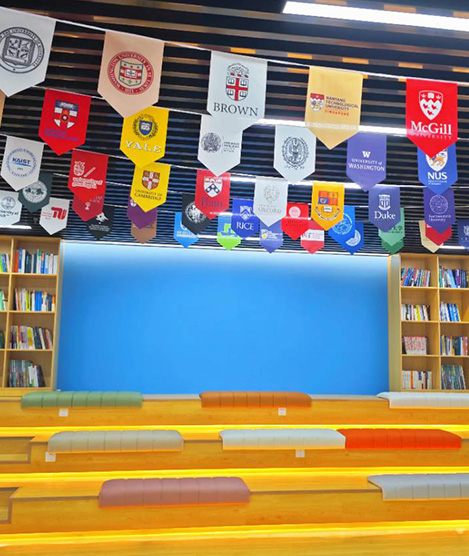
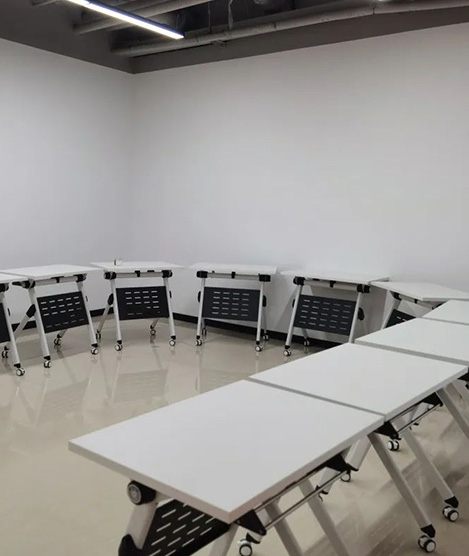
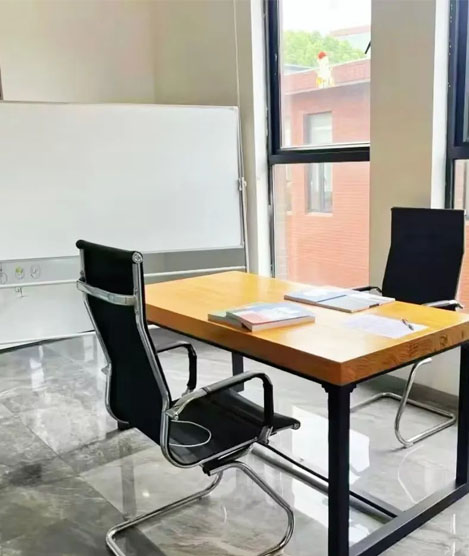
Teaching runs from Hanlin's own centres in Shanghai, Shenzhen, Chengdu and Hangzhou, and online for students elsewhere.




Talk to an advisor
Everything Hanlin does for Technovation Girls, in one conversation.
Entry, planning, coaching and the past papers. An advisor will tell you which of these a student actually needs, including when the answer is none of them.
Competition entry and planning
Which competitions suit this student, in what order, and by when - then we handle the registration, including the ones that can only be entered through a school or a centre.
Competition coaching
Taught by full-time subject tutors, on a course tier chosen by placement paper rather than by year group.
International curriculum tutoring
IB, AP, A-Level, IGCSE and the US high school curriculum, taught alongside school and timed around the exam calendar.
Competition past papers, free
A large library of past papers, mark schemes and syllabus breakdowns across every competition on this site. No charge and no enrolment.
Scan to add an advisor
Say which competition or course you are asking about. Replies in Chinese or English.
Or call +86 21 6352 6630FAQ
Technovation Girls, briefly answered.
What students and families ask before entering.
Who can enter?
Students aged 8 to 18. The organisers state that participants must be female, transgender, non-binary or gender non-conforming, and that students assigned male at birth who identify as male may not compete.
What does it cost?
Nothing. Technovation Girls is a free programme.
Do we need to know how to code?
No. The organisers assess creativity and do not require technical proficiency to begin - but they are clear that a willingness to learn is necessary, because otherwise the app does not get finished.
How big is a team?
One to five students. A student may join only one team, but there is no limit on the number of mentors a team may have.
How are divisions decided?
By the age of the oldest team member - 8 to 12, 13 to 15, or 16 to 18. A team with one older student competes in the older band.
What do we submit?
A three-to-five-minute pitch video, a demonstration video, the app name and a 100-word description, a team introduction with photographs, the source code, two to six screenshots, a code listing and a pitch deck. Senior division teams also submit a five-page business plan.
Which development tools are allowed?
Source code is accepted only from Thunkable, App Inventor, Thunkable Classic, Swift or Java. An App Inventor project must be uploaded as an .aia file.
What problems can we work on?
Choose one of poverty, environment, peace, equality or education. The wider theme list follows the United Nations sustainable development goals.
Can we enter again next year?
Yes, until you turn 18, and with the same teammates and mentors. You may return to the same problem, but the app or AI prototype must be different or improved.
What are the prizes?
Regional winners in each division receive a USD 1,000 scholarship. Ten global finalists receive roughly USD 10,000 each. Grand prize winners in each division receive a USD 3,000 scholarship, and there are Technology and People’s Choice special awards.
Related
Other technology and innovation competitions.
What students enter alongside Technovation.
Technovation Girls enquiries
Four jobs on a team, and only one of them is coding.
A team needs someone who understands the problem, someone who codes, someone who writes the business plan and someone who makes the films. Tell us who you have and an advisor will help cast the roles and plan the season.