
Competitions · Research and innovation · BJC
BJC, the Breakthrough Junior Challenge.
Explain something genuinely hard in a short film, in English, and win a quarter of a million dollars in scholarship - plus fifty thousand for your teacher and a hundred thousand for a laboratory at your school.
The prize
It is not only the student who wins.
The award structure is unusual and it is worth understanding, because two thirds of it goes somewhere other than the entrant.
USD 250,000 for the student
A college scholarship, awarded to the winner of the challenge and announced at the televised Breakthrough Prize ceremony.
USD 50,000 for the teacher
Paid to the winner’s teacher. Very few competitions recognise the person who taught the winner, and none on this site at that scale.
USD 100,000 for a laboratory
A Breakthrough science laboratory at the winner’s school. The prize is designed to leave something behind.
Which changes who should encourage an entry
A school with a science teacher who inspires students has a direct stake in this one. It is worth raising with them rather than treating it as an individual project.
At a glance
What the challenge is.
The Breakthrough Junior Challenge is an annual science video competition for students worldwide, run by the Breakthrough Prize - founded to recognise advances in fundamental physics, the life sciences and mathematics by Sergey Brin and Anne Wojcicki, Yuri and Julia Milner, and Mark Zuckerberg and Priscilla Chan.
- Who can enter
- Anyone aged 13 to 18 - specifically, 13 by the opening date in April and not yet 19 by the closing date in October
- Open to
- Students anywhere in the world, including home-schooled students and students with disabilities
- The task
- Choose a theory, concept or principle in physics, the life sciences or mathematics that matters and is hard to explain, and explain it in a short film
- Video length
- The instructions say a maximum of two minutes and the entry requirements say three or less. Confirm the current limit before editing
- Language
- English throughout, including the script and the narration
- Where it goes
- Uploaded to YouTube, with the link submitted in the application
- Originality
- The work must be original and the entrant must own all intellectual property in it
- Consent
- A parent or guardian must give permission
- Three steps
- Registration, submission, and peer review. All three must be completed to be eligible
- The season
- Applications open in April and close in late June, with peer review and expert evaluation running through the summer and finalists announced in September
The requirement people miss
You must review five other entries.
Registration and submission are not enough. The third step is compulsory and it disqualifies entrants every year.
Peer review is a condition of entry
Every entrant must view and score at least five other submissions. Only entries that complete all three steps - registration, submission and peer review - are eligible for the challenge.
And it is the first judging stage
Peer review is not an administrative formality. It produces the first round of finalists, before any expert sees a single video.
With its own deadline
The peer review window runs for about a fortnight after submissions close. Missing it costs the entry, not just the marks.
So watch the others properly
Reviewing five entries carefully is also the fastest way to learn what works in this format - and what does not.
How it is judged
Four criteria, and one of them is how hard your topic is.
The fourth criterion is the one that shapes the choice of subject, and it rewards ambition rather than safety.
| Criterion | The question the judges ask |
|---|---|
| Engagement | Does the video capture the viewer’s interest? Do they want to keep watching to the end? |
| Illumination | Does it clearly explain the subject, so the viewer genuinely understands it? Does it show rigorous, in-depth research? |
| Creativity | Has the entrant made a real effort to treat the subject in an original or creative way? |
| Difficulty | Is the topic challenging? Is it a subject normally taught at high-school level or beyond? |
The difficulty criterion is why choosing an easy topic is a mistake. The brief asks for something important and hard to explain - and then rewards you for having chosen something hard.
The four judging stages
Peers, then experts, then the public.
Each stage narrows the field differently, and the third one is not judged by anyone in particular.
One - peer review
Every entrant reviews at least five others. This produces the first set of finalists.
Two - the expert panel
Leading academics and science figures from around the world select the top 75 semi-finalists against the published criteria, then narrow to the leading 30 across seven geographic regions plus the top two videos in each subject area.
Seven regions, judged separately
North America, South and Central America with Mexico and the Caribbean, Europe, Asia, India, the Middle East and Africa, and Australia and New Zealand.
Three - the popular vote
A public vote produces the highest-scoring popular-vote entrant, a top scorer in the subject category and seven regional champions. The overall winner is announced at the Breakthrough Prize ceremony.
Preparation
How Hanlin supports a BJC entry.
Two or three minutes of film is a very small container for a genuinely difficult idea, and that constraint is the whole problem.
Choosing something properly hard
Difficulty is an explicit criterion. The brief asks for a concept that is important to understand and hard to explain, taught at high-school level or beyond. Playing safe costs marks.
Building the explanation before the film
The illumination criterion asks whether a viewer genuinely understands afterwards. That is settled in the script, not in the edit.
Using visual tools deliberately
The organisers suggest animation, simulation and physical demonstration. A talking head explaining a hard idea rarely clears the engagement criterion.
And working in English throughout
Script and narration must both be in English. For most entrants from China that is the largest hidden workload, and it is best done at script stage.
Why Hanlin
Preparation for BJC at Hanlin is taught by full-time subject tutors, on a course tier chosen by placement paper rather than by year group.
Programme formats
Five ways this is taught.
Group size is the whole difference between these. It decides how much of the tutor's attention a student gets and how far the course can bend to them, so it is worth choosing rather than accepting.
| Format | Group size | What it suits |
|---|---|---|
| One-to-one | One student | Content, pace and emphasis set by what this student actually needs rather than by a syllabus. The only format that can be rebuilt mid-course. |
| Small group | Three to eight | Opens at three. Frequent discussion, and the tutor can slow down or move on according to what the group has absorbed. Most students chasing a higher award are taught in this one. |
| Class | Eight to twelve | Taught by the subject lead or a medal coach. Less back-and-forth, so it suits a student who will say when something is unclear. |
| Large class | Ten to twenty | For students in the middle of the placement range, and a way to try a competition before committing. Students often move to a small group or to one-to-one afterwards. |
| Past-paper class | No cap | Past papers worked through in sequence in the weeks before the sitting. Free to students already enrolled. |
Course length for BJC is set after a placement paper. The gap between where a student is and what the paper asks for is what the course has to close, and that gap is not the same for two students in the same year group.
How it runs
Six steps, four people on your side.
The same process for every student, so that nothing depends on one tutor remembering to do it.
 Step 1
Pre-course assessment
A placement paper before anything is booked, so the course tier is chosen on evidence rather than on a year group.
 Step 2
Tutor matching
A subject tutor is matched to the result, and their full background is provided before you agree to it.
 Step 3
Plan and group
A study group opens with four people on one student: the tutor, a planner, a supervisor and an academic manager.
 Step 4
Scheduled teaching
The teaching office sets the timetable around the competition date and school term, and teaching begins.
 Step 5
After-class reports
What was covered, and how the student handled it, reported after every lesson.
 Step 6
Homework follow-up
The teaching assistant and the form teacher both check that homework is done, which is where most preparation quietly fails.
Free resource pack
Project and submission pack
The same material our own BJC students work from. Scan the code, say what you need, and an advisor sends it.
Tell an advisor which competition and year group, and the material comes back the same day. Free, and you do not have to enrol in anything. If we do not already hold what you need, we will go and find it.
- PDFPast finalist project titles and abstracts
- PDFCategory definitions and the judging criteria, broken down
- DOCXA project timeline working back from the submission date
- PDFEntry checklist and the dates for the current cycle
Teaching team
Who would teach it.
Three of the twenty-two tutors on the published Hanlin roster - the ones whose subject this is.

Dr An
Mathematics at Illinois Urbana-Champaign with highest honours and the Elizabeth R. Bennett scholarship, then a PhD in mathematics at Johns Hopkins on full funding with the Owen fellowship and the Joel Dean award for excellent teaching. Years of US university teaching, translating high-level mathematics into language students can use.

Yu
Master's in bioinformatics and computational biology from UT Dallas and a nutritional sciences degree from Wisconsin-Madison. Second author on an SCI-indexed paper from the Tanumihardjo vitamin-A laboratory, and formerly at ABS Global.

Tan
Master's in data science from the University of Sydney after a statistics degree at Simon Fraser University, graduating in the top 5% with repeated chancellor's honours; A-Levels at a Cambridge international school, and formerly a data analyst at Tencent. An AMC-accredited coach, a College Board-accredited AP teacher, and holder of a Math League excellent-teacher award.
Where it is taught
Hanlin learning centres.
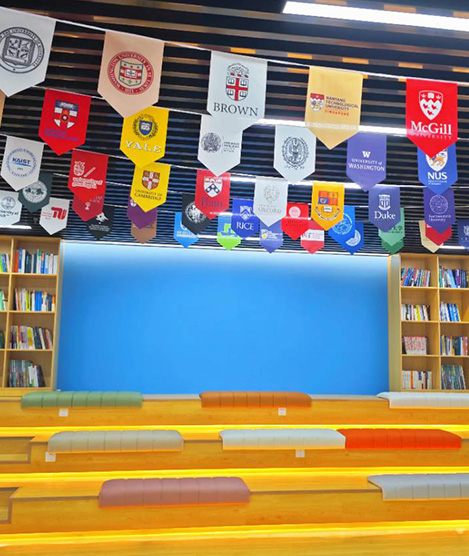
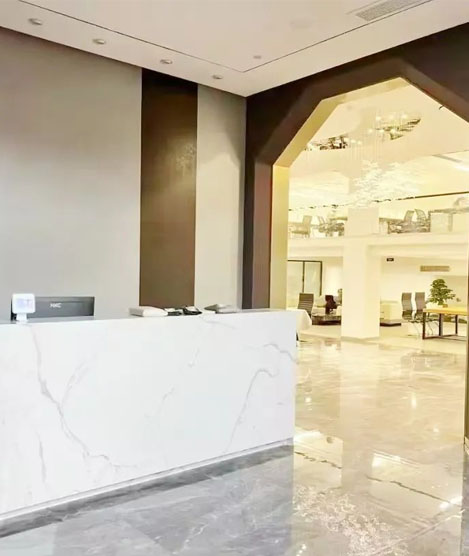
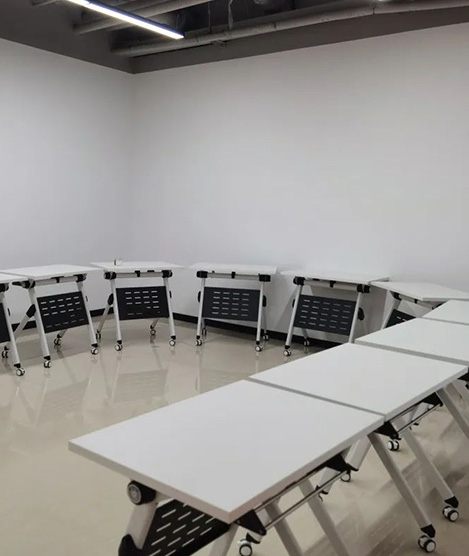
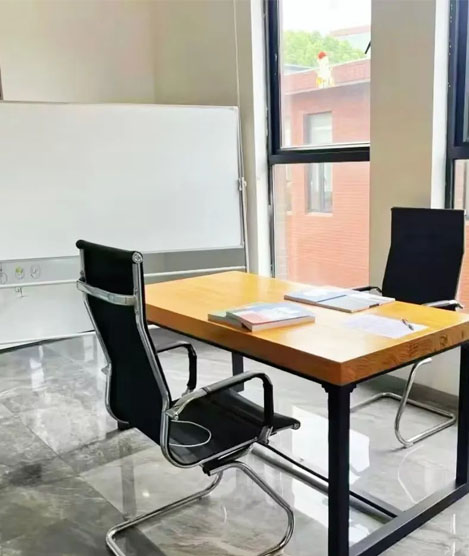
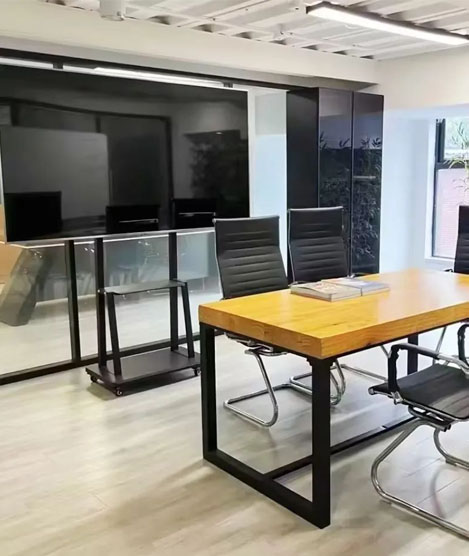
Teaching runs from Hanlin's own centres in Shanghai, Shenzhen, Chengdu and Hangzhou, and online for students elsewhere.


Talk to an advisor
Everything Hanlin does for BJC, in one conversation.
Entry, planning, coaching and the past papers. An advisor will tell you which of these a student actually needs, including when the answer is none of them.
Competition entry and planning
Which competitions suit this student, in what order, and by when - then we handle the registration, including the ones that can only be entered through a school or a centre.
Competition coaching
Taught by full-time subject tutors, on a course tier chosen by placement paper rather than by year group.
International curriculum tutoring
IB, AP, A-Level, IGCSE and the US high school curriculum, taught alongside school and timed around the exam calendar.
Competition past papers, free
A large library of past papers, mark schemes and syllabus breakdowns across every competition on this site. No charge and no enrolment.
Scan to add an advisor
Say which competition or course you are asking about. Replies in Chinese or English.
Or call +86 21 6352 6630FAQ
The Breakthrough Junior Challenge, briefly answered.
What students and families ask before entering.
Who can enter?
Anyone aged 13 to 18 anywhere in the world - specifically, 13 by the April opening date and not yet 19 by the October closing date. Home-schooled students and students with disabilities are explicitly welcomed.
Is there an exam?
No. The entire entry is a short video. There are no papers and no problems to solve.
What should the video be about?
A theory, concept or principle in physics, the life sciences or mathematics that is important to understand and difficult to explain.
How long can the video be?
The instructions give a maximum of two minutes and the entry requirements say three minutes or less. Confirm the current limit before you start editing.
What language must it be in?
English throughout, including the script and the narration.
What are the three steps?
Registration, submission of the application and video, and peer review. All three must be completed - an entry that skips the peer review is not eligible.
What is peer review?
Every entrant must view and score at least five other submissions. It is also the first judging stage, producing the first round of finalists before any expert sees a video.
How is it judged?
On engagement, illumination, creativity and difficulty - the last of these asking whether the topic is genuinely challenging and taught at high-school level or beyond.
What are the prizes?
A USD 250,000 college scholarship for the winner, USD 50,000 for their teacher, and USD 100,000 toward a Breakthrough science laboratory at their school.
When is the winner announced?
At the televised Breakthrough Prize ceremony, after finalists, popular-vote winners and regional champions are announced in September.
Related
Other competitions that reward explaining.
What students enter alongside BJC.
Breakthrough Junior Challenge enquiries
Three minutes, one hard idea, and your teacher wins too.
There is no exam here - only whether a viewer understands something difficult by the end of a short film. Tell us what the student finds interesting and an advisor will help pick a topic hard enough to score on.