
Competitions · Research and innovation · CNAT
The Academic Triathlon - USAT, now CNAT in China.
Three subjects, one theme, and a team of ten-year-olds working in English. It is the first rung of a ladder, and the only one where the research project stops at the national stage.

Where it sits
The first rung, and it is a real one.
CNAT is the entry point to a three-tier family, and the step sizes are worth knowing before you choose.
Three subjects, one theme
Social science, science and art, taught and tested in English, built around the year’s theme - substantial for a ten-year-old and manageable across a team.
Then five, then seven
The pentathlon adds literature and mathematics for grades 6 to 8, and the decathlon adds economics and music for grades 9 to 12. The reading load deepens at every step.
Four modules rather than six
CNAT runs an objective test, a team Super Q&A, a theme speech and the Boya Museum research project. The analytical writing and the global 36-hour challenge come later.
And the project ends nationally
At this tier the Boya Museum finishes with the display board and defence at the China station. The written research report at the global station belongs to the older programmes.
At a glance
What the triathlon is.
The American original has run for over thirty years and is described by its organisers as the only home-grown creative competition in Minnesota. It is built on Howard Gardner’s work on multiple ways of learning, which is why it suits students with quite different strengths. In China it runs as SKT-CNAT.
- Who can enter, China region
- Students in grades 4 to 5
- The American original
- Written for grades 5 to 8
- Team
- Three to six students
- Subjects
- Social science, science and art
- Language
- English throughout
- Reading load
- All-English subject material, built around the year’s theme
- Modules
- Four - an objective knowledge test, a team Super Q&A, a theme speech, and the Boya Museum research project
- The theme
- One a year across all three subjects. The current season is Our Changing Climate
- Its basis
- Howard Gardner’s research on seven ways of learning
- Coaches
- Teachers, principals, parents and other volunteers may all coach a team
- Where it leads
- CNAP, the pentathlon, from grade 6
What it is for
Learning styles, not academic ranking.
The founding idea is different from most competitions at this age, and it shapes who does well.
Built on multiple ways of learning
The programme draws on Howard Gardner’s research into seven learning styles, which is why the organisers describe it as suited to students with all kinds of talents.
Discovery before demonstration
The stated aim is that students discover, refine and then show their own interests, strengths and abilities - in that order. A child who does not yet know what they are good at is the intended participant.
And real-world problem solving
Creativity, teamwork and solving actual problems are the three things the organisers say the programme develops in this age group.
Anyone can coach
Teachers, head teachers, parents and volunteers all serve as coaches. It is designed to be run by a school or a family rather than by a specialist.
The four modules
What a team of ten-year-olds actually does.
Two are individual and two are team work, which is a sensible balance at this age.
| Module | Format | What it asks |
|---|---|---|
| Objective knowledge test | Timed, individual | Vocabulary, core concepts and factual understanding across the three subjects |
| Super Q&A | Timed, team | Answering together against the clock, moving knowledge between subjects |
| Theme speech | Team, prepared | A topic the team chooses within the year’s theme, given as a prepared speech with questions afterwards |
| The Boya Museum | Team project | A full project cycle scaled for the age group: find a question, explore it from several angles, shape the content, then build a display board under time and defend it at the China station |
Note what is absent. There is no timed analytical essay and no global 36-hour challenge - both arrive in the pentathlon and decathlon. What is present is a complete research project, which most children meet for the first time here.
What the programme provides
Support built for the age group.
Everything a team needs is supplied, which matters when the participants are ten and the material is in English.
Feedback on drafts
The subjective modules require work in progress to be submitted, and the committee comments on it before the final version.
Guided subject videos
Video introductions covering every chapter of each subject, so that a child reading academic English has a map before they start.
Explained rules, with examples
Official video walkthroughs of every module, with worked samples. At this age, knowing what is being asked is half the difficulty.
And practice that finds gaps
Matching exercises, maps, gap-fills and past-paper simulations, aimed at locating weak points rather than at volume.
Preparation
How Hanlin prepares a CNAT team.
At this age the English is the barrier before the subject matter is, and the work follows from that.
Academic vocabulary first
Thirty thousand words of subject English is the real challenge for a grade 4 or 5 student. Building the vocabulary is what makes the rest of it possible.
Reading as a team
Three to six children dividing the material, explaining it to each other and checking understanding gets further than each reading alone - and it is the habit the later tiers depend on.
Practising speaking early
A prepared speech with questions is daunting at ten and entirely learnable. It improves with rehearsal in front of people, not with more reading.
And treating the project as a project
The Boya Museum is a first taste of research. Choosing a question the children actually care about is worth more than choosing an impressive one.
Why Hanlin
Preparation for CNAT at Hanlin is taught by full-time subject tutors, on a course tier chosen by placement paper rather than by year group.
Programme formats
Five ways this is taught.
Group size is the whole difference between these. It decides how much of the tutor's attention a student gets and how far the course can bend to them, so it is worth choosing rather than accepting.
| Format | Group size | What it suits |
|---|---|---|
| One-to-one | One student | Content, pace and emphasis set by what this student actually needs rather than by a syllabus. The only format that can be rebuilt mid-course. |
| Small group | Three to eight | Opens at three. Frequent discussion, and the tutor can slow down or move on according to what the group has absorbed. Most students chasing a higher award are taught in this one. |
| Class | Eight to twelve | Taught by the subject lead or a medal coach. Less back-and-forth, so it suits a student who will say when something is unclear. |
| Large class | Ten to twenty | For students in the middle of the placement range, and a way to try a competition before committing. Students often move to a small group or to one-to-one afterwards. |
| Past-paper class | No cap | Past papers worked through in sequence in the weeks before the sitting. Free to students already enrolled. |
Course length for CNAT is set after a placement paper. The gap between where a student is and what the paper asks for is what the course has to close, and that gap is not the same for two students in the same year group.
How it runs
Six steps, four people on your side.
The same process for every student, so that nothing depends on one tutor remembering to do it.
 Step 1
Pre-course assessment
A placement paper before anything is booked, so the course tier is chosen on evidence rather than on a year group.
 Step 2
Tutor matching
A subject tutor is matched to the result, and their full background is provided before you agree to it.
 Step 3
Plan and group
A study group opens with four people on one student: the tutor, a planner, a supervisor and an academic manager.
 Step 4
Scheduled teaching
The teaching office sets the timetable around the competition date and school term, and teaching begins.
 Step 5
After-class reports
What was covered, and how the student handled it, reported after every lesson.
 Step 6
Homework follow-up
The teaching assistant and the form teacher both check that homework is done, which is where most preparation quietly fails.
Free resource pack
Motions and case-file pack
The same material our own CNAT students work from. Scan the code, say what you need, and an advisor sends it.

Tell an advisor which competition and year group, and the material comes back the same day. Free, and you do not have to enrol in anything. If we do not already hold what you need, we will go and find it.
- PDFPast motions and topic areas
- DOCXA case-file template, ready to fill in
- PDFFormat, speaking times and the judging criteria
- PDFEntry checklist and the dates for the current cycle
Teaching team
Who would teach it.
Three of the twenty-two tutors on the published Hanlin roster - the ones whose subject this is.

Dr An
Mathematics at Illinois Urbana-Champaign with highest honours and the Elizabeth R. Bennett scholarship, then a PhD in mathematics at Johns Hopkins on full funding with the Owen fellowship and the Joel Dean award for excellent teaching. Years of US university teaching, translating high-level mathematics into language students can use.

Yu
Master's in bioinformatics and computational biology from UT Dallas and a nutritional sciences degree from Wisconsin-Madison. Second author on an SCI-indexed paper from the Tanumihardjo vitamin-A laboratory, and formerly at ABS Global.

Tan
Master's in data science from the University of Sydney after a statistics degree at Simon Fraser University, graduating in the top 5% with repeated chancellor's honours; A-Levels at a Cambridge international school, and formerly a data analyst at Tencent. An AMC-accredited coach, a College Board-accredited AP teacher, and holder of a Math League excellent-teacher award.
Where it is taught
Hanlin learning centres.
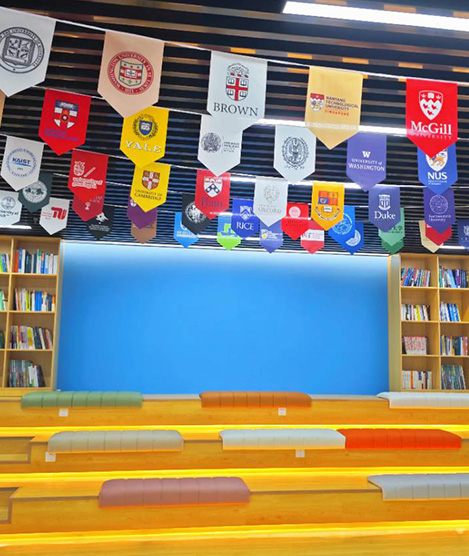
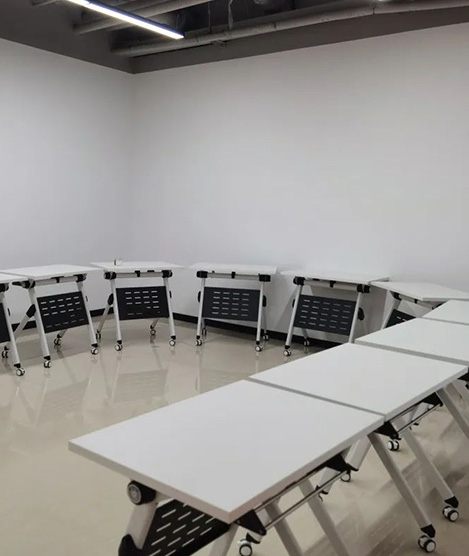
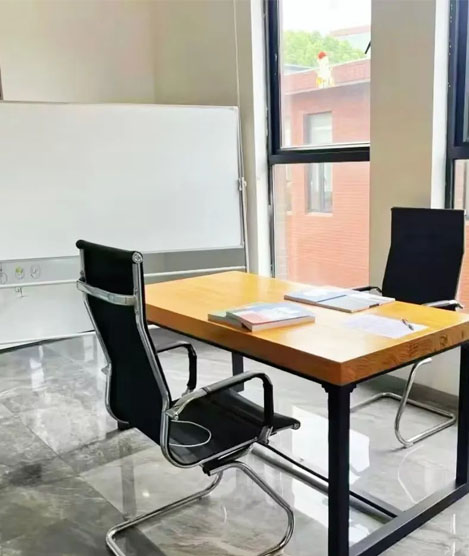
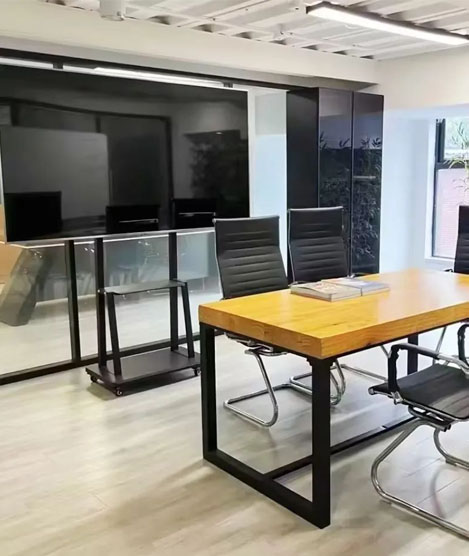
Teaching runs from Hanlin's own centres in Shanghai, Shenzhen, Chengdu and Hangzhou, and online for students elsewhere.



Talk to an advisor
Everything Hanlin does for CNAT, in one conversation.
Entry, planning, coaching and the past papers. An advisor will tell you which of these a student actually needs, including when the answer is none of them.
Competition entry and planning
Which competitions suit this student, in what order, and by when - then we handle the registration, including the ones that can only be entered through a school or a centre.
Competition coaching
Taught by full-time subject tutors, on a course tier chosen by placement paper rather than by year group.
International curriculum tutoring
IB, AP, A-Level, IGCSE and the US high school curriculum, taught alongside school and timed around the exam calendar.
Competition past papers, free
A large library of past papers, mark schemes and syllabus breakdowns across every competition on this site. No charge and no enrolment.
Scan to add an advisor
Say which competition or course you are asking about. Replies in Chinese or English.
Or call +86 21 6352 6630FAQ
The Academic Triathlon, briefly answered.
What families and teachers ask before entering.
Who can enter?
In China, students in grades 4 to 5, in teams of three to six. The American original is written for grades 5 to 8.
Which subjects?
Social science, science and art, all approached through one annual theme.
How much reading is there?
Around 30,000 words of English subject material - roughly a third of what the pentathlon asks and a fraction of the decathlon.
What are the four modules?
A timed objective knowledge test taken individually, a timed team Super Q&A, a prepared team theme speech with questions, and the Boya Museum research project.
How is it different from the pentathlon?
Three subjects instead of five, four modules instead of six, about 30,000 words instead of 90,000, and the research project finishes at the China station rather than continuing to a written report at the global stage.
Is my child too young for this?
The programme is designed for grades 4 to 5 and is built on research into different ways of learning, so it suits children with quite different strengths. The reading load is the honest test of readiness.
Who can coach a team?
Teachers, head teachers, parents and other volunteers. It is designed to be run by a school or a family rather than by a specialist.
What language is it in?
English - the reading, the writing and the speaking.
What is the theme this season?
Our Changing Climate, approached through social science, science and art.
What comes next?
CNAP, the academic pentathlon, from grade 6. It adds literature and mathematics and raises the reading to about 90,000 words.
Related
The rest of the family.
Where a student goes after the triathlon.
CNAT enquiries
A first research project, at ten.
Three subjects, thirty thousand words of English and a team display board defended in front of judges. Tell us what the child reads now and an advisor will say honestly whether this is the right year to start.